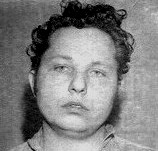
Robert Zarinsky
Serial killer Richard Kuklinski
Serial killer · USA · 1949
Richard “Iceman” Kuklinski was sentenced to life in prison in 1988. He died in…
100 victims
Richard Kuklinski
Serial killer · USA · 1949
Richard “Iceman” Kuklinski was sentenced to life in prison in 1988. He died in…
100 victims
 Ottis Toole
Serial killer · USA · 1961
Ottis Elwood Toole (sometimes misspelled as “Otis”) was an American serial kill…
65 victims
Ottis Toole
Serial killer · USA · 1961
Ottis Elwood Toole (sometimes misspelled as “Otis”) was an American serial kill…
65 victims
 Juan Vallejo Corona
Serial killer · USA · 1960
Juan Vallejo Corona was a native of Mexico, born in 1934. He moved to Yuba City…
25 victims
Juan Vallejo Corona
Serial killer · USA · 1960
Juan Vallejo Corona was a native of Mexico, born in 1934. He moved to Yuba City…
25 victims
 Carroll Edward Cole
Serial killer · USA · 1948
Carroll Edward Cole, also known as “Eddie,” was born in Sioux City, Iowa on May…
15 victims
Carroll Edward Cole
Serial killer · USA · 1948
Carroll Edward Cole, also known as “Eddie,” was born in Sioux City, Iowa on May…
15 victims
 Kenneth Allen McDuff
Serial killer · USA · 1966
Kenneth Allen McDuff was executed by lethal injection in Texas on November 17,…
14 victims
Kenneth Allen McDuff
Serial killer · USA · 1966
Kenneth Allen McDuff was executed by lethal injection in Texas on November 17,…
14 victims
 Gerhard Puff
Murderer · USA · 1952
Gerhard Arthur Puff (died August 21, 1954) was an American gangster. He was exe…
1 victim
Gerhard Puff
Murderer · USA · 1952
Gerhard Arthur Puff (died August 21, 1954) was an American gangster. He was exe…
1 victim
 Donnie Allen Hulett
Murderer · USA · 2002
Donnie Allen “D.J.” Hulett was convicted murderer who was sentenced to death on…
2 victims
Donnie Allen Hulett
Murderer · USA · 2002
Donnie Allen “D.J.” Hulett was convicted murderer who was sentenced to death on…
2 victims
 Yang Jiaqin
Homicide · China · 2010
Yang Jiaqin carried a kitchen cleaver and attacked students and bystanders outs…
2 victims
Yang Jiaqin
Homicide · China · 2010
Yang Jiaqin carried a kitchen cleaver and attacked students and bystanders outs…
2 victims
- Gender
- male
- Country
- USA
- Location
- Monmouth County, New Jersey, USA
- Date of birth
- 1940
- Age at first offence
- 18
- Characteristics
- rape, arson, kidnapping, domestic violence
- Victim profile
- Young women and a man ( New Jersey police officer )
- Method of murder
- Shooting / Strangulation
- Date(s) of murder
- 1958 - 1974
- Years active
- 1958–1974
- Date of arrest
- —
- Status
-
Died in custody
Sentenced to life imprisonment; died in prison on November 29, 2008 of pulmonary fibrosis
Case record: Robert Zarinsky
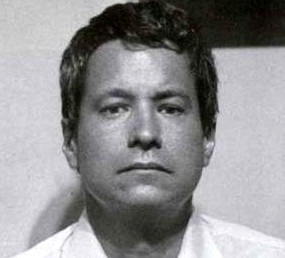
Robert Zarinsky (1940? – November 28, 2008) was a convicted murderer and suspected serial killer from Linden, New Jersey.
The offence
Rosemary Calandriello murder (Atlantic Highlands, New Jersey)
Rosemary Calandriello was a 17-year-old girl from Atlantic Highlands, New Jersey. She disappeared on October 25, 1969. Her body was never recovered. Zarinsky was convicted in 1975 of her murder. He was sentenced to life imprisonment.
In 1988, Zarinsky admitted that he had accidentally killed her and buried her body in a grave in northwest New Jersey. He also stated to another investigator that he had thrown her body into the Atlantic Ocean. Zarinsky was the first person in New Jersey ever to be convicted of murder without a body being found.
Jane Durrua murder indictment (Keansburg, New Jersey)
On March 11, 2008, Zarinsky was indicted for the 1968 murder of Jane Durrua of Keansburg.
Jane Durrua disappeared on the evening of November 4, 1968. Her body was found the next morning in a field in North Middletown, New Jersey.
Investigation
Suspected serial killer investigation and evidence links
Investigators focused on Zarinsky as a possible suspect in multiple long-unsolved murders. Authorities believed he had a long list of victims, most of them teenage girls.
Authorities were attempting to link Zarinsky through DNA to the 1974 killings of Woodbridge teenagers Joanne Delardo and Doreen Carlucci.
A DNA investigation in the Durrua case included DNA analysis of semen stains found on the girl’s slip. The stains were discovered in 2005 after Paul Seitz, a detective in the Monmouth County Prosecutor’s Office, recruited Robert Shaler, a nationally known DNA expert from the New York City Medical Examiner’s Office, to examine evidence in the case. Shaler told reporters he discovered large stains that had not been detected years earlier by forensic scientists in the New Jersey State Police lab. He was able to raise enough DNA to develop a profile and compare it with a sample on file for Zarinsky.
In January, prosecutors asked a Superior Court judge in Monmouth County to force Zarinsky to submit a fresh DNA sample. The judge barred reporters from the hearing.
Investigators with drills and saws tore apart a “haunted house” in Linden, New Jersey, looking for evidence that might link Zarinsky to unsolved slayings of at least four more teenage girls. Officials from eight law enforcement agencies, including the State Police and FBI, searched for personal belongings that Zarinsky, 59, might have taken from his victims and stashed in the house he inherited from his mother.
Evidence and testimony in the Bernoskie matter
Judith Sapsa implicated Zarinsky in the 1958 slaying of Rahway police officer Charles Bernoskie. The information described an incident on November 28, 1958 involving a burglary in progress at Miller Pontiac in Rahway, where Bernoskie was shot and killed by one of the perpetrators, either Zarinsky or Theodore Schiffer. Bernoskie shot both suspects who both were able to elude capture.
The evidence described later included a fingerprint left at the scene of the crime by Theodore Schiffer, matched in 1999. The record also described that Schiffer was implicated in the murder by Judith Sapsa, and that Schiffer testified against Zarinsky and served three years in Pennsylvania for the crime.
Judith Sapsa also described that she assisted her mother with removing bullets from Zarinsky and Schiffer on the night of the Bernoskie murder, and that Zarinsky stated to her: “Teddy and I shot a cop."
Arrest
Transfer request and protective custody
Corrections Department officials said Zarinsky requested to be transferred to protective custody at New Jersey State Prison in Trenton after he became a suspect in a string of killings 30 years ago.
Served with new charges
Monmouth County Prosecutor Luis Valentin officially announced that Robert Zarinksy was being charged with murder and felony murder in connection with the death of 13-year-old Jane Durrua. Zarinsky, 67, was served in South Woods State Prison in Bridgeton on the murder and felony murder charge and was expected to appear in court Thursday to face the new charges against him.
Trial
Bernoskie murder acquittal (Rahway, New Jersey)
In 2001, Zarinsky was tried and acquitted of the November 28, 1958 murder of Rahway, New Jersey police officer Charles Bernoskie.
The narrative described that Schiffer testified against Zarinsky, pleaded guilty, and served three years in Pennsylvania for the crime. The narrative also described that Judith Sapsa later testified at the Bernoskie murder trial that she assisted her mother with removing bullets from Zarinsky and Schiffer on the night of the Bernoskie murder, and said Zarinsky had stated: “Teddy and I shot a cop."
Despite this testimony, Zarinsky was acquitted of the Bernoskie murder. The jurors said afterward they believed Zarinsky killed the officer, but the prosecutor had not convinced them “beyond a reasonable doubt.”
Calandriello murder conviction (1975)
On February 25, 1975, Zarinsky was charged with the murder of Rosemary Calandriello. His bond was held in the record as $125,000. His trial in April ended with Zarinsky’s conviction of first-degree murder, and he was sentenced to life imprisonment.
The verdict was affirmed on appeal in July 1976, with the higher court ruling that failure to produce a victim’s body is no bar to prosecution in a murder case—particularly when the suspect brags about the killing to his friends.
Sentencing
Zarinsky was sentenced to life imprisonment for the 1969 murder of Rosemary Calandriello of Atlantic Highlands, New Jersey. He was entitled to an annual parole review.
Appeals
Wrongful death civil outcome involving Bernoskie
A wrongful death suit was filed by Bette Bernoskie, widow of Charles Bernoskie, against Zarinsky in civil court.
In August 2003, a jury found Zarinsky responsible for the death and awarded Bette Bernoskie $9,500,000 plus interest.
In 2004, $154,000 was seized from Zarinsky’s assets, and Bette Bernoskie divided her award among her six children.
In July 2007, a New Jersey Appellate Court reversed the decision and ordered the money returned to Zarinsky, citing his inability to put on a proper defense. The record also stated that Bette Bernoskie no longer had the money and that the NJ PBA organized efforts to repay the money, with an intention that neither Bette Bernoskie or her children would ever give back the award money.
Outcome
Disappearance and body never recovered (Calandriello)
Rosemary Calandriello disappeared on October 25, 1969. Her body was never recovered. Zarinsky was convicted in 1975 of her murder and was the first person in New Jersey ever to be convicted of murder without a body for evidence.
Acquittal of Bernoskie murder (2001)
Zarinsky was acquitted in 2001 of the November 28, 1958 murder of Rahway, New Jersey police officer Charles Bernoskie.
Aftermath / later developments
Attempts at parole and correspondence
Zarinsky was entitled each year for parole review. He consistently denied committing the murder and, in his bid for early parole, admitted killing Calandriello. He claimed she died when he accidentally backed over her with his car.
In correspondence with The Star-Ledger, Zarinsky denied any role in the Durrua homicide, writing on May 26, 2007: “I most certainly was not involved in it, as I was not not involved in the numerous other allegations made against me over the years,” he wrote on May 26, 2007.
Transfer to extended care
In 2007, Zarinsky was transferred from the maximum security New Jersey State Prison in Trenton, to the extended care unit at South Woods State Prison.
Statements and quoted views
John T. Mullaney, former assistant prosecutor in Monmouth County who tried Zarinsky in the Calandriello case, said: “We knew he was a serial killer, but there was precious little to prove it” “We knew he was a serial killer, but there was precious little to prove it,” said Mullaney, who now has a private law practice. We had four eyewitnesses who put the girl in his car. Then we found the car, and the handles on the doors and the windows were missing. Clearly a pattern All indications were he did it Will they find that he committed the other murders? Will they find [Calandriello's] body? I don't know. I hope so for the family's sake Rosemary's mother and brother are still alive. One brother was killed in a bungled robbery in Pennsylvania. That family has had more than their share of tragedy. Closure would be nice. the investigation couldn't have come at a better time.
Monmouth County prosecutor Peter Warshaw confirmed his office was engaged in a “cooperative investigation” that involved Zarinsky.
Monmouth County Prosecutor Luis Valentin said: “I've been waiting for this day for so many years. I have always believed it was Zarinsky,” The evidence was examined and re-examined, We have been working diligently on this case. “The evidence was examined and re-examined,” Valentin said.
A record also included a statement by Richard Rodbart, a Union County prosecutor: “He is being looked at as a suspect.” “Events have motivated us to consider him a suspect.”
A record included a statement by Samuel Guzzi, a retired Atlantic Highlands police sergeant who built cases against Zarinsky: “It's unbelievable,” “What can I tell you. I'm so elated for the family.”
A record included a statement by Delardo: “We've given up now ... We get the feeling they are never going to try him,”
Alleged additional suspects and potential links
The narrative described Zarinsky as the only suspect in the Balabanow murder, but said the Middlesex County Prosecutor's Office told The Star-Ledger in August that there was not enough evidence to charge him.
The narrative described authorities as investigating potential links to the Woodbridge killings of Joanne Delardo and Doreen Carlucci.
Other victims and related allegations (as suspects)
The record described Zarinsky as a suspect in the murders of:
- Linda Balabano (17) of Union in 1969
- Ann Logan of Elizabeth
- Doreen Carlucci (14) of Woodbridge Township
- Joanne Delardo (15) of Woodbridge Township
The record described Linda Balabanow’s body being found floating in the Raritan River in Middlesex County, and described the bodies of Doreen Carlucci and Joanne Delardo as found beaten and strangled with an electrical cord in Monmouth County in December 1974.
The record also described that Zarinsky was charged in connection with a kidnapping allegation involving Linda Balbanow in April 1969, and that her body was recovered soon thereafter floating in the Raritan River near Woodbridge.
Timeline
- 1958-11-28 — Rahway police officer Charles Bernoskie was shot and killed during an incident described as a burglary in progress at Miller Pontiac in Rahway.
- 1968-11-04 — Jane Durrua disappeared on the evening of November 4, 1968.
- 1968-11-05 — Jane Durrua’s body was found the next morning in a field in North Middletown, New Jersey.
- 1969-10-25 — Rosemary Calandriello disappeared in Atlantic Highlands, New Jersey.
- 1975-02-25 — Zarinsky was charged with the murder of Rosemary Calandriello; bond was listed as $125,000.
- 1975 — Zarinsky was convicted of first-degree murder of Rosemary Calandriello in a trial held in April and sentenced to life imprisonment.
- 1976-07 — The conviction for Rosemary Calandriello’s murder was affirmed on appeal, with the higher court ruling that lack of a body was no bar to prosecution in a murder case.
- 1988 — Zarinsky admitted he had accidentally killed Rosemary Calandriello and buried her body in northwest New Jersey.
- 1999 — The record described that Zarinsky’s sister, Judith Sapsa, implicated him in the 1958 killing of Rahway police officer Charles Bernoskie.
- 2001 — Zarinsky was acquitted of the Bernoskie murder.
- 2003 (August) — A jury found Zarinsky responsible for Charles Bernoskie’s death and awarded Bette Bernoskie $9,500,000 plus interest.
- 2004 — $154,000 was seized from Zarinsky’s assets; Bette Bernoskie divided the award among her six children.
- 2007 (July) — A New Jersey Appellate Court reversed the wrongful death decision and ordered the money returned to Zarinsky.
- 2007 (May 26) — Zarinsky wrote in correspondence: “I most certainly was not involved in it, as I was not not involved in the numerous other allegations made against me over the years,”
- 2007 — Zarinsky was transferred from maximum security New Jersey State Prison in Trenton to the extended care unit at South Woods State Prison.
- 2008-03-11 — A grand jury indicted Zarinsky for the 1968 murder of Jane Durrua.
- 2008-11-28 — Zarinsky died at South Woods State Prison in Bridgeton of pulmonary fibrosis.
- 2008-11-29 — The record included that Zarinsky died on November 29, 2008.
Other details
People involved
- Rosemary Calandriello — 17-year-old victim from Atlantic Highlands, New Jersey; body never recovered.
- Jane Durrua — 13-year-old victim of Keansburg; body found next morning in North Middletown, New Jersey after disappearing on November 4, 1968.
- Charles Bernoskie — Rahway police officer who was shot and killed on November 28, 1958.
- Bette Bernoskie — widow of Charles Bernoskie; filed wrongful death suit and received a 2003 jury award that was later reversed.
- Judith Sapsa — Zarinsky’s sister; implicated him in the Bernoskie murder.
- Theodore Schiffer — cousin implicated alongside Zarinsky in the Bernoskie incident; testified against Zarinsky and served three years in Pennsylvania.
- Peter Sapsa — Judith Sapsa’s husband; described in the record as connected to mutual fund money theft allegations.
- Robin Gaby Fisher and Judith Lucas — named in a fragment stating “Robert Zarinksy formally charged in '68 slaying of Keansburg girl by Robin Gaby Fisher and Judith Lucas,” in the context of the Durrua matter.
- Luis Valentin — Monmouth County Prosecutor who announced the Durrua charges.
- Samuel Guzzi — retired Atlantic Highlands police sergeant involved in building cases against Zarinsky.
- John T. Mullaney — former assistant prosecutor in Monmouth County who tried Zarinsky in the Calandriello case.
- Chris Carden — corrections spokesman referenced in the record about Zarinsky’s transfer request.
- Matt Schuman — spokesman for the state Department of Corrections, quoted about Zarinsky’s death location and time.
- Paul Seitz — detective in the Monmouth County Prosecutor’s Office involved in DNA analysis steps in the Durrua case.
- Robert Shaler — DNA expert recruited for analysis in the Durrua case.
Mental illness and juvenile conduct details included in the record
The record stated that Zarinsky exhibited signs of mental instability in adolescence and that at age 14 he was admitted to Trenton Psychiatric Hospital. It also described that he was in prison for desecrating a Jewish cemetery and setting lumberyard fires, and that he was a self-styled Nazi who commanded “two or three like-minded friends,” imagining he led an entire army.
The record described that his sister said she was under “hypnotic” domination by her sadistic brother Robert who repeatedly beat her, debased their father, and tortured animals. It also described that Zarinsky abused his father, Julius, by pushing tomatoes into his face, and that when he finished high school he took the shop’s proceeds and put his father on a $5 weekly salary.
Arson and cemetery desecration details
The record described that, as a teenager, Zarinsky formed a gang called “The Panthers” and committed arson, including gleefully committing arson and ripping the wings off a bird or chopping the head off a bird. It also described grave desecration and that he was convicted at age 22 of desecrating hundreds of tombstones in a Jewish cemetery in Linden.
Death in prison
Zarinsky died at 8:25 p.m. in the hospice unit at the South Jersey prison, said Matt Schuman, spokesman for the state Department of Corrections. The record stated that an exact cause of death was not given and that Zarinsky had suffered from “major respiratory issues” before his death. The record also stated he died of pulmonary fibrosis, a scarring of the lung tissue that made it increasingly difficult for him to breathe.
Criminal-justice status references in the record
The record stated that Zarinsky was convicted in 1975 of murder, sentenced to life imprisonment, and entitled to annual parole review. It also stated he was transferred to protective custody when he became a suspect again after his sister implicated him.
Spotted an error, or have more information about this case?