
Mariette Bosch
Murderer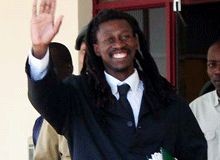 Modise Mokwadi Fly
Murderer · Botswana · 2006
Modise Mokwadi Fly was a Botswana politician and activist. He was the general s…
1 victim
Modise Mokwadi Fly
Murderer · Botswana · 2006
Modise Mokwadi Fly was a Botswana politician and activist. He was the general s…
1 victim
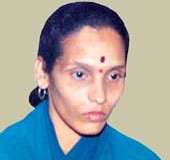 Renuka Shinde
Murderer · India · 1990
Renuka Shinde was sentenced to death on June 29, 2001. The High Court upheld th…
9 victims
Renuka Shinde
Murderer · India · 1990
Renuka Shinde was sentenced to death on June 29, 2001. The High Court upheld th…
9 victims
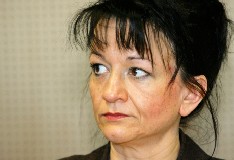 Sabine Hilschenz
Murderer · Germany · 1988
Sabine Hilschenz was a German woman convicted of infanticide involving eight of…
9 victims
Sabine Hilschenz
Murderer · Germany · 1988
Sabine Hilschenz was a German woman convicted of infanticide involving eight of…
9 victims
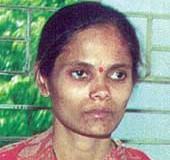 Seema Gavit
Murderer · India · 1990
Seema Mohan Gavit and her sister Renuka Shinde received death sentences. The se…
9 victims
Seema Gavit
Murderer · India · 1990
Seema Mohan Gavit and her sister Renuka Shinde received death sentences. The se…
9 victims
 Megan Huntsman
Murderer · USA · 1996
Megan Huntsman was 40 at sentencing. She was a mother of three children who wer…
6 victims
Megan Huntsman
Murderer · USA · 1996
Megan Huntsman was 40 at sentencing. She was a mother of three children who wer…
6 victims
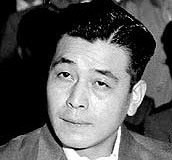 Masaru Okunishi
Mass murderer · Japan · 1961
Masaru Okunishi was a farmer from Kuzuo, a remote mountain village in Nabari ci…
5 victims
Masaru Okunishi
Mass murderer · Japan · 1961
Masaru Okunishi was a farmer from Kuzuo, a remote mountain village in Nabari ci…
5 victims
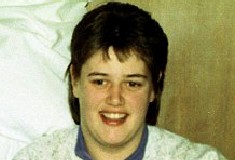 Beverley Allitt
Serial killer · United Kingdom · 1991
Beverley Allitt was a nurse who suffered from the mental illness Munchausen’s S…
4 victims
Beverley Allitt
Serial killer · United Kingdom · 1991
Beverley Allitt was a nurse who suffered from the mental illness Munchausen’s S…
4 victims
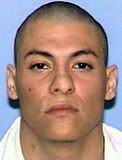 Martin Robles
Murderer · USA · 2002
Martin Robles (Hispanic male) Robles dropped out of school after the eighth gra…
2 victims
Martin Robles
Murderer · USA · 2002
Martin Robles (Hispanic male) Robles dropped out of school after the eighth gra…
2 victims
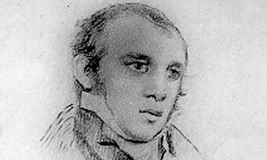 Mark Jefferies
Murderer · Australia · 1820
Mark Jefferies was an escaped convict who was described as a rapist and a canni…
5 victims
Mark Jefferies
Murderer · Australia · 1820
Mark Jefferies was an escaped convict who was described as a rapist and a canni…
5 victims
 John Earl Bush
Murderer · USA · 1982
Defendant: John Earl Bush Victim: Frances Julia Slater Status: Executed by elec…
1 victim
John Earl Bush
Murderer · USA · 1982
Defendant: John Earl Bush Victim: Frances Julia Slater Status: Executed by elec…
1 victim
- Gender
- female
- Country
- Botswana
- Location
- Botswana
- Date of birth
- 1950
- Age at first offence
- 46
- Characteristics
- love triangle
- Victim profile
- Maria 'Ria' Wolmarans (her best friend)
- Method of murder
- Shooting ( 9mm Browning pistol)
- Date(s) of murder
- June 26, 1996
- Years active
- 1996
- Date of arrest
- October 7, 1996
- Status
-
Executed
Executed by hanging at Gaborone's Central Maximum Prison on March 31, 2001
Case summary
Mariette Sonjaleen Bosch was executed in Botswana by hanging at Gaborone's Central Maximum Prison on March 31, 2001. She was identified as a South African woman who was the first South African executed in Botswana. Her death sentence was upheld on appeal, and clemency was denied by the Botswana government.
Timeline
- June 26, 1996 — Maria Wolmarans (Ria), the wife of Tienie Wolmarans, was shot dead in the hallway of her home in Botswana.
- 1996 — Mariette Bosch borrowed a 9mm Browning pistol from a friend in South Africa.
- 1996 — Mariette Bosch smuggled the gun across the border into Botswana and later entered the Wolmarans' house after scaling a wall.
- October 7, 1996 — Mariette Bosch and Tienie Wolmarans were arrested.
- 1998 — Mariette Bosch and Tienie Wolmarans got married while Bosch was on bail.
- December 1999 — Bosch’s trial opened at Botswana's Lobatse High Court before Justice Isaac Aboagye.
- February 21, 2000 — Justice Isaac Aboagye found Bosch guilty and sentenced her to be hanged.
- January 18, 2001 — Mariette Bosch entered the appeal court proceedings on the morning of January 18.
- January 29, 2001 — The appeal court gave its judgement denying the appeal.
- March 29, 2001 — President Festus Mogae said in London that he would not consider granting Bosch clemency.
- Friday, March 30, 2001 — Bosch’s death warrant was read to her and she was informed her execution would take place in the early hours of Saturday.
- March 31, 2001 — Bosch was hanged at Gaborone's Central Maximum Prison.
Background
Mariette Bosch was a 50-year-old South African woman and a mother of three. She grew up as the daughter of a wealthy liquor store owner and came to Botswana from South Africa. She became a regular attendant at the Dutch Reformed Church in Gaborone. She and her first husband Justin moved to Botswana in 1992, settling in Phakalane, an area of Gaborone described as popular with well-off white South Africans. She met Maria (normally known as Ria) and Tienie Wolmarans, who lived nearby, and the women took classes together in decorating porcelain dolls and made cakes together.
Justin was killed in a car crash in 1995, and Ria comforted and helped Mariette through that period. Within months after Justin’s death, Mariette began an affair with Tienie. The material described that Tienie and Ria’s marriage had been under strain, having separated in 1993 and getting back together in 1994. The material described that Tienie promised to divorce his wife, and that Bosch became impatient.
In June 1996, Bosch drove to Pietersburg in South Africa and borrowed a pistol from a friend. She later smuggled the gun across the border into Botswana.
The offence
Maria (Ria) Wolmarans was shot dead in the hallway of her home in Botswana. She was found later that evening by her daughter, Maryna. The material described no forced entry and that she was shot after being confronted in the hallway passageway. The court found that Bosch scaled a wall described as about 2m, entered Wolmarans' house, confronted Ria in the passageway, and shot and killed her.
The material described that Bosch fired twice, with Maria Wolmarans being shot once in the side and once in the chest. The material also described that she had been making a cup of tea when she was shot and that the tea tray and its contents were found beside her body. The case was characterized as a “love-triangle murder” in the material.
Investigation
After police discovered Maria Wolmarans shot dead, detectives initially believed she was the victim of a botched burglary. For three months after the killing, the police did not identify a suspect. The material described that police investigated the possibility that Tienie Wolmarans had a hand in his wife’s murder but that he was never charged. It also described that he stated he had been arrested on suspicion but released after one night because police had no evidence.
The material described that Bosch gave the gun to Judith Bosch’s husband to look after, and that later Judith Bosch persuaded Bosch to return the weapon to her. Judith Bosch then handed the gun over to police. Forensic tests showed the recovered gun was the murder weapon.
Arrest
Mariette Bosch and Tienie Wolmarans were arrested on October 7, 1996.
Trial
Bosch’s trial was held at Botswana's Lobatse High Court before Justice Isaac Aboagye. The trial opened in December 1999.
The prosecution argued that Bosch climbed over the wall into the Wolmarans’ garden, entered the house, and shot Maria. The material described Bosch’s claim that she was over weight at the time of the killing and therefore could not have scaled the garden wall, but that the court rejected this on the basis that she could have had a set of keys.
Much of the more damning evidence against her was presented from her sister-in-law, Judith, regarding the gun and the affair. Bosch admitted borrowing the gun from a friend, but she claimed she did so after being hypnotised by Hennie Coetzee, Maria's former boss, who she accused of being the killer. The material also described suggestions that Hennie had put some sort of drug into wine that he and Mariette were drinking and then told her to get the gun and bring it to him while not mentioning it to anyone. The material described an alleged motive that Ria had uncovered financial irregularities in Hennie Coetzee’s company and that these would be revealed at a forthcoming audit.
For the defence, the material described that there was no direct forensic evidence linking Bosch to the murder and that there were no finger prints on the gun nor in Ria’s home. It also described testimony by psychiatrist Dr Louise Olivier, who was presented as a psychologist and described as appearing in a pink suit, big hair, and turned out to be the “sex doctor” for a popular magazine. The judge asked Dr Louise Olivier:
“Let's suppose you were my wife - ha, ha, ha - and I knew you were going around with some guy. Then suppose I go to Pretoria to get a gun, come back and shoot you - wouldn't you call that premeditation?” Dr Louise Olivier had to confess she would. The material described her testimony ending with “a loud bang from the witness box and a grovelling apology.” The judge replied: “Don't be sorry. It's only the bible you dropped!”
The trial also involved Bosch’s alibi. Bosch said she had been at home all evening and the material described that her daughters verified this. The maid said Bosch had gone out around 8.00 p.m., rebutting the alibi. The material described this as a strong circumstantial case and a clear motive.
The court found Bosch guilty. On February 21, 2000, Justice Isaac Aboagye sentenced Bosch to be hanged. The material quoted Justice Aboagye’s sentencing remarks:
“I have searched the trial records to find anything, however minute, to reduce your blameworthiness,” he told her.
“I have not been able to find anything. The crime was carefully planned with the motive of enabling you to take over the husband of the deceased. It was committed with no mercy for the innocent victim. You desired to eliminate the deceased in order to be able to marry her husband. I have no doubt the crime was premeditated.” The material also described Bosch’s response before sentence: “I am not guilty, you are My Lord, sentencing a woman for something she did not do.” After a brief adjournment, Justice Aboagye told her: “You will be returned to prison and there be hanged by the neck until you are dead. Your body will be buried in such a place as the State President may determine. May the Lord have mercy on your soul.”
The material said Bosch’s older daughter Charmaine was stunned by the verdict and sentence and had to be comforted by relatives, while her younger daughter, 14-year-old Soné, tried to chase after her mother as she was led from the court under guard, but was not allowed contact.
The material described that, in handing down his guilty verdict, the judge also implicated Tienie Wolmarans, saying:
“I find that the accused and Tienie were seriously in love before the death of the deceased and that they wanted the deceased out of Tienie's way for them to get married,” he said.
Sentencing
Bosch was sentenced to death by hanging. She was returned to prison and placed in solitary confinement on death row to await her appeal.
In prison, the material described her refusal to eat tripe, her becoming “thin and drawn,” and her arriving in court with her blue eyeshadow carefully applied.
Appeals
Bosch appealed against the death sentence. The appeal court comprised judges from England, Scotland, South Africa, Zimbabwe and Nigeria. The members named in the material included Judge President Timothy Aguda from Nigeria, Sir John Blofeld from England and Lord Weir from Scotland. The appeal court proceedings took place on the morning of January 18, 2001, with Bosch entering the packed court promptly at 9.30am. The material described that she blew a discreet kiss towards Tienie Wolmarans and sat down to listen.
The material described the role of Botswana's assistant Attorney General, Lizo Ngcongo, in presenting the case against Bosch. It included the quoted statement:
“We are talking about a woman who decided in advance that the deceased was an obstacle to her amorous relationship with Tienie Wolmarans and would have to be got rid of.” The material described that Ngcongo said Bosch and her daughter Charmaine contradicted themselves during the trial, and that this affected “the plausibility of the entire defence.” The material also quoted Ngcongo’s assertion about Bosch’s testimony regarding the alibi and statements about the murder weapon.
Bosch’s defence at appeal was represented by British barrister Desmond da Silva, who argued that the trial was flawed because Hennie Coetzee had been given immunity for testifying against Bosch without the court or defence being informed. The material quoted da Silva:
“The witness had demanded and got an immunity which did not even specify he had to tell the truth as far as I can see,” he said.
“It is astonishing.” The material described that evidence was presented about Bosch’s dependent and vulnerable personality and that she was easily suggestible. It also described a contested question of who influenced Bosch to commit the crime.
On January 29, 2001, the appeal court judgement was given after lasting nearly two hours. The material quoted Acting Judge President Timothy Aguda:
“She is a wicked and despicable woman. The murder had been planned over a long period, no doubt as a result of jealousy and infatuation. It involved travelling to South Africa where she collected a gun and she illegally brought it into the country.” The appeal was denied. The material described that Bosch was visibly shocked and that Tienie Wolmarans was too upset to speak and admitted there was little hope of a reprieve.
After the appeal was dismissed, Bosch’s lawyer, Edward Fashole Luke II, began preparing an appeal for clemency. The material described the Advisory Committee on the Prerogative of Mercy and that the final decision for clemency rested with the president.
Outcome
Clemency was not granted. President Festus Mogae said he would not consider granting Bosch clemency. The death sentence was carried out.
Aftermath
The material described that Bosch spent her last days on death row in a single cell with just a mattress and a bucket, and that standard prison food included tripe and morogo. It described that she wrote letters to Tienie and her children and prayed. It stated that she was not permitted any visitors, not permitted to say goodbye to her family, and not allowed a special last meal. It also stated that sedatives were not offered to condemned prisoners.
The material described that on Friday March 30, 2001, Bosch’s death warrant was read to her and she was informed that her execution would take place in the early hours of Saturday. It described that a minister of the church, the prison doctor and prison officials witnessed the hanging, carried out British style at 6.00 a.m. that morning. It also stated that executions in Botswana were carried out in complete secrecy and that no details were released and no advance warning was normally given.
After her execution, Bosch’s body was buried in the prison cemetery.
The material described that Tienie Wolmarans had a confirmed appointment to visit Bosch on the Friday, but when he phoned on the Friday morning he was told the prison officials were busy with an inspection and that visitors for the day had been postponed. He was told to come back on Monday. The material said that on Monday, prison officials including the assistant district commissioner told him that Bosch had been hanged on Saturday. It further described that Tienie Wolmarans and their daughters Soné and Charmaine “broke down completely” and were then given Bosch’s personal belongings after fifteen minutes and told to leave.
The material quoted Botswana’s permanent secretary at the ministry of foreign affairs, Ernest Mpofu:
“Partly because of the controversy this particular case was generating, he (the commissioner) used his judgement. It would not be in their interest to bring in the family.” It also quoted Mpofu about allegations regarding a formal note: “There was nothing in writing. If he phoned the president, I'm not aware of it.” The material also quoted Tienie Wolmarans after the execution, including: “The manner in which Mariette was executed was totally and completely indecent. I cannot fathom the reason for it. We had filed a petition for clemency. It was a preliminary petition in which we made clear to President Mogae that we needed time to prepare a full petition. We also told him that we were arranging for a psychiatrist to evaluate Mariette's state of mind.” “My lawyers did not even have time to write the report before Mariette was executed,” he said. The material also quoted Tienie Wolmarans regarding a letter from Bosch: “She had been told to dictate it.” It further included: “I believe that the story they told us about an inspection was a lie. They will probably make up anything now.” and: “Mariette had nobody to comfort her, nobody to try and help her, to be with her in her final hours. She was denied the common decency of being allowed to talk to a priest. I cannot even begin to imagine what she must have gone through.”
The material described that no family members were allowed at the hanging and that, in Botswana, no family members had been present at the hanging as is customary. It stated that the hangman’s name could not be released and the execution location could not be given out.
Other details
The material described that Bosch was the first white person and the fourth woman to be hanged in Botswana since independence. It also described that she was the first woman to hang in Botswana in three decades.
The material described that the police discovered Maria Wolmarans shot dead nearly four years earlier at the time of the reporting and had initially suspected a botched burglary. It described that the international case attracted attention and that it was dubbed “Botswana's white mischief” after the book about love betrayal in colonial Kenya.
The material described that if her appeal was refused, the death penalty was mandatory for murder in Botswana unless there were extenuating circumstances.
The material described that the judge who sentenced Bosch, Isaac Aboagye, said he could find none, stating:
“The crime was carefully planned with the motive of enabling you to take over the husband of the deceased,” and: “I have not been able to find one moral extenuating circumstance. You are not very young, you were not intoxicated and you were not provoked.”
The material included additional details on domestic and personal relationships and trials, including that Mariette was granted bail after ten months in custody, and that she and Tienie married in 1998 while she was on bail. It also described that Bosch spent her time awaiting appeal in death row solitary confinement at Gaborone's Central Prison.


Spotted an error, or have more information about this case?