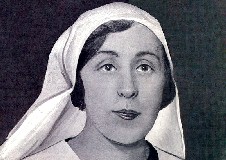
Dorothea Waddingham
Murderer Florence Ransom
Murderer · United Kingdom · 1940
Florence Ransom was a middle-aged woman who was described as physically beautif…
3 victims
Florence Ransom
Murderer · United Kingdom · 1940
Florence Ransom was a middle-aged woman who was described as physically beautif…
3 victims
 Charlotte Bryant
Murderer · United Kingdom · 1935
Charlotte Bryant, also known as Charlotte McHugh, was born in Londonderry in 19…
1 victim
Charlotte Bryant
Murderer · United Kingdom · 1935
Charlotte Bryant, also known as Charlotte McHugh, was born in Londonderry in 19…
1 victim
 Elizabeth Jones
Murderer · United Kingdom · 1944
Elizabeth Jones was born in Neath, Wales, in 1926. At the age of thirteen, she…
1 victim
Elizabeth Jones
Murderer · United Kingdom · 1944
Elizabeth Jones was born in Neath, Wales, in 1926. At the age of thirteen, she…
1 victim
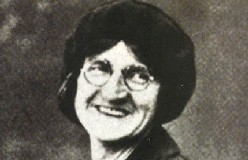 Ethel Major
Murderer · United Kingdom · 1934
Ethel Major was executed by hanging at Hull Prison on December 19, 1934 for the…
1 victim
Ethel Major
Murderer · United Kingdom · 1934
Ethel Major was executed by hanging at Hull Prison on December 19, 1934 for the…
1 victim
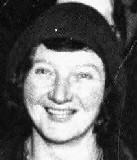 Jeannie Donald
Murderer · United Kingdom · 1934
Jeannie Donald was tried in July 1934 for the murder of Helen Priestly. Helen P…
1 victim
Jeannie Donald
Murderer · United Kingdom · 1934
Jeannie Donald was tried in July 1934 for the murder of Helen Priestly. Helen P…
1 victim
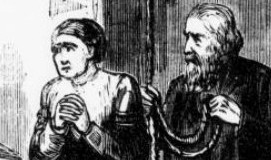 Margaret Waters
Murderer · United Kingdom · 1866
Margaret Waters was an English murderess who was hanged by executioner William…
19 victims
Margaret Waters
Murderer · United Kingdom · 1866
Margaret Waters was an English murderess who was hanged by executioner William…
19 victims
 Elena Kiejliches
Murderer · USA · 2000
Defendant: Elena Kiejliches (Russian émigré) · Victim: Borys Kiejliches (also d…
1 victim
Elena Kiejliches
Murderer · USA · 2000
Defendant: Elena Kiejliches (Russian émigré) · Victim: Borys Kiejliches (also d…
1 victim
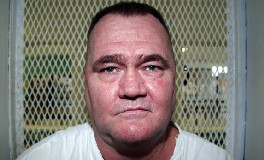 Cleve Foster
Murderer · USA · 2001
Cleve Foster was sentenced to death on March 1, 2004. He was executed by lethal…
2 victims
Cleve Foster
Murderer · USA · 2001
Cleve Foster was sentenced to death on March 1, 2004. He was executed by lethal…
2 victims
 David Miller
Murderer · USA · 1997
David Miller was born on 09/06/1959. His case was in the Fourth Judicial Circui…
1 victim
David Miller
Murderer · USA · 1997
David Miller was born on 09/06/1959. His case was in the Fourth Judicial Circui…
1 victim
 Dennis Edgecomb
Murderer · USA · 2010
Dennis Edgecomb pleaded guilty to murder at the beginning of the sentencing hea…
1 victim
Dennis Edgecomb
Murderer · USA · 2010
Dennis Edgecomb pleaded guilty to murder at the beginning of the sentencing hea…
1 victim
- Gender
- female
- Country
- United Kingdom
- Location
- Nottingham, East Midlands, England, United Kingdom
- Date of birth
- 1899
- Age at first offence
- 36
- Characteristics
- poisoner, inheritance
- Victim profile
- Louisa Baguley , 89, and her daughter Ada Baguley, 50
- Method of murder
- Poisoning (morphine)
- Date(s) of murder
- May 12/September 10, 1935
- Years active
- 1935
- Date of arrest
- January 1936
- Status
-
Executed
Executed by hanging at Winson Green Prison in Birmingham on April 16, 1938
Case record: Dorothea Waddingham
Dorothea Waddingham (also referred to as Dorothea Nancy Waddingham) was born in 1899 and was executed in 1938. She was known as “Nurse” Waddingham, but she did not have the right to the title nurse. She was a nursing home matron in the United Kingdom and was convicted of murder.
Background
Waddingham was born on a farm near Nottingham. The only medical training she may have been able to get was as a ward-maid at an infirmary near Burton-on-Trent. She later worked in a nursing-home role and served prison terms during her adult life.
Waddingham married Thomas Willoughby Leech in 1925. Leech was twice her age and was dying of cancer. During their marriage, she served two prison terms, for fraud and for theft. Leech died in 1930.
After Leech’s death, Waddingham formed a relationship with Ronald Joseph Sullivan. Sullivan had fought in World War I and had won the Military Medal for gallantry. He also served in Ireland after the war. Waddingham and Sullivan later married and had four children.
Waddingham opened a nursing home at 32 Devon Drive, Nottingham while with Sullivan. They ran the home together, with Waddingham as matron and Sullivan as a general assistant.
Waddingham had long criminal experience, including convictions for fraud and petty theft. After the death of her elderly husband, she reverted to her maiden name and began using it again.
The offence
Waddingham was accused and convicted of poisoning two nursing home patients with morphine.
Mrs Baguley and Ada Baguley
A Mrs Blagg, the Honorary Secretary of the County Nursing Association, approved of Waddingham’s work and arranged for patients. Mrs Blagg arranged for Mrs Baguley and her daughter Ada (described as having “creeping paralysis” or “disseminated sclerosis”) to become patients. Mrs Baguley was 89 and Ada was 50 in one account.
Waddingham and Sullivan were alleged to have used morphine to poison the Baguleys, and the conviction was linked to an alleged motive of gaining the Baguleys’ estate.
Investigation
Dr. Cyril Banks, who was also the Medical Officer for Health in Nottingham, became suspicious after reviewing cremation-related paperwork connected with Ada Baguley. Banks had never thought highly of Waddingham’s establishment as a nursing home and knew there was no State Registered Nurse on the staff.
A post-mortem was ordered, and it found traces of morphine. The analysis of organs of the deceased was carried out by Dr W. W. Taylor, Senior Assistant to the Nottingham Analyst, who found “considerable traces of morphine (over three grains)” in Ada Baguley’s stomach, liver, kidneys, and heart.
Suspicion was then raised about the earlier death of Mrs Baguley, and an exhumation ordered by the Home Office occurred. Dr Roche Lynch handled the exhumation and found that the mother had also died of morphine poisoning.
Arrest
Waddingham and Sullivan were arrested and charged with the murders. Waddingham had recently given birth to her fifth child and nursed it in prison.
Trial
Waddingham’s trial began on 4 February 1936 at Nottingham Assizes.
Her case was tried by Judge Rayner Goddard in 1936. Her barrister was Mr. Eales. The prosecution was led by Norman Birkett.
Birkett brought out damaging testimony, including that Ada Baguley’s last meal had been heavy and rich for her condition. Waddingham admitted she gave Ada pork, baked potatoes, kidney beans, and fruit pie, and she gave Ada two portions. This testimony was taken to suggest an effort to disguise the cause of death and a lack of concern for the patient’s welfare.
Sullivan discharged
Sullivan was discharged for insufficient evidence, despite the fact that the note from Ada Baguley regarding cremation was said to have been written by him.
Defence and testimony
Waddingham’s defence suggested that Dr. Mansfield had given her surplus morphine tablets for Ada Baguley, but Dr. Mansfield denied having given her tablets for Ada and denied having provided morphine tablets to Waddingham for Ada. Waddingham described the last two days of Ada Baguley’s life. She said Ada was depressed and in great pain, that she gave Ada up to ten tablets over two days, and that she found Ada in a coma in the early hours of the Wednesday morning. This information had been contained in a statement made to the police on 24 September after the post-mortem result was known. Previously, Waddingham had told the police that Ada had eaten a large lunch on the Tuesday and appeared to be well. Her evidence was described as less than convincing.
The court heard forensic evidence of morphine poisoning and testimony of Mrs. Briggs and Dr. Mansfield.
Sentencing
On 27 February 1936, Waddingham was convicted of using morphine to poison Mrs. Baguley and Ada. The jury recommended mercy. Despite that recommendation, Judge Goddard sentenced Waddingham to death. The Home Secretary, John Simon, did not concur with the jury’s recommendation.
Because Nottingham no longer had an execution facility, Waddingham was transferred to the condemned suite at Birmingham’s Winson Green Prison to await her fate. Her appeal was rejected.
Outcome
Waddingham was executed by hanging.
She was hanged at Winson Green Prison in Birmingham on 16 April 1936. Her hangman was Thomas Pierrepoint, assisted by his nephew Albert Pierrepoint. Waddingham was the only woman ever to be hanged at Winson Green.
Waddingham confessed to the double murder shortly before her execution.
Waddingham was weighed and measured the day before and was recorded at 4’11” tall and 123 lbs in weight. She was thus given a drop of 8’ 5”. Large numbers of people gathered outside the prison on the Wednesday afternoon to protest the execution of a mother of five. The protest was led by anti capital punishment campaigner, Mrs. Violet Van der Elst. By Thursday morning the crowd was estimated at 5,000, and hymns could be heard within. At 8.01 a.m., Waddingham was hanging limply in her cell below the gallows and was examined by the prison doctor using a stethoscope to ensure she was dead. The execution chamber was locked for an hour. The Pierrepoints returned at nine o’clock, undressed her, and put a rope around her body under her arms, lifting her up with a block and tackle attached to the chain on the gallows beam, for removal of the noose and hood. Her body was then lowered on to a stretcher and made ready for autopsy. A formal inquest was held, and Waddingham was later buried in the prison grounds.
Waddingham was a mother of five and was still breastfeeding her 3-month old baby at the time of her execution.
The fiancé of Ada Baguley, the daughter, committed suicide after her death.
Other details
Waddingham and Sullivan were involved in opening the nursing home and were described as relying on the income from taking in elderly and infirm patients. In one account, a Mrs Baguley agreement was that the home would care for the two women until their deaths on condition that Mrs Baguley left Dorothea her entire estate, which came to about £1,600. In another account, Ada Baguley made out a will leaving her estate of £1,600 in trust for her mother after her death, with the remainder to be divided between Lawrence Baguley and Fred Guilbert, but that will was later destroyed and a new will was created leaving all the money to Dorothea Waddingham and Ronald Sullivan when Ada and her mother both died.
Waddingham was said to have been attentive to Ada, and Ada lasted through the spring and summer of 1935 after Mrs Baguley died. In September 1935, Ada received a visit from an old family friend, Mrs. Alice Briggs, who spent an afternoon cheering her up. Mrs Briggs told Waddingham that she would have Ada over for tea at her home in a couple of days.
On September 11, Sullivan called Dr. H. H. Mansfield and said his patient Ada was in a coma. Mansfield came and found Ada dead. After getting further details from Waddingham, Mansfield filled out a death certificate stating that Ada died of cardiovascular degeneration. Ada had given permission to be cremated. It was said that the cremation certificate required two doctors to sign, and this could only be done after the family had been notified. Ada’s will contained a request not to notify her relatives, which was described as odd. Waddingham said there were no relatives, which was described as a known lie.
In one account, Waddingham claimed that Dr. Mansfield gave her surplus morphine tablets for Ada Baguley, and Dr. Mansfield denied this but confirmed that he had prescribed morphine for another home patient, Mrs. Kemp.
Waddingham’s trial lasted such that on the third day of the trial the jury took two and a quarter hours to reach a guilty verdict, and added a recommendation to mercy.
Popular culture included a dramatisation in the 2005 film Pierrepoint, in which Waddingham was played by Elizabeth Hopley. The film implied the hangman carrying out the execution was Albert Pierrepoint, but it was stated that the hangman was Thomas Pierrepoint and Albert acted as his assistant. The film also implied the execution took place at Holloway Prison in London, but it took place at Birmingham’s Winson Green prison.


Spotted an error, or have more information about this case?