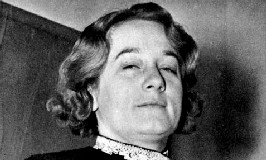
Anna Marie Hahn
Serial killer Rhonda Bell Martin
Serial killer · USA · 1937
Rhonda Bell Martin was an American serial killer known for poisoning multiple f…
6 victims
Rhonda Bell Martin
Serial killer · USA · 1937
Rhonda Bell Martin was an American serial killer known for poisoning multiple f…
6 victims
 Morris Bolber
Serial killer · USA · 1932
Morris Bolber was prosecuted as part of a Philadelphia poison-murder ring invol…
50 victims
Morris Bolber
Serial killer · USA · 1932
Morris Bolber was prosecuted as part of a Philadelphia poison-murder ring invol…
50 victims
 Jake Bird
Serial killer · USA · 1930
October 30, 1947 — Jake Bird broke into the home of Bertha Kludt and her daught…
44 victims
Jake Bird
Serial killer · USA · 1930
October 30, 1947 — Jake Bird broke into the home of Bertha Kludt and her daught…
44 victims
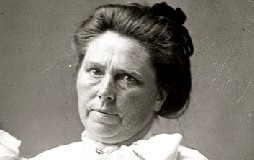 Belle Gunness
Serial killer · USA · 1880
Belle Gunness was Norwegian-born. She was born as Brynhild Paulsdatter Størseth…
42 victims
Belle Gunness
Serial killer · USA · 1880
Belle Gunness was Norwegian-born. She was born as Brynhild Paulsdatter Størseth…
42 victims
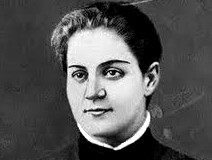 Jane Toppan
Serial killer · USA · 1887
Jane Toppan (1880-1901) was a nurse from Boston, Massachusetts. Another record…
31 victims
Jane Toppan
Serial killer · USA · 1887
Jane Toppan (1880-1901) was a nurse from Boston, Massachusetts. Another record…
31 victims
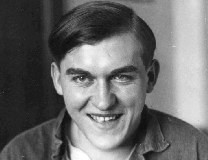 Gordon Northcott
Serial killer · USA · 1928
Gordon Stewart Northcott was a Canadian-born ranch owner who later murdered boy…
20 victims
Gordon Northcott
Serial killer · USA · 1928
Gordon Stewart Northcott was a Canadian-born ranch owner who later murdered boy…
20 victims
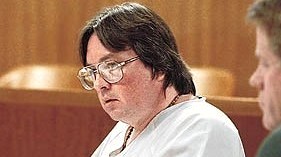 Floyd Tapson
Murderer? · USA · 1987
Floyd Tapson was convicted by a jury in the Thirteenth Judicial District Court,…
3 victims
Floyd Tapson
Murderer? · USA · 1987
Floyd Tapson was convicted by a jury in the Thirteenth Judicial District Court,…
3 victims
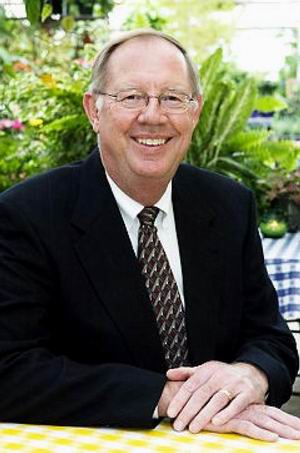 Tang Yongming
Murderer · China · 2008
Tang Yongming (47) attacked three people at the 13th-century Drum Tower in Beij…
1 victim
Tang Yongming
Murderer · China · 2008
Tang Yongming (47) attacked three people at the 13th-century Drum Tower in Beij…
1 victim
 Alexander Kinyua
Homicide · USA · 2012
Alexander Kinyua was an engineering student at Morgan State University in Maryl…
1 victim
Alexander Kinyua
Homicide · USA · 2012
Alexander Kinyua was an engineering student at Morgan State University in Maryl…
1 victim
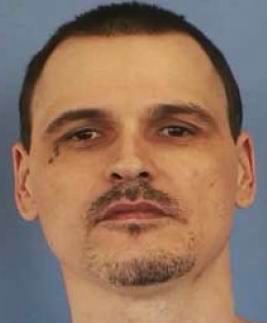 Joseph Daniel Burns
Murderer · USA · 1994
Joseph Daniel “JoJo” Burns was executed by lethal injection in Mississippi on J…
1 victim
Joseph Daniel Burns
Murderer · USA · 1994
Joseph Daniel “JoJo” Burns was executed by lethal injection in Mississippi on J…
1 victim
 Francesco Mangione
Murderer · Australia · 2002
Francesco Mangione was convicted of the murder of Denis Giunta. Francesco Mangi…
1 victim
Francesco Mangione
Murderer · Australia · 2002
Francesco Mangione was convicted of the murder of Denis Giunta. Francesco Mangi…
1 victim
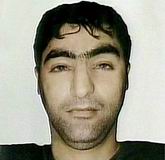 Farda Gadirov
Murderer · Azerbaijan · 2009
Farda Gadirov (also given as Farda Asad oglu Gadirov; Azeri: Fərda Qədirov; Geo…
12 victims
Farda Gadirov
Murderer · Azerbaijan · 2009
Farda Gadirov (also given as Farda Asad oglu Gadirov; Azeri: Fərda Qədirov; Geo…
12 victims
- Gender
- female
- Country
- USA
- Location
- Colorado/Ohio, USA
- Date of birth
- July 7, 1906
- Age at first offence
- 26
- Characteristics
- poisoner, inheritance, torture, fugitive
- Victim profile
- Ernest Koch, 73 / Albert Parker, 72 / Jacob Wagner, 78 / George Gsellman, 67 / George Obendoerfer, 67
- Method of murder
- Poisoning (arsenic)
- Date(s) of murder
- 1932 - 1937
- Years active
- 1932–1937
- Date of arrest
- September 1937
- Status
-
Executed
Executed by electrocution at the Ohio Penitentiary on December 7, 1938
Background
Anna Marie Hahn (née Filser; July 7, 1906 in Bavaria, Germany – December 7, 1938 at the Ohio Penitentiary) was a German-born American serial killer. She immigrated to Cincinnati at age 21 and later worked as a live-in attendant for elderly men in the Cincinnati German community. She married Philip Hahn, a telephone operator. After her first husband died before she emigrated to America, her second marriage ended in divorce.
As a teenager, she had an affair with a Viennese physician, or so she claimed, and they had a son she called Oskar (also spelled “Oscar”). Her scandalized family sent her to America in 1929 while her son remained in Bavaria with her parents. While staying with relatives Max and Anna Doeschel in Cincinnati, she met Philip Hahn and they married in 1930.
She briefly managed a bakery in Cincinnati’s German district before she sought “easy money.” Life insurance seemed to be the answer, and she twice tried to insure her husband for $25,000, meeting resistance each time. Soon after rejecting her second demand, Philip Hahn fell suddenly ill and was rushed to the hospital by his mother over Anna’s objection. Physicians saved his life.
After Philip’s illness and later separation, Hahn began working as a visiting nurse for elderly patients despite a lack of training or experience in the field. Her alleged poisoning and robbery targeted elderly men living alone.
The offence
Hahn befriended elderly men, offered her services as a live-in “nurse,” and then bilked them of assets in multiple ways. She used different poisons across different cases and finally murdered victims after they had no more assets to take. Arsenic was found in at least one victim’s body. Investigators also found croton oil connected to her case history.
She was described as presenting herself as an “angel of mercy” and maintaining a “mercy killing defense,” which failed.
Jacob Wagner
Jacob Wagner died in 1937 and left $17,000 cash to Hahn as his “beloved niece.” Her involvement included alleged deception about her relationship to him. Hahn was also reported to have spent several hours in Wagner’s apartment after his death.
People
Anna Marie Hahn
Anna Marie Hahn served as the defendant in the case.
Philip Hahn
Philip Hahn was Hahn’s husband. He tried to leave his job. He attempted to secure a $25,000 life insurance policy demand faced resistance from him. He later became a source of evidence by giving investigators a half-ounce bottle of croton oil.
Ernest Koch
Ernest Koch was Hahn’s first client. He died on May 6, 1932, leaving Anna a house in his will.
Albert Parker
Albert Parker was Hahn’s next client. He died soon after Anna began caring for him. Prior to Parker’s death, she signed an I.O.U. for $1,000 she borrowed from him, but after his death the document “disappeared.”
Jacob Wagner
Jacob Wagner was murdered-poisoned in 1937. He died on June 5, 1937, leaving $17,000 cash to his “beloved niece” Anna.
George Gsellman
George Gsellman was a client before his death July 6, 1937. Hahn received $15,000 for her service before his death.
George Obendoerfer
George Obendoerfer was the last victim to die in 1937. He died on August 1, 1937 after traveling to Colorado Springs with Hahn and her 12-year-old son. Police described him as dying in agony after Hahn bent over his deathbed inquiring his name and professing she did not know the man.
George Heis (George Heis / Heis)
George Heis was described as a surviving victim who became suspicious after drinking a mug of beer that Hahn poured for him. He claimed he was made violently ill.
Olive Luella Koehler
Olive Luella Koehler was described as an elderly woman living in the same apartment building as Wagner. Hahn befriended her and brought her ice cream cone treats on at least two occasions.
Ollie Koehler and Julia Kresckay
Ollie Koehler and Julia Kresckay were described as also having died of acute poisoning.
Albert Palmer
Albert Palmer was described as a 72-year-old resident of 2416 Central Parkway. Hahn was alleged to have borrowed betting money from him. Investigators found a promissory note for $2,000 related to him, and relatives informed investigators he had died on March 27, 1936 after having been ill for an extended period of time.
Oskar Hahn (Oskar / Oscar)
Oskar Hahn (12-year-old Oskar at the time of events described) was Hahn’s son. At trial, his testimony included details about traveling with Obendoerfer and sickness en route. He was later placed with a foster family in the Midwest.
Prosecutors and defence attorneys; judge; warden; chaplain
Hamilton County Prosecutors Dudley Outcalt, Loyal Martin and Simon Leis were given the duty of presenting the state’s case. Hahn was granted two attorneys: Joseph H. Hoodin and Hiram Bosinger, Sr. Common Pleas Court Judge Charles S. Bell presided. Prison chaplain Father John Sullivan was involved during the final moments. The prison warden was named Woodward or Woodard in the narrative accounts.
Timeline
- 1930 — Hahn married Philip Hahn.
- May 6, 1932 — Ernest Koch died after Anna began working for him.
- June 2, 1935 — Hahn’s household was involved in a suspicious fire at the Hahn residence.
- May 20, 1936 — Hahn’s household was involved in a second suspicious fire at the Hahn residence.
- July 6, 1937 — George Gsellman died.
- August 1, 1937 — George Obendoerfer died after traveling to Colorado Springs with Hahn and her 12-year-old son.
- August 10, 1937 — Ohio authorities arrested Hahn and charged her with the murder of Jacob Wagner.
- October 11, 1937 — Hahn’s trial began before Judge Charles S. Bell.
- October 29, 1937 — the prosecution rested its case.
- November 4, 1937 — the defense rested its case.
- November 10, 1937 — Judge Bell sentenced Hahn.
- December 1, 1937 — Hahn was transferred to the Ohio State Penitentiary.
- June 20, 1938 — Hahn hosted a small party for local newsmen in her cell and lapsed into hysterics as she began her last walk to the death chamber.
- December 6, 1938 — accounts reported her execution scheduled for 8 o’clock the next evening.
- December 7, 1938 — Hahn was executed by electrocution at the Ohio Penitentiary; she was officially pronounced dead at 8:13 p.m.
- December 8, 1938 — Hahn’s body was buried in unsanctified ground at Holy Cross Catholic Cemetery in Columbus.
- December 17, 1938 — defence attorney Joseph H. Hoodin announced the letters given by Hahn had been sold to the Cincinnati Enquirer and the money was put into a trust for her son, Oskar.
Investigation
After suspicious deaths and financial irregularities, police exhumed bodies of former employers. Investigators connected Hahn to the death of 78-year-old Jacob Wagner and pursued an autopsy, after which they found evidence of poisoning.
Arsenic was discovered in Obendoerfer’s body. Investigators said each victim had been slain with a different potion, and exhumations showed victims had been poisoned. A search of Hahn’s lodgings reportedly turned up “enough poison to kill half of Cincinnati.”
In Colorado Springs, doctors at Memorial Hospital contacted local authorities regarding a sudden and mysterious death of George Obendorfer after he fell unexplainably ill just days earlier. Investigators learned he had checked into the Park Hotel on July 30, 1937 with two unknown companions. The circumstances also related to a stolen diamond incident, including a report of $300 worth of stolen diamonds by the Park Hotel owner.
Investigators learned Obendoerfer registered at the Park Hotel with Anna Marie Hahn and her young son Oskar. A search of pawnshops for the stolen diamonds led to information from a shop owner about a woman matching Anna Hahn’s description attempting to pawn similar jewels with a young boy. Investigators also learned Hahn had tried to withdraw $1,000 from a Denver bank using a Cincinnati bankbook in the name of George Obendorfer, and the transaction was refused by the bank manager.
Authorities secured arrest warrants and exhumation orders and arrested Hahn after she returned to Ohio. When asked about Obendoerfer’s death, Anna responded:
“The man is a perfect stranger to me.”
When reminded she had signed the hotel registry book for Obendorfer, Anna changed her explanation:
“I met him (George) on the train from Denver,” she said. “He was Swiss. I felt sorry for him, and was only trying to help him.”
Investigators later developed more evidence through interviews with relatives and through trial testimony.
Arrest
Ohio authorities arrested Hahn on August 10, 1937 and charged her with the murder of Jacob Wagner.
Trial
Hahn’s trial began on October 11, 1937 before Judge Charles S. Bell. A jury of 11 women and one man was selected to hear the case.
The prosecutors insisted that Hahn had killed Jacob Wagner out of greed, stating that his money and estate were motive for murder. Witnesses included hospital employees recounting Wagner’s last days, and a chemist testified that the victim had enough arsenic in him to “Kill four men.” A handwriting expert testified that Wagner’s will was a forgery and that the handwriting was identical to Anna Hahn’s.
Judge Bell allowed evidence relating to other poisoning cases to be introduced to show a pattern of homicidal behavior. George Heis was called to testify about his encounter with Hahn and his subsequent illness. Prosecutors’ exhibits included internal organs from Jacob Wagner and Albert Palmer.
The prosecution rested its case on October 29, 1937. The defense began on Monday, November 1, 1937 and rested on November 4, 1937. Hahn testified and denied any wrongdoing. During cross-examination she could not be slipped up.
Closing arguments
Prosecutor Dudley Outcalt delivered the closing argument for the state, saying:
“She is sly, because she developed her relationships with old men who had no relatives and lived alone. She is avaricious, because no act was so low but that she was ready to commit it for slight gain. She is cold-blooded, like no other woman in the world, because no one could sit here for four weeks and hear this damaging parade of evidence and display no emotion. She is heartless, because nobody with a heart could deal out the death she dealt these old men. We've seen here the coldest, most heartless cruel person that ever has come within the scope of our lives. In the four corners of this courtroom stand four dead men. Gsellman, Palmer, Wagner, Obendorfer! From the four corners bony fingers point at her and say: 'That woman poisoned me! That woman made my last moments an agony! That woman tortured me with the tortures of the dammed!' Then, turning to you they say, 'Let my death be not entirely in vain. My life cannot be brought back, but through my death and the punishment to be inflicted upon her, you can prevent such a death from coming to another man.' From the four corners of this room, those old men say to you 'Do your duty!' I ask of you, for the state of Ohio, that you withhold any recommendations of mercy.”
Defense attorney Joseph H. Hoodin addressed the jury, saying:
“I will not say that a single witness lied, but this case has had such widespread publicity that it would have been impossible for these witnesses not to have preconceived ideas before they ever came into this courtroom. Particularly this is true of the witnesses from Wagner's neighborhood, where the case has been the chief topic of conversation for months. Although she is no angel, she is not guilty of the murder of Jacob Wagner.”
The jury returned a guilty verdict with no recommendation for mercy after deliberating for about two hours. Each juror affirmed their vote.
Sentencing
On November 10, 1937, Judge Bell sentenced Hahn. Hahn replied to the judge’s question whether she had anything she wanted to say:
“I have,” she replied. “I'm innocent, Your Honor.”
Judge Bell then formally sentenced her, saying:
“It is ordered, adjudged, and desired by the court that the defendant, Anna Marie Hahn, be taken hence to jail in Hamilton County, Ohio, and that within 30 days hereof the Sheriff of Hamilton County shall convey the said defendant to the Ohio penitentiary and deliver her to the warden thereof, and that on the 10 th day of March, 1938 the said warden shall cause a current of electricity sufficient to cause death to pass through the body of the said defendant, the application of such current to be continued until the said defendant is dead.”
Judge Bell concluded, saying:
“And may God, in his infinite wisdom, have mercy on your soul.”
Appeals
Hahn’s case was taken through Ohio’s court system several times and reached the United States Supreme Court. The courts agreed with the state of Ohio and refused to block her execution.
Outcome
Hahn was executed by electrocution at the Ohio Penitentiary on December 7, 1938. She was officially pronounced dead at 8:13 p.m. in the electric chair.
During the final period, accounts described Hahn collapsing as she was led to the execution chamber. Officials revived her with an ammonia capsule and strapped her into the chair.
In the death chamber, she cried:
“Oh heavenly father! Oh God! Oh God! I can't go! I won't go!”
She later cried out:
“Don't do this to me,” she continued to cry out. “Oh, no, no, no. Warden Woodard, don't let them do this to me.”
She asked for help:
“Please don't. Oh, my boy. Think of my boy. Won't someone, won't anyone, come and do something for me? Isn't there anybody to help me? Anyone? Anyone? Is nobody going to help me?”
She called for Father John Sullivan, the prison chaplain, saying:
“Father, come close,” she said.
She and the chaplain began reciting the Lord’s Prayer, and then the switch was thrown. The officials monitored her condition using stethoscopes, and within seconds confirmed her death.
Accounts also include her warning to the chaplain:
“Be careful, Father, you’ll be killed!”
A warden replied:
“I’m sorry, but we can’t help it.”
After execution, defence attorney Joseph H. Hoodin announced on December 17, 1938 that the letters Anna had given him the night of her execution had been sold to the Cincinnati Enquirer and the money was put into a trust for Oskar. The newspaper planned to publish the letters over the following two days.
Aftermath
The case included detailed last statements written by Hahn in letters. In her letters, she wrote:
“I don't know how I could have done the things I did in my life. Only God knows what came over me when I gave Albert Palmer that first one, that poison that caused his death. ”
She continued:
“When I stood by Mr. Wagner as he was laid out at the funeral home I don't know how it was I didn't scream out at the top of my voice. I couldn't in my mind believe that it was me. I can't believe it even today. I couldn't believe it when in the court those people came to the room and told the jury how they said these men died. I was sitting there hearing a story like out of a book all about another person. As things come to my mind now and as I put them on this paper I can't believe I am writing about things I did myself. However, they must be about me because they are in my mind and I know them. ”
She wrote:
“God above will tell me what made me do these terrible things. I couldn't have been in my right mind when I did them. I loved all people so much. Now I am so close to death. Death is all around me. I have been here (on death row) for what seems another lifetime already. Several other people in this place have been called out.”
She described her gambling and debt situation, including threats regarding her Colerain Avenue house, and wrote:
“Then it was that I started gambling and playing the racehorses. I wanted to make some money for my boy.”
In describing her encounter with Albert Palmer, she wrote:
“I paid much of it back. Then when I didn't pay it back fast enough to suit him, then it was that he wanted me to be his girl. He threatened me that if I didn't do what he asked he would get his attorney to get the rest of the money that I borrowed from him. He wouldn't leave me alone. God knows that I did not want to kill him, and I don't know what put such a thought in my head. I remembered that down in the cellar was some rat poison. Something in my mind kept saying to me, ' give him a little of this and he won't trouble you anymore.' I don't know what made me do it, but I slipped some of the poison in the oysters. I told him to go on home and he left at the same time, threatening what he was going to do to me.”
She wrote:
“A short time later Anna learned from one of Albert's relatives that he had become suddenly ill and was in the hospital. ”
and:
“I visited him just as soon as I could and he was very nice to me. He told me that he was sorry for the way that he had treated me. I prayed that he would get well. Nobody knows the things that went through my mind. I told the nurses and doctors to do everything they could to make him well, but on Holy Thursday, Mr. Palmer died. Only I knew why.”
She described her confession regarding Jacob Wagner and wrote:
“I got scared that if the police would start questioning me maybe all this about Mr. Palmer would come out. Something cried out in me to stop him, so that all my troubles wouldn't start again. I don't know what guided my hand, but I fixed him some orange juice and placed a half of teaspoon of the powder poison, which I took from my purse in the glass. Mr. Wagner drank it down. ... Early the next day, I went back to the room and Mr. Wagner was very sick. I knew what I had done to him. ”
She continued:
“I did not harm Mr. Wagner for his money. I never had such a thought. It was not until Mr. Wagner had died that I wrote the will. I placed in his room on the afternoon that the man from the Probate came to Mr. Wagner's room. The poison that I used is, for all that I know, still in my house. I found it first in the paint cupboard in the basement. If I had never found that poison in the first place I know that I would not be in all this trouble right now.”
She wrote about other cases including Yeltsin and Obendorfer:
“I cannot say anything about those other cases that came after -- Mr. Yeltsin and that last one, Mr. Obendorfer -- except that they died of the same symptoms and as I face my Maker I take full responsibility for what happened in them.”
She wrote about her son and concern for his well-being:
“I hope that God will take care of my son, for I would not want anything to happen to my boy. I feel that God has shown me my wrongs in life and my only regret is that I have not the power to undo the trouble and heartache that I have caused. ”
and signed:
“(signed) Anna Marie Hahn”
Detectives were described as shocked by her admissions and elated that they received answers. Oskar Hahn was placed with a foster family in the Midwest, and the Cincinnati Crime Book claimed the newspaper bankrolled his education and never revealed his name or whereabouts publicly. The only thing ever released about Oskar was that he lived a normal life and eventually fought for the Navy during World War II. Hahn’s body was buried in unsanctified ground at Holy Cross Catholic Cemetery in Columbus, Ohio.
Other details
The narratives also described suspicious fires: one at a delicatessen on 3007 Colerain Avenue that caused minimal damage while Hahn collected $300 from an insurance company, and two fires at the Hahn residence on June 2, 1935 and May 20, 1936 for which she collected just over $2000 for both fires.
Arson was described as apparently being Hahn’s first choice, and investigations considered the possibility of death by accident or brutal intent connected to her husband’s illness after her insurance attempts.
Investigators also described a missing money and jewelry theft connected to Olive Luella Koehler during her hospital stay. One family member also revealed that Anna and George Obendoerfer had been dating and that the trip was Anna’s idea under the premise of visiting a ranch Anna owned in Colorado Springs.
Multiple narrative accounts reported that she hosted journalists in her cell and had her hair brushed and fingernails polished.
Fashion and execution day details were included in narrative accounts, including that one of her pajama legs had been slit to permit electrode attachment and that another warder cut away some hair on the back of her neck to accommodate the other electrode.

Spotted an error, or have more information about this case?