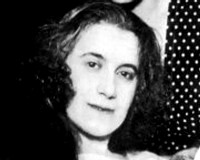
Martha Marek
Serial killer Waltraud Wagner
Serial killer · Austria · 1983
Waltraud Wagner was an Austrian nurse nicknamed a “Death Angel.” She was 49 at…
15 victims
Waltraud Wagner
Serial killer · Austria · 1983
Waltraud Wagner was an Austrian nurse nicknamed a “Death Angel.” She was 49 at…
15 victims
 Elfriede Blauensteiner
Serial killer · Austria · 1981
Elfriede Blauensteiner (born 22 January 1931 in Vienna; died 18 November 2003)…
5 victims
Elfriede Blauensteiner
Serial killer · Austria · 1981
Elfriede Blauensteiner (born 22 January 1931 in Vienna; died 18 November 2003)…
5 victims
 Felicitas Sanchez Aguillon
Serial killer · Mexico · 1930
Felícitas Sánchez Aguillón or Sánchez Neyra (1890 - June 16, 1941) was a Mexica…
50 victims
Felicitas Sanchez Aguillon
Serial killer · Mexico · 1930
Felícitas Sánchez Aguillón or Sánchez Neyra (1890 - June 16, 1941) was a Mexica…
50 victims
 Max Gufler
Serial killer · Austria · 1946
Max Gufler was described as Austria’s “Bluebeard.” He lived in a lower Austrian…
18 victims
Max Gufler
Serial killer · Austria · 1946
Max Gufler was described as Austria’s “Bluebeard.” He lived in a lower Austrian…
18 victims
 Antoinette Scieri
Serial killer · France · 1924
Antoinette Scieri was born in Italy and emigrated to France as a child. In the…
12 victims
Antoinette Scieri
Serial killer · France · 1924
Antoinette Scieri was born in Italy and emigrated to France as a child. In the…
12 victims
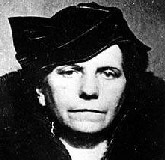 Marie Alexandrine Becker
Serial killer · Belgium · 1932
Marie Alexandrine Becker was born in 1877 and was from Liege, Belgium. She spen…
10 victims
Marie Alexandrine Becker
Serial killer · Belgium · 1932
Marie Alexandrine Becker was born in 1877 and was from Liege, Belgium. She spen…
10 victims
 Oscar Pistorius
Homicide · South Africa · 2013
Oscar Leonard Carl Pistorius was a South African sprint runner. He was born on…
1 victim
Oscar Pistorius
Homicide · South Africa · 2013
Oscar Leonard Carl Pistorius was a South African sprint runner. He was born on…
1 victim
 Jason Matthew Joseph
Murderer · USA · 1992
Jason Matthew Joseph was executed by lethal injection in Virginia on October 19…
1 victim
Jason Matthew Joseph
Murderer · USA · 1992
Jason Matthew Joseph was executed by lethal injection in Virginia on October 19…
1 victim
 Zhao Zhihong
Serial killer · China · 1996
Zhao Zhihong received a death sentence in February 2015 for crimes including ra…
10 victims
Zhao Zhihong
Serial killer · China · 1996
Zhao Zhihong received a death sentence in February 2015 for crimes including ra…
10 victims
 James Allen Paul
Murderer · USA · 1984
James Allen Paul was sentenced to life imprisonment in New Jersey on July 27, 1…
3 victims
James Allen Paul
Murderer · USA · 1984
James Allen Paul was sentenced to life imprisonment in New Jersey on July 27, 1…
3 victims
- Gender
- female
- Country
- Austria
- Location
- Vienna, Austria
- Date of birth
- 1904
- Age at first offence
- 28
- Characteristics
- poisoner, attempt to collect insurance money, to inherit
- Victim profile
- Emil Marek (her husband) / Ingeborg Marek (her daughter) / Suzanne Lowenstein (an elderly relative, whose money and house she inherited) / Felicitas Kittsteiner ( a lodger in her house)
- Method of murder
- Poisoning (thallium)
- Date(s) of murder
- 1932 - 1937
- Years active
- 1932–1937
- Date of arrest
- 1938
- Status
-
Executed
Executed by guillotine in Vienna on December 6, 1938
Case details
Martha Lowenstein Marek was guillotined in Vienna on December 6, 1938.
Background
Martha Marek had been born as Martha Lowenstein in Vienna, Austria. She had been adopted by an impoverished couple after being described as a foundling. She went to work in a Vienna dress shop in 1919.
Moritz Fritsch took pity on Martha and made her his ward. Fritsch was described as a wealthy department store owner. Despite being seventy-four, he took Martha to bed and, in exchange for sexual favours, dressed her well and sent her to two elite finishing schools in France and England.
After returning to Vienna, Martha lived with Moritz Fritsch, and later met Emil Marek, with whom she carried on a secret affair. After Fritsch died, he left his stately mansion at Modling and his money to Martha.
Martha married Emil Marek in 1924. Their marriage and combined spending led them to exhaust their new-found wealth and sell the mansion. They then devised an insurance fraud scheme.
The offence
Martha Marek was described as poisoning a series of people in order to obtain money and inherit property. The record described poisoning of Emil Marek, their baby daughter, an elderly relative Suzanne Lowenstein, and a lodger named Neumann and a dowager named Kittenberger (referred to as Felicitas Kittsteiner in the case summary).
The case summary described Emil Marek conspiring with Martha to defraud insurers by having Martha chop off his leg so they could collect accident insurance. The insurer’s doctors rejected the claim because they were not convinced it was an accident that occurred while cutting down a tree as the Mareks claimed. Emil died, apparently from tuberculosis, in July 1932. Their nine-month-old baby daughter died a month later.
The lodger Felicitas Kittsteiner died after eating or drinking anything Martha prepared, after which he felt violently sick. Martha had taken out a life insurance policy on him before he died. When Felicitas Kittsteiner’s relatives became suspicious, they informed the police, who ordered the exhumation of all four bodies. Toxicologists reported that the bodies were poisoned with a compound of thallium.
Martha was arrested and brought to trial in Vienna in 1938. She was charged with four murders and was convicted of murdering Lowenstein, Kittenberger, her husband, and her husband’s daughter. The prosecution case included evidence that Martha was regularly buying thallium from a pharmacist in Vienna.
Investigation
An insurance firm asked a detective, Ignatz Peters, to investigate an insurance claim about paintings. Peters had earlier been involved in the amputated leg claim made by the Mareks and suspected another scam. Peters canvassed warehouses in Vienna and found hidden artwork.
A person described as the son of Mrs Kittenberger went to the police and said he believed Martha Marek had poisoned his mother to obtain insurance money. Detective Peters had Kittenberger’s body exhumed, along with the bodies of Emil and Ingeborg Marek and Suzanne Lowenstein. Toxicologists reported that all had been poisoned with thallium.
Peters then remembered that Martha had another child, a son, and located the boy boarded out in a poor district of Vienna. The boy was dying from thallium poisoning. He was rushed to a hospital and saved.
Arrest
Martha Marek was thrown into prison and charged with fraud.
Trial
Martha Marek was charged with four murders. Prosecutors proved that Martha had regularly been buying thallium from a pharmacist in Vienna.
Martha continued to insist upon her innocence. She was condemned to death and capital punishment had been restored in Austria after Hitler took over the government.
Sentencing
Martha Marek was condemned to death. Capital punishment had been restored in Austria after Hitler had taken over the government.
Appeals
No appeals were described.
Outcome
Martha Lowenstein Marek was executed by guillotine in Vienna on December 6, 1938.
Aftermath
Hitler had re-instated capital punishment in Austria when he took control of it. A new guillotine was sent to Vienna by rail, packed as “industrial machinery” on October 3, 1938. The record described that no woman had been executed in Austria for over 30 years and that there was some reluctance on the part of authorities to execute Martha.
Martha was alleged to be paralysed, so it was decided to take her from the condemned cell to the execution chamber in a wheelchair. The executioner, Johann Reichhart, and his assistants practised tipping the wheelchair in front of the guillotine so that Martha would fall directly onto the bench in the right place.
On the morning of the execution, Martha’s paralysis seemed to have disappeared. She struggled violently with her guards and was able to land a heavy kick on Reichhart before being subdued and tied to the bascule by his assistant.
It was noted that many British accounts claimed she was beheaded with an axe, which was described as incorrect and possibly resulting from an incorrect translation of the German term “Fallbeil” as an axe. Martha’s execution was described as being achieved by the guillotine.
Johann Reichhart executed 3,165 people between 1924 and 1947.
Other details
Earlier fraud and imprisonment described in the record
Martha insured Emil against accidents and obtained a £10,000 policy. The record described the “accident” as Emil losing a leg while using an axe to cut down a tree, except that it would occur when Martha was wielding the axe on purpose. The injury was described as caused not by one but three separate blows, with angles inconsistent with being struck by the alleged holder of the axe.
Martha attempted to bribe a surgeon’s assistant to testify that he had seen the surgeon deliberately create the additional wounds at the instigation of the insurance company. This attempt failed. The couple was sentenced to four months in gaol for bribery. The record described that the insurance company paid out only £3,000 after rejecting the claim.
The record described that charges of fraud against the Mareks were dropped at one point, but the nurse who was bribed demanded more money and went to the police when not receiving the payoff. The record stated that the Mareks were then charged and convicted of bribery and sent to prison for four months.
The record described that the insurance firm nevertheless settled with the couple, paying £3,000 for an accident the insurers were convinced had been falsified.
Deaths attributed to tuberculosis in the record prior to thallium findings
Emil died in July 1932, apparently from tuberculosis. A few weeks later, Martha’s seven-year-old daughter, Ingeborg, died of a mysterious ailment and Martha collected money on the child’s small life insurance policy. An aging aunt, Suzanne Lowenstein, asked Martha to look after her. The aunt died within a month. Before the aunt died, she manifested symptoms described as difficult to swallow and her limbs being numb. In those cases, death was attributed to tuberculosis.
Insurance claims described prior to the thallium investigations
Martha opened her aunt’s house to boarders. The record described taking in a man named Neumann and a dowager named Kittenberger. The elderly woman died a short time later. The record stated that insurance money on her life amounted to no more than $300 being left to Martha.
By 1937, the record described Martha arranging for expensive paintings in her aunt’s house to be removed to a warehouse in the middle of the night, reporting the paintings stolen, and making a claim for the missing artwork. Peters located the hidden artwork and Martha was thrown into prison, charged with fraud.
Additional unrelated material included in the scraped text
The scraped text included details of a separate matter involving Ginette Vidal and Gerard Osselin, including a signed document and a prison sentence of ten years. No connection to Martha Marek was established in the provided text.


Spotted an error, or have more information about this case?