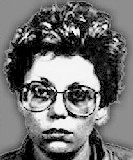
Waltraud Wagner
Serial killer Elfriede Blauensteiner
Serial killer · Austria · 1981
Elfriede Blauensteiner (born 22 January 1931 in Vienna; died 18 November 2003)…
5 victims
Elfriede Blauensteiner
Serial killer · Austria · 1981
Elfriede Blauensteiner (born 22 January 1931 in Vienna; died 18 November 2003)…
5 victims
 Martha Marek
Serial killer · Austria · 1932
Martha Lowenstein Marek was guillotined in Vienna on December 6, 1938. Martha M…
4 victims
Martha Marek
Serial killer · Austria · 1932
Martha Lowenstein Marek was guillotined in Vienna on December 6, 1938. Martha M…
4 victims
 Max Gufler
Serial killer · Austria · 1946
Max Gufler was described as Austria’s “Bluebeard.” He lived in a lower Austrian…
18 victims
Max Gufler
Serial killer · Austria · 1946
Max Gufler was described as Austria’s “Bluebeard.” He lived in a lower Austrian…
18 victims
 Sara María Aldrete
Serial killer · Mexico · 1987
Sara María Aldrete (born September 6, 1964 in Matamoros, Tamaulipas, Mexico) wa…
15 victims
Sara María Aldrete
Serial killer · Mexico · 1987
Sara María Aldrete (born September 6, 1964 in Matamoros, Tamaulipas, Mexico) wa…
15 victims
 Genene Jones
Serial killer · USA · 1977
Genene Anne Jones (born July 13, 1950) was a former pediatric nurse who worked…
11 victims
Genene Jones
Serial killer · USA · 1977
Genene Anne Jones (born July 13, 1950) was a former pediatric nurse who worked…
11 victims
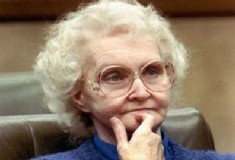 Dorothea Puente
Serial killer · USA · 1982
Dorothea Puente was a convicted serial killer. In Sacramento, California, she r…
9 victims
Dorothea Puente
Serial killer · USA · 1982
Dorothea Puente was a convicted serial killer. In Sacramento, California, she r…
9 victims
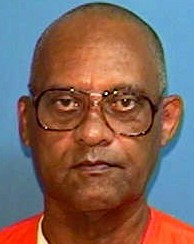 Linroy Bottoson
Murderer · USA · 1979
Linroy Bottoson was the appellant, petitioner, and convict in multiple court pr…
1 victim
Linroy Bottoson
Murderer · USA · 1979
Linroy Bottoson was the appellant, petitioner, and convict in multiple court pr…
1 victim
 Donald Eugene Harding
Serial killer · USA · 1979
Donald Eugene Harding was convicted of the January 25, 1980 murders of Robert W…
7 victims
Donald Eugene Harding
Serial killer · USA · 1979
Donald Eugene Harding was convicted of the January 25, 1980 murders of Robert W…
7 victims
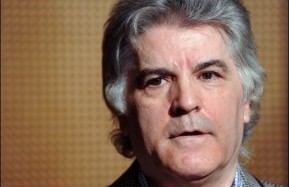 Pierre Bodein
Murderer · 2004
Pierre Bodein was nicknamed “Pierrot le fou,” or “Crazy Pierre.” He was 59 at t…
3 victims
Pierre Bodein
Murderer · 2004
Pierre Bodein was nicknamed “Pierrot le fou,” or “Crazy Pierre.” He was 59 at t…
3 victims
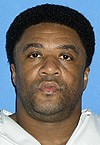 Lonnie Earl Johnson
Murderer · USA · 1990
Lonnie Earl Johnson was executed by lethal injection in Texas on July 24, 2007.…
2 victims
Lonnie Earl Johnson
Murderer · USA · 1990
Lonnie Earl Johnson was executed by lethal injection in Texas on July 24, 2007.…
2 victims
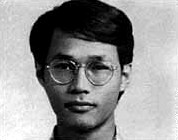 Jaturun Siripongs
Murderer · USA · 1981
Jaturun Siripongs was a native of Thailand and was known as “Jay” to friends an…
2 victims
Jaturun Siripongs
Murderer · USA · 1981
Jaturun Siripongs was a native of Thailand and was known as “Jay” to friends an…
2 victims
- Gender
- female
- Country
- Austria
- Location
- Vienna, Austria
- Date of birth
- 1960
- Age at first offence
- 23
- Characteristics
- nurse, poisoner, abuse
- Victim profile
- Men and women (patients)
- Method of murder
- Poisoning (morphine overdose)
- Date(s) of murder
- 1983 - 1989
- Years active
- 1983–1989
- Date of arrest
- April 7, 1989
- Status
-
Released
Conditionally released from prison approved by Austria’s Justice Ministry on grounds of good behaviour
Background
Waltraud Wagner was an Austrian nurse nicknamed a “Death Angel.” She was 49 at the time of her conviction.
Two Austrian nurses, Waltraud Wagner and Irene Leidolf, were known as “death angels” after killing at least 20 elderly patients.
The offence
Waltraud Wagner was convicted of “15 murders, 17 attempts, and 2 counts of assault.”
The convictions related to a seven-year killing spree at Vienna’s Lainz hospital, between 1983 and 1989.
During their trial, prosecutors said the women forced water into patients’ lungs and injected them with large doses of insulin and tranquilisers, causing “terrible suffering.”
Waltraud Wagner and Irene Leidolf argued that their actions were mercy killings of old and chronically ill patients.
Trial
Wagner and Irene Leidolf were convicted in 1991 of taking part in the seven-year killing spree at Vienna’s Lainz hospital, between 1983 and 1989.
During the trial, prosecutors said the women had forced water into patients’ lungs and injected them with large doses of insulin and tranquilisers, causing “terrible suffering”.
Wagner and Leidolf argued that their actions were mercy killings of old and chronically ill patients.
Both women were sentenced to life in prison.
Sentencing
Both Wagner and Irene Leidolf were sentenced to life in prison. The Justice Ministry later approved their conditional release on the grounds of good behaviour.
Outcome
The country’s Justice Ministry approved Wagner and Leidolf for conditional release, on grounds of good behaviour.
Wagner and Leidolf were scheduled to be released early from prison “next month.”
Officials refused to comment on whether Wagner and Leidolf would receive new identities.
Other people and accomplices
Two accomplices, Maria Gruber and Stefanija Mayer, were convicted as accessories on lesser charges of attempted murder and manslaughter.
Gruber and Mayer were released a few years ago and were issued with new identities as a precaution against vigilantes.
Confessions and disputed details
The four women initially admitted involvement in the deaths of up to 42 elderly patients, but police said they later retracted most of those confessions.
Aftermath
The imminent release of Wagner and Leidolf caused widespread outrage in Austria.
The newspaper Heute led with the headline “The death angels are getting out!”.
The case led some Austrians to question whether their sentencing system, in which the maximum life term usually means 15 years, was harsh enough.
Vienna bookkeeper Anna Rietsch said:
"It's inhumane and immoral to execute a killer, but it's not fair to their victims' loved ones when a killer can look forward to a nice life outside prison."
Austria was also described as “still reeling” from the scandal involving Josef Fritzl. Prosecutors said he had imprisoned a daughter for 24 years and used her as a sex slave. Fritzl was described as a retired engineer. He was expected to go on trial before the end of the year for allegedly holding his daughter Elisabeth captive in a windowless cell from the age of 18 and fathering seven children with her. The material stated that Fritzl could face a murder charge after it emerged one of the babies died and the body was allegedly tossed into a furnace.
The material also referenced Natascha Kampusch, who was described as having been 18 at the time she escaped in August 2006 from the windowless cell where kidnapper Wolfgang Priklopil had confined her for eight-and-a-half years after abducting her as she walked to school.

Spotted an error, or have more information about this case?