
Hannah Ocuish
Homicide Constance Fisher
Homicide · USA · 1954
Constance Fisher · 3 August 1954 — Constance Fisher drowned her three children…
6 victims
Constance Fisher
Homicide · USA · 1954
Constance Fisher · 3 August 1954 — Constance Fisher drowned her three children…
6 victims
 Andrea Yates
Homicide · USA · 2001
Andrea Pia Yates (born Andrea Pia Kennedy on July 2, 1964) was a former Houston…
5 victims
Andrea Yates
Homicide · USA · 2001
Andrea Pia Yates (born Andrea Pia Kennedy on July 2, 1964) was a former Houston…
5 victims
 Christine Falling
Homicide · USA · 1980
Christine Falling (1980-1982) was a 17-year-old babysitter from Perry, Florida.…
5 victims
Christine Falling
Homicide · USA · 1980
Christine Falling (1980-1982) was a 17-year-old babysitter from Perry, Florida.…
5 victims
 Coleen Thompson
Homicide · USA · 2002
Coleen Thompson was a former intensive care nurse at Shady Grove Adventist Hosp…
5 victims
Coleen Thompson
Homicide · USA · 2002
Coleen Thompson was a former intensive care nurse at Shady Grove Adventist Hosp…
5 victims
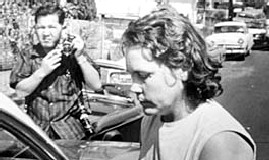 Maggie Young
Homicide · USA · 1965
Maggie Young was a despondent, mentally ill mother who had been treated for a m…
5 victims
Maggie Young
Homicide · USA · 1965
Maggie Young was a despondent, mentally ill mother who had been treated for a m…
5 victims
 Christine Paolilla
Homicide · USA · 2003
Christine Marie Paolilla was an American woman born on Long Island, New York on…
4 victims
Christine Paolilla
Homicide · USA · 2003
Christine Marie Paolilla was an American woman born on Long Island, New York on…
4 victims
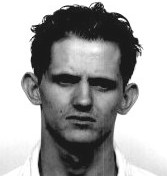 Charles Rumbaugh
Homicide · USA · 1975
Charles Rumbaugh was identified as #555. Charles Rumbaugh was executed by letha…
1 victim
Charles Rumbaugh
Homicide · USA · 1975
Charles Rumbaugh was identified as #555. Charles Rumbaugh was executed by letha…
1 victim
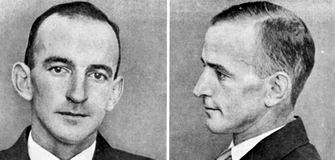 William Alfred Bayly
Murderer · New Zealand · 1933
William Alfred Bayly was executed by hanging in Mount Eden prison, Auckland, on…
2 victims
William Alfred Bayly
Murderer · New Zealand · 1933
William Alfred Bayly was executed by hanging in Mount Eden prison, Auckland, on…
2 victims
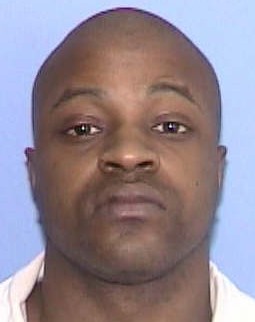 Clifton Lamar Williams
Murderer · USA · 2005
Clifton Lamar Williams (TDCJ Number 999515) was born on 08/23/1983. He was rece…
1 victim
Clifton Lamar Williams
Murderer · USA · 2005
Clifton Lamar Williams (TDCJ Number 999515) was born on 08/23/1983. He was rece…
1 victim
 Melvin Wayne White
Murderer · USA · 1997
Melvin Wayne White (male, White) Melvin Wayne White was sentenced to death for…
1 victim
Melvin Wayne White
Murderer · USA · 1997
Melvin Wayne White (male, White) Melvin Wayne White was sentenced to death for…
1 victim
- Gender
- female
- Country
- USA
- Location
- New London County, Connecticut, USA
- Date of birth
- March 1774
- Age at first offence
- 12
- Characteristics
- juvenile (12)
- Victim profile
- Eunice Bolles, 6
- Method of murder
- Beating and choking
- Date(s) of murder
- July 21, 1786
- Years active
- 1786
- Date of arrest
- Same day
- Status
-
Executed
Executed by hanging in New London, Connecticut, on December 20, 1786
Overview
Hannah Ocuish was a Native American girl who was executed by hanging in New London, Connecticut, on December 20, 1786. She was 12 years and 9 months old at execution, described as a Pequot Indian girl. She was convicted in New London of the murder of Eunice Bolles, a 6-year-old girl. The case narrative included that Hannah beat and choked Eunice to death out of revenge after quarreling with her over strawberries.
Timeline
- December 20, 1786 — Hannah Ocuish was hanged in New London, Connecticut.
- December 19, 1786 — Hannah Ocuish appeared in great distress and continued in tears most of the day until her execution.
- In early December (1786) — Visitors began to ask Hannah Ocuish how long she had to live, and she told the number of her days with manifest agitation.
- October (year not specified) — Hannah Ocuish appeared entirely unconcerned at her trial.
- July 22, 1786 — Hannah Ocuish was closely questioned, repeatedly denied guilt, and then was carried to the house where the body lay, burst into tears, and confessed she killed Eunice.
- July 21, 1786 — Eunice Bolles’ body was found at the side of the road outside Norwich, Connecticut.
- A few weeks prior to the killing (year not specified, relative to December 1786 narrative) — Eunice Bolles reportedly had reported Hannah Ocuish for stealing fruit.
Background
Hannah Ocuish was described as a Pequot Indian girl. An appendix to Rev. Henry Channing’s execution sermon noted that Hannah’s mother was “an abandoned creature, much addicted to the vice of drunkenness,” and that she sent Hannah to work as a servant in a white family’s home. At the age of six, Hannah Ocuish was accused of beating a white child while trying to steal her necklace.
An anonymous author described Hannah’s conduct before the honorable Superior Court as: “Her conduct, as appeared in evidence before the honorable Superior Court was marked with almost every thing bad. Theft and lying were her common vices. To these were added a maliciousness of disposition which made the children in the neighborhood much afraid of her. She had a degree of artful cunning and sagacity beyond many of her years.” The narrative stated that the description was expressed in terms designed to emphasize the importance of training children in obedience, and that it may or may not be accurate, while all evidence suggested Hannah was alone in a hostile world. The narrative also included that some historians had suggested she may also have been mentally retarded.
The offence
Hannah Ocuish was charged with the murder of Eunice Bolles, a 6-year-old girl. The case narrative described an argument between Hannah and Eunice, and stated that Hannah beat and choked Eunice to death. Hannah’s confession was said to indicate she sought revenge because Eunice had complained of her “in strawberry time … for taking away her strawberries.” When Hannah saw Eunice walking to school alone, she beat and choked her, and covered the body with rocks “to make people think that the wall fell upon her and killed her.”
The body of Eunice Bolles was reported to have displayed signs of extreme trauma: “the head and body were mangled in a shocking manner, the back and one arm broken, and a number of heavy stones placed on the body, arms and legs.”
Investigation
On July 21, 1786, someone found Eunice Bolles’ body at the side of the road outside Norwich, Connecticut. Investigators questioned Hannah Ocuish and she initially denied any involvement, but mentioned that she had seen a group of boys on the road earlier. The town officials did not believe her.
On July 22, Hannah Ocuish “she was closely questioned, but repeatedly denied that she was guilty.” Still unconvinced, investigators “carried [Hannah] to the house where the body lay, and being charged with the crime, burst into tears and confessed that she killed her, saying if she could be forgiven she would never do so again.” The narrative stated that Hannah’s confession was accepted as truth by the court.
Arrest
The narrative described that investigators carried Hannah Ocuish to the house where the body lay, charged her with the crime, and that she then burst into tears and confessed.
Trial
The narrative stated that Hannah Ocuish appeared entirely unconcerned at her trial in October, and that as the execution date approached she began to show fear. With respect to the sentencing phase before execution, witnesses to her execution reported she “seemed greatly afraid when at the Gallows.”
Sentencing
Hannah Ocuish was convicted of the crime of murder and was sentenced to death by hanging.
Appeals
No appeals were described.
Outcome
Hannah Ocuish was executed by hanging in New London, Connecticut, on December 20, 1786. Witnesses reported that she seemed greatly afraid when at the gallows. With her last words, she “thanked the Sheriff for his kindness, and launched into the eternal World.”
Aftermath
Rev. Henry Channing visited Hannah Ocuish in prison many times, urging her to repent so that her soul might be spared. On the day of her execution, he delivered a sermon entitled, God Admonishing His People of Their Duty as Parents and Masters. The sermon included:
- that Hannah was held up as an example of what could happen if parents did not raise their children to be “dutiful and obedient,”
- that her crimes were the “natural consequences of too great parental indulgence,” and
- that it warned: “appetites and passions unrestrained in childhood become furious in youth; and ensure dishonour, disease and an untimely death.”
The sermon portion directed at Hannah included the following verbatim address:
HANNAH! — prisoner at the bar– agreeably to the laws of the land you have arraigned, tried and convicted of the crime of murder … The good and safety of society requires, that no one, of such a malignant character, shall be suffered to live, and the punishment of death is but the just demerit of your crime: and the sparing you on account of your age, would, as the law says, be of dangerous consequence to the publick, by holding up an idea, that children might commit such atrocious crimes with impunity … And you must consider that after death you must undergo another trial, infinitely more solemn and awful than what you have here passed through, before that God against whom you offended; at whose bar the deceased child will appear as a swift witness against you — And you will be condemned and consigned to an everlasting punishment, unless you now obtain a pardon, by confessing and sincerely repenting of your sins, and applying to his sovereign grace, through the merits of his Son, Jesus Christ, for mercy, who is able and willing to save the greatest offenders, who repent and believe in him.
The narrative stated that various websites mistakenly reported her name as Hannah Omish and reported the year of her death as 1876. It also stated that she was believed to be the youngest person legally executed in America.
The narrative further included comparative statements: in the United States, the youngest children put to death by the government were said to have all be children of color; it referenced James Arcene, a Cherokee boy, who was described as being only 10 or 11 years old when he was hanged for a robbery and murder resulting in his 1885 hanging in Arkansas. It also stated that at 12, Hannah Ocuish was the youngest female offender executed by any state, and mentioned that in the 20th century the youngest children executed were both African-American: 13-year-old Fortune Ferguson of Florida (1927) and 14-year-old George Stinney of South Carolina (1944). It further noted that in 2005 the United States Supreme Court abolished the death penalty for criminals who committed their crimes as juveniles (Roper v. Simmons), and described that the court split 5-4, with Jutices Scalia, O’Connor, Thomas, and Chief Justice Rehnquist dissenting. The narrative included a Scalia dissent quotation about “cruel and unusual” and international consensus:
I do not believe that the meaning of our Eighth Amendment, any more than the meaning of other provisions of our Constitution, should be determined by the subjective views of five Members of this Court and like-minded foreigners.

Spotted an error, or have more information about this case?