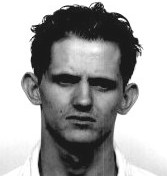
Charles Rumbaugh
Homicide Edward Charles Allaway
Homicide · USA · 1976
Edward Charles Allaway Edward Charles Allaway was found not guilty by reason of…
7 victims
Edward Charles Allaway
Homicide · USA · 1976
Edward Charles Allaway Edward Charles Allaway was found not guilty by reason of…
7 victims
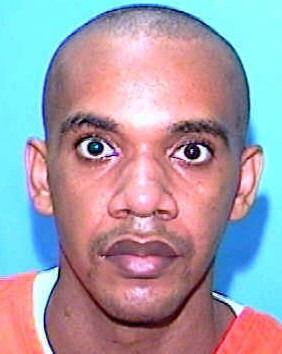 Carlton Francis
Murderer · USA · 1997
Carlton Francis was a neighbor of twin sisters Claire Brunt and Bernice Flegel.…
2 victims
Carlton Francis
Murderer · USA · 1997
Carlton Francis was a neighbor of twin sisters Claire Brunt and Bernice Flegel.…
2 victims
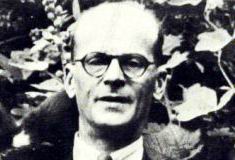 John Reginald Christie
Serial killer · United Kingdom · 1943
John Reginald Halliday Christie (April 8, 1899–July 15, 1953) was an English se…
8 victims
John Reginald Christie
Serial killer · United Kingdom · 1943
John Reginald Halliday Christie (April 8, 1899–July 15, 1953) was an English se…
8 victims
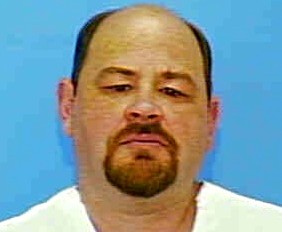 Richard Edwin Fox
Murderer · USA · 1989
Richard Edwin Fox (February 3, 1956 – February 12, 2003) was convicted of aggra…
1 victim
Richard Edwin Fox
Murderer · USA · 1989
Richard Edwin Fox (February 3, 1956 – February 12, 2003) was convicted of aggra…
1 victim
 Anthony Bertolotti
Murderer · USA · 1983
Anthony Bertolotti was executed in Florida by electrocution on July 27, 1990. H…
1 victim
Anthony Bertolotti
Murderer · USA · 1983
Anthony Bertolotti was executed in Florida by electrocution on July 27, 1990. H…
1 victim
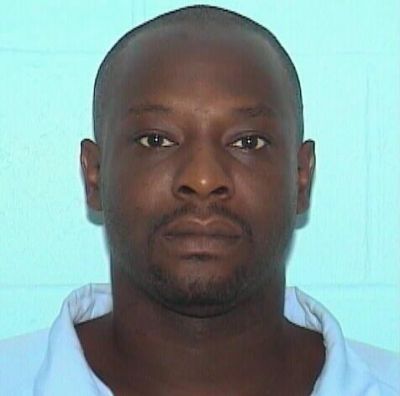 Lorenzo Fayne
Serial killer · USA · 1989
Lorenzo Fayne grew up in Milwaukee and lived in the 2400 block of W. Lloyd St.…
6 victims
Lorenzo Fayne
Serial killer · USA · 1989
Lorenzo Fayne grew up in Milwaukee and lived in the 2400 block of W. Lloyd St.…
6 victims
- Gender
- male
- Country
- USA
- Location
- Potter County, Texas, USA
- Date of birth
- J une 23, 1957
- Age at first offence
- 18
- Characteristics
- juvenile (17), jewelry store robbery
- Victim profile
- Michael Fiorillo, 58 (jewelry owner)
- Method of murder
- Shooting
- Date(s) of murder
- April 4, 1975
- Years active
- 1975
- Date of arrest
- —
- Status
-
Executed
Executed by lethal injection in Texas on September 11, 1985
Case identifiers
Charles Rumbaugh was identified as #555.
Status
Charles Rumbaugh was executed by lethal injection in Texas on September 11, 1985.
Timeline
- September 11, 1985 — Charles Rumbaugh was executed by lethal injection in Texas.
- April 20, 1984 — The United States Court of Appeals, Fifth Circuit issued its decision in Harvey and Rebecca RUMBAUGH, Individually, and as Next Friends acting on Behalf of Charles RUMBAUGH, Petitioners-Appellants, v. Dan V. McKASKLE, Acting Director, Texas Department of Corrections, Defendant-Appellee (No. 83-1161).
- 1983 — The district court decision referenced in the appeal was Rumbaugh v. Estelle, 558 F.Supp. 651 (N.D.Tex.1983).
Background
Charles Rumbaugh was a 17-year-old at the time of a murder carried out during a robbery.
The case included a pro se Application for Writ of Habeas Corpus filed by Charles Rumbaugh in the state district court in Potter County, Texas. After filing the application, Charles Rumbaugh asked the state district judge to inform the federal court of his action.
Harvey and Rebecca Rumbaugh appealed from a decision of the district court in Rumbaugh v. Estelle, 558 F.Supp. 651 (N.D.Tex.1983) that denied their application to present a next friend petition for a writ of habeas corpus on behalf of their son, Charles Rumbaugh, a death-sentenced state prisoner.
The petitioners, Harvey and Rebecca Rumbaugh, contended that Charles Rumbaugh lacked the mental competence to waive his legal rights and lacked competence to decide whether to pursue or waive the benefits of 28 U.S.C. Sec. 2254.
Charles Rumbaugh refused to seek federal habeas review of his conviction and sentence and resisted efforts by his parents to act on his behalf.
The offence
Charles Rumbaugh’s criminal activity began at age six, and at age 12 he had committed an armed robbery.
He was executed by lethal injection on 11 September 1985, 10 years after his conviction. At the time of his execution, he was described as the first juvenile offender for 21 years to be executed in the USA.
Investigation / competence proceedings
The trial court committed Charles Rumbaugh to the federal prison in Springfield, Missouri, under the authority of 18 U.S.C. Secs. 4241-45. The commitment order was to determine whether he had the capacity to appreciate his position and make a rational choice with respect to continuing or abandoning further litigation, and also whether he was suffering from a mental disease, disorder, or defect which may substantially affect his capacity in the premises.
After the examination, the district court held a hearing and received conflicting expert testimony. The district court continued the hearing and directed that the psychiatrist from the Springfield facility be summoned to testify in person to expand and explain his written reports.
At the conclusion of the hearing, the district judge found:
"that Charles Rumbaugh has a realistic understanding of his present position and of the choices available to him, and that he is mentally competent to make a rational choice with respect to continuing or abandoning further litigation."
The district court held that Harvey and Rebecca Rumbaugh lacked standing to pursue habeas relief for Charles Rumbaugh and dismissed their petition. The district court issued a certificate of probable cause for appeal.
Appeals
The United States Court of Appeals, Fifth Circuit addressed the appeal of Harvey and Rebecca Rumbaugh from the district court’s decision denying their next friend habeas application.
The Fifth Circuit described the essential contention as that, due to his mental condition, Charles Rumbaugh could not make a rational choice to continue or abandon legal proceedings.
The medical opinion cited in support of the petitioners’ position was that Charles Rumbaugh was not able to countenance the delay inherent in the continuation of legal proceedings and the possible conversion of his death sentence to life imprisonment. It was suggested that he did not have the mental capability to elect to continue further judicial examination of his conviction.
The Fifth Circuit noted it was informed that Charles Rumbaugh had filed a pro se Application for Writ of Habeas Corpus in the state district court in Potter County, Texas. The court described the need to consider the effect of that application on the pending appeal.
The court’s order on remand
The Fifth Circuit stated that it would fashion a special order using the authority granted by 28 U.S.C. Sec. 2106. It noted that Texas courts would decline to address a petition for writ of habeas corpus when the petitioner had a writ application pending in federal court, citing:
- Ex Parte McNeil, 588 S.W.2d 592, 593 (Tex.Cr.App.1979)
- Ex Parte Green, 548 S.W.2d 914 (Tex.Cr.App.1977)
The Fifth Circuit stated that Charles Rumbaugh had no pending federal application.
The question before the court was whether it should permit his parents to act in his stead and present such an application to the district court, noting that if Charles Rumbaugh was incompetent to waive his right to federal habeas review, his parents had standing to evoke a next friend proceeding. The court cited:
- Gilmore v. Utah, 429 U.S. 1012, 97 S.Ct. 436, 50 L.Ed.2d 632 (1976) (Burger, C.J., concurring), citing Rosenberg v. United States, 346 U.S. 273, 73 S.Ct. 1152, 97 L.Ed. 1607 (1953); Hays v. Murphy, 663 F.2d 1004 (10th Cir.1981); Weber v. Garza, 570 F.2d 511 (5th Cir.1978).
- Lenhard v. Wolf, 444 U.S. 1301, 100 S.Ct. 241, 62 L.Ed.2d 11 (1979) (in-chambers opinion of Rehnquist, J.).
- Evans v. Bennett, 440 U.S. 1301, 99 S.Ct. 1481, 59 L.Ed.2d 756 (1979) (in-chambers opinion of Rehnquist, J.).
The Fifth Circuit described that the recently filed pro se application by Charles Rumbaugh impacted the issue of whether he had competence to make a rational choice to pursue or abandon further judicial review.
The Fifth Circuit stated that the state filing mandated a deferral of its decision. It described processing of the application of Harvey and Rebecca Rumbaugh as time-consuming, costly, and exacting, and it said interests of judicial economy dictated avoiding unnecessary repetition previously done at both trial and appellate levels.
The Fifth Circuit remanded the case to the United States District Court for the Northern District of Texas with instructions to monitor the progress of the state habeas corpus proceedings initiated by Charles Rumbaugh.
It directed all counsel to keep the district court fully informed of the progress of the suit. The district court was instructed to advise the Fifth Circuit of the final disposition of Rumbaugh’s state habeas petition.
The Fifth Circuit instructed that if any act or omission by Charles Rumbaugh resulted in a conclusion of the state habeas suit without an adjudication on the merits, the district court should return the record to the Fifth Circuit for further disposition by the panel. It stated that in that event, no further notice of appeal would be required and no further filings or briefings would be necessary unless directed by the Fifth Circuit. It stated that the panel would then address and promptly resolve the issue posed by the appeal of Harvey and Rebecca Rumbaugh.
The Fifth Circuit stated: “Specially REMANDED with instructions.”
Last statement
Charles Rumbaugh’s last statement included: D.J., Laurie, Dr. Wheat, about all I can say is goodbye, and for all the rest of you, although you don’t forgive me for my transgressions, I forgive yours against me. I am ready to begin my journey and that’s all I have to say.
Other details
The Fifth Circuit cited 28 U.S.C. Sec. 2106 and included its text as:
The Supreme Court or any other court of appellate jurisdiction may affirm, modify, vacate, set aside or reverse any judgment, decree, or order of a court lawfully brought before it for review, and may remand the cause and direct the entry of such appropriate judgment, decree, or order, or require such further proceedings to be had as may be just under the circumstances.
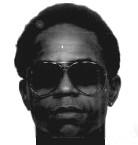
Spotted an error, or have more information about this case?