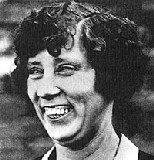
Eva Rablen
Murderer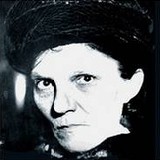 Martha Wise
Murderer · USA · 1924
Martha Wise (born 1885; died June 28, 1971), also known as “the Borgia of Ameri…
3 victims
Martha Wise
Murderer · USA · 1924
Martha Wise (born 1885; died June 28, 1971), also known as “the Borgia of Ameri…
3 victims
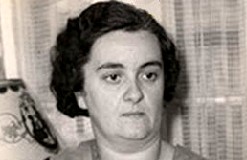 Mary Frances Creighton
Murderer · USA · 1923
Mary Frances Creighton (c. 1898 - July 16, 1936) was a housewife and was execut…
3 victims
Mary Frances Creighton
Murderer · USA · 1923
Mary Frances Creighton (c. 1898 - July 16, 1936) was a housewife and was execut…
3 victims
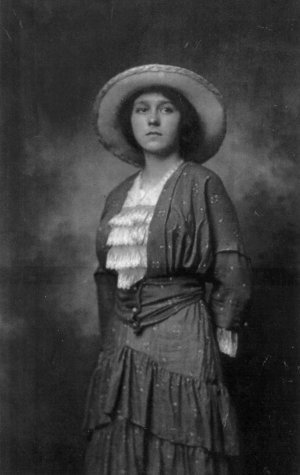 Inez Palmer
Murderer · USA · 1926
Inez Palmer — defendant; lived at the Stout farmhouse and pleaded guilty to a f…
2 victims
Inez Palmer
Murderer · USA · 1926
Inez Palmer — defendant; lived at the Stout farmhouse and pleaded guilty to a f…
2 victims
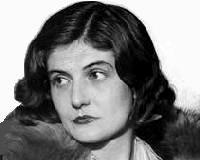 Winnie Ruth Judd
Murderer · USA · 1931
Winnie Ruth Judd (January 29, 1905 – October 23, 1998) was a Phoenix, Arizona m…
2 victims
Winnie Ruth Judd
Murderer · USA · 1931
Winnie Ruth Judd (January 29, 1905 – October 23, 1998) was a Phoenix, Arizona m…
2 victims
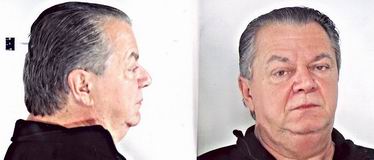 Joseph Massino
Murderer · USA · 1974
Joseph Charles “Big Joey” Massino (born January 10, 1943), also known as “The L…
7 victims
Joseph Massino
Murderer · USA · 1974
Joseph Charles “Big Joey” Massino (born January 10, 1943), also known as “The L…
7 victims
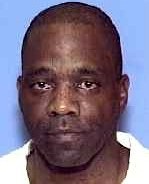 Robert Charles Ladd
Murderer · USA · 1978
Robert Charles Ladd was a Black man. He had black hair. Ladd had prior prison r…
4 victims
Robert Charles Ladd
Murderer · USA · 1978
Robert Charles Ladd was a Black man. He had black hair. Ladd had prior prison r…
4 victims
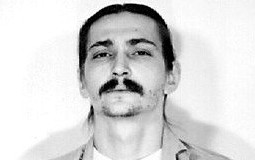 Larry C. Williams
Murderer · USA · 1979
Larry C. Williams and the other men drank beer, smoked pot, and watched TV for…
2 victims
Larry C. Williams
Murderer · USA · 1979
Larry C. Williams and the other men drank beer, smoked pot, and watched TV for…
2 victims
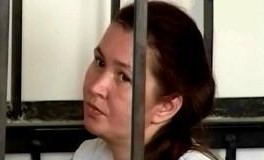 Irina Gaidamachuk
Serial killer · Russia · 2002
Irina Viktorovna Gaidamachuk (Russian: Ирина Викторовна Гайдамачук) was born in…
17 victims
Irina Gaidamachuk
Serial killer · Russia · 2002
Irina Viktorovna Gaidamachuk (Russian: Ирина Викторовна Гайдамачук) was born in…
17 victims
 Manuel Marcus Sepulveda
Murderer · USA · 2001
Manuel Marcus Sepulveda Manuel Sepulveda lived with Daniel Heleva and Robyn Ott…
2 victims
Manuel Marcus Sepulveda
Murderer · USA · 2001
Manuel Marcus Sepulveda Manuel Sepulveda lived with Daniel Heleva and Robyn Ott…
2 victims
- Gender
- female
- Country
- USA
- Location
- Tuolumne County, California, USA
- Date of birth
- 1897
- Age at first offence
- 32
- Characteristics
- parricide, poisoner
- Victim profile
- Carroll Rablen (her deaf husband)
- Method of murder
- Poisoning ( strychnine)
- Date(s) of murder
- April 29, 1929
- Years active
- 1929
- Date of arrest
- 4 days after
- Status
-
Life imprisonment
Sentenced to life in prison without parole on June 10, 1929
Case record: Eva Rablen
Personal details
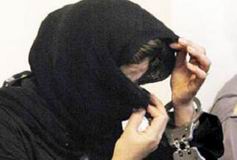
Eva Rablen was accused in 1929 in Northern California of getting rid of her deaf husband, Carroll Rablen, by putting strychnine into his coffee during a dance.
Eva Rablen was described as a “young woman” in the account. She had an eleven year-old son named Albert Lee. Eva Rablen married Carroll Rablen after receiving a matrimonial publication in June 1928 and traveling from Texas to California.
Carroll Rablen was described as deaf from a German shell that exploded in his dugout while he was serving in France during World War I. He later returned home to Standard, CA. He was also described as a thirty-four year old veteran of World War II from Tuttletown, California. The marriage between Carroll and Eva lasted less than a year, in part because she could not stand his domineering father.
Carroll Rablen had begun writing to women whose names he bought from a marriage agency and he eventually found one woman, Eva Young (hearing), who had also been married before and had an 11 year old son. They met and married despite his father's and the community's intense disapproval and dislike.
Background
Carroll Rablen did not participate in the dances because of his deafness, and instead waited in his car outside until the dance ended to take Eva home. It was suggested that he did not trust other men to take her home, and that he and Eva both had an eye for each other despite others noticing her.
Eva Rablen enjoyed attending weekly dances in another town a few miles away.
The offence
On the night of 29 April 1929, Carroll Rablen waited in his car while Eva danced in the town schoolhouse.
Eva brought sandwiches and coffee out to Carroll in the car. Shortly after Carroll swallowed the coffee for a third time, he dropped the cup, began to scream, continued to scream, and was seen writhing with agony in the car seat. A dance reception crowd poured out to see what was wrong. Carroll’s father, Stephen Rablen, pushed past people to get to his son, and Carroll repeated “Papa. Papa,” reaching out for Stephen’s hand.
Carroll died before anyone could help after the screaming began. Emergency services were called, but by the time they arrived Carroll had slipped into an unconscious state, and he was pronounced dead at the scene. His death was associated with his comment about the coffee, described as “bitter…so bitter,” and later as “The coffee was bitter…so bitter.”
An ambulance transported Carroll to the hospital and Eva rode along in the vehicle with her husband. Doctors suspected foul-play because his illness came on so suddenly. An autopsy was performed.
Investigation
An early medical examiner conclusion was that the man had died from natural causes. A preliminary inquest into Carroll’s death brought a huge crowd of spectators, forcing the judge to hold it outdoors since no available room was large enough.
Poison was not found initially, with the coroner found no trace of poison in Carroll Rablen’s body. A sheriff searched Carroll and Eva’s house and found a bottle of strychnine behind a plank and underneath the stairs. A woman calling herself Mrs. Joe Williams had purchased the poison at a local drug store, but a clerk identified the woman as Eva.
A sheriff’s department called in Edward Heinrich, described as one of the new forensic scientists based at the University of California, Berkeley, to redo the autopsy. Heinrich examined the corpse and found traces of strychnine in the stomach and also found it in the coffee cup and in some stains on Eva’s dress, after learning that she had stumbled while carrying the cup.
Heinrich reasoned that Carroll could have poisoned his own coffee, so he needed to show that Eva had spiked the drink with strychnine. Heinrich asked the sheriff to interview all those who had attended the dance. During questioning, Alice Shea remembered that Eva had bumped into her and spilled a few drops of coffee on her dress, and Heinrich examined the garment and found strychnine in the coffee stains.
Authorities also searched for additional supporting evidence: a bottle of strychnine was found in a patch of grass only a few spots where Rablen’s automobile was parked, and the bottle was traced to a drugstore in near Tuttletown. The register showing the purchase had been signed for by “Mrs. Joe Williams,” and the description of Mrs. Williams given by the clerk suggested Eva Brandon Rablen had bought the item. When asked to identify the purchaser, the clerk identified Eva without hesitation.
The authorities escorted Eva to the police station, and she claimed her husband had poisoned himself because he was brokenhearted over his health problems. Stephen Rablen arrived soon afterwards and told police that he suspected his daughter-in-law killed his son over a $3,500 insurance police. Stephen accused Eva of finding victims through mail-order bride advertisements and suggested she killed her last husband, a mail-order groom named Hubert Brandon. Stephen demanded Eva be arrested for murder. The sheriff and an expert forensic investigator worked together to build an intricate chain of proof establishing Eva’s guilt in poisoning Carroll.
Heinrich re-examined the corpse and detected poison in the cup and in the stomach; he then used the coffee spill and the dress staining detail to establish that Eva’s act involved the coffee.
Arrest
Eva was arrested for murder, not on her father-in-law’s orders. Authorities and prosecution evidence included a handwriting comparison: a handwriting expert compared the signature on a drugstore’s registry with one Eva provided authorities at the station, and the two were a match.
Newspaper articles referred to Eva as “Borgia of the Sierras.”
Trial
Eva changed her plea to guilty. Prosecutors and defense attorneys alike sought out Heinrich to analyze evidence and present his findings in court. Heinrich explained his findings simply and directly and was described as not patronizing juries or confusing them with jargon.
As to her marriage, Eva told a judge about her disagreements and decision-making around suicide:
“Quarrels, quarrels, I was sick of and tired of them,” Eva told a judge about her marriage. “We talked things over. It was decided we should both commit suicide. But I couldn’t bring myself to do it. Finally I decided to poison him. It was the best way out, I thought. Now they want to hang me? I could only put him out of the way because I felt it was the only way to get my freedom.”
After learning about Heinrich’s involvement in the case, Eva pled guilty to avoid the death penalty. Confronted with the evidence, Eva confessed, eliminating the need for a trial.
At the time she was escorted to the ferry for San Quentin, Eva told traveling companions:
“I feel fine,” she told her traveling companions, “not a bit tired. I’m not at all downhearted or discouraged.”
Sentencing
Eva was sentenced to life in prison at San Quentin for murder. The day the authorities escorted her to the ferry for San Quentin, she appeared all smiles. The sentencing outcome was recorded as life in prison without parole on June 10, 1929.
Appeals
No appeals were described in the provided material.
Outcome
Eva was sentenced to life in prison without parole on June 10, 1929 after pleading guilty to murder.
Aftermath
On the day of Carroll’s funeral, the sheriff returned to the spot where the groom died and found a bottle of strychnine in a patch of grass near where Rablen’s automobile was parked. The register showing purchase was signed for by “Mrs. Joe Williams,” with a clerk identifying the purchaser as Eva.
As Eva left for San Quentin, reporters and inquisitive spectators on hand at the dock asked why she killed Carroll. She responded:
“I can’t tell you why I confessed to putting strychnine in my husband’s coffee. I told the court all and I want to tell all.”
Eva’s eleven year-old son, Albert Lee, waited at the dock with his aunt and uncle to say goodbye. Eva held her child close and showed little emotion, telling him:
“I will be all right,” she told him. “I’m going to study Spanish. I’ve always been crazy to learn Spanish. Then if I get along well with that I can take on other subjects.”
Eva’s sister assured Eva she would take good care of Albert and promised that those who lived in the Sonora area would help as well, saying:
“He will not suffer for what wasn’t his fault. We will see he wants for nothing.”
Heinrich later became popularly known as “The Wizard of Berkeley.”
The 1929 murder of Carroll Rablen by his mail-order bride Eva Brandon was described as the most notorious case of its type.
Timeline
- June 1928 — Carroll Rablen advertised for a bride in a San Francisco matrimonial paper; the advertisement was answered by Eva Brandon.
- Late April 1929 — Eva left Texas for California.
- 29 April 1929 — Carroll Rablen waited in his car while Eva danced in the town schoolhouse; Eva later brought sandwiches and coffee to Carroll, and Carroll died after drinking the coffee.
- 1 May 1929 — On the day of Carroll’s funeral, the sheriff returned to the spot where Carroll died and found a bottle of strychnine in a patch of grass near where his automobile was parked.
- June 10, 1929 — Eva Rablen was sentenced to life in prison without parole.
Other details
A newspaper account described Carroll and Eva’s wedding evening dance at the Tuttletown school house, where Eva twirled around with anyone who wanted to join her, while Carroll chose to wait outside for his new bride in the car.
Stephen Rablen began regaling guests with his rendition of “Turkey in the Straw” on his fiddle; Eva excused herself and went outside to visit her husband with sandwiches and coffee.
Carroll helped himself to a cup of coffee, blew across the top of it to cool it down, then took a sip and made a face as if the coffee lacked something; he took another drink to determine what it needed before he dropped the cup and began to scream.
Attendees told reporters for the local newspaper that Eva simply stood back and watched the action play out around her, wearing no expression at all.
The material described an Ogden, Utah newspaper, the Ogden Standard-Examiner, and quoted a letter starting “Mr. Rablen, Dear Friend,” in which Eva wrote:
“Mr. Rablen, Dear Friend,” the letter began. “You wrote about a son I have. He has had no father since he was a month old. The father left me. I haven’t seen him. If a man leaves me I don’t want to see them. And I’ll make sure I can’t.”
Another point recorded in the material was that Stephen suspected Eva killed her last husband, a mail-order groom named Hubert Brandon, and demanded Eva be arrested for murder.
Eva was described as “Borgia of the Sierras” in newspaper articles about the homicide.
Spotted an error, or have more information about this case?