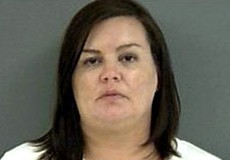
Kimberly Clark Saenz
Serial killer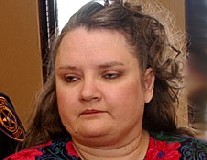 Vickie Dawn Jackson
Serial killer · USA · 2000
Vickie Dawn Jackson was a former nurse who received a life sentence after plead…
10 victims
Vickie Dawn Jackson
Serial killer · USA · 2000
Vickie Dawn Jackson was a former nurse who received a life sentence after plead…
10 victims
 Belle Gunness
Serial killer · USA · 1880
Belle Gunness was Norwegian-born. She was born as Brynhild Paulsdatter Størseth…
42 victims
Belle Gunness
Serial killer · USA · 1880
Belle Gunness was Norwegian-born. She was born as Brynhild Paulsdatter Størseth…
42 victims
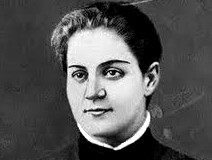 Jane Toppan
Serial killer · USA · 1887
Jane Toppan (1880-1901) was a nurse from Boston, Massachusetts. Another record…
31 victims
Jane Toppan
Serial killer · USA · 1887
Jane Toppan (1880-1901) was a nurse from Boston, Massachusetts. Another record…
31 victims
 Bertha Gifford
Serial killer · USA · 1909
Bertha Gifford (1872- August 20, 1951) was a farmwife in rural Catawissa, Misso…
17 victims
Bertha Gifford
Serial killer · USA · 1909
Bertha Gifford (1872- August 20, 1951) was a farmwife in rural Catawissa, Misso…
17 victims
 Maury Troy Travis
Serial killer · USA · 2001
Maury Troy Travis (born October 25, 1965; died June 10, 2002) was an American s…
17 victims
Maury Troy Travis
Serial killer · USA · 2001
Maury Troy Travis (born October 25, 1965; died June 10, 2002) was an American s…
17 victims
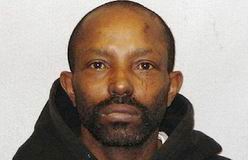 Anthony Sowell
Serial killer · USA · 2007
Anthony Edward Sowell (born August 19, 1959) was an American serial killer iden…
11 victims
Anthony Sowell
Serial killer · USA · 2007
Anthony Edward Sowell (born August 19, 1959) was an American serial killer iden…
11 victims
 Jeffrey Dillingham
Murderer · USA · 1992
Jeffrey Dillingham was executed by lethal injection in Texas on November 1, 200…
1 victim
Jeffrey Dillingham
Murderer · USA · 1992
Jeffrey Dillingham was executed by lethal injection in Texas on November 1, 200…
1 victim
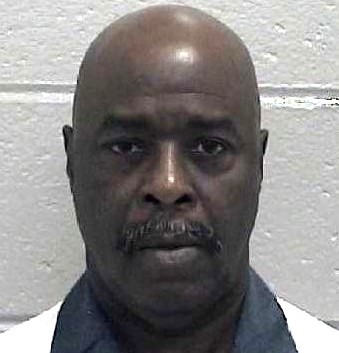 John Washington Hightower
Murderer · USA · 1987
John Washington Hightower was executed by lethal injection in Georgia on June 2…
3 victims
John Washington Hightower
Murderer · USA · 1987
John Washington Hightower was executed by lethal injection in Georgia on June 2…
3 victims
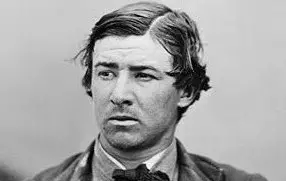 David Herold
Assassin · USA · 1865
David Edgar Herold (16 June 1842 – 7 July 1865) conspired with John Wilkes Boot…
1 victim
David Herold
Assassin · USA · 1865
David Edgar Herold (16 June 1842 – 7 July 1865) conspired with John Wilkes Boot…
1 victim
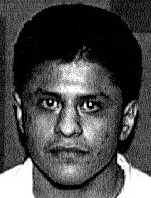 Pablo Melendez
Murderer · USA · 1994
Pablo Melendez was sentenced to death on May 21, 1996. At the guilt/innocence s…
1 victim
Pablo Melendez
Murderer · USA · 1994
Pablo Melendez was sentenced to death on May 21, 1996. At the guilt/innocence s…
1 victim
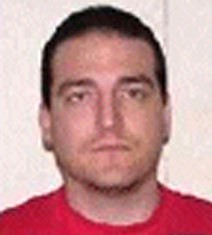 Vincent Stopher
Murderer · USA · 1997
Name: Vincent Stopher · Date of birth: 7-11-72 · Place: Jefferson County · Marc…
1 victim
Vincent Stopher
Murderer · USA · 1997
Name: Vincent Stopher · Date of birth: 7-11-72 · Place: Jefferson County · Marc…
1 victim
- Gender
- female
- Country
- USA
- Location
- Lufkin, Texas, USA
- Date of birth
- 1974
- Age at first offence
- 34
- Characteristics
- nurse, poisoner
- Victim profile
- Clara Strange / Thelma Metcalf / Garlin Kelley / Cora Bryant / Opal Few ( kidney dialysis patients)
- Method of murder
- Poisoning ( by injecting their bloodstreams with bleach)
- Date(s) of murder
- January-April 2008
- Years active
- 2008
- Date of arrest
- April 1, 2009
- Status
-
Life imprisonment
Sentenced to life imprisonment with no eligibility for parole on April 2, 2012
Case record: Kimberly Clark Saenz
Background
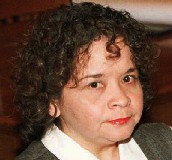
Kimberly Clark Saenz, also known as Kimberly Clark Fowler, was a convicted serial killer. In 2008, at the time of the murders, Kimberly Clark Saenz was a 34-year-old licensed practical nurse. Saenz was married with two young children.
Saenz had substance dependence and used stolen prescription medication. She had been fired at least four times from health care jobs and placed false information on an application for employment. Saenz sought a health care job in violation of the terms of her bail.
Saenz was fired from Woodland Heights hospital for stealing Demerol, which was found in her handbag. She was fired from DaVita in April 2008 after the numerous deaths at the clinic. Saenz’s nursing licence was eventually suspended.
Saenz applied to work as a receptionist in a Lufkin medical office and lied on her job application about previous employment.
Saenz’s husband was Mark Kevin Saenz. The husband filed for divorce and obtained a restraining order against Saenz in June 2007, one year before the clinic deaths and illnesses.
The offence
On April 28, 2008, Saenz drew sodium hypochlorite, commonly known as bleach, into syringes and injected the substance into two patients’ dialysis lines at the dialysis clinic owned by DaVita in Lufkin, Texas.
The dialysis clinic deaths and illnesses involved five murder victims and five other injured patients. The five murder victims named were Clara Strange, Thelma Metcalf, Garlin Kelley, Cora Bryant and Opal Few.
Two eyewitness accounts of Linda Hall and Leraline Hamilton confirmed that on April 28, 2008, Saenz drew sodium hypochlorite into syringes and injected the substance into two patients’ dialysis lines at the dialysis clinic owned by DaVita in Lufkin, Texas.
Hall and Hamilton testified that they watched Saenz inject bleach into ports on the dialysis lines of Marva Rhone and Carolyn Risinger.
Marva Rhone’s dialysis line tested positive for bleach. Carolyn Risinger’s line was not tested because it had already been thrown away. Although neither Rhone nor Risinger went into cardiac arrest, the later testing revealed bleach on Rhone’s line.
Investigation
Lufkin law enforcement officers testified at trial that they arrested Saenz for public intoxication and criminal trespass. These incidents related to domestic disturbances with her husband, Mark Kevin Saenz.
The Food and Drug Administration prepared a document confirming that samples linked to some victims tested positive for bleach, while others showed bleach “may have been present at one time.”
The prosecutor, Clyde Herrington, believed there were more victims than just the ten indicted cases, based on research by an epidemiologist from the Centers for Disease Control and Prevention. The epidemiologist statistically connected Saenz to other adverse health events to patients.
Lufkin Police detectives could only obtain medical waste from two weeks prior to April 28, 2008, so there was inadequate evidence to raise further indictments against Saenz in other incidents.
A U.S. Department of Health and Human Services report from May 2008 was described as heavily critical of DaVita’s practices. The report was ruled inadmissible by state District Judge Barry Bryan. The report was said to state that from Dec. 1, 2007, to April 28, 2008, the facility had 19 deaths compared to 25 for 2007, putting the facility at a mortality rate 7 percent above the state average. The report also stated that the facility was not keeping proper records of adverse occurrences.
The report further stated that from Sept. 1, 2007, to April 26, 2008, there were 102 DaVita patients transported by ambulance to local hospitals during or immediately following dialysis, and that 68 did not have a complete adverse occurrence report. It also stated that based on record review and nursing staff interview, the facility “did not demonstrate competence in monitoring patients during treatment alerting nurses or physicians of changes to a patient’s condition and following the physician’s orders for the dialysis treatment.”
Investigators examined blood tubing, IV bags and syringes used by DaVita patients. They testified that they found Internet searches on Saenz’s computer about bleach poisoning in blood and whether bleach could be detected in dialysis lines.
Saenz told the grand jury she had been concerned about the patients’ deaths and looked up bleach poisoning references to see “if this was happening, what would be the side effects”.
Arrest and custody
Saenz was arrested for public intoxication and criminal trespass.
Following sentencing, Saenz remained in the Angelina County Jail pending prison transport.
Trial
Guilt finding
On March 31, 2012, in Texas District Court, Kimberly Clark Saenz, a nurse, was found guilty of the 2008 murders of five kidney dialysis patients and injuring five other patients.
Saenz was charged with one capital murder count accusing her of killing as many as five patients, and with five counts of aggravated assault for injuries to the five other patients.
The trial records reflected that prior to working at DaVita, Saenz was fired from Woodland Heights hospital for stealing Demerol, found in her handbag.
Saenz was fired from DaVita in April 2008 after the numerous deaths at the clinic.
Saenz appeared in court Wednesday to start the process for appeal.
Victim impact
During the victim impact statement portion of the trial, the daughter of victim Thelma Metcalf told Saenz: “You are nothing more than a psychopathic serial killer. I hope you burn in hell”.
Sentencing
On April 2, 2012, the Angelina County jury sentenced Saenz to life imprisonment with no eligibility for parole and three 20-year sentences for aggravated assault.
Appeals
Saenz intended to be involved with her appeal, according to defense attorney Ryan Deaton.
The report from May 2008 was ruled inadmissible by state District Judge Barry Bryan.
Outcome
Saenz was sentenced to life imprisonment with no eligibility for parole on April 2, 2012.
Aftermath
DaVita spokesman Vince Hancock said the company’s actions in April 2008 did not kill any Lufkin patients, citing the jury’s decision. He said: “We hope that healing can start to occur for families of victims and for our teammates who also have been victimized by the murderous acts of Kim Saenz,”
Saenz did not take the stand in her own defense. In a recording played at trial, she was heard testifying before a grand jury that she felt “railroaded” by the clinic and “would never inject bleach into a patient”.
Other details
At the trial, prosecutor Clyde Herrington made the following statements and arguments.
He believed there were more victims than just the ten indicted cases based on the CDC epidemiologist’s research, and he stated: “The only days there were deaths in April, she was there,” He also said: “Dialysis patients are sick, but every source of information we can find says it is very unusual for patients to die during dialysis treatment.” Herrington stated: “Criminal behavior is something we’ve been trying to understand since Cain killed Abel,” and: “Only when the health care killer confesses do we know motive.”
Regarding jurors’ choice between life imprisonment and the death penalty, Steve Taylor said in closing remarks: “She’s never getting out no matter what you do,” and urged jurors to choose a life sentence, stating: “Society is protected. You will never see her again.”
Defense attorney T. Ryan Deaton said: “Hopefully she’ll get a new trial,” and in closing argued: “Kimberly Saenz is a good nurse, a compassionate, a caring individual who assisted her patients and was well liked,”
Deaton also said: “There is a lot of information he wishes the jury had heard,” and he fought for the jury to have access to a U.S. Department of Health and Human Services report from May 2008 that was heavily critical of DaVita’s practices, but it was ruled inadmissible.
A letter quoted in connection with the investigation stated: “In the last two weeks, we have transported 16 patients.This seems a little abnormal and disturbing to my med crews. Could these calls be investigated by you?”
Spotted an error, or have more information about this case?