
Assia Wevill
Murderer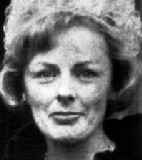 Sheila Garvie
Murderer · United Kingdom · 1967
Sheila Garvie was convicted of the murder of her husband, Maxwell Garvie. Sheil…
1 victim
Sheila Garvie
Murderer · United Kingdom · 1967
Sheila Garvie was convicted of the murder of her husband, Maxwell Garvie. Sheil…
1 victim
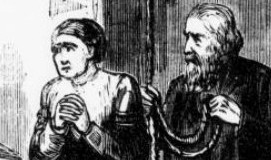 Margaret Waters
Murderer · United Kingdom · 1866
Margaret Waters was an English murderess who was hanged by executioner William…
19 victims
Margaret Waters
Murderer · United Kingdom · 1866
Margaret Waters was an English murderess who was hanged by executioner William…
19 victims
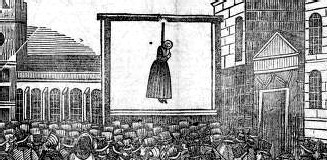 Catherine Wilson
Murderer · United Kingdom · 1854
Catherine Wilson was a British nurse who poisoned victims after befriending the…
7 victims
Catherine Wilson
Murderer · United Kingdom · 1854
Catherine Wilson was a British nurse who poisoned victims after befriending the…
7 victims
 David McGreavy
Murderer · United Kingdom · 1973
David McGreavy was born in 1950 or 1951. He was an English convicted murderer w…
3 victims
David McGreavy
Murderer · United Kingdom · 1973
David McGreavy was born in 1950 or 1951. He was an English convicted murderer w…
3 victims
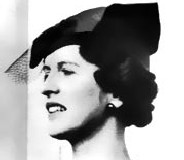 Florence Ransom
Murderer · United Kingdom · 1940
Florence Ransom was a middle-aged woman who was described as physically beautif…
3 victims
Florence Ransom
Murderer · United Kingdom · 1940
Florence Ransom was a middle-aged woman who was described as physically beautif…
3 victims
 Harry Maurice Roberts
Murderer · United Kingdom · 1966
Name: Harry Maurice Roberts Birth year: 1936 Birthplace: Kennington, London, En…
3 victims
Harry Maurice Roberts
Murderer · United Kingdom · 1966
Name: Harry Maurice Roberts Birth year: 1936 Birthplace: Kennington, London, En…
3 victims
 Leon Taylor
Murderer · USA · 1994
State of Missouri v. Leon Taylor, 7944 S.W. 2d 925 (Mo.banc). On April 14, 1994…
1 victim
Leon Taylor
Murderer · USA · 1994
State of Missouri v. Leon Taylor, 7944 S.W. 2d 925 (Mo.banc). On April 14, 1994…
1 victim
 Tina Resch
Murderer · USA · 1992
Tina Resch (pronounced "Resh"), born October 23, 1969, achieved some fame durin…
1 victim
Tina Resch
Murderer · USA · 1992
Tina Resch (pronounced "Resh"), born October 23, 1969, achieved some fame durin…
1 victim
 Phillip Brown
Murderer · USA · 2001
Phillip Brown (DOB 8-31-80) was indicted on August 13, 2002 on case 02CR00101,…
1 victim
Phillip Brown
Murderer · USA · 2001
Phillip Brown (DOB 8-31-80) was indicted on August 13, 2002 on case 02CR00101,…
1 victim
 Rodney Sattler
Murderer · USA · 1986
Rodney Sattler was convicted of deliberate homicide in the Twentieth Judicial D…
2 victims
Rodney Sattler
Murderer · USA · 1986
Rodney Sattler was convicted of deliberate homicide in the Twentieth Judicial D…
2 victims
 Kristi Koslow
Homicide · USA · 1992
Kristi Koslow was the 17-year-old daughter of Jack Koslow and stepdaughter of C…
1 victim
Kristi Koslow
Homicide · USA · 1992
Kristi Koslow was the 17-year-old daughter of Jack Koslow and stepdaughter of C…
1 victim
 Stephen Shaun Griffiths
Serial killer · United Kingdom · 2009
Stephen Shaun Griffiths was convicted after pleading guilty to killing three wo…
3 victims
Stephen Shaun Griffiths
Serial killer · United Kingdom · 2009
Stephen Shaun Griffiths was convicted after pleading guilty to killing three wo…
3 victims
- Gender
- female
- Country
- United Kingdom
- Location
- London, England, United Kingdom
- Date of birth
- May 15, 1927
- Age at first offence
- 42
- Characteristics
- murder-suicide, abuse
- Victim profile
- Her four-year-old daughter Alexandra Tatiana Elise (nicknamed "Shura")
- Method of murder
- Gassing (she had sealed the kitchen door and window, taken and given to Shura sleeping pills dissolved in a glass of water, and turned on the gas stove
- Date(s) of murder
- March 23, 1969
- Years active
- 1969
- Date of arrest
- —
- Status
-
Died in custody
Killed herself and her four-year-old daughter Alexandra Tatiana Elise (nicknamed “Shura”) on March 23, 1969 by use of a gas oven.
Assia Wevill
Assia Wevill (May 15, 1927 – March 23, 1969) was a German-born woman who escaped the Nazis at the beginning of World War II and emigrated to Mandate Palestine, then later the United Kingdom. She later had a relationship with the English poet Ted Hughes.
She killed herself and her four-year-old daughter Alexandra Tatiana Elise (nicknamed “Shura”) in their London home on March 23, 1969. She used a gas oven in a manner similar to that of Sylvia Plath, who six years earlier had also committed suicide by use of a gas oven.
Background
Assia Gutmann was the daughter of a Jewish physician of Russian origin, Dr. Lonya Gutmann, and a German Lutheran mother, Elizabetha (née Gaedeke). She spent most of her youth in Tel Aviv.
Friends and family described her as a free-spirited young woman. She went out to dance at the British soldiers’ club, where she met Sergeant John Steel, who became her first husband. In 1946, she moved to London with Steel.
According to biographers Yehuda Koren and Eilat Negev, she “had entered an essentially loveless marriage with an Englishman at the age of 20 – largely to enable her family to emigrate to England.” The couple later emigrated to Canada, where Assia enrolled in the University of British Columbia, Vancouver, and met her second husband, Canadian economist Richard Lipsey. In 1956, on a ship to London, she met the 21-year-old poet David Wevill. They began an affair, and Assia divorced Lipsey; she married Wevill in 1960.
Career
Wevill was a refugee from Nazi Germany and was linguistically gifted. She had a successful career in advertising and was an aspiring poet who published, under her maiden name Assia Gutmann, an English translation of the work of Israeli poet Yehuda Amichai.
In advertising, she composed the 90-second “Sea Witches” advertisement for a ladies’ hair-dye product, for both television and cinemas. Her biographers Koren and Negev described it as a “breakthrough in type” and a “huge success” that was “applauded in theaters.”
Ted Hughes
In 1961, poets Ted Hughes and Sylvia Plath rented their flat in Chalcot Square, Primrose Hill, London to Assia and David Wevill, and took up residence at North Tawton, Devon.
Hughes was “immediately struck with Assia, as she was with him.” Hughes later wrote:
We didn't find her - she found us. She sniffed us out... She sat there... Slightly filthy with erotic mystery... I saw the dreamer in her Had fallen in love with me and she did not know it. That moment the dreamer in me Fell in love with her, and I knew it.
Plath also noted their chemistry. Soon afterward, Ted and Assia began an affair.
At the time of Plath’s suicide, Wevill was pregnant with Hughes’s child, but she had an abortion soon after Plath’s death.
After Plath’s suicide, Hughes moved Wevill into Court Green (the North Tawton, Devon home he had bought with Plath). Wevill helped to care for Hughes’s and Plath’s two children, Frieda and Nicholas.
A biography of Wevill titled Lover of Unreason included an account that authors Koren and Negev said she used Plath’s items “not out of obsession, but rather for the sake of practicality, as she was maintaining a household for Hughes and his children.”
Most of Hughes’s friends indicated that while he never publicly claimed Shura as his daughter, his sister Olwyn said he did believe the child was his.
In October 2015, BBC Two broadcast the major documentary Ted Hughes: Stronger Than Death, which examined Hughes’s life and work and included an examination of the part played by Wevill.
Birth of Alexandra Tatiana Elise (“Shura”)
On 3 March 1965, at age 37, Wevill gave birth to Alexandra Tatiana Elise (“Shura”) while still married to David Wevill.
Death and suicide method
On 23 March 1969, Wevill gassed herself and four-year-old Shura in their London home.
She sealed the kitchen door and window. She took and gave to Shura sleeping pills dissolved in a glass of water. She turned on the gas stove. Wevill and Shura were found lying together on a mattress in the kitchen.
Legacy
Literature and poetry
Ted Hughes’s volume of poetry Crow (1970) was dedicated to the memory of Assia and Shura.
Hughes’s poem “Folktale” included these lines:
She wanted the silent heraldry
Of the purple beach by the noble wall.
He wanted Cabala the ghetto demon
With its polythene bag full of ashes.
Hughes published half a dozen poems he had written for Assia, which were hidden among the 240 poems in New Selected Poems (1989).
In “The Error.” Hughes wrote:
When her grave opened its ugly mouth why didn't you just fly,
Why did you kneel down at the grave's edge to be identified accused and convicted?
In “The Descent”, he wrote:
your own hands, stronger than your choked outcry,
Took your daughter from you. She was stripped from you,
The last raiment
Clinging round your neck, the sole remnant
Between you and the bed
In the underworld
Wevill appeared as “Helen” in Fay Weldon’s novel Down Among the Women.
Film
In the feature film Sylvia (2003), Wevill was portrayed by Amira Casar.
Other details
A major biographical account described a “Draft Constitution” consisting of two typed pages of instructions from Hughes to Wevill on how to manage his house and children, including dictating what time she should get up.
The same biographical account described Hughes’s mistress for six years as being involved in a narrative of “a domestic tyrant” who issued those instructions.
Nigel Reynolds, Arts Correspondent - Telegraph.co.uk, wrote in September 9, 2006 that “Wevill, 42, gassed herself with Shura, her four-year-old daughter by Hughes, in 1969 after discovering that he was having an affair.” He also wrote that it was an “eery re-enactment” of the suicide six years earlier of the American poet Sylvia Plath.
Yehuda Koren and Eilat Negev also disclosed that Hughes and Wevill started sharing Plath’s bed in the London flat where she died within two days of her suicide. They stated that within six weeks, Wevill was using the same bed to recover from an abortion.
Negev said:
“It was loving Ted that cost Assia her life.”


Spotted an error, or have more information about this case?