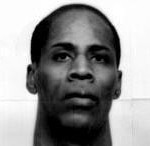
Jessel Turner
Murderer Brian Kevin Rosenfeld
Murderer · USA · 1985
Brian Kevin Rosenfeld Brian Kevin Rosenfeld was sentenced to three concurrent l…
23 victims
Brian Kevin Rosenfeld
Murderer · USA · 1985
Brian Kevin Rosenfeld Brian Kevin Rosenfeld was sentenced to three concurrent l…
23 victims
 Yahweh ben Yahweh
Murderer · USA · 1980
Yahweh ben Yahweh was born and legally named Hulon Mitchell Jr. (October 27, 19…
23 victims
Yahweh ben Yahweh
Murderer · USA · 1980
Yahweh ben Yahweh was born and legally named Hulon Mitchell Jr. (October 27, 19…
23 victims
 Russell Ellwood
Murderer · USA · 1991
Russell Ellwood was a former taxi driver. Authorities suspected him of killing…
20 victims
Russell Ellwood
Murderer · USA · 1991
Russell Ellwood was a former taxi driver. Authorities suspected him of killing…
20 victims
 Billy Bailey
Murderer · USA · 1979
Billy Bailey (1947? - January 25, 1996) was a convicted murderer who was execut…
2 victims
Billy Bailey
Murderer · USA · 1979
Billy Bailey (1947? - January 25, 1996) was a convicted murderer who was execut…
2 victims
 Erica Lynn Orta
Murderer · USA · 2004
Erica Lynn Orta pleaded guilty to murdering her mother, Diane Acton, in Defianc…
1 victim
Erica Lynn Orta
Murderer · USA · 2004
Erica Lynn Orta pleaded guilty to murdering her mother, Diane Acton, in Defianc…
1 victim
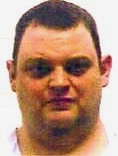 Russel William Burket
Murderer · USA · 1993
Russel William Burket was executed by lethal injection in Virginia on August 30…
2 victims
Russel William Burket
Murderer · USA · 1993
Russel William Burket was executed by lethal injection in Virginia on August 30…
2 victims
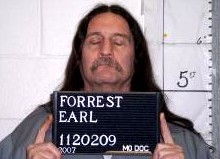 Earl Mitchell Forrest
Murderer · USA · 2002
Earl M. Forrest was drinking in December 2002 when he went to Harriet Smith's h…
3 victims
Earl Mitchell Forrest
Murderer · USA · 2002
Earl M. Forrest was drinking in December 2002 when he went to Harriet Smith's h…
3 victims
- Gender
- male
- Country
- USA
- Location
- Harris County, Texas, USA
- Date of birth
- J une 7, 1960
- Age at first offence
- 26
- Characteristics
- rape, robbery
- Victim profile
- Charles Hunter, 37 (taxi cab driver)
- Method of murder
- Shooting ( .22 caliber pistol)
- Date(s) of murder
- February 10, 1986
- Years active
- 1986
- Date of arrest
- Same day
- Status
-
Executed
Executed by lethal injection in Texas on September 22, 1997
Case record: Jessel Turner
Status
Jessel Turner was executed by lethal injection in Texas on September 22, 1997.
Background
Near midnight on February 10, 1986, Jessel Turner walked up to a gas station in Houston, Texas and sought a ride from Archie Holmes, the driver of a cab parked there. Holmes was off duty but he asked his dispatcher to send out another cab for Turner. Turner spoke with Tracy McGrew, an employee of the station, as he waited for the cab. In a few minutes a cab driven by Charles Hunter picked up Turner and departed.
A short time later Jimmy Darks, another cab driver, found Hunter lying in the road a few hundred yards from the station. Hunter had been shot to death; his cab was gone.
Meanwhile, Turner had returned to the station driving a Chevrolet Impala. Shortly after Turner left, Houston police officers, alerted about the homicide and informed of Hunter’s last dispatch, arrived at the gas station. As they were interviewing McGrew, who was giving them a description of Turner and his vehicle, Turner drove by. The police gave pursuit and, after a brief car chase, stopped Turner and placed him under arrest.
Turner was taken to a police station and placed in a line-up. McGrew identified Turner as the man who had entered Hunter’s cab at the gas station a few minutes before Hunter’s death. Archie Holmes, while unable to identify Turner positively as Hunter’s last cab fare, advised of a similarity in appearance.
Around 8:00 a.m., while in police custody, Turner signed a written statement claiming that he had not been involved in Hunter’s death. Several hours later he signed a second statement asserting that Hunter had threatened him with a pistol and that the fatal wound had been inflicted as the two men struggled for control of the gun. In a third statement, made at 2:40 p.m. that day, Turner admitted that the murder weapon was his but stated that Hunter was killed when the weapon accidentally discharged. Finally, Turner gave a fourth written statement in which he confessed to robbing and kidnapping two women on the night of Hunter’s murder.
Hunter’s cab was found at Turner’s apartment complex. A fingerprint from Turner’s left ring finger was recovered from the outside of the front passenger door. A .22 caliber pistol was found under the front seat of the Impala Turner was driving when he was arrested. Ballistics tests confirmed that this weapon fired the shot which killed Hunter.
The offence
In early February 1986, Turner kidnapped and robbed two women. He robbed and shot one man at a service station, and abducted two women in the Fifth Ward, raping one of them. His crime spree ended February 10, 1986, when he shot and killed cab driver Charles Hunter, 37, during an argument that started when Hunter refused to accept a ring stolen from the rape victim as payment for a taxi fare.
On the night of February 10, 1986, Turner shot his victim with a .22 caliber pistol, robbed him of his wallet, and then dumped his body in the street.
Investigation and arrest
On February 10, 1986, the police pursued and stopped Turner after he drove by while officers were interviewing McGrew.
Two hours later, Turner was arrested and held without bond.
Trial
On April 13, 1987, Turner went on trial for capital murder while in the course of committing and attempting to commit robbery, in violation of Section 19.03(a)(2) of the Texas Penal Code.
Turner’s motions to suppress the pretrial identifications and his statements to the police were denied.
At the guilt phase, Holmes and McGrew identified Turner as the man who had entered Hunter’s cab shortly before his murder. The state also presented redacted versions of Turner’s four statements, forensic evidence tying him to the crime, and additional evidence of two extraneous armed robberies committed by Turner.
On April 23, 1987, the jury found Turner guilty of capital murder and the trial advanced into the punishment phase.
During the punishment phase, the state presented significant other crimes evidence, including excerpts from Turner’s four written statements. The only mitigating evidence Turner presented was testimony by two Harris County jailers that he was not a troublemaker and had helped restore order in the jail on several occasions.
On April 27, 1987, the jury returned a unanimous affirmative response to the death penalty special issues and Turner was sentenced to death.
His conviction and sentence were subsequently affirmed on direct appeal and the Supreme Court denied certiorari.
Sentencing and postconviction proceedings
State habeas corpus
On June 11, 1992, Turner sought a state writ of habeas corpus.
On June 29, 1994, after an evidentiary hearing, the trial court entered factual findings and legal conclusions recommending that relief be denied; the Court of Criminal Appeals denied relief on the basis of the trial court’s findings.
Turner filed a second application on October 3, 1994, and a second evidentiary hearing was held on October 10, 1994. On November 2, 1994, the trial court again recommended that relief be denied and the Court of Criminal Appeals adopted that recommendation.
Federal habeas corpus and appeal (United States Court of Appeals, Fifth Circuit)
After those state proceedings, Turner filed a petition for federal habeas corpus relief. He also filed motions for a stay of execution and an evidentiary hearing. The state answered with a motion for summary judgment and a response to the request for a stay. The day before the scheduled execution, the district court denied Turner’s petition and declined to issue a Certificate of Probable Cause for appeal. Turner appealed, requested a CPC, and secured from the Fifth Circuit a stay of execution in order to review the matter.
United States Court of Appeals, Fifth Circuit. 106 F.3d 1178
Jessel TURNER, Petitioner-Appellant, v. Gary L. JOHNSON, Director, Texas Department of Criminal Justice, Institutional Division, Respondent-Appellee
Feb. 19, 1997 Appeal from the United States District Court for the Southern District of Texas.
Before POLITZ, Chief Judge, and GARWOOD and DUHE, Circuit Judges.
POLITZ, Chief Judge: Jessel Turner, a Texas death row inmate, seeks additional counsel, a stay of execution, and an evidentiary hearing on this, his first petition for federal habeas corpus relief. Finding Turner represented by very competent counsel and that he has received a full and fair hearing in state court, we deny that relief. In addition, because petitioner has not made a substantial showing of the denial of a federal right, we deny the requested Certificate of Probable Cause to appeal the district court's denial of a writ of habeas corpus as well as the successor Certificate of Appealability.
Evidence discussed in appeal
The state presented expert testimony to demonstrate that Turner had possessed the requisite intent to kill Hunter.
C.E. Anderson, a firearms examiner with the Houston police department, testified that the trigger pull on the murder weapon was eight pounds on single action and nineteen pounds on double action, and opined that the act of firing the weapon "would have to be very intentional and pressure would have to be exerted to pull this trigger."
Dr. Harminder S. Narula, the Harris County assistant medical examiner, testified that the absence of soot or gunpowder stippling on Hunter's body meant that the fatal bullet had been fired from "at least 24 inches away."
Further expert testimony by a police department chemist stated that no gunpowder or stippling had been found on Hunter's shirt and that therefore the shot that killed Hunter was fired from a distance of three to five feet away.
Appeal contentions addressed (Federal habeas ruling)
Turner contended that the Supreme Court’s decision in McFarland v. Scott entitled him to appointment of counsel and a stay order. The court found Turner’s reading too expansive and concluded there was no error in the district court’s ruling.
Turner also contended that, despite two postconviction evidentiary hearings in state court, he was entitled to an evidentiary hearing in federal court. The court concluded he had received a full and fair hearing in state court and that he did not establish cause and prejudice or a miscarriage of justice.
Turner challenged the dismissal of his federal lawsuit, contending that he did not receive ten days notice as provided by Fed. R. Civ. P. 56(c). The court concluded that no notice was required under habeas procedures as applied to the case and that Turner did not justify reversal.
The court addressed ineffective assistance of counsel claims under the Strickland v. Washington framework, including claims relating to counsel’s investigation and defense strategy at trial. It concluded counsel did not perform deficiently.
The court also addressed challenges to jury instructions and sentencing-phase issues, including that unadjudicated offenses presented in the punishment phase should have been proven beyond a reasonable doubt, and that the jury instructions failed to define reasonable doubt and did not adequately consider mitigating evidence. The court rejected these claims as lacking merit and, for some claims, treated them as procedurally barred.
Finally, Turner assigned as error the district court’s denial of leave to amend his petition to add an ineffective assistance claim based on appellate counsel’s failure to raise the so-called Palafox rule. The court noted the rule had been abrogated and concluded there was no error.
For these reasons, the Fifth Circuit denied Turner’s requests for appointment of counsel and an evidentiary hearing, and denied Turner a Certificate of Probable Cause.
Outcome
Jessel Turner was put to death by lethal injection on September 22, 1997.
Other details
- Offender: Jessel Turner
- Execution date: September 22, 1997
- Texas death row inmate
- Offender number: #895
- Age: 37 (25)
- Education level: 11th grade
- Charles Hunter was 37 years old.
- Turner was formerly a truck driver.
- Turner was held without bond two hours after arrest.
- Turner’s statements to police included four written statements, culminating in a confession to robbing and kidnapping two women on the night of Hunter’s murder.
- Ballistics tests confirmed the pistol fired the shot that killed Hunter.
- Key identification witnesses included Tracy McGrew and Archie Holmes; McGrew identified Turner in a line-up.
- Jimmy Darks found Hunter lying in the road and reported finding him shot to death.
- References to additional citations and procedural items included Turner v. State, 805 S.W.2d 423 (Tex. Crim. App.), cert. denied, 502 U.S. 870; Ex Parte Turner, No. 26,853-01 (Tex. Crim. App. Sept. 7, 1994); and Ex Parte Turner, No. 26,853-02 (Tex. Crim. App. Nov. 3, 1994).
Spotted an error, or have more information about this case?