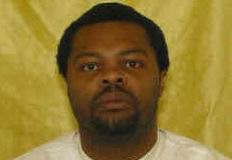
Jeronique Cunningham
Murderer Robert Martines Perez
Murderer · USA · 1994
Name: Robert Martines Perez · Other name used in proceedings: Robert Martinez P…
15 victims
Robert Martines Perez
Murderer · USA · 1994
Name: Robert Martines Perez · Other name used in proceedings: Robert Martinez P…
15 victims
 Billy Frank Vickers
Murderer · USA · 1993
Billy Frank Vickers Vickers was executed by lethal injection in Texas on Januar…
14 victims
Billy Frank Vickers
Murderer · USA · 1993
Billy Frank Vickers Vickers was executed by lethal injection in Texas on Januar…
14 victims
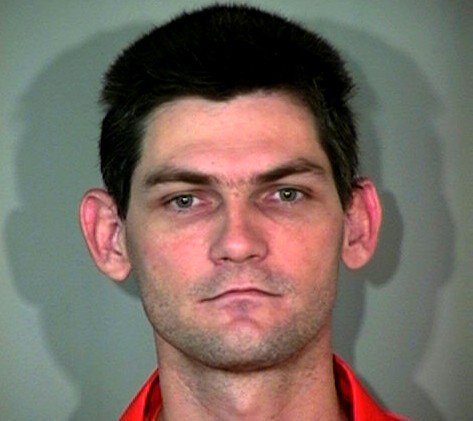 James Erin McKinney
Murderer · USA · 1991
James Erin McKinney was a defendant described as Caucasian. His half-brother wa…
2 victims
James Erin McKinney
Murderer · USA · 1991
James Erin McKinney was a defendant described as Caucasian. His half-brother wa…
2 victims
 Richard Allen Williams
Murderer? · USA · 1992
Boone County Prosecutor Kevin Crane dismissed the charges in August 2003 after…
10 victims
Richard Allen Williams
Murderer? · USA · 1992
Boone County Prosecutor Kevin Crane dismissed the charges in August 2003 after…
10 victims
 John Reyes Matamores
Murderer · USA · 1990
John Reyes Matamores was sentenced to death on October 29, 1993.
1 victim
John Reyes Matamores
Murderer · USA · 1990
John Reyes Matamores was sentenced to death on October 29, 1993.
1 victim
 Patricia Columbo
Murderer · USA · 1976
Patricia Columbo and Frank DeLuca were convicted after a jury trial of three co…
3 victims
Patricia Columbo
Murderer · USA · 1976
Patricia Columbo and Frank DeLuca were convicted after a jury trial of three co…
3 victims
 Rufus Lee Averhart
Murderer · USA · 1972
Rufus Lee Averhart later changed his name to Zolo Agona Azania after entering p…
2 victims
Rufus Lee Averhart
Murderer · USA · 1972
Rufus Lee Averhart later changed his name to Zolo Agona Azania after entering p…
2 victims
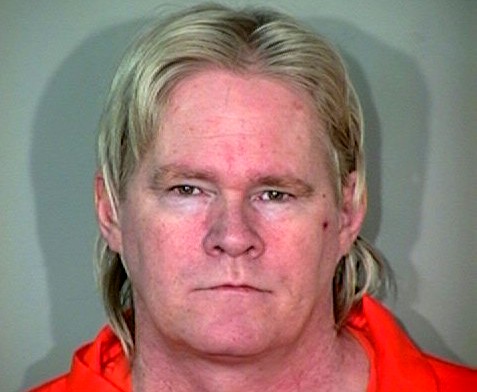 George Kayer
Murderer · USA · 1994
Defendant: George Kayer · Defendant race: Caucasian · Victim: Delbert L. Haas ·…
1 victim
George Kayer
Murderer · USA · 1994
Defendant: George Kayer · Defendant race: Caucasian · Victim: Delbert L. Haas ·…
1 victim
- Gender
- male
- Country
- USA
- Location
- Allen County, Ohio, USA
- Date of birth
- August 13, 1972
- Age at first offence
- 30
- Characteristics
- armed robbery, rape, robbery, spree killer, drug dealer, crack addict
- Victim profile
- Leneshia Williams, 17, and Jala Grant, 3
- Method of murder
- Shooting
- Date(s) of murder
- January 3, 2002
- Years active
- 2002
- Date of arrest
- 2 days after
- Status
-
Sentenced to death
Sentenced to death in 2003
Timeline
- January 3, 2002 — Jeronique Cunningham and his half-brother, Cleveland Jackson, murdered 3-year-old Jala Grant and 17-year-old Leneshia Williams at a home in Lima.
- Two days after January 3, 2002 — Cunningham and Cleveland Jackson were arrested shortly after the shootings.
- June 2002 — An Allen County Common Pleas Court jury convicted Cunningham of two counts of aggravated murder with death penalty specifications.
- 2004 — The Supreme Court of Ohio affirmed the aggravated murder convictions and death sentence in State v. Cunningham (2004-Ohio-7007; 2002-1377).
- December 29, 2004 — A 7-0 decision announced today affirmed Cunningham’s aggravated murder convictions and death sentence.
Background
Jeronique Cunningham was sentenced to death in 2003. He was 29 at the time of the shootings.
Cunningham and his half-brother, Cleveland Jackson, were described as having planned to rob a man at a home in Lima in order to steal crack cocaine and money. Jala Grant, Leneshia Williams, and six other people were at the house of a man whom Cunningham and Jackson planned to rob.
Several of the victims were related to each other, and the others were friends from Lima, which was about 70 miles south of Toledo. Layshane Liles lived in the apartment and had sold drugs to Cunningham earlier in the day and played video games there, prosecutors said. Cunningham and his brother then decided to return to rob Layshane Liles, prosecutors said.
The offence
On January 3, 2002, Cunningham and Jackson murdered 3-year-old Jala Grant and 17-year-old Leneshia Williams at a home in Lima.
Cunningham and Jackson emptied their guns into the victims who were huddled together on the floor. The Supreme Court of Ohio described how Cunningham and Jackson armed themselves and went to the home of Shane Liles, an acquaintance from whom they had purchased crack cocaine earlier the same day. While Jackson took Liles aside to discuss a purported drug purchase, Cunningham pulled a gun and herded the other seven victims into a small kitchen where he forced them to sit on the floor against a wall and demanded their money and jewelry.
After Jackson robbed Liles of a small amount of drugs and four or five hundred dollars in cash, Liles denied having any other drugs or money in the house. Jackson brought Liles into the kitchen with the others and, when Liles again denied having any more money, shot him in the back. The two robbers then emptied their guns into the seven remaining victims, killing Grant and Williams and severely wounding most of the others.
Cunningham and Jackson opened fire on everyone in the house, fatally shooting Jala Grant twice in the head as her father held her in his arms, and fatally shooting Leneshia Williams in the back of the head. Prosecutors said Cunningham forced the victims into a kitchen and hit one in the jaw with his gun before making them line up against a wall.
Cunningham and Jackson were also convicted for the attempted murders of the survivors, each of whom suffered gunshot injuries. One survivor who was shot in the head was in a coma for 40 days, while the others were not as seriously injured; some were just grazed by the bullets. Another description stated that one of the wounded lost her left eye, another lost the use of his right arm, and a third suffered profound brain damage and was in a coma for 47 days.
Investigation
During the trial, five victims testified they saw Cunningham shoot. Coron Liles, who was shot in the mouth, said:
"He shot me. I blanked out. When I woke up, I saw a bloody mess"
Prosecutors described the robbery and shootings as drug-related. They said the brothers knew some of the victims, were invited inside their apartment, and even watched television together before herding the group into a kitchen and shooting them one-by-one.
Arrest
Cunningham and Cleveland Jackson were arrested two days after the shootings on January 3, 2002.
Trial
Convictions
In June 2002, an Allen County Common Pleas Court jury convicted Cunningham of two counts of aggravated murder with death penalty specifications. He was also convicted of aggravated robbery and six counts of attempted aggravated murder.
The jury recommended and the court imposed a sentence of death after hearing aggravating and mitigating evidence during the penalty phase.
Defence and disputed issues
Defense attorneys did not dispute that Cunningham was at the apartment. They said Cunningham had no intention of robbing his friends and put the blame on his younger brother. Defense attorney Robert Grzybowski said:
"There was no plan or purpose on the part of Jeronique Cunningham to cause the death of anyone,"
Grzybowski added:
"Cleveland Jackson had a purpose and plan."
Grzybowski also said:
"Cunningham never fired a gun he had with him,"
During the trial, several victims testified about seeing Cunningham shoot, and prosecutors characterized the act as cold-blooded and calculated. Prosecutor David Bowers said:
"This is absolutely the most cold-blooded, calculated, inhumane murder anyone could imagined,"
Venue and evidentiary issues (Supreme Court discussion)
Cunningham appealed and argued that he was denied a fair trial when the judge denied a motion for change of venue despite extensive pretrial publicity in Lima-area news media, allowed jurors to be shown multiple gruesome photos of the victims and crime scene, and allowed defense lawyers to compare the in-court testimony of some, but not all, of the prosecution witnesses against their pretrial statements to determine if there were inconsistencies that could be attacked on cross-examination.
In its review, the Supreme Court of Ohio addressed jury voir dire procedures. Justice Paul E. Pfeifer wrote about the trial court’s voir dire. The decision stated:
"Here, the trial court conducted an extensive voir dire that covered four days and nearly 900 pages of transcript … After a thorough general voir dire with counsel for both sides participating, the trial court conducted a sequestered voir dire during which the prospective jurors were individually questioned regarding the death penalty and exposure to pretrial publicity."
The decision also described that those who said they had formed fixed opinions or were otherwise unsuitable to serve were excused, and Cunningham’s attorneys did not challenge any of the jurors seated in the case despite not having used all of their peremptory challenges. Pfeifer concluded that the defence “failed to show that ‘the publicity in this case was so pervasive that it impaired the ability of the impaneled jurors to deliberate fairly and impartially.'”
The decision also addressed witness statements. Pfeifer wrote that the trial court's failure to provide defense counsel with copies of three of six prosecution witnesses' pretrial statements for direct review may have been incorrect, but did not rise to the level of reversible error. The decision stated that police incident reports did not contain direct statements signed or affirmed by the actual witness, but rather summarised what an officer understood a witness to have said.
Pfeifer cited State v. Jenkins (1984) and wrote:
“we specifically excluded from discovery … portions of a police officer's report, including statements from other witnesses contained therein.”
Pfeifer further stated that even if the incident reports constituted “statements” subject to review, Cunningham’s attorneys waived all but “plain error” because they failed to object when the trial judge provided only the three witness statements in which the judge found possible inconsistencies. The decision included:
“There was no plain error,” wrote Justice Pfeifer.
It also stated that:
“Defense counsel and the prosecutor were present while the trial court reviewed the statements … (O)nce the trial court concluded that there were no inconsistencies between the statements and trial testimony of Goodloe, Coron Liles and Tomeaka Grant, defense counsel did not request to review the statements or object to the procedure employed by the court … Under somewhat similar circumstances in Jenkins, we said that ‘a defendant cannot be heard to complain on appeal about a matter which the trial judge could have remedied if the defense had complained then.'"
Sentencing
After hearing aggravating and mitigating evidence during the penalty phase, the jury recommended and the court imposed a sentence of death.
Appeals
The Supreme Court of Ohio affirmed the aggravated murder convictions and death sentence of Jeronique Cunningham in State v. Cunningham (2004-Ohio-7007; 2002-1377) in a 7-0 decision announced on December 29, 2004.
Justice Paul E. Pfeifer wrote that the Supreme Court overruled or held as non-prejudicial all 14 assignments of error advanced by Cunningham’s attorneys in asking the Supreme Court to reverse his convictions or reduce his sentence.
Cleveland Jackson also received a death sentence.
Outcome
The Supreme Court of Ohio affirmed the aggravated murder convictions and death sentence of Jeronique Cunningham in the January 2002 shootings at a home in Lima.
Other details
Victims
Jeronique Cunningham was convicted in connection with the shootings that killed:
- Jala Grant (3-year-old)
- Leneshia Williams (17-year-old)
Cunningham’s jury conviction also related to attempted murders of survivors who suffered gunshot injuries, including a survivor who was shot in the head and was in a coma for 40 days, and other victims who had injuries including loss of an eye, loss of the use of an arm, and profound brain damage with a coma for 47 days.
Family statement
Vicki Williams, the mother of Leneshia Williams, hugged her 12-year-old son after Cunningham was convicted. Vicki Williams said:
"I hope he receives the death penalty," she said. "It won't bring Leneshia back but they deserve it."
Spotted an error, or have more information about this case?