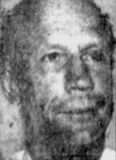
Carl Robert Brown
Mass murderer Julio Gonzalez
Mass murderer · USA · 1990
Julio Gonzalez was sentenced to 174 twenty-five-year sentences (a total of 4,35…
87 victims
Julio Gonzalez
Mass murderer · USA · 1990
Julio Gonzalez was sentenced to 174 twenty-five-year sentences (a total of 4,35…
87 victims
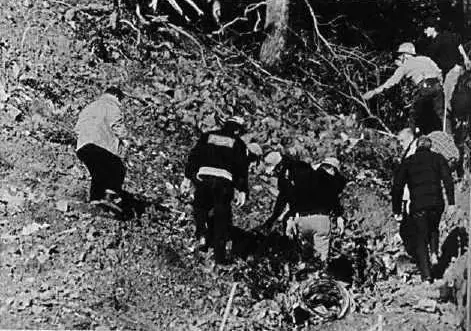 David Burke
Mass murderer · USA · 1987
David Augustus Burke (May 18, 1952–December 7, 1987) was an employee of USAir,…
43 victims
David Burke
Mass murderer · USA · 1987
David Augustus Burke (May 18, 1952–December 7, 1987) was an employee of USAir,…
43 victims
 George Jo Hennard
Mass murderer · USA · 1991
George Jo Hennard carried out a mass killing at a Luby’s Cafeteria in Killeen,…
23 victims
George Jo Hennard
Mass murderer · USA · 1991
George Jo Hennard carried out a mass killing at a Luby’s Cafeteria in Killeen,…
23 victims
 James Huberty
Mass murderer · USA · 1984
James Oliver Huberty was a 41-year-old unemployed security guard. He was born i…
21 victims
James Huberty
Mass murderer · USA · 1984
James Oliver Huberty was a 41-year-old unemployed security guard. He was born i…
21 victims
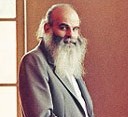 Ronald Gene Simmons
Mass murderer · USA · 1987
Ronald Gene Simmons was a retired United States Air Force sergeant. Over the Ch…
16 victims
Ronald Gene Simmons
Mass murderer · USA · 1987
Ronald Gene Simmons was a retired United States Air Force sergeant. Over the Ch…
16 victims
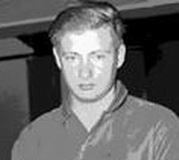 Victor Ernest Hoffman
Mass murderer · Canada · 1967
Victor Ernest Hoffman (born 1946; died May 21, 2004) was found not guilty by re…
9 victims
Victor Ernest Hoffman
Mass murderer · Canada · 1967
Victor Ernest Hoffman (born 1946; died May 21, 2004) was found not guilty by re…
9 victims
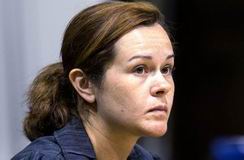 Amy Parmer
Murderer · USA · 2010
Amy Parmer was a 29-year-old woman from Hiawatha who was convicted in the death…
1 victim
Amy Parmer
Murderer · USA · 2010
Amy Parmer was a 29-year-old woman from Hiawatha who was convicted in the death…
1 victim
 Baruch Goldstein
Mass murderer · Palestine · 1994
Baruch Kappel Goldstein (Hebrew: ברוך גולדשטיין ; December 9, 1956 – February…
29 victims
Baruch Goldstein
Mass murderer · Palestine · 1994
Baruch Kappel Goldstein (Hebrew: ברוך גולדשטיין ; December 9, 1956 – February…
29 victims
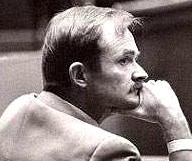 Randy Kraft
Serial killer · USA · 1972
Defendant: Randy Kraft Randy Kraft was sentenced to death on November 29, 1989.…
16 victims
Randy Kraft
Serial killer · USA · 1972
Defendant: Randy Kraft Randy Kraft was sentenced to death on November 29, 1989.…
16 victims
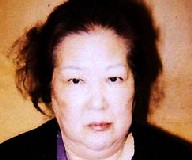 Kayoko Nakai
Murderer · Japan · 2000
Kayoko Nakai was 66 and ran a rival telephone dating club in Kobe at the time o…
4 victims
Kayoko Nakai
Murderer · Japan · 2000
Kayoko Nakai was 66 and ran a rival telephone dating club in Kobe at the time o…
4 victims
 Amber Bray
Murderer · USA · 1996
Amber Bray was a 20-year-old former Burbank high school honor student and cheer…
1 victim
Amber Bray
Murderer · USA · 1996
Amber Bray was a 20-year-old former Burbank high school honor student and cheer…
1 victim
- Gender
- male
- Country
- USA
- Location
- Miami, Florida, USA
- Date of birth
- November 26, 1930
- Age at first offence
- 52
- Characteristics
- shooting spree, abuse, armed robbery, domestic violence
- Victim profile
- Nelson Barrios, 46 / Lonie Jeffries, 53 / Carl Lee, 47 / Ernestine Moore, 67 / Magnum Moore, 78 / Martha Steelman, 29 / Juan Tres-Palacios, 38 / Pedro Vasques, 44
- Method of murder
- Shooting
- Date(s) of murder
- August 20, 1982
- Years active
- 1982
- Date of arrest
- —
- Status
-
Died in custody
Fatally shot and run down by two witnesses while cycling away from the crime scene on August 20, 1982
Case record: Carl Robert Brown
Status / outcome
Carl Robert Brown was fatally shot and run down by two witnesses while cycling away from the crime scene on August 20, 1982.
Background
Carl Brown was born on November 26, 1930. He was an American teacher and mass murderer. He joined the Navy and was honorably discharged in 1954. He later moved from Chicago to Florida in 1955. He graduated from the University of Miami in 1957 and from East Carolina College in Greenville, North Carolina, in 1964, earning a master's degree in education.
Brown worked briefly for Keyes Realty and then took a full-time job at Hialeah Junior High School in 1962. He also moonlighted at Miami-Dade Community College as an accounting instructor from 1964 to 1970.
Brown was married twice and had three children. His first wife died. His second marriage failed, according to his second wife, Sylvia, because he refused to seek psychological help. Brown's condition began to deteriorate, and he became increasingly disheveled and gaunt while isolating himself. A neighbor described him as looking "as if he were 80 years old". One of Brown's daughters tried to have him hospitalized, but because admission had to be voluntary, her request was declined.
Brown's career suffered as his condition worsened. Due to problems at Hialeah Junior High, he was transferred to Drew Middle School in 1981, a school with a black majority. He taught American history there until March 3, 1982, when he was relieved of his teaching duties for medical leave to treat psychiatric problems.
Neighbors described Brown as quiet, kind, and helpful, and praised him as a landlord while saying he worked hard to keep his duplex neat and clean. Other accounts stated that he made a habit of walking into other people's yards early in the morning, waking them by yelling "United States!" and that during the night shots were heard from his house. It was reported that he once broke a window while firing a pellet gun and picked grapefruits from a neighbor's tree while being in underwear. He collected aluminium cans. After a trip abroad taken shortly before the shooting, he returned in worse shape and stated that nothing in the United States stood for anything.
Brown was described as prejudiced and as a racist who hated everyone.
School problems
Brown wrote in his application for a job as a teacher in 1961 that he "always enjoyed being with younger people" and felt that he "could benefit these younger people with his abilities".
As his psychological problems aggravated over the years, complaints were filed. Students began to refuse to sit in his class as he rambled incoherently about personal problems and topics unrelated to the curriculum, conducting confusing conversations that strung together unrelated things. Students often took advantage of this trait by asking a question that resulted in him talking for the rest of the period.
On May 5, 1977, Brown sent three girls to detention because they refused to sit in his class. They refused because they were "sick and tired of hearing him talk."
During his time at Hialeah Junior High, Brown wrote a letter to the principal "for the enlightenment of the assistant principals" discussing misbehavior in rambling and poorly constructed sentences:
"I don't read the students their rights as infants, you all do. (...) If you ever study business law, until a child is 18, the child can do just about anything the child desires to do and get away with the abuse. Any adult interfering, is accountable as an adult, but with infancy laws, the child is a child."
Brown made threatening remarks and insulted people from other races.
Timeline
- November 26, 1930 — Carl Robert Brown was born.
- 1954 — He was honorably discharged from the Navy.
- 1955 — He moved from Chicago to Florida.
- 1957 — He graduated from the University of Miami.
- 1961 — He applied for a job as a teacher and wrote about enjoying being with younger people.
- 1962 — He took a full-time job at Hialeah Junior High School.
- 1964 — He graduated from East Carolina College in Greenville, North Carolina, earning a master's degree in education; he also began moonlighting at Miami-Dade Community College as an accounting instructor (from 1964 to 1970).
- 1964 to 1970 — He moonlighted at Miami-Dade Community College as an accounting instructor.
- May 5, 1977 — Brown sent three girls to detention.
- 1981 — Brown was transferred to Drew Middle School.
- March 3, 1982 — Brown was relieved of teaching duties for medical leave to treat psychiatric problems.
- January 1982 — Brown was referred to the School Board's employe assistance program.
- August 19, 1982 — Brown had a heated argument with Jorge Castalleda, an employee at "Bob Moore's Welding & Machine Service Inc."
- August 20, 1982 — Brown purchased weapons, went to the welding shop, shot employees, and was later fatally shot and run down while cycling away.
Other details (medication, assessments, evaluations, and correspondence)
At Drew Middle School, on December 3, he had a dispute with two students accused of throwing books. During the argument, Brown described his sexual behavior with a girlfriend and chased the boys with a stapler.
The School Board's director of personnel control, Pat Gray, described this as:
"a classroom incident (...) wherein Mr. Brown demonstrated a significant lack of adult judgment, an overtone of sexual fixation, and definitive aggression toward students."
The schools principal wrote:
"I found Mr. Brown to be incoherent and unable to grasp the severity of the situation at hand. I, also, fear for the safety of the students since during my conference with Mr. Brown he demonstrated no regret for his actions pointing to the fact that he is a 'man' and any man would have reacted in the same manner."
Principal Octavio Visiedo wrote in his last evaluation:
"I find Mr. Brown to be a negative force. Today I did a follow-up observation of Mr. Brown's second-period class and I continue to be alarmed about the potential for disaster in that class. As you can see. from today's observation, there is absolutely no discipline or control in that class and I am concerned for the safety of the students and also Mr. Brown."
Visiedo stated that Brown's class was in:
"total and complete chaos" and that students talked constantly, wandered about at will, and left without permission.
Brown reacted by writing a response suggesting the principal "should seek the help" of the School Board's employe assistance program. He was referred to that program in January 1982.
Psychiatrist Dr. Robert A. Wainger examined Brown and assessed:
"Mr. Brown is suffering from rather severe anxiety associated with some paranoid and grandiose ideas" and that he also: "demonstrates a probable thinking disorder".
Wainger wrote that these symptoms would affect Brown's work, but also that he would be able to continue teaching given psychotherapy and medication. Wainger wrote that:
"although he may appear to be rather unusual and disorganized to the people around him, he (Brown) does not represent a danger to either"
After his examination, Brown wrote to Wainger:
"I wish to thank you for the very interesting and informative meeting I experienced yesterday. Please stress blood analysis, heart cartograph and urine plus the other mental health features of your program."
On March 3, Brown was relieved of his duties to seek psychiatrical help, and he agreed to seek further treatment from Wainger. In a meeting with Pat Gray, Brown apparently said:
"Wainger wants to study me, that's all. I can cure Dr. Wainger. I will treat him. I will change his seeds."
According to Sylvia, Brown asked to return to work two days prior to the shooting. His psychiatrist later stated that Brown showed no aggressiveness at that time and declined Brown's request.
The offence (Miami welding shop shooting)
On August 19, 1982, the day before the shooting, Brown had a heated argument with Jorge Castalleda, an employee at "Bob Moore's Welding & Machine Service Inc.", about a 20$ bill for repairing a lawnmower-motor Brown wanted to use to power his bicycle. Castalleda was described as repairing the work poorly, and Brown was angry because his traveler's check was refused. Brown left the shop stating he would come in and kill everybody, but nobody took the threat seriously.
Early the next day, Brown went to a gun store a few blocks from his home in Hialeah and purchased two shotguns, a semi-automatic rifle, and ammunition. An hour before starting his rampage, Brown invited his 10-year old son to join him in "killing a lot of people", telling him that the final destination would be Hialeah Junior High School.
Shortly before 11:00 a.m., Brown arrived at the welding shop on his cycle, wearing a Panama hat and carrying one of the shotguns, identified as either a Mossberg 500 or an Ithaca 37, slung over his shoulder. He entered the shop through a side door and began shooting, saying that he would send everybody to Germany.
Police said Brown walked through the building methodically shooting everyone, most of the time at close range and sometimes twice. Three victims were left in the office, and others were left in the work area and the driveway in front of the shop. Ultimately, six of the eleven employees present lay dead, and two more were dying. Three injured victims escaped, jumped into the car of a passing motorist, who brought them to a petrol station a mile away and called for help.
When his gun was emptied, Brown stepped out of the store, reloaded, and reentered to shoot two more times before leaving for good and cycling away, apparently towards Hialeah Junior High School. A witness said Brown "looked very passive and very non-chalant" and "wasn't trying to escape, just strictly leaving the crime scene." Another witness said:
"He got on his bike and pedaled off as if he was going for a stroll on North River Drive."
After the shooting, Mark Kram, an employee at a nearby metal shop, grabbed a .38 revolver and set out to persue the shooter in his car. Down the street Kram picked up Ernest Hammett, who was trying to flag down cars, and together they tried to get hold of the perpetrator. Six blocks away from the crime scene, near Miami International Airport, Kram and Hammett caught up with Brown. Brown said the pursuers fired a warning shot "over his (Brown's) head", but the bullet hit Brown in the back and later proved to be the cause of his death. When Brown turned in his saddle, aiming at his pursuers with his shotgun, Kram and Hammett ran him over, crashing him into a concrete light pole. Brown, who still had 20 shells in his pockets, died shortly afterwards.
Victims
Eight people were killed. The victims were:
- Nelson Barrios, 46, welder
- Lonie Jeffries, 53, crane operator
- Carl Lee, 47, manager
- Ernestine Moore, 67, the machine shop owner's mother
- Magnum Moore, 78, the machine shop owner's uncle
- Martha Steelman, 29, secretary
- Juan Tres-Palacios, 38, machinist
- Pedro Vasques, 44, shop foreman
The injured were:
- Carlos Vasquez Sr., 42
- Carlos Vasquez Jr., 17
- Eduardo Lima, 30
Aftermath and repercussions
Police found a cassette tape in Brown's house. Brown called himself "Logos", a mythical figure he considered to be the controlling principle of the universe. The cassette included the following quoted statements:
"This is the Logos speaking. God through me is responsible for the good and bad sounds in your head." "Now I shall say a few good words in your head before I return you to the bad sounds in your head ... The Logos is the spark of God, the most logical. I am indestructable on Earth."
No charges were filed against Kram.
Spotted an error, or have more information about this case?