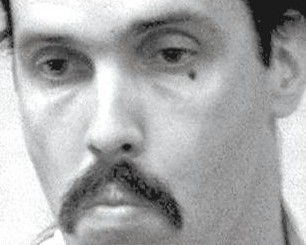
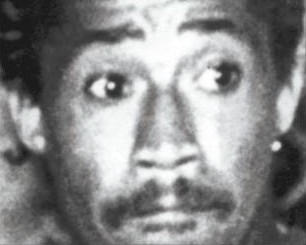
Michael Clagett
Mass murderer Gameel Al-Batouti
Mass murderer · USA · 1999
Gameel Al-Batouti (also rendered “Gamil ElBatouty” or “El Batouty” in U.S. offi…
216 victims
Gameel Al-Batouti
Mass murderer · USA · 1999
Gameel Al-Batouti (also rendered “Gamil ElBatouty” or “El Batouty” in U.S. offi…
216 victims
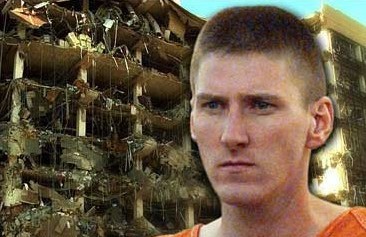 Timothy McVeigh
Mass murderer · USA · 1995
Timothy James McVeigh (April 23, 1968 – June 11, 2001) was a United States Army…
168 victims
Timothy McVeigh
Mass murderer · USA · 1995
Timothy James McVeigh (April 23, 1968 – June 11, 2001) was a United States Army…
168 victims
 Julio Gonzalez
Mass murderer · USA · 1990
Julio Gonzalez was sentenced to 174 twenty-five-year sentences (a total of 4,35…
87 victims
Julio Gonzalez
Mass murderer · USA · 1990
Julio Gonzalez was sentenced to 174 twenty-five-year sentences (a total of 4,35…
87 victims
 David Burke
Mass murderer · USA · 1987
David Augustus Burke (May 18, 1952–December 7, 1987) was an employee of USAir,…
43 victims
David Burke
Mass murderer · USA · 1987
David Augustus Burke (May 18, 1952–December 7, 1987) was an employee of USAir,…
43 victims
 George Jo Hennard
Mass murderer · USA · 1991
George Jo Hennard carried out a mass killing at a Luby’s Cafeteria in Killeen,…
23 victims
George Jo Hennard
Mass murderer · USA · 1991
George Jo Hennard carried out a mass killing at a Luby’s Cafeteria in Killeen,…
23 victims
 James Huberty
Mass murderer · USA · 1984
James Oliver Huberty was a 41-year-old unemployed security guard. He was born i…
21 victims
James Huberty
Mass murderer · USA · 1984
James Oliver Huberty was a 41-year-old unemployed security guard. He was born i…
21 victims
 Dale Shackelford
Murderer · USA · 1999
Dale Carter Shackelford was convicted for the 1999 slayings of Donna Fontaine a…
2 victims
Dale Shackelford
Murderer · USA · 1999
Dale Carter Shackelford was convicted for the 1999 slayings of Donna Fontaine a…
2 victims
 Maurice Lydell Harris
Murderer · USA · 1994
Maurice Lydell Harris was sentenced to death on December 20, 1996. The Californ…
1 victim
Maurice Lydell Harris
Murderer · USA · 1994
Maurice Lydell Harris was sentenced to death on December 20, 1996. The Californ…
1 victim
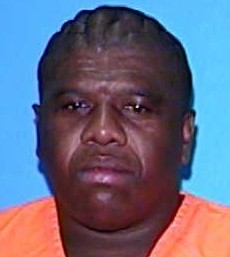 Curtis Windom
Murderer · USA · 1992
Curtis Windom was born on 01/29/66. The case proceeded in the Ninth Judicial Ci…
3 victims
Curtis Windom
Murderer · USA · 1992
Curtis Windom was born on 01/29/66. The case proceeded in the Ninth Judicial Ci…
3 victims
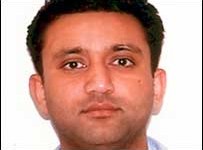 Rahan Arshad
Murderer · United Kingdom · 2006
Rahan Arshad (born 1970) was a taxi driver. He lived at Turves Road, Cheadle Hu…
4 victims
Rahan Arshad
Murderer · United Kingdom · 2006
Rahan Arshad (born 1970) was a taxi driver. He lived at Turves Road, Cheadle Hu…
4 victims
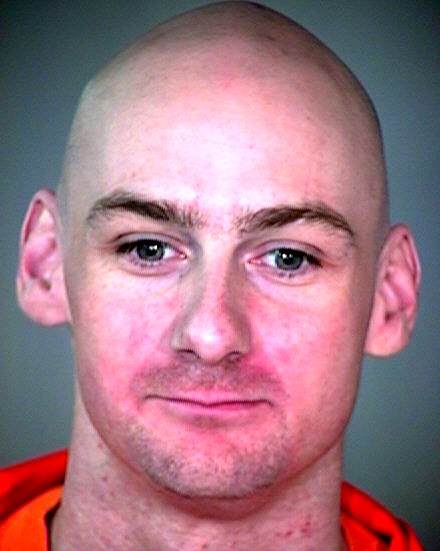 Tracy Allen Hampton
Murderer · USA · 2001
Tracy Allen Hampton was staying with Charles Findley and Findley’s girlfriend,…
2 victims
Tracy Allen Hampton
Murderer · USA · 2001
Tracy Allen Hampton was staying with Charles Findley and Findley’s girlfriend,…
2 victims
- Gender
- male
- Country
- USA
- Location
- Virginia Beach, Virginia, USA
- Date of birth
- 1961
- Age at first offence
- 33
- Characteristics
- revenge, robbery
- Victim profile
- Lam Van Son (owner), Karen Sue Rounds (waitress), Wendel G. "J.R." Parrish Jr. (cook), and Abdelaziz Gren (patron)
- Method of murder
- Shooting
- Date(s) of murder
- June 30, 1994
- Years active
- 1994
- Date of arrest
- Next day
- Status
-
Executed
Executed by electrocution in Virginia on July 6, 2000
Background
Michael Clagett killed four people in a Virginia Beach bar in 1994. His girlfriend, Denise R. Holsinger, was fired from her job as a waitress at the Witchduck Inn in Virginia Beach, and she and Clagett planned to rob the Inn in revenge.
The offence
On June 30, 1994, Holsinger and Clagett carried out a robbery and slayings at the Witchduck Inn in Virginia Beach.
- Holsinger took cash from the register while Clagett shot to death:
- Lam Van Son (owner)
- Karen Sue Rounds (waitress)
- Wendel G. "J.R." Parrish Jr. (cook)
- Abdelaziz Gren (patron) Each victim was shot once in the head. The innkeeper’s cash register was open and empty after the killings, and the robbery involved cash taken from the register.
The evidence at trial showed that Holsinger engineered the crime about a month after she was fired from her job at the Inn. Holsinger urged Clagett to fire the shots while she emptied the tavern’s cash register of about $400. The events occurred after a two-day drug and alcohol binge. Clagett confessed to the killings.
The owner's 5-year-old son, Joshua Lee Son, was asleep in a back room during the killings and was unharmed.
Clagett wrote to Son's widow, Lanna Le Son, the couple's child, Joshua Lee Son, 11, and other relatives of the victims asking for forgiveness. Lanna Son said the letters only convinced her that execution was just, and she said she would pull the switch to electrocute Clagett if she could.
Investigation
Richard T. Reed, a regular patron, arrived at the Witchduck Inn about midnight on June 30, 1994. He discovered the bodies of Lam Van Son, Wendell Parish and Karen Sue Rounds, and Abdelaziz Gren. Each victim had been shot once in the head. Based upon information supplied by Denise Holsinger, Clagett was identified as a suspect in the killings.
On July 1, 1994, Police Officer Donna Malcolm arrested Clagett for public intoxication after responding to a citizen call reporting that a man was "sleeping in the bushes." Clagett was taken into custody and was read his Miranda rights. At the police station, Clagett was turned over to Detective Paul C. Yoakum.
Clagett initially denied that he had been at the Witchduck Inn on the night of the killings. Detective Yoakum then told Clagett that the Inn had security cameras and that the police could place him at the Inn on the night of the murders. Clagett then confessed to the killings.
"You can fry me. Thats (sic) what I'm going to ask for when we go to court. Fry me, I'm not gonna live. I don't want the tax payers supporting me. I did it. Yeah I did it. I did it all. All by my f* * ing self. Let that little c * * go free. I did it all. I did it all buddy. And the worst thing was . . . Lam[, the bar owner,] was my buddy . . . . "
Clagett then explained to Detective Yoakum that he planned the robbery at the request of Holsinger. He also stated that while Holsinger took $400 from the cash register, he used a .357 Magnum to murder the four individuals. He described how and where he shot each of the victims, explaining that he shot one victim in the forehead and the other three victims in the back of the head.
The same day that Clagett confessed to Detective Yoakum and while he was still in police custody, he confessed a second time to a television news reporter. A reporter from WTKR Channel 3 asked Clagett "Are you guilty of these charges?" and Clagett replied:
"Yes. I shot every one of them."
Police found a .357 Magnum in Clagett's home on the morning of July 2, but a crime laboratory analyst was unable to match bullet fragments from the Inn with the gun found in Clagett's home. A medical examiner testified that only one victim was not shot in the back of the head.
When Clagett was arrested, he had $137.00 on his person. Holsinger did not testify at trial.
Arrest
On July 1, 1994, Police Officer Donna Malcolm arrested Clagett for public intoxication after responding to a citizen call reporting that a man was "sleeping in the bushes." Clagett was taken into custody and read his Miranda rights.
Trial
A grand jury returned two indictments against Clagett on October 3, 1994.
- One indictment charged him with robbery, use of a firearm in the commission of a robbery, four counts of capital murder during the commission of a robbery, and four counts of use of a firearm in the commission of a murder.
- The other indictment charged him with one count of multiple homicide capital murder for killing all four individuals as part of the same act or transaction.
During the jury trial, which spanned ten days, the prosecution presented, in addition to the two videotaped confessions, evidence including that Clagett and Holsinger were seen with a gun on the day of the killings. The jury convicted Clagett of all charges in the two indictments.
Sentencing
A sentencing hearing was held on July 12 and 13, 1995. During the hearing, the jury heard evidence that Clagett had a history of brutal domestic violence against his former wife and of drug use, but that he showed great remorse for the murders during his confession to Detective Yoakum.
At sentencing, Clagett received five death sentences after being convicted of five counts of capital murder. He was convicted of four separate counts of capital murder in the commission of a robbery and one count of multiple homicide murder.
Appeals
On appeal, the Supreme Court of Virginia vacated the sentence and conviction for multiple homicide murder, finding that the conviction was derivative of the convictions for capital murder during the commission of a robbery. The court affirmed the remaining four capital murder convictions and death sentences.
The Supreme Court of Virginia also addressed procedural and other appellate issues. It vacated six of Clagett’s claims only to the extent of defaulted claims due to not being addressed in his brief to the court, and it rejected five assignments of error that it had decided in previous cases. The court also held that the trial court properly denied Clagett's requests for disclosure of statements from a police officer and a potential witness, and that it was not an abuse of discretion for the trial court to refuse to strike jurors for cause.
In 1997, the United States Supreme Court denied Clagett's petition for a writ of certiorari.
Clagett had been on death row since October 24, 1995.
In his appeal, Clagett said jurors were not told that he would have been ineligible for parole if they had opted to sentence him to life in prison. He also said his confession should have been thrown out because it was taken by Virginia Beach police when his mind was fogged by alcohol and lack of sleep.
Clagett v. Angelone, 209 F.3d 370 (4th Cir. 2000) (Habeas) was referenced regarding the habeas proceedings.
Outcome
Michael Clagett was executed by electrocution in Virginia on July 6, 2000.
Clagett did not ask Gov. Jim Gilmore for clemency. He was put to death at the Greensville Correctional Center after the U.S. Supreme Court turned down a final appeal and request for a stay.
Clagett watched expressionless as he was strapped into the electric chair by prison officers. He was pronounced dead at 9:08 p.m.
His final statement included an apology to the victim's families.
The electrocution involved:
- 1,825 volts of electricity at 7 1/2 amps for 30 seconds, followed by
- 240 volts at 1.5 amps for 60 seconds After a 5-second pause, the cycle was repeated. A Department of Corrections physician then put a stethoscope to Clagett's heart and pronounced him dead.
Witnesses in the viewing room with the victims' families stood silently through the electrocution, except for one woman who began to cry. Some family members were relieved, and others said the execution did nothing to ease their pain.
Jim Garcia, brother-in-law of Abdelaziz "Aziz" Gren, watched Clagett die and said: "Suddenly I wasn't angry anymore." Garcia's wife, Fatna "Fouzia'' Garcia, said: "It doesn't bring Aziz back," and "It doesn't bring any one of them back." Khadija Johnson thought she was going to faint during the electrocution and later said: "For me it is a sense of relief. So much changed. I do not feel the way I did yesterday." Khadija Johnson also said: "It's not up to anybody to forgive him. If God forgives him then he's forgiven. It's not up to me or anybody else,"
Lanna Le Son forgave Clagett in a Thursday phone call approved by Gov. Jim Gilmore, according to news reports. She told a television reporter: "I think the execution is a lot easier for him than for me. It's really sad to stand there and watch somebody dying and also feel that he deserve it."
Garcia said that on the way back from Jarratt, the family stopped at the cemetery where Gren is buried to tell him that Clagett had been executed.
Aftermath
Denise R. Holsinger was convicted and is serving five life terms plus 23 years.
Holzinger's role in the crimes was described as taking $400 from the cash register while Clagett shot four people in the head. Holsinger had been a waitress at the tavern until she was fired before the killings.
Tim Stanton of Virginians for Alternatives to the Death Penalty said: "Tonight Virginia creates its own family of violence." He also said: "6 years ago, Clagett created a family of victims."
About 20 people conducted a candlelight vigil outside the prison, singing songs and reading Bible passages.
Other details
Clagett chose the electric chair instead of lethal injection. As of January 2002, he was described as the last person executed in the United States by electric chair.
Clagett was described as the second inmate to die in the state's electric chair since Virginia gave inmates a choice between electrocution and lethal injection in 1995. Kenneth Manual Stewart Jr. was described as having been electrocuted in 1998 for killing his estranged wife and infant son in Bedford County.
Clagett was described as becoming the fourth condemned inmate to be put to death in Virginia in that year and as the 77th overall since Virginia resumed capital punishment in 1982. He was also described as the 52nd condemned prisoner to be put to death in the USA that year and the 651st overall since America resumed executions on Jan. 17, 1977.
Clagett wrote to Son's widow, Lanna Le Son, the couple's child, Joshua Lee Son, and other relatives of the victims asking for forgiveness.
On July 8, 2000, Michael Clagett quietly married his 1st cousin in a jailhouse wedding ceremony. The marriage was described as secret, and the wife was identified as Karen Elaine Sparks. The narrative also stated that Clagett's then-girlfriend, Denise Holsinger, and his girlfriend at the time had been involved in the robbery and killings, and that prison policy forbids conjugal visits. It was also stated that Virginia law does not prohibit 1st cousins from marrying, while the state prohibits marriages between brothers and sisters; aunts and uncles and their nieces and nephews; and "ancestors and descendants."
Reached at her home Friday hours after returning from her husband's execution, Karen Sparks said:
"I wouldn't have done it if it wasn't true, if our love wasn't true,''
Sparks also said:
"I can't explain it. There's just no way to put it into words."
Sparks downplayed the significance of marrying a first cousin by saying that Clagett's father and her mother "barely knew each other. They were born 14 years apart. She also said they never consummated the marriage. Prison policy forbids conjugal visits."
Sparks said she told only two close friends, a sister and Clagett's mother, and said:
"When I first brought the subject up with my family, when I told them we were thinking about it,'' she said, "they just went off."
Clagett's mother, Iris M. Etter, said she had spoken frequently with her son from her home in Galloway, Ohio, and understood the contempt people had for him. She said:
"I'd like for people to know that he is not the murderer they think he is,"
and:
"Michael has found peace and he knows what he's done."
Iris M. Etter declined to say whether she knew that Sparks was her son's 1st cousin and said:
"It was wrong for the state to kill her son and that his ashes had been returned to her after his autopsy."
Etter also said:
"It was a very sad thing to me,"
and:
"I think they did a terrible thing. I think Michael would have made a really good person to go around to the prisons and talk to people."
Maurice Sparks Jr., the father of Karen Sparks, said:
"That's a good question,"
and:
"I don't know what she's doing."
It was stated that Karen Sparks and Etter spent 2 hours with Clagett on Thursday before prison officials made them leave at 3 p.m.
Jim Garcia’s brother-in-law relationship was described as brother-in-law of Gren, and Garcia watched the electrocution. Fatna "Fouzia'' Garcia and Khadija Johnson were identified as Gren’s relatives.
Clagett created an apology and wrote to relatives; family members’ reactions to his apologies were included, with Garcia and Johnson stating their views.
Clagett’s confession was described as including that he used a .357 Magnum and that he planned the robbery at Holsinger’s request, while Holsinger emptied the tavern’s cash register.
The Rev. Charles Crismier of Richmond, who interviewed Clagett for a radio program last week, said he believes Clagett has repented. He compared Clagett to Karla Faye Tucker, who claimed to have found God before her 1998 execution for 2 pickax slayings in Texas. Crismier said he believes the reason Clagett picked the electric chair was:
"is more of a statement that he understands profoundly the heinous nature"
Clagett wrote to Son's widow and relatives asking for forgiveness, and Lanna Le Son said she would pull the switch if she could.
Denise Holsinger was described in later discussion as attempting to obtain a portion of her ex-husband’s Navy retirement pay, and a hearing by a divorce commissioner was referenced as an April 2 hearing. Denise Holsinger was described as being eligible for parole on July 19, 2011.
Lanna Son said she would consult a lawyer if Holsinger received any part of the pension and said:
"I promise that I will meet her there at the parole board.''
Spotted an error, or have more information about this case?