
Mesac Damas
Mass murderer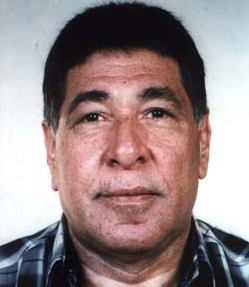 Gameel Al-Batouti
Mass murderer · USA · 1999
Gameel Al-Batouti (also rendered “Gamil ElBatouty” or “El Batouty” in U.S. offi…
216 victims
Gameel Al-Batouti
Mass murderer · USA · 1999
Gameel Al-Batouti (also rendered “Gamil ElBatouty” or “El Batouty” in U.S. offi…
216 victims
 Omar Mateen
Mass murderer · USA · 2016
Omar Mir Seddique Mateen was an American mass murderer who killed 49 people and…
49 victims
Omar Mateen
Mass murderer · USA · 2016
Omar Mir Seddique Mateen was an American mass murderer who killed 49 people and…
49 victims
 Seung-Hui Cho
Mass murderer · USA · 2007
Seung-Hui Cho was a mass murderer who shot and killed 32 people and wounded man…
32 victims
Seung-Hui Cho
Mass murderer · USA · 2007
Seung-Hui Cho was a mass murderer who shot and killed 32 people and wounded man…
32 victims
 Adam Lanza
Mass murderer · USA · 2012
Adam Lanza, 20, fatally shot twenty children and six adult staff members in a m…
27 victims
Adam Lanza
Mass murderer · USA · 2012
Adam Lanza, 20, fatally shot twenty children and six adult staff members in a m…
27 victims
 Eric Harris
Mass murderer · USA · 1999
Eric Harris committed suicide by gunshot to the roof of the mouth on April 20,…
13 victims
Eric Harris
Mass murderer · USA · 1999
Eric Harris committed suicide by gunshot to the roof of the mouth on April 20,…
13 victims
 Jiverly Wong
Mass murderer · USA · 2009
December 8, 1967 — Jiverly Antares Wong was born. · late 1980s — Wong first cam…
13 victims
Jiverly Wong
Mass murderer · USA · 2009
December 8, 1967 — Jiverly Antares Wong was born. · late 1980s — Wong first cam…
13 victims
 John Avalos Alba
Murderer · USA · 1991
John Avalos Alba was convicted of capital murder and was sentenced to death in…
1 victim
John Avalos Alba
Murderer · USA · 1991
John Avalos Alba was convicted of capital murder and was sentenced to death in…
1 victim
 Stanley Williams
Murderer · USA · 1979
Stanley Williams was convicted and sentenced to death for murders committed dur…
4 victims
Stanley Williams
Murderer · USA · 1979
Stanley Williams was convicted and sentenced to death for murders committed dur…
4 victims
 Kenneth Ray Ransom
Mass murderer · USA · 1983
Kenneth Ray Ransom was executed by lethal injection in Texas on October 28, 199…
4 victims
Kenneth Ray Ransom
Mass murderer · USA · 1983
Kenneth Ray Ransom was executed by lethal injection in Texas on October 28, 199…
4 victims
 Champ Ferguson
Murderer · USA · 1861
Champ Ferguson was born November 29, 1821 in Clinton County, Kentucky, near the…
100 victims
Champ Ferguson
Murderer · USA · 1861
Champ Ferguson was born November 29, 1821 in Clinton County, Kentucky, near the…
100 victims
 Douglas Crabbe
Mass murderer · Australia · 1983
Douglas John Edwin Crabbe (b. 1948) was sentenced to five consecutive terms of…
5 victims
Douglas Crabbe
Mass murderer · Australia · 1983
Douglas John Edwin Crabbe (b. 1948) was sentenced to five consecutive terms of…
5 victims
- Gender
- male
- Country
- USA
- Location
- Collier County, Florida, USA
- Date of birth
- July 2, 1976
- Age at first offence
- 33
- Characteristics
- parricide
- Victim profile
- His wife, Guerline Damas, 32, and their children Michzach, 9; Marven, 6; Maven, 5; Megan, 3; and Morgan, 11 months
- Method of murder
- Stabbing with knife
- Date(s) of murder
- September 18, 2009
- Years active
- 2009
- Date of arrest
- 3 days after (in Haiti)
- Status
-
In prison awaiting trial
Background
Mesac Damas, 33, was a Naples, Florida man who was held without bail on the island of Haiti on suspicion of killing six people of his own family, before being extradited to Miami on September 22, 2009.
The offence
The body of Mesac Damas’ wife of ten years, Guerline Damas, 32, was found on September 18, 2009 in the family’s North Naples, Florida home along with the dead bodies of Mesac Damas’ five children: Michzach, 9; Marven, 6; Maven, 5; Megan, 3; and Morgan, 11 months.
Florida police did not release any details on how the murders were done but described the murder site as “horrific”.
Other news media described the crime as the worst crime in the North Naples area history.
Detectives said that sometime between September 17 and 18, Mesac Damas left work, returned to his North Naples townhouse, and cut the throats of his wife, Guerline Dieu Damas, 32, and their five children, before fleeing to his native Haiti, where he was later arrested and returned to the U.S.
The indictment said on or about September 17 or 18, Mesac Damas killed his wife Guerline Dieu Damas, and children Meshach Zack, Maven, Marven, Megan and Morgan by stabbing or slitting their neck with a deadly weapon.
Investigation
Florida police said they were working with federal investigators to locate Mesac Damas after he fled to Haiti.
Collier County Sheriff Kevin Rambosk stated:
"In the 30 years that I've been in Collier County ... this is certainly the most horrific and violent scene that our community has ever seen,"
and:
"This is the worst of the worst."
Rambosk stated Florida police were coordinating with the FBI and ICE to reach Damas, describing him as the man who drove to Miami International Airport and boarded a flight to Haiti. Rambosk stated that FBI and ICE had reached out to the Haitian government about the case and were awaiting word.
Mesac Damas’ car was found at the Miami airport and was being transferred back to Collier County for investigation; Rambosk would not say whether any evidence had been recovered from the vehicle.
Family members contacted authorities on Thursday because they had not heard from Guerline Damas. A missing person report was filed the next day, and on Saturday the sheriff’s office entered the home in a gated community in Naples and found the bodies.
Authorities said Mesac Damas was last seen at about 9 p.m. Thursday at Miller’s Ale House in Naples, where he worked as a cook.
Arrest and extradition
On September 17, Mesac Damas was believed to have boarded a plane to Haiti from the Miami International Airport. He was awaiting extradition to the United States in a police arrest in the Haitian capital city of Port-au-Prince.
On September 22, 2009 Mesac Damas confessed to police that he killed his family. He also told news reporters that he wanted to die and go to heaven.
Mesac Damas was extradited to Miami on September 22, 2009.
Mesac Damas remained on suicide watch in the Collier County jail and had not been allowed any visitors other than his attorney since his September arrest.
A newly released arrest warrant stated Mesac Damas stabbed and slit the throats of his wife, Guerline, and their five children sometime between September 17 and 18. The six bodies were discovered in the couple’s rented townhouse on Saturday night.
Mesac Damas confessed publicly to the murders to a reporter with the Naples Daily News while in Haiti and was in the medical housing unit of the Collier County Jail.
Mesac Damas waived his first hearing. Members of the Haitian community and the victim’s advocate in the courtroom were disappointed that Mesac Damas chose not to appear.
Linda Oberhaus, Shelter for Abused Women and Children, stated:
"The shelter will be here for every single hearing and we'll be here for the arraignment, and we feel we need to follow this case to the end,"
Trial
Mesac Damas had an arraignment scheduled on October 19. The grand jury issued an indictment for Mesac Damas, who was accused of killing his wife and five children in their North Naples home in September.
Mesac Damas was to be arraigned on six counts of first degree murder on October 26.
The State Attorney’s Office announced it would seek the death penalty and filed a notice of intent to seek the death penalty in Collier County court. Steve Russell, State Attorney, stated:
"We're trying to do that early in the case, to make a decision whether this is the type of case that warrants seeking a death penalty or not,"
Collier County Deputy Public Defender Mike Orlando, who represented Mesac Damas, filed a not-guilty plea in September and stated he had concerns about his client’s mental state at the time of the murders.
Sentencing
If sentenced to death, Mesac Damas would have been only the second Florida inmate on death row in a Collier County case.
A status check was slated for Mesac Damas in court that morning, though Orlando said he did not “anticipate Mr. Damas will be there.”
During the penalty phase, the same jury that convicted him would have decided whether to recommend Damas receive life in prison or the death penalty, weighing aggravating factors with mitigating factors offered by the defense.
Aggravating factors were described as:
- acts that were “heinous, atrocious and cruel;”
- acts that were “cold, calculated and premeditated;”
- acts in which a victim was under the age of 12; and
- those in which the offender was the parent of the victim.
Under Florida law as described, each individual killing counted as a prior violent felony to the next.
David A. Brener, a Fort Myers criminal defense attorney, stated that all the aggravators listed may apply to Damas and said a mitigating factor stood above all others, stating:
“Clearly this gentlemen is ill,”
Brener also stated:
“In other words the jury can find him legally sane but mentally ill and therefore not deserving of the death penalty,”
Mesac Damas’ father, Jean Damas Sr., stated:
“I don’t want to talk about this,”
Mackindy Dieu, listed as a witness in the case, stated:
he is not allowed to discuss it.
Guerline’s mother, Thelicia Medor, declined comment.
Sabrina Obsaint, Guerline’s 12-year-old granddaughter, returned a call to the Daily News and stated:
“We wanted to see him live and suffer the consequences in jail,”
Orlando stated:
“I would have preferred that they had not filed that, but that’s what they chose to do,”
and:
“I understand that and will prepare accordingly.”
If convicted, prosecutors sought the death penalty.
Appeals
No appeals were described.
Outcome
Mesac Damas remained in the Collier County jail awaiting trial.
Other details
Mesac Damas was on suicide watch in the Collier County jail.
Authorities described Mesac Damas as having prior arrests for domestic violence, according to records on the Collier County Clerk of Courts Web site as reported in the material.
Mesac Damas’ family members on both sides were tight-lipped when asked about the possibility of receiving the death penalty.
The State Attorney’s Office decision to file for the death penalty meant that Mesac Damas would receive a second attorney for his defense and undergo a penalty phase if convicted.
The material stated that if sentenced to death, Mesac Damas would join Brandy Bain Jennings as the only inmates with Collier cases on death row. It also referenced Thomas Lee Gudinas’ death sentence in Collier County in 1995, Raymond Koon’s death sentence in 1982 and his death in prison in 2005 at 73 years old, and that in 2003 John Ballard was sentenced to death but had his two murder convictions and death sentence vacated in 2006.

Spotted an error, or have more information about this case?