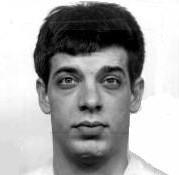
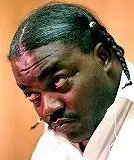
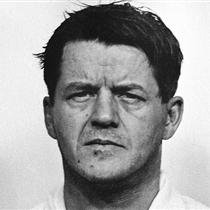
Troy Dale Farris
Murderer Brian Kevin Rosenfeld
Murderer · USA · 1985
Brian Kevin Rosenfeld Brian Kevin Rosenfeld was sentenced to three concurrent l…
23 victims
Brian Kevin Rosenfeld
Murderer · USA · 1985
Brian Kevin Rosenfeld Brian Kevin Rosenfeld was sentenced to three concurrent l…
23 victims
 Marvin Gray
Murderer · USA · 1975
Marvin Gray was convicted killer who claimed responsibility for 23 slayings and…
23 victims
Marvin Gray
Murderer · USA · 1975
Marvin Gray was convicted killer who claimed responsibility for 23 slayings and…
23 victims
 Yahweh ben Yahweh
Murderer · USA · 1980
Yahweh ben Yahweh was born and legally named Hulon Mitchell Jr. (October 27, 19…
23 victims
Yahweh ben Yahweh
Murderer · USA · 1980
Yahweh ben Yahweh was born and legally named Hulon Mitchell Jr. (October 27, 19…
23 victims
 Russell Ellwood
Murderer · USA · 1991
Russell Ellwood was a former taxi driver. Authorities suspected him of killing…
20 victims
Russell Ellwood
Murderer · USA · 1991
Russell Ellwood was a former taxi driver. Authorities suspected him of killing…
20 victims
 William Palmer
Serial killer · United Kingdom · 1846
William Palmer (August 6, 1824 – June 14, 1856) was an English doctor who was c…
13 victims
William Palmer
Serial killer · United Kingdom · 1846
William Palmer (August 6, 1824 – June 14, 1856) was an English doctor who was c…
13 victims
 Lavell Frierson
Homicide - Murderer · USA · 1972
Lavell Frierson was sentenced to death on November 19, 1986. The death sentence…
2 victims
Lavell Frierson
Homicide - Murderer · USA · 1972
Lavell Frierson was sentenced to death on November 19, 1986. The death sentence…
2 victims
 Carlos de Luna
Murderer · USA · 1983
Carlos de Luna was executed by lethal injection in Texas on December 7, 1989. H…
1 victim
Carlos de Luna
Murderer · USA · 1983
Carlos de Luna was executed by lethal injection in Texas on December 7, 1989. H…
1 victim
 Timothy Stemple
Murderer · USA · 1996
Timothy Shaun Stemple was convicted by jury of first degree malic murder (count…
1 victim
Timothy Stemple
Murderer · USA · 1996
Timothy Shaun Stemple was convicted by jury of first degree malic murder (count…
1 victim
- Gender
- male
- Country
- USA
- Location
- Tarrant County, Texas, USA
- Date of birth
- February 26, 1962
- Age at first offence
- 21
- Characteristics
- drugs
- Victim profile
- Clark Rosenbalm Jr., 28 ( Tarrant County Sheriff's Deputy )
- Method of murder
- Shooting ( Magnum .357)
- Date(s) of murder
- December 3, 1983
- Years active
- 1983
- Date of arrest
- —
- Status
-
Executed
Executed by lethal injection in Texas on January 13, 1999; clemency petition denied; execution date January 13, 1999
Case record: Troy Dale Farris (#831)
Background
Troy Dale Farris (#831) was convicted for the December 3, 1983 slaying of Tarrant County Sheriff's Deputy Carl Rosenbalm (also referred to as Clark Rosenbalm Jr.). The conviction involved an incident where Rosenbalm, although wearing a bulletproof vest, was shot and killed after interrupting a roadside drug deal.
Farris was sentenced to death. He insisted he was innocent of the murder of Rosenbalm, who was described as being gunned down after interrupting a drug deal involving Farris. He acknowledged being a heavy methamphetamine user who made money dealing the illegal drug, and testimony showed he had no previous criminal record but had a reputation as a violent person.
The offence
Clark (Carl) Rosenbalm Jr. was murdered after he interrupted a drug deal on an isolated road outside Fort Worth. One of two shots fired at close range went through Rosenbalm's left arm and into his chest, and Rosenbalm had a protective vest. Passersby found the deputy sprawled on the road near his car.
Authorities said Rosenbalm was shot when he left his patrol car and approached Farris, who was in a pickup truck. One bullet from a .357-caliber Magnum was stopped by Rosenbalm's protective vest but a second bullet entered under his arm and tore through his lungs and heart.
Rosenbalm was identified as having been on the Tarrant County force for about two years, and the event was described as occurring on an isolated road near Saginaw, northwest of Fort Worth. It was described as the first time in 25 years that a Tarrant County deputy was killed in the line of duty.
Investigation
Two men testified about the slaying. They said they drove from Wichita Falls to meet Farris in Fort Worth “to exchange marijuana for amphetamine.” After the exchange, Rosenbalm drove up on the scene with the lights on his patrol car flashing. After the two men drove away, they saw the deputy lying on the ground.
One of the men involved in the drug deal testified that Farris “later admitted to shooting Rosenbalm.” Farris also confessed to his brother-in-law “that he shot a policeman.”
The crime scene was described as badly trampled by investigators and onlookers. Sixty-three photographs of the sheriff's patrol car disappeared, and plaster casts taken of tire tracks in the area also disappeared. Marijuana was found on Sheriff Rosenbalm, and an investigator flushed it down the toilet, or so he first claimed.
The investigator was indicted for perjury and planting evidence. After Farris's trial was over and he was on death row, the indictment of the investigator was dismissed.
The Court of Criminal Appeals concluded that "the circumstantial and forensic evidence offered at trial not only failed to connect" Mr. Farris with the murder, but it "also failed in nearly all material respects to confirm the testimony" of the two key witnesses against Mr. Farris. The Court of Criminal Appeals later described that Farris's appellate issue had been affected by how the court handled a prior decision.
Arrest
About a year later, an informant told police about the slaying. That led to the arrest of Farris and two Wichita Falls men, Vance Nation and Charles Lowder. Lowder was given immunity.
Nation identified Farris as the gunman.
Farris stated:
“I was at the scene. I wasn't there when the crime was committed.”
Farris also stated:
“I didn't know about the officer's death until I heard about later on the radio.”
Trial
Two men testified, including Vance Nation and Jimmy Daniels, described as Farris's former brother-in-law. Vance Nation turned state's evidence in exchange for a plea bargain, and he had a marijuana possession conviction and a seven-year probated sentence. Jimmy Daniels testified that Farris confessed to him, “albeit not until a year after the crime.”
The Court of Criminal Appeals found that Daniels's and Nation's credibility and consistency were undermined. It was stated that "credibility was seriously undermined by the fact that his testimony before the grand jury had been inconsistent with his trial testimony, "and, therefore, inconsistent with" Mr. Farris's guilt, the Court of Criminal Appeals found.
Despite those appellate findings, the court voted to affirm the jury's finding of guilt. The Court of Criminal Appeals also used a guiding principle that, unless the court concludes that a "rational trier of fact" could not have found the defendant guilty based on all the evidence before it, the court upholds the jury's decision.
A number of appeal grounds were described, including the claim that the court unfairly excluded a juror who expressed opposition to the death penalty. The U.S. Supreme Court had held that opposition to the death penalty does not automatically exclude a person from participating on the jury of a capital case.
The Court of Criminal Appeals rejected Farris's bid for a new trial in 1990, and in 1994 it held in a similar case that the unfair exclusion of an anti-death penalty juror constituted grounds for reversal. In the new ruling, the court admitted it had erred in throwing out Farris's appeal, stating:
"We believe Farris was wrongly decided ... and hereby expressly overrule it."
It was described that this ruling had no effect on Farris's case because lawyers were then appealing at the federal, not the state level.
Sentencing
Farris was sentenced to death, and the case involved clemency review by the Texas Board of Pardons. The Texas Board of Pardons rejected his clemency appeal by a vote of 12-5 with 1 abstention. A guiding description stated that the pardon board had only reprieved one death row inmate on humanitarian grounds since 1982.
It was also described that seven members voted for some form of clemency, either commutation or a 30-day reprieve.
Daniel Lang, described as a Bush appointee to the board, said:
“I had some questions on the fairness”
Mr. Sutton, described as the criminal adviser to Governor Bush, said the governor could have granted a reprieve, but that he had "looked at all the facts of the case and chose not to."
Appeals
The Texas Court of Criminal Appeals refused to grant a stay of execution and had previously held that it had "wrongly decided" to reject Farris's appeal of trial irregularities.
The Court of Criminal Appeals refused to block the execution by ruling that Farris's appeal did not meet narrow criteria established by Texas legislature restrictions on death row appeals. It was described that the court did not even review the merits of his claim of an unfair trial.
The U.S. Supreme Court denial was referenced during the execution process when an application was sought.
Outcome
Farris was executed by lethal injection in Texas on January 13, 1999.
The execution occurred at 7:16 p.m., and it was described as six minutes after the lethal drugs were released into his arms. The execution was delayed by more than 30 minutes while Farris's attorneys sought a stay from the U.S. Supreme Court. The application was denied at 6:20 p.m.
As the drugs took effect, Farris gasped a couple of times and stopped moving.
Rosenbalm's wife, Cindy, said afterward:
“Justice prevailed”
“It was very uneventful. I feel he had lots of practice in his last words.”
Outside the prison, about a dozen Tarrant County officers including Sheriff David Williams waited in uniform. Sheriff David Williams said:
“It was important to be here to be part of the closure. We can put this in the file and the file can be closed.”
Farris's final statement included the following:
“First off, to the Rosenbaum family, to Cindy, to Scott, to everyone, I just want to say I have nothing but love for you. And I mean that from the deepest part. I can only tell you that Clark did not die in vain. I don’t mean to offend you by saying that, but what I mean by that is, through his death, he led this man to God. I have nothing but love for you. To my family, my soul beloved, you’re so beautiful, for all your love and support is just miraculous, everything that ya’ll have done. Be sure and tell T.D. he’s in my heart. I send my love to Jay, to everyone. To Roger Burdge. I have nothing but love for all of you. Like they say in the song, I guess, I just want to go out like Elijah, on fire with the spirit of God. I love you. I’m done.”
Farris also used a set of statements reported during his final moments:
“Like they say in the song, I guess, I just want to go out like Elijah, on fire with the spirit of God,” Farris said.
“I’m done. Take me, Jesus. Take me, Jesus. I love you.”
Tina McIntire, who described herself as a lifelong friend of the inmate, said:
“Texas criminal justice is a farce and a political game”
“I hope voters are going to wake up.”
Aftermath
Farris was described as the second condemned inmate executed that year in Texas. It was stated that 20 convicted murderers were executed in 1998, described as the most in the nation.
It was also described that Farris was executed while another inmate, Gary Graham, had an execution scheduled, and that Graham insisted he is innocent and had sought a court reprieve earlier in the week. Farris was described as disagreeing with Graham's combative stance, and Farris said:
“I hate to hear it, not only for repercussions it might have for the rest of the people here, but I hate it for him as an individual. I’d like to think he could find some peace and go in peace. I think it's very important for everybody.”
Other details
Farris was described as a former electrician and truck driver.
David Montague, described as prosecuting Farris, said:
“He was an incredibly violent individual who had told a friend he had been waiting for a chance to kill a cop and did so,”
and also said:
“He also was a freeway shooter. If you didn't use your signal when you moved in front of him he was likely to pull out a gun and start firing at you.”
Montague said:
“He wanted to see what the gun would do,”
and described an incident where Farris tried out a new gun by shooting a buffalo at a nature preserve and then drove away.
Farris was described as denying shooting the officer and viewing his execution with relief. In an interview last week, he said:
“I don't have any fear,”
and also said:
“I'm just happy.”
He said:
“I think you have to understand this has been a very, very long journey,”
and continued:
“Fourteen years is a long time, especially when you live under these conditions. I'm tired, I really am. It's not that I'm giving up. That's not it at all. It's just that I'm tired. Anything is better than this.”
Spotted an error, or have more information about this case?