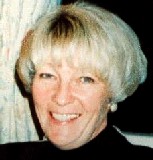
Susan May
Murderer Heather Arnold
Murderer · United Kingdom · 1986
Heather Arnold was a mathematics teacher at Kingsdown Comprehensive School, War…
2 victims
Heather Arnold
Murderer · United Kingdom · 1986
Heather Arnold was a mathematics teacher at Kingsdown Comprehensive School, War…
2 victims
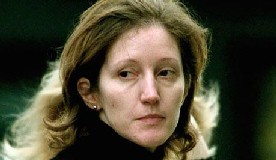 Jane Andrews
Murderer · United Kingdom · 2000
Jane Andrews (born 1967) was a former Royal dresser for Sarah, the Duchess of Y…
1 victim
Jane Andrews
Murderer · United Kingdom · 2000
Jane Andrews (born 1967) was a former Royal dresser for Sarah, the Duchess of Y…
1 victim
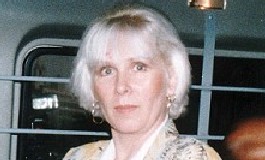 Linda Calvey
Murderer · United Kingdom · 1990
Linda Calvey was a female convicted murderer and armed robber. She was known as…
1 victim
Linda Calvey
Murderer · United Kingdom · 1990
Linda Calvey was a female convicted murderer and armed robber. She was known as…
1 victim
 Marie-Thérèse Kouao
Murderer · United Kingdom · 2000
Marie-Thérèse Kouao Victoria Climbié was born on 2 November 1991 in a small Afr…
1 victim
Marie-Thérèse Kouao
Murderer · United Kingdom · 2000
Marie-Thérèse Kouao Victoria Climbié was born on 2 November 1991 in a small Afr…
1 victim
 Tracie Andrews
Murderer · United Kingdom · 1996
Tracie Marguerite Andrews (born 1969) was an English woman who murdered her fia…
1 victim
Tracie Andrews
Murderer · United Kingdom · 1996
Tracie Marguerite Andrews (born 1969) was an English woman who murdered her fia…
1 victim
 Margaret Waters
Murderer · United Kingdom · 1866
Margaret Waters was an English murderess who was hanged by executioner William…
19 victims
Margaret Waters
Murderer · United Kingdom · 1866
Margaret Waters was an English murderess who was hanged by executioner William…
19 victims
 William Gerald Mitchell
Murderer · USA · 1974
William Gerald Mitchell — petitioner/appellant. · Christopher B Epps, Commissio…
2 victims
William Gerald Mitchell
Murderer · USA · 1974
William Gerald Mitchell — petitioner/appellant. · Christopher B Epps, Commissio…
2 victims
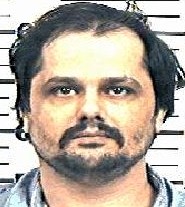 David Wayne Woodruff
Murderer · USA · 1985
David Wayne Woodruff. · July 19, 1986 — Woodruff and John Joseph Romano were ac…
2 victims
David Wayne Woodruff
Murderer · USA · 1985
David Wayne Woodruff. · July 19, 1986 — Woodruff and John Joseph Romano were ac…
2 victims
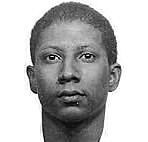 Kenneth Dunn
Murderer · USA · 1980
Kenneth Dwayne Dunn, a Texas death row inmate, was executed by lethal injection…
1 victim
Kenneth Dunn
Murderer · USA · 1980
Kenneth Dwayne Dunn, a Texas death row inmate, was executed by lethal injection…
1 victim
 Patrick Fitzgerald Rogers
Murderer · USA · 1985
June 2, 1997 — Patrick Rogers was executed by lethal injection in Texas. · June…
1 victim
Patrick Fitzgerald Rogers
Murderer · USA · 1985
June 2, 1997 — Patrick Rogers was executed by lethal injection in Texas. · June…
1 victim
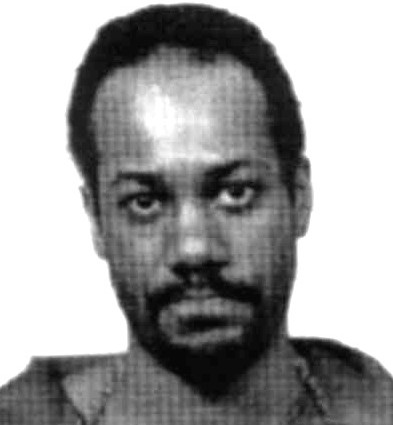 Vincent Prowell
Homicide · USA · 1993
Vincent Prowell had a paranoid personality disorder. Prowell grew up in a dysfu…
2 victims
Vincent Prowell
Homicide · USA · 1993
Vincent Prowell had a paranoid personality disorder. Prowell grew up in a dysfu…
2 victims
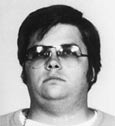 Mark David Chapman
Murderer · USA · 1980
Mark David Chapman (born May 10, 1955, in Fort Worth, Texas) shot and killed mu…
1 victim
Mark David Chapman
Murderer · USA · 1980
Mark David Chapman (born May 10, 1955, in Fort Worth, Texas) shot and killed mu…
1 victim
- Gender
- female
- Country
- United Kingdom
- Location
- Royton, Greater Manchester, England, United Kingdom
- Date of birth
- 1945
- Age at first offence
- 47
- Characteristics
- —
- Victim profile
- Hilda Marchbank, 89 (her aunt)
- Method of murder
- Suffocation
- Date(s) of murder
- March 11, 1992
- Years active
- 1992
- Date of arrest
- 18 days later
- Status
-
Released
Sentenced to life imprisonment on May 5, 1993; released on April 26, 2005
Parties and identifiers
- Susan May (principal carer for her aunt) was convicted of the murder of Hilda Marchbank.
- Hilda Marchbank was an 89-year-old widow living alone at 24 Tandle Hill Road, Royton, Oldham.
Timeline
- 11 March 1992 — Hilda Marchbank was beaten around the face and killed by suffocation in her house at 24 Tandle Hill Road, Royton, Oldham.
- 12 March 1992 — The body of Hilda Marchbank was discovered by her niece, Mrs Susan May, at about 9.30 am.
- 12 March 1992 (about 9 pm) — Susan May said she went to her aunt’s house because her aunt had telephoned expressing anxiety as to the whereabouts of the front door keys.
- 12 March 1992 (about 9.40 am) — Susan May arrived to visit Hilda Marchbank.
- 12 March 1992 (about 10.30 am) — Detective Superintendent Kerr took charge of the investigation and arrived at 24 Tandle Hill Road with a fingerprint officer and a photographer (Mr Naylor).
- 13 March 1992 — Detective Sergeant Rimmer produced a typed report R17 dated 13 March 1992.
- 14 February 1997 — Susan May’s first appeal against her conviction was dismissed by a differently constituted division of the Court of Appeal.
- 5 May 1993 — Susan May was convicted of murder and sentenced to life imprisonment.
- 24 November 1999 — The Criminal Cases Review Commission referred the case to the Court of Appeal.
- 7 December 2001 — The Court of Appeal dismissed Susan May’s second appeal.
- 26 April 2005 — Susan May was released.
- May 27 2009 — Susan May reported having breast cancer and discussed her campaign.
- May 7 2012 — The Guardian published findings including claims about evidence not followed up.
Background
Hilda Marchbank lived alone at 24 Tandle Hill Road, Royton, Greater Manchester and was 89 years old. She was the aunt of Susan May, who lived with her mother at 42 Dogford Road, Royton, and was described as the principal carer for both elderly women. Susan May visited her aunt several times each day and received many telephone calls from her aunt due to her impaired sight.
Susan May provided all of Hilda Marchbank’s food, either preparing it at her own home and taking it by car, or buying pre-prepared food. Hilda Marchbank also had help from a cleaner, Mrs B, who visited once a week for two hours on a Wednesday.
On the Wednesday evening 11 March 1992, Susan May said that about 9 pm she went to her aunt’s house because her aunt telephoned expressing anxiety as to the whereabouts of the front door keys. Susan May stated that the keys were not in fact mislaid and that she was able to leave after a brief visit.
Susan May did not receive a telephone call from her aunt on the morning after 11 March 1992 and set off to visit her at about 9.40 am on 12 March 1992. She arrived to find the curtains still drawn, and she went to the bedroom where she could see Hilda Marchbank lying on the bed in disarray with her night-dress up.
Susan May later stated that she saw blood on her aunt’s face and blood on the pillow, and then ran out to find a neighbour, Mrs O, to telephone for an ambulance. When the ambulance crew arrived, it was clear that Hilda Marchbank was dead.
The offence
Hilda Marchbank was killed by asphyxia due to suffocation, described as possibly with the blood-stained pillow on which her head was subsequently found to be resting. There were bruises on the neck indicative of grasping and compressing quite forcibly, facial bruises described as probably caused by slapping or punching, and three facial scratches described as probably caused by fingernails. The scratches were described as not capable of being self-inflicted because the deceased’s nails were bitten short.
A murder inquiry began and detectives initially believed the death was the result of a botched burglary; however, nothing was taken and there was no sign of forcible entry.
Investigation
Discovery and immediate scene
Susan May found her aunt dead on 12 March 1992 and telephoned for an ambulance. Police involvement began after it was clear the aunt was dead. Detective Superintendent Kerr took charge of the investigation and arrived at about 10.30 am with a fingerprint officer and a photographer, Mr Naylor, and later another photographer, Mr Fitton, attended briefly for a video film.
Initial investigations showed signs of disturbance within the house suggestive of searching by a burglar, but it was stated that no property appeared to be missing and there was no sign of forcible entry.
Marks on the wall
Investigators noted that there were three sets of marks on a wall running parallel to and a short distance away from the bed. It was described that anyone entering the bedroom from the kitchen would have that wall on their right, and that there was a light switch near the entrance. The wall ended before it reached the bedhead, leaving a gap giving access to the living area.
At trial, the marks were described as:
- The left mark (JH1) made by a right hand, labelled JH1, 13 inches from a corner nearest to the bedhead.
- The middle set of marks (JH2) made by a left hand, located 18 inches away from the left-hand set of marks.
- A further 26 inches along towards the kitchen, a smear MSN14 close to the light switch. All three marks were described as made at a height of about 4'6" above floor level.
It was the prosecution case that these were marks made by Susan May at the time she murdered her aunt during the evening of 11 March 1992, with the substance left on the wall being the blood of the deceased. The ambulance crew did not see living symptoms; a pathologist, Dr Lawler, later revealed that the aunt died as a result of suffocation and described the injuries including bruises and scratches.
Dr Lawler’s evidence included that the blood on the surface of the body and the bedding was dry and that blood transfer would not likely occur after deposition by more than about six hours after it was deposited, and that death likely occurred between 9 pm and midnight on 11 March 1992.
Fingerprints and forensic testing
A forensic scientist, Mr Hussein, attended on 19 March 1992 about one week after the murder and applied chemical re-agents (iodine spray and ninhydrin) to enhance fingerprint detail. On 24 March 1992, Mr Hussein used tetra-amino biphenyl (TAB) to test whether the substance on the wall was blood. All three areas demonstrated positive reaction, with no atypical reactions. It was stated that these tests were not sufficiently specific to distinguish between human and animal blood.
A fingerprint officer gave evidence that the left mark JH1 was made by Susan May’s right hand. The right hand mark was described as a smear for which another scientist, Dr Basley, reported that the blood was of human origin and could not have been animal blood, though it could not say whose blood it was.
The evidence at trial included that the judge told the jury that making the marks would have required “a great deal of blood,” though later discussion indicated it could have been less.
It was stated that the prosecution invited the jury to infer that all three marks were made in the deceased’s blood by the murderer as she or he felt his or her way along the wall towards the kitchen door after killing her, and that because Susan May’s right hand made JH1, Susan May was the murderer.
Remark about scratches and record keeping
The investigation included an alleged remark Susan May made to Detective Sergeant Rimmer: “Do you know the scratches on my aunt's face, can they get stuff from down your finger nails at forensic?”
Det. Sgt. Rimmer recorded information about what Susan May told her, including that Susan May was seen as in her later reports to have commented about scratches. There was dispute as to whether Susan May made the remark; Susan May denied making it. The notebook in which police said the words were logged was described as missing, and it was said that the remark was not recorded in the murder log and that the appeal court hearing was told this fact.
The court later considered statutory protection under the Police and Criminal Evidence Act 1984 and concluded that it was not necessary at the earlier stages.
Burglary line of inquiry
Detectives initially believed the death resulted from a botched burglary, despite no property being missing and no forcible entry. The prosecution contended that evidence of burglary was faked. Susan May asserted the door had been left unlocked by her aunt at times, and that absence of signs of forcible entry could be explained accordingly.
Communications and interviews
The court record described that Detective Sergeant Rimmer gathered information from Susan May about the deceased and the last day of the deceased’s life. In her report, Rimmer recorded that “As she got near her 'aunty' she could see blood on her face, blood on the pillows and thought she had something around her neck. May states that she did not go any nearer nor did she touch anything.”
It was discussed that Susan May gave witness statements on 19 March 1992 and 20 March 1992 dealing with background matters, and on 23 March 1992 she made a third witness statement confirming she did not touch her aunt.
A policy book entry dated 24th March 1992 stated: “There is significant evidence to suspect that Susan May has murdered her aunty. The SIO instructs that she be arrested and interviewed on Thursday 26th March 1992.”
The court later stated that Susan May was arrested and interviewed under caution.
Arrest
The Court of Appeal judgment described that by 24 March 1992, it was decided Susan May should be treated as a suspect and she was to be arrested and interviewed on Thursday 26 March 1992. When arrested and interviewed, Susan May denied the offence and vehemently denied having said anything about scratch marks to Detective Sergeant Rimmer.
Trial
Court
Susan May was tried for the murder of Mrs Marchbank at Manchester Crown Court before Justice Hutchison and a jury.
Conviction
The jury convicted Susan May of the murder of Hilda Marchbank. She was sentenced to life imprisonment on 5 May 1993.
Prosecution case at trial
The prosecution case at trial included:
- Evidence of opportunity and motive, described as opening the door to proof of murder but not amounting to an important element of proof.
- Evidence relating to the marks on the wall.
- Evidence of burglary which the prosecution contended was faked.
- The remark about scratches allegedly made to Detective Sergeant Rimmer.
- Lies admitted to in interview about financial matters and about her association with C R.
- Lies allegedly told about conversations she had with Mrs O and PC Roberts soon after the murder.
The prosecution case on forensic evidence emphasized the fingerprint on the wall in a bloodstain and the remark about scratches, and argued that the jury should infer that the murderer left blood marks as she or he felt along the wall.
Defence case at trial
Susan May denied the offence and adopted what she had said in her three witness statements, including asserting that at no time had she touched the body.
In cross-examination she said: “I am more than sure that I didn't touch her.”
The defence explanation at trial included speculation that the marks in blood could have been made about two or three weeks earlier when she cut her left hand when removing a rubber door stop. The cleaner Mrs B testified about the incident.
The judge dismissed the notion that Susan May killed Hilda Marchbank for her money. The judge pointed out that Susan May had power of attorney over her aunt’s finances and could have taken money out at any time. The judge also noted that Susan May had power over her mother’s finances.
Sentencing
Susan May was sentenced to life imprisonment on 5 May 1993. She was told she would serve at least 12 years.
Appeals
First appeal
Susan May’s first appeal was dismissed in February 1997. Another appeal court judgment described that judges rejected fresh medical evidence that May had suffered a memory gap over the circumstances of Hilda Marchbank’s death, and stated the expert evidence failed to explain away what she had said four or five years previously. The Court of Appeal stated the conviction was not unsafe on any ground.
Second appeal (Court of Appeal, Criminal Division)
A case referred by the Criminal Cases Review Commission resulted in a Court of Appeal hearing. The effect of the referral was described as treating the matter as an appeal against conviction under the Criminal Appeal Act 1968.
Before this court, the additional matters and evidence led the court to consider grounds of appeal. The grounds were described as including:
- The marks on the wall, focusing on the right hand mark MSN14, suggesting it could have been made by someone other than Susan May after investigations began.
- Statutory protection under the Police and Criminal Evidence Act 1984, contending she should have been treated as a suspect earlier so evidence should have been excluded, including evidence about what was allegedly said to Detective Sergeant Rimmer. Other grounds were listed as involving the police interviews dwelling too much on financial matters, motive playing too big a part, and that originally acting counsel did not establish material suggesting an unknown assailant, but the court found no substance in them as presented.
Decision on second appeal
On 7 December 2001, the Court of Appeal dismissed Susan May’s second appeal.
The court found:
- That it was not fanciful to suggest the third mark was due to later transfer and that there was no liquid blood available to transfer until Dr Lawler examined the body.
- The marks on the wall close to the deceased constituted even more telling evidence against Susan May.
- The position in relation to JH1 remained a handprint made by her right hand in blood.
- JH2 was a print made by a left hand, now known to be made in human blood or blood of a higher primate.
- MSN14 was a smear of the deceased’s blood. The court held it was open to the jury to infer the marks were made in the deceased’s blood at the time of death and that the identification of Susan May’s right hand constituted “damning evidence.”
On the statutory protection ground, the court accepted that there were no grounds to suspect Susan May earlier so as to require cautions at the earlier stages. The court also described that even if there had been a breach, it would not have resulted in evidence exclusion, and that counsel did not apply for exclusion at trial for forensic reasons.
Outcome
- Susan May was convicted of murdering Hilda Marchbank and sentenced to life imprisonment on 5 May 1993.
- Susan May’s second appeal was dismissed on 7 December 2001.
- The Criminal Cases Review Commission later invited Susan May to resubmit her claim following additional evidence.
Aftermath
Susan May served 12 years and was released on 26 April 2005, becoming the first prisoner to gain release “on time” while still denying the offence.
Throughout incarceration she refused to comply with offending behaviour programmes and other measures associated with parole.
After release, she described being unable to work because her conviction appeared on Criminal Records Bureau checks, and she devoted her life to clearing her name.
Susan May later reported being in remission from breast cancer, describing chemotherapy and treatment taking a toll. She survived on a small state pension and continued campaigning to clear her name. She said: “Despite 20 years passing since Auntie was murdered, I still firmly believe there are individuals who know something which could help clear my name and bring long awaited justice for my auntie. I may be free from prison, but remain locked up in this wrongful conviction and will never stop fighting to clear my name.”
She also said: “The worst thing has been the idea people believed I could have hurt her.” And she said: “I loved my auntie,” and “The worst thing has been the idea people believed I could have hurt her.”
A family member described Susan May’s support network and continued attention on the case.
Other details
Associated individuals and relationships
- Susan May was described as having a secret affair with Chris Ross (C R), a married man who was 16 years younger and worked at a computer firm. Susan May was accused of murdering her aunt for money to lavish gifts on this lover.
- Susan May’s daughter was named Katy May. The Court of Appeal hearing described Katy May as starting to cry during the second appeal hearing.
- Susan May’s mother was named Dorothy (also described as Hilda Marchbank’s sister).
- Hilda Marchbank was married to Tom Marchbank, described as owner of Royton’s first launderette.
- Susan May’s husband at one time was named Terry, and Susan May’s children included Adam, Toby, and Katy. (Terry and Susan were later described as divorced in the narrative.)
- A neighbour mentioned in the investigation narrative was Delryse Oakley (referred to as Mrs Oakley).
Evidence and forensic concerns discussed after conviction
The Guardian and related narrative described claims including:
- Greater Manchester police allegedly failed to follow up evidence linking a red car seen at the crime scene to Michael Rawlinson, described as a heroin addict with convictions for burgling elderly people’s homes.
- Rawlinson was stated to have been killed in a drug-related dispute in 2001.
- Claims that police tried to persuade a witness, George Cragg, to lie, and that Cragg’s account included references to being told “eliminate the red Fiesta, we know who's done it, she's done it.” The narrative attributed alleged further exchange: “Can you not say you were driving a red Fiesta?” and an alleged reply: “We have her bang to rights and we want to eliminate the red Fiesta.”
- Claims that forensic analysis of the marks on the wall was flawed, including discussion of TAB testing and fingerprints.
- Further claims about missing records, including that the notebook where the scratches remark was logged had gone missing, and that the marks were not discovered by the police photographer or chief forensic officer but by Detective Superintendent Bill Kerr.
Appeal counsel and court members (as named in the Court of Appeal judgment)
For the appellant, the Court of Appeal judgment named:
- Mr Michael Mansfield QC
- Mr James Gregory (instructed by Stephensons Solicitors, Salford)
For the Crown:
- Mr Anthony Morris QC
- Miss Rachel Smith (instructed by CPS for the Crown)
The Court of Appeal bench was:
- LORD JUSTICE KENNEDY
- MR JUSTICE BUCKLEY
- MR JUSTICE GRIGSON
Spotted an error, or have more information about this case?