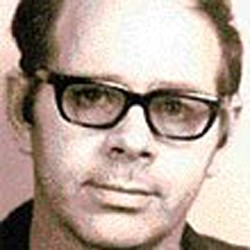
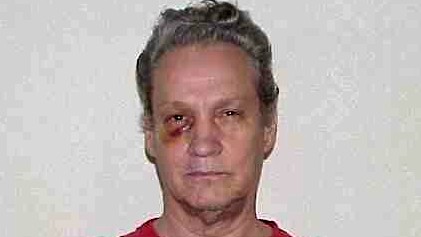
Robert Garrow
Spree killer Paul John Knowles
Spree killer · USA · 1974
Paul John Knowles (April 17, 1946 – November 18, 1974) was an American spree ki…
35 victims
Paul John Knowles
Spree killer · USA · 1974
Paul John Knowles (April 17, 1946 – November 18, 1974) was an American spree ki…
35 victims
 Bobby Joe Maxwell
Spree killer · USA · 1978
Name: Bobby Joe Maxwell Sex: M Race: B Type: T Motive: PC-nonspecific Method of…
11 victims
Bobby Joe Maxwell
Spree killer · USA · 1978
Name: Bobby Joe Maxwell Sex: M Race: B Type: T Motive: PC-nonspecific Method of…
11 victims
 Mark Essex
Spree killer · USA · 1973
Mark James Robert Essex was a Navy veteran who engaged in a shooting and arson…
9 victims
Mark Essex
Spree killer · USA · 1973
Mark James Robert Essex was a Navy veteran who engaged in a shooting and arson…
9 victims
 Allen Leroy Anderson
Spree killer · USA · 1976
Allen Leroy Anderson was a 34-year-old vagrant with a long record of felony arr…
8 victims
Allen Leroy Anderson
Spree killer · USA · 1976
Allen Leroy Anderson was a 34-year-old vagrant with a long record of felony arr…
8 victims
 Betty Lou Beets
Murderer · USA · 1981
Betty Lou Beets was convicted of the capital offense of the murder of her husba…
2 victims
Betty Lou Beets
Murderer · USA · 1981
Betty Lou Beets was convicted of the capital offense of the murder of her husba…
2 victims
 George Joseph Smith
Serial killer · United Kingdom · 1912
George Joseph Smith was also known as Oliver George Love, Charles Oliver James,…
3 victims
George Joseph Smith
Serial killer · United Kingdom · 1912
George Joseph Smith was also known as Oliver George Love, Charles Oliver James,…
3 victims
 James & John McNamara
Mass murderer · USA · 1910
James B. (“J.B.”) McNamara · John J. (“J.J.”) McNamara · The brothers were Iris…
21 victims
James & John McNamara
Mass murderer · USA · 1910
James B. (“J.B.”) McNamara · John J. (“J.J.”) McNamara · The brothers were Iris…
21 victims
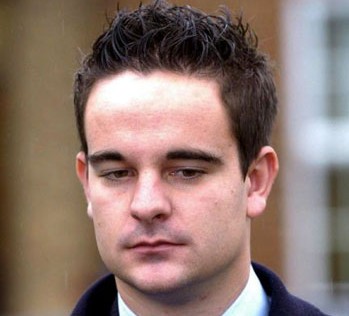 Benjamin Geen
Murderer · United Kingdom · 2004
Benjamin Geen was a former nurse. He worked at the accident and emergency depar…
2 victims
Benjamin Geen
Murderer · United Kingdom · 2004
Benjamin Geen was a former nurse. He worked at the accident and emergency depar…
2 victims
- Gender
- male
- Country
- USA
- Location
- New York, USA
- Date of birth
- March 4, 1936
- Age at first offence
- 37
- Characteristics
- rape
- Victim profile
- Daniel Porter, 23, and Susan Petz, 20 / Alicia Hauck, 16 / Philip Domblewski
- Method of murder
- St abbing with knife
- Date(s) of murder
- July 1973
- Years active
- 1973
- Date of arrest
- August 9, 1973
- Status
-
Died in custody
Sentenced to a term of 25 years to life in prison; shot dead during a prison break on September 11, 1978
Case record: Robert Garrow
Status and legal outcome
Robert Garrow was sentenced to a term of 25 years to life in prison in 1974. He was later shot dead during a prison break on September 11, 1978.
Background
Robert Garrow was an American serial killer active in New York in the early 1970s. He was born on March 4, 1936, and died on September 11, 1978.
Garrow was born in the Upstate New York village of Dannemora and grew up in a poor family of farmers. He later said his parents were severe and violent disciplinarians who regularly physically abused their children with whatever was handy, including bricks. His accounts were confirmed by his siblings.
The police were called several times throughout the years to break up violent fights between Garrow and his alcoholic father. After a particularly brutal episode when Garrow was 15, he was sent to a reform school.
After his release, Garrow joined the Air Force. He was court-martialed a year later for stealing money from a superior officer and spent six months in a military prison in Florida. After a failed escape attempt, he spent a year in another stockade in Georgia.
Garrow later reported a long history of sexual dysfunction and paraphilias. He committed several acts of bestiality with farm animals he worked with throughout childhood and adolescence, and would often perform sadomasochistic masturbation with milking machines.
Garrow returned to New York in 1957. He married and fathered a son. He was fired from a series of menial jobs, including from a fast food restaurant he burglarized. He was involved in an abusive homosexual relationship with a man he later described as a sadist.
The offence
Garrow was arrested for rape in 1961 and spent seven years in prison.
Soon after his release, he committed a series of rapes, and many of his victims were children.
He was arrested for the rape of two prepubescent girls, but jumped bail and became a fugitive.
His crimes escalated to murder. He murdered four people in July 1973, including a young woman whom he kidnapped and repeatedly raped before killing, and a high school-aged camper in the Adirondacks a few days later. This spurred a statewide manhunt at the time described as the largest in New York State history.
Killing of Phillip Domblewski
On the morning of May 31, 1973, Garrow followed two girls down a deserted street in upstate Geddes, New York. He opened the door to his car and stepped onto the pavement, then followed them past houses lined along the avenue. One girl sensed someone following her and turned to see him. He called out “Stop!” and said “Police!”, showing a phony badge.
He told the girls they had to come to a police station to help him find a lost dog. He escorted them and herded them into his car while he scanned for witnesses. He drove around until he spotted a place in the fields where there were no houses or farms. He parked his car on Maple Road in Camillus and took the girls out of the back seat.
The girls were walked up to nearby hills. Garrow laid a blanket down onto the grass. He told the 9-year-old: “C’mere!”. He stuck a plastic handgun in the face of the 9-year old and ordered: “C’mere! I said!” He later told a jury: “I had the girls play with me, if that will help you any,” and “and one of them committed an act of sodomy, orally, and that is what happened.”
Their encounter lasted three hours, and Garrow let the girls live.
July 1973 murders and related events
On the morning of July 29, 1973, a group of friends camped in the Adirondacks near Wells, New York. The group included Phil Domblewski, Carol Ann Malinowski, David Freeman and Nick Fiorello. Garrow was driving an orange colored VW hatchback, and he arrived at the campsite, shut down the engine, grabbed a .30-caliber rifle and walked into the campsite.
At trial, Garrow described: “There was this couple in this tent,“ and “they had no clothes on…I had my rifle with me and I asked them for some gas…I remember her putting her pants on…I don’t think she put a bra on, she didn’t have one.”
He rounded up all four campers at gunpoint and told them he wanted to siphon gas out of their car. Phil Domblewski objected. Garrow brandished his rifle and pointed it at the group. He marched them into the woods and told them: “I’ve killed before and I will again if I have to!”
He tied the men and women to separate trees out of sight. Domblewski was tied face forward. Garrow reached into his pocket and removed a knife. Garrow attacked Domblewski, slashed him several times across the chest, and then plunged the blade into his boy’s chest, killing him instantly. Garrow later told a jury: “I went berserk I guess or something and I hit him with the knife,” and he also said: “It’s okay. I’ll be done in a minute!” in response to Carol Malinowski’s cry: “What are you doing to him?”
Within minutes, one of the victims managed to loosen the ropes and escaped while Garrow walked deeper into the woods.
The hunt was followed by a statewide manhunt. After the Domblewski killing, Garrow escaped into the woods near Wells and drove his orange Volkswagen hatchback through the Adirondack Park on isolated dirt roads. He was spotted by the State Police on the night of July 31. A chase began and the VW crashed in an area called Coon Creek. He ran through the woods with state cops in pursuit but managed to get away from the two troopers.
Investigation
After the Domblewski killing, companions identified the killer through photographs. The abandoned VW was traced to Robert Garrow and an arrest warrant charging him with murder was issued by the Wells Town Court.
Suspicion grew that Garrow was also involved in the killing of another Adirondack camper a few weeks before. A Harvard student, Daniel Porter, 23, of Concord, Massachusetts, was found murdered in the park in a similar fashion, and his girlfriend, Susan Petz, 20, of Skokie, Illinois, was missing. Porter’s body was found on July 20 about 25 miles away from the scene of the Domblewski murder scene.
Police helicopters were used in the manhunt. A recorded message was broadcast over giant loudspeakers, in which Edith Garrow’s voice said: “Honey, this is Edith!” followed by: “Won’t you please come out? Leave the rifle in the woods!” Garrow’s son also asked his father to give up, pleading: “We don’t want you to get hurt!”
Garrow was spotted several times by residents but evaded capture by running into the woods. Bloodhounds picked up his trail but lost it again in the dense forests, and Garrow purposely walked in and out of streams to confuse the dogs. On August 7, word arrived that Garrow visited his sister, Agnes, in Mineville. Agnes told police she had no idea where he went after he left her and said his right hand was injured and bleeding. At trial, Agnes said: “He said that he was in some kind of a …they had some kind of…not a fistfight, they were fumbling over it or something, there was a knife involved, he said he stabbed…a guy got stabbed.”
On August 10, a conservation officer saw Mandy’s son carrying food into the woods behind the house. When cops investigated, Garrow emerged from behind some trees and began to run. Police yelled: “Halt! Stop! Police!” Garrow continued running still armed with his rifle. Police opened fire and hit the suspect several times. He fell wounded in his back, legs and left hand, and after a brief struggle police handcuffed him while he continued to resist. He was taken into custody after 11 days.
Arrest
Robert Garrow was tracked down, cornered and shot in the foot, arm and back by a Conservation Officer during the manhunt. He survived and alleged partial paralysis. After being shot and taken into custody, he was held following the manhunt described as the largest in New York State history.
Trial
After his arrest, Garrow met with his court-appointed attorneys, Francis Belge and Frank Armani of Syracuse. Garrow was uncooperative and claimed a loss of memory when critical subject matter arose.
During interviews with his attorneys in late August 1973, Garrow made admissions about assaults and killings and described locations where bodies could be found. Belge and Armani later corroborated the information they were told. They drove to Mineville, New York, and searched with Garrow’s instructions for the body of Susan Petz. Belge managed to locate a mineshaft and, after searching, Belge retrieved from the shaft a girl’s body at the bottom. The narrative later said Belge and Armani believed they could not reveal what they found due to legal ethics and attorney-client confidentiality.
They also searched Oakwood Cemetery in Syracuse for the body of Alicia Hauck. They returned and after searching located Alicia Hauck’s remains, which were described as in an advanced state of decomposition and partially destroyed by animal activity. According to Armani, “Her skull had been torn from her body…Belge picked up the skull…placed it above the girl’s shoulders, then photographed the remains.” The narrative additionally described that Armani believed evidence had been altered and tampered with.
Pretrial and jury selection
The trial took place in the Adirondack town of Lake Pleasant, where dozens of police officers surrounded the court building and snipers were placed around the intersection of Route 8. Starting on May 9, 1974, more than 750 people were called for jury duty in Hamilton County. Attorneys Belge and Armani scrutinized the pool due to publicity. A jury was selected by early June.
The trial began on June 10, and proceeded through testimony described as involving multiple witnesses and crime scene technicians. Judge Marthen charged the jury on June 27, 1974.
Insanity plea and verdict
Garrow pleaded not guilty by reason of insanity. The jury rejected the plea and found him guilty of first-degree murder.
The jury deliberated and returned a verdict on June 27, 1974 at 6:22 p.m. Garrow was found guilty of murder in the first-degree.
Sentencing
On July 1, 1974, Garrow was sentenced to 25 years to life. At the time of sentencing, Garrow was quoted: “I’m sorry it happened,” he said of the murders.
Garrow began his sentence at Clinton Correctional Facility (maximum security) in Dannemora, New York, on July 2, 1974. Due to his alleged paralysis, he requested transfer to the Elderly and Handicapped Unit (minimum security) within the medium-security Fishkill Correctional Facility. In September 1977, a death threat prompted his transfer to Auburn Correctional Facility (maximum security). It was not until early 1978 that he was transferred to Fishkill.
Garrow filed a $10 million lawsuit against New York State after being treated at CVPH Medical Center in Plattsburgh, New York, for the gunshot wound. He alleged negligent treatment of the gunshot wound that he said led to alleged paralysis. He was moved to a medium security prison after dropping the lawsuit, and he was later found to be faking his paralysis.
Appeals
The narrative described that Garrow pleaded not guilty by reason of insanity and the jury rejected it, but no appeal outcome was stated.
Outcome
Garrow escaped from Fishkill prison on September 8, 1978. He was in possession of a .32 caliber pistol obtained from his son, who concealed the weapon inside a bucket of chicken brought during a visit. Garrow was spotted by guards a few hundred yards away from the prison walls and fired at his pursuers, but was killed when guards returned fire.
An autopsy later determined that three .38-caliber bullets had pierced his heart and lungs.
Aftermath
Fishkill Correctional Facility instituted new procedures after Garrow’s escape to improve security and alleviate fears in the surrounding community.
Because of the jailbreak of his father, Garrow’s son, Robert Jr., was later convicted in the jailbreak and sentenced to four years in prison for his crimes. He had been in trouble with the law several times over the years.
Francis Belge was indicted by a grand jury on February 25, 1975 for health law violations pertaining to a speedy burial. The same jury refused to indict Armani on any charges, and Armani was exonerated. Later the grand jury indictment against Belge was eventually dropped.
The narrative stated that neither attorney ever faced criminal charges for their conduct during the Garrow case. The New York State Bar Association later found there had been no violation of legal ethics when they failed to report the location of the dead bodies to authorities.
Garrow’s lawyers had carried loaded guns in their briefcases due to death threats during and after the trial. Belge died at age 63 in Lake Worth, Florida, in 1989.
The narrative also described an incident in which Fishkill experienced a mass escape in May 1977, with 10 inmates escaping and all being captured without loss of life.
A newspaper editorial was quoted as saying: “Justice was served in the shooting death of Robert Garrow this week…he was a malignant cancer on the society that fostered him...less than useless to the human race” (Poughkeepsie Journal, September 14, 1978).
Garrow was buried in Oakwood Cemetery in Syracuse, New York, near where Alicia Hauck was murdered.
Spotted an error, or have more information about this case?