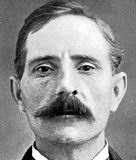
George Joseph Smith
Serial killer Bruce Lee
Serial killer · United Kingdom · 1973
Bruce Lee was born Peter George Dinsdale in 1960. He later changed his name to…
26 victims
Bruce Lee
Serial killer · United Kingdom · 1973
Bruce Lee was born Peter George Dinsdale in 1960. He later changed his name to…
26 victims
 William Burke
Serial killer · United Kingdom · 1827
William Burke (1792 – 28 January 1829) was born in Urney, near Strabane, in the…
17 victims
William Burke
Serial killer · United Kingdom · 1827
William Burke (1792 – 28 January 1829) was born in Urney, near Strabane, in the…
17 victims
 William Hare
Serial killer · United Kingdom · 1827
William Hare and Brendan “Dynes” Burke committed serial murders in Edinburgh, S…
17 victims
William Hare
Serial killer · United Kingdom · 1827
William Hare and Brendan “Dynes” Burke committed serial murders in Edinburgh, S…
17 victims
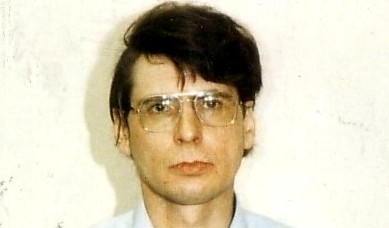 Dennis Nilsen
Serial killer · United Kingdom · 1978
Dennis Andrew Nilsen was born on November 23, 1945. He lived in London. He was…
16 victims
Dennis Nilsen
Serial killer · United Kingdom · 1978
Dennis Andrew Nilsen was born on November 23, 1945. He lived in London. He was…
16 victims
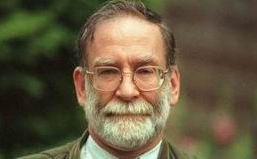 Dr. Harold Shipman
Serial killer · United Kingdom · 1974
Harold Fredrick Shipman was an English doctor who was convicted as a serial kil…
15 victims
Dr. Harold Shipman
Serial killer · United Kingdom · 1974
Harold Fredrick Shipman was an English doctor who was convicted as a serial kil…
15 victims
 Frederick West
Serial killer · United Kingdom · 1967
Frederick West (29 September 1941 – 1 January 1995) was an English serial kille…
13 victims
Frederick West
Serial killer · United Kingdom · 1967
Frederick West (29 September 1941 – 1 January 1995) was an English serial kille…
13 victims
 Diane Marsh
Homicide · USA · 2007
Diane Marsh was the mother of 5-year-old autistic child Brandon Williams. She a…
1 victim
Diane Marsh
Homicide · USA · 2007
Diane Marsh was the mother of 5-year-old autistic child Brandon Williams. She a…
1 victim
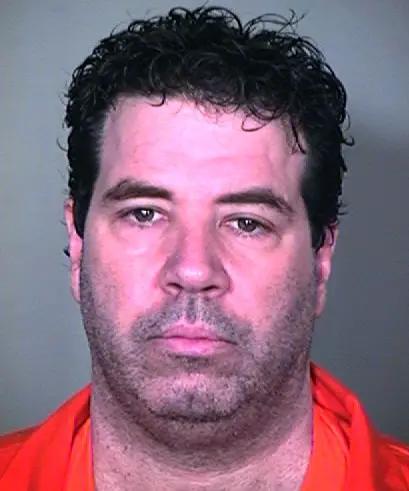 Shawn Patrick Lynch
Murderer · USA · 2001
Shawn Patrick Lynch was convicted and later sentenced to death. Shawn Patrick L…
1 victim
Shawn Patrick Lynch
Murderer · USA · 2001
Shawn Patrick Lynch was convicted and later sentenced to death. Shawn Patrick L…
1 victim
 Phillip Stroud
Murderer · USA · 2000
Phillip A. Stroud was approximately age 21 at the time of the murders. He had a…
3 victims
Phillip Stroud
Murderer · USA · 2000
Phillip A. Stroud was approximately age 21 at the time of the murders. He had a…
3 victims
 David Lee Holland
Murderer · USA · 1985
David Lee Holland was convicted for the capital murder of Helen Barnard while i…
2 victims
David Lee Holland
Murderer · USA · 1985
David Lee Holland was convicted for the capital murder of Helen Barnard while i…
2 victims
 Shawna Forde
Murderer · USA · 2009
Shawna Forde was sentenced to death on February 22, 2011. She was convicted of…
2 victims
Shawna Forde
Murderer · USA · 2009
Shawna Forde was sentenced to death on February 22, 2011. She was convicted of…
2 victims
 Antoinette Frank
Murderer · USA · 1995
Defendant: Antoinette Frank (born April 30, 1971) Role: New Orleans police offi…
3 victims
Antoinette Frank
Murderer · USA · 1995
Defendant: Antoinette Frank (born April 30, 1971) Role: New Orleans police offi…
3 victims
- Gender
- male
- Country
- United Kingdom
- Location
- England, United Kingdom
- Date of birth
- January 11, 1872
- Age at first offence
- 40
- Characteristics
- —
- Victim profile
- Beatrice "Bessie" Mundy, 31 / Alice Burnham, 25 / Margaret Elizabeth Lofty, 38
- Method of murder
- Drowning
- Date(s) of murder
- 1912 - 1914
- Years active
- 1912–1914
- Date of arrest
- February 1, 1915
- Status
-
Executed
Executed by hanging at Maidstone prison on August 13, 1915
Case record: George Joseph Smith
Background
George Joseph Smith was also known as Oliver George Love, Charles Oliver James, Henry Williams and John Lloyd. He was an English serial killer and bigamist.
He was born in Bethnal Green. He was sent to a reformatory at Gravesend at the age of nine and later had served time for swindling and theft. In 1896, he was imprisoned for twelve months for persuading a woman to steal from her employers. He used the proceeds to open a baker's shop in Leicester.
In 1898, he married Caroline Beatrice Thornhill in Leicester under another alias, Oliver George Love; it was described as his only legal marriage. His first wife was still alive when he married Edith Peglar in 1908 (in the name of Oliver George Love). He married Bessie Mundy in 1910 when Edith Peglar was still alive. It was stated that in the years following, murder and money took over his life and that he contentedly went through wives’ possessions before he disappeared.
He was described as the son of an insurance agent. His birth date was given as January 11, 1872, and his execution date was given as August 13, 1915.
It was also stated that he had seven bigamous marriages between 1908 and 1914.
The offence
George Joseph Smith was convicted of the murders of Bessie Williams (nee Mundy), Alice Burnham (referred to as Alice Smith (née Burnham)), and Margaret Elizabeth Lofty (née Lofty) (referred to as Margaret Lloyd).
Bessie Williams was found dead in a bath in 1912. Alice Burnham died in a bath at Blackpool in December 1913. Margaret Elizabeth Lofty was found in a bath in Highgate in December 1914. The case became known as the “Brides in the Bath” murders.
Divisional Detective Inspector Neil formed the opinion, together with the pathologist Dr Bernard Spilsbury, that it would be impossible for anyone to accidentally drown in any of the baths in question.
Investigation
On 13 July 1912, Bessie Williams was found dead in her bath at 80 High Street, Herne Bay. Bessie Williams was ascertained to have made a will five days before her death in favour of her husband, Henry Williams (alias George Joseph Smith). The will benefited him to the amount of £2,579, 13 shillings and 7 pence.
Smith was questioned closely, but the doctor’s examination apparently convinced the jury. Dr Frank French said he believed she had had an epileptic fit and thought the cause of death had been asphyxia brought about by drowning. He replied that he had seen none when asked if he had seen any signs of a struggle on the body. At the inquest, the last question was whether the death had been due to anything else other than drowning. The doctor replied: “ I have no reason to suspect any other cause than drowning.”
The jury did not wish for a post mortem and returned a verdict of ‘Death by misadventure’.
Regarding Alice Burnham, the death occurred on 12 December 1913. Alice’s father had severe doubts about Smith, describing him during the engagement as being of “very evil appearance”, and yet the marriage went ahead. On the evening of her death, Alice went for a bath at apartments owned by Mr & Mrs Crossley, where she and her husband were staying, and never returned. Joseph Crossley noted when her body was found sometime later that her head was at the foot of the bath.
An inquest held on 13 December returned the verdict that Alice had ‘Accidentally drowned through heart failure when in the bath.’ It transpired that Alice had insured herself for £500.
Margaret Elizabeth Lofty’s death was described as the death warrant for Margaret Elizabeth Lloyd (nee Lofty). John Lloyd (otherwise known as George Joseph Smith) took rooms with his wife in a boarding house at 14 Bismark Road, in Highgate, London. On the afternoon of 18 December 1914, Margaret Lloyd visited her solicitor in Islington and made a will in favour of her husband. Later that evening, ‘John Lloyd’ told the owner of the house that he was going out to buy some tomatoes for his wife's supper while she took a bath. When he returned, he called out to his wife, entered the bathroom and found her dead in the bath.
The inquest took place on 1 January 1915 and a verdict of accidental death was recorded.
A letter was written by Joseph Crossley to the Metropolitan Police. On January 3 1915, Joseph Crossley wrote to the Metropolitan Police and enclosed a newspaper cutting about the death of Margaret Lloyd. The cutting remarked how similar it was to the death of Alice Smith 12 months previously in Blackpool. Thus started the downfall of Smith.
Upon investigation, the details of Smith’s life emerged:
- In 1898, he married Caroline Beatrice Thornhill (under the alias Oliver George Love).
- In 1908, he married Edith Peglar under the name Oliver George Love, with his first wife still alive.
- In 1910, he married Bessie Mundy while Edith Peglar was still alive.
- He was described as having entered into seven bigamous marriages between 1908 and 1914.
Divisional Detective Inspector Neil stopped Smith on 1 February 1915 in Uxbridge Road in London.
Arrest
On the 1st February 1915, Smith was stopped by Divisional Detective Inspector Neil in Uxbridge Road in London.
On the 8th February, Smith appeared at Bow Street Police Court and was remanded till the 15th of February.
Smith was initially charged with causing a false entry to be made in a marriage register. Further enquiries revealed the darker side of the case.
On 23 March 1915, he was charged with the murders of Bessie Williams, Alice Smith, and Margaret Lloyd.
When Smith was arrested for the charge of bigamy and suspicion of murder, Bernard Spilsbury was asked to determine how the women died.
Margaret Lloyd’s body was exhumed. Spilsbury’s first task was to confirm drowning as the cause of death, and whether it was by accident or force. He confirmed the tiny bruise on the elbow as noted earlier, as well as two microscopic marks. It was stated that evidence of drowning was not extensive, with no signs of heart or circulatory disease and that death appeared almost instantaneous, as if from a sudden stroke. Poison was also seen as a possibility, and Spilsbury ordered tests for its presence. Spilsbury proposed running experiments in the bathtub where Margaret died. Neil had it set up in the police station.
It was stated that despite the exhumation being carried out as discreetly as possible, the press got wind of it and stories about the “Brides in the Baths” began to appear.
On 8 February, the chief of police of Herne Bay read the stories and sent Neil a report of another death strikingly similar to the other two.
A third victim was described as occurring a year before Alice Burnham’s death in Blackpool. Henry Williams rented a house in 80 High Street with no bath for himself and his wife Beatrice “Bessie” Munday, whom he married in Weymouth in 1910. He rented a bathtub seven weeks later and took his wife to local doctor Frank French due to a supposed attack of epilepsy, though Mrs. Williams was only complaining of headaches and the doctor prescribed some medication.
On 12 July 1912, Mr. Williams woke up Dr. French, saying his wife was having another attack. He checked on her and promised to come back the following afternoon. On the following morning, he was informed by Mr. Williams that his wife had died of drowning. Dr. French found Bessie Williams in the tub with her head underwater, her legs stretched out straight and her feet protruding out of the water. There was no trace of violence, and Dr. French attributed the drowning to an attack of epilepsy. The inquest jury was apparently convinced and awarded Mr. Williams £2,579 13s 7p, as stipulated in Mrs. Williams’ will, made five days before her death.
Neil sent photographs of Smith to Herne Bay for possible identification. Neil went to Blackpool where Spilsbury was conducting an autopsy of Alice Williams. The results were described as matching those for Margaret Lloyd, with lack of violence, instantaneous death suggestion, and little evidence of drowning. It was stated that there were no traces of poison on Margaret Lloyd. Spilsbury took measurements of the corpse and had the tub sent to London.
Back in London, Neil received confirmation from Herne Bay that “Henry Williams” was the same man as “John Lloyd” and “George Smith”.
When Spilsbury examined Bessie Williams, he found one sure sign of drowning: the presence of goose bumps on the skin. The tub where Mrs. Williams died was sent to London.
Trial
Smith was charged for the murders of Bessie Williams, Alice Smith and Margaret Lloyd on 23 March 1915.
Smith went on trial at the Old Bailey on June 22. The prosecuting Counsel were Archibald Bodkin (later Director of Public Prosecutions) and Cecil Whiteley (later KC). It was stated that he could only be tried for the murder of Bessie Williams according to English law, but the prosecution used the deaths of the other two to establish the pattern of Smith’s crimes. This was allowed by Mr Justice Scrutton despite protests of Smith’s counsel, Sir Edward Marshall Hall.
Smith decided not to give evidence in his own defence, and he indicated this to Marshall Hall in a handwritten note.
The jury took about twenty minutes on 1 July to find him guilty. Smith was sentenced to death.
Smith’s appeal against his verdict and sentence was dismissed.
Sentencing
Smith was sentenced to death after being found guilty.
Outcome
Smith was executed at Maidstone Gaol on 13 August 1915 by John Ellis.
Before the funeral, it was stated that Smith told the undertaker Herbert Francis Beckett: “I don't want any walking, get it over as quick as you can”. After the funeral, he was heard to say: “Thank goodness, that's all over.”
Appeals
Aftermath
Charles Matthews, Director of Public Prosecutions wrote on 1st July 1915 to the Commissioner of the Metropolitan Police concerning Divisional Detective Inspector Neil:
" I feel I ought not to allow any interval of time to pass without expressing the acknowledgement which in my opinion, the administration of justice is under to Divisional Detective Inspector Neil, and to the officers who served under him, for their untiring, able, zealous, and intelligent efforts, which played so conspicuous a part in securing the conviction which was this day obtained of the above named malefactor."
Under ordinary circumstances, it was stated that the investigation would have been conducted by a Chief Inspector from the Commissioners Office, but it was felt that Neil had so much ability it was better to leave the case in his hands.
The case was described as an intricate one. It was also stated that the use of “system”—comparing other crimes to the one a criminal is being tried for—set a precedent later used in other murder trials.
Popular culture references were included:
- Harold Nicolson used the behaviour of George Smith as a parallel to Hitler’s behaviour in Europe in the 1930s in his book “Why Britain is at War”.
- The Smith case was mentioned in Dorothy L. Sayers’ mystery, Unnatural Death.
- The Smith case was dramatised on the radio series The Black Museum in 1952 under the title of “The Bath Tub”.
- “The Brides in the Bath (2003)” was described as a British TV movie made by Yorkshire Television, starring Martin Kemp as George Smith.
- The play Tryst by Karoline Leach, first produced in New York in 2006, starring Maxwell Caulfield and Amelia Campbell, was mentioned.
- This story was stated to be the basis for the play The Drowning Girls by Beth Graham, Charlie Tomlinson, Daniela Vlaskalic.
An effigy of Smith was described as having stood in Madame Tussauds' Chamber Of Horrors for many decades.
Other details
On the 13 August execution, the hanging took place at Maidstone prison.
Divisional Detective Inspector Arthur Neil received a letter from Joseph Crossley, who owned a boardinghouse in Blackpool. The letter was accompanied by two newspaper clippings: one from The News of the World dated before Christmas 1914 about the death of Margaret Elizabeth Lloyd (née Lofty), aged 38, and one containing the report of a coroner's inquest dated 13 December 1913 in Blackpool about a woman named Alice Smith (née Burnham). Joseph Crossley wrote that his wife and a Mr Charles Burnham expressed suspicion about similarities and urged the police to investigate.
The hunt led Inspector Neil to 14 Bismarck Road where Mr. and Mrs. Lloyd had taken lodgings on 17 December. The landlady found it peculiar that before they took the room, Mr. Lloyd examined the bathroom first. The bathtub was described as fifty inches long and sixty-six inches at the top. It was stated that Neil found it hard to believe an adult could have drowned in such a small tub, especially as the tub was three-fourths full when Mrs. Lloyd was found. Neil spoke to the coroner, Dr. Bates, who signed the death certificate, and asked if there were signs of violence; there were none except for a tiny bruise above the left elbow. It was stated that Mr. Lloyd had not shown grief and ordered the cheapest coffin for his late bride.
It was stated that a will was made on the 18th, three hours before Margaret Lloyd died, with the sole beneficiary being Mr. Lloyd, and that Mr. Lloyd submitted the will to a solicitor “for settlement”. It was also stated that Mrs. Lloyd withdrew all her savings on that day.
It was stated that on 12 January, Dr. Bates called for an inquiry for the Yorkshire Insurance Company about the death of Margaret Lloyd. Margaret Lloyd had taken out a life insurance policy for £700 three days before she was married, with her husband John Lloyd as sole beneficiary. Neil promptly asked the doctor to stall in his reply, asked for more data from Blackpool police, and had the office watched day and night.
The narrative then described a man fitting Lloyd/Smith’s description appearing on 1 February. Inspector Neil introduced himself and asked whether he was John Lloyd. The man replied: “Yes”. Neil asked whether he was also George Smith; the man vehemently denied it. Neil told him he would be taken for questioning because of bigamy. The man then admitted he was indeed George Smith.
It was stated that Neil guessed Smith admitted it because he would rather admit bigamy than murder, and that Smith was under arrest.
Regarding Bessie Williams’s inquest, the jury declined a post mortem and returned a verdict of ‘Death by misadventure’.
Regarding Alice, it was stated that her inquest jury verdict was ‘Accidentally drowned through heart failure when in the bath.’ It was stated that she had insured herself for £500.
Regarding Margaret Lloyd, the inquest verdict was recorded as accidental death on 1 January 1915.
A theory and experiment sequence was described. Spilsbury pondered the bathtubs and victims’ measurements. He proposed that Bessie Williams had a seizure with stiffening and extension; for the victims’ height (five feet seven inches) and tub length (five feet), the upper part of her body would have been pushed up the sloping head above the water level. He proposed that the second stage would consist of violent spasms of the limbs. It was stated that the third stage would involve muscle relaxation and that the tub would have been too small for her size to get underwater.
Spilsbury’s proposed solution was that Smith, under the pretence of lover’s teasing, seized Bessie by the feet and pulled them up toward himself, sliding the upper part of the body underwater. The sudden flood of water into the nose and throat was proposed as causing shock and sudden loss of consciousness, explaining the absence of injuries and minimal signs of drowning.
To test the theory, Neil hired several experienced women divers of the same size and build as the victims. Neil pushed them underwater by force but there would be inevitable signs of struggle. It was then stated that Neil did what Spilsbury had suggested: he unexpectedly pulled the feet of one of the divers, and her head glided underwater before she knew what was happened. Neil was alarmed when the woman was no longer moving. Neil quickly pulled her out and it took him and a doctor over half an hour to revive her. When she came to, she related that the only thing she remembered was the rush of water before she lost consciousness. This was stated to have confirmed Spilsbury’s theory.
It was stated that the prosecution used the deaths of the other two to establish a pattern of Smith’s crimes allowed by Mr Justice Scrutton despite protests by Smith’s counsel.
The narrative also provided additional discussion of forensic and historical claims, including that no evidence was found of foul play at the exhumations and that poisoning tests were carried out, and that goose bumps were used as a sure sign of drowning for Bessie Williams.
The narrative described Smith as protesting his innocence to the end at the time of his hanging and that he took with him the secret of how he killed three women.
Spotted an error, or have more information about this case?