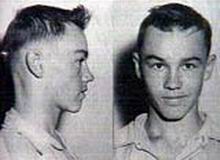
Steven Truscott
Homicide ?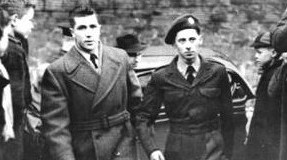 Iain Hay Gordon
Homicide ? · United Kingdom · 1952
Iain Hay Gordon was convicted of the killing of Patricia Curran and was found g…
1 victim
Iain Hay Gordon
Homicide ? · United Kingdom · 1952
Iain Hay Gordon was convicted of the killing of Patricia Curran and was found g…
1 victim
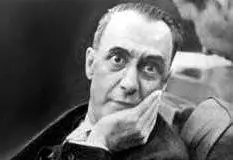 Pierre Jaccoud
Homicide ? · Switzerland · 1958
Pierre Jaccoud (born in 1905) was a Swiss lawyer and politician. He served as “…
1 victim
Pierre Jaccoud
Homicide ? · Switzerland · 1958
Pierre Jaccoud (born in 1905) was a Swiss lawyer and politician. He served as “…
1 victim
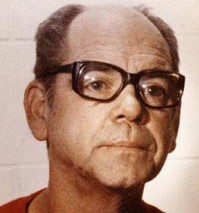 Gilbert Paul Jordan
Serial killer · Canada · 1965
Gilbert Paul Jordan (born December 12, 1931; died July 7, 2006) was known as th…
10 victims
Gilbert Paul Jordan
Serial killer · Canada · 1965
Gilbert Paul Jordan (born December 12, 1931; died July 7, 2006) was known as th…
10 victims
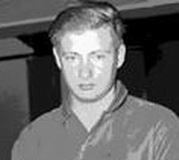 Victor Ernest Hoffman
Mass murderer · Canada · 1967
Victor Ernest Hoffman (born 1946; died May 21, 2004) was found not guilty by re…
9 victims
Victor Ernest Hoffman
Mass murderer · Canada · 1967
Victor Ernest Hoffman (born 1946; died May 21, 2004) was found not guilty by re…
9 victims
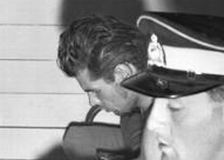 Robert Raymond Cook
Mass murderer · Canada · 1959
Robert Raymond Cook (also known as Bobby Cook): convicted murderer; eldest son…
7 victims
Robert Raymond Cook
Mass murderer · Canada · 1959
Robert Raymond Cook (also known as Bobby Cook): convicted murderer; eldest son…
7 victims
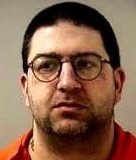 Adam Norcross
Murderer · USA · 1996
Adam W. Norcross (born 07/25/1970) was convicted of Murder 1st and was sentence…
1 victim
Adam Norcross
Murderer · USA · 1996
Adam W. Norcross (born 07/25/1970) was convicted of Murder 1st and was sentence…
1 victim
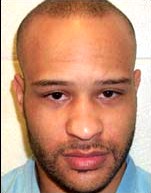 Bobby Lee Ramdass
Murderer · USA · 1992
Bobby Lee Ramdass was executed by lethal injection in Virginia on December 6, 2…
2 victims
Bobby Lee Ramdass
Murderer · USA · 1992
Bobby Lee Ramdass was executed by lethal injection in Virginia on December 6, 2…
2 victims
 Jerry Harvey
Murderer · USA · 1988
Jerry Harvey (October 28, 1949 – April 9, 1988) was an American screenwriter an…
1 victim
Jerry Harvey
Murderer · USA · 1988
Jerry Harvey (October 28, 1949 – April 9, 1988) was an American screenwriter an…
1 victim
 Yoo Young-Chul
Serial killer · South Korea · 2003
Yoo Young-Chul (Korean: 유영철; born 1970) was a South Korean serial killer and se…
20 victims
Yoo Young-Chul
Serial killer · South Korea · 2003
Yoo Young-Chul (Korean: 유영철; born 1970) was a South Korean serial killer and se…
20 victims
- Gender
- male
- Country
- Canada
- Location
- Clinton, Ontario, Canada
- Date of birth
- January 18, 1945
- Age at first offence
- 14
- Characteristics
- juvenile (14), miscarriage of justice
- Victim profile
- Lynne Harper, 12
- Method of murder
- Strangulation
- Date(s) of murder
- June 9, 1959
- Years active
- 1959
- Date of arrest
- 3 days after
- Status
-
Sentenced to death on September 30, 1959; commuted to life imprisonment on January 22, 1960; released on parole in 1969; on August 28, 2007, the court acquitted Steven Truscott and declared his conviction a miscarriage of justice
Case overview
Steven Murray Truscott (born January 1945) was a Canadian who was convicted of the murder of 12-year-old Lynne Harper in 1959. He maintained that he was wrongfully convicted and campaigned to have his name cleared. On August 28, 2007, the Ontario Court of Appeal acquitted him, and the court declared that his conviction was a miscarriage of justice.
Timeline
- June 9, 1959 — Steven Truscott, 14, took Lynne Harper, 12, on a short bicycle ride near an Air Force base outside Clinton, Ontario, about 180 km west of Toronto.
- June 11, 1959 — Searchers found Lynne Harper’s body in a nearby wood; she was raped and strangled.
- June 12, 1959 — Police arrested Truscott.
- June 13, 1959 — Police charged Truscott in Harper’s murder.
- September 30, 1959 — After a 15-day trial, Truscott was found guilty and sentenced to death by hanging.
- November 20, 1959 — A temporary reprieve postponed his execution to February 16, 1960 to allow for an appeal.
- January 21, 1960 — Truscott’s appeal to the Ontario Court of Appeal was dismissed.
- January 22, 1960 — Truscott’s death sentence was commuted to life imprisonment.
- February 1960 to January 1963 — Truscott was incarcerated at the Ontario Training School for Boys in Guelph.
- January 14, 1963 — Truscott was transferred to Collins Bay Penitentiary.
- May 7, 1967 — Truscott was transferred to the Farm Annex of Collins Bay Penitentiary.
- October 21, 1969 — Truscott was released on parole and lived in Kingston before settling in Guelph under an assumed name.
- November 12, 1974 — Truscott was relieved of the terms and conditions of his parole by the National Parole Board.
- Spring of 1966 — Isabel LeBourdais’ The Trial of Steven Truscott was published.
- April 26, 1966 — The Government of Canada referred the Truscott case to the Supreme Court of Canada.
- October 1966 — The Supreme Court of Canada heard five days of evidence in the Truscott case.
- January 1967 — Submissions were heard by the Supreme Court of Canada.
- May 4, 1967 — The Supreme Court of Canada held that, if Truscott’s appeal had been heard by the Court, it would have been dismissed.
- 2000 — An interview on the Canadian Broadcasting Corporation’s the fifth estate revived interest in his case.
- March 29, 2000 — Truscott broke decades of silence and anonymity, proclaiming his innocence, in a documentary broadcast on the fifth estate.
- November 28, 2001 — Lawyers for the Association in Defence of the Wrongly Convicted, led by James Lockyer, filed an appeal to have the case reopened.
- November 29, 2001 — Truscott filed a section 690 Criminal Code application for a review of his 1959 murder conviction.
- January 24, 2002 — Retired Quebec Justice Fred Kaufman was appointed to review the case.
- October 28, 2004 — Federal Justice Minister Irwin Cotler directed a Reference pursuant to section 693.3(a)(ii) of the Criminal Code to the Ontario Court of Appeal to review whether new evidence would have changed the 1959 verdict.
- April 6, 2006 — The body of Lynne Harper was exhumed by order of the Attorney General of Ontario to test for DNA evidence.
- April 10, 2006 — Lynne Harper was interred again in a private ceremony.
- June 19, 2006 — The Ontario Court of Appeal began hearings on Truscott’s conviction.
- January 31, 2007 — Hearings continued in the Ontario Court of Appeal.
- February 10, 2007 — Arguments in the Ontario Court of Appeal appeal concluded after 10 days.
- August 28, 2007 — The Ontario Court of Appeal acquitted Truscott and declared his conviction a miscarriage of justice.
Background
Steven Murray Truscott was convicted in 1959 of the murder of 12-year-old schoolmate Lynne Harper. He was 14 at the time of his conviction, and he was sentenced to death. After his release on parole in 1969, he adopted an assumed name and lived under a low profile in Guelph, Ontario, where he married and raised three children.
Since his parole release, he maintained that he was wrongfully convicted and campaigned to have his name cleared. In 2000, interest in the case was revived through a Canadian Broadcasting Corporation interview on the fifth estate and through a subsequent book by journalist Julian Sher. Lawyers sought reopening of the case, and in 2007 the Ontario Court of Appeal acquitted Truscott.
The offence
On June 9, 1959, 12-year-old Lynne Harper disappeared near an Air Force base south of Clinton, Ontario. The base was later renamed Vanastra, Ontario after the air force decommissioned it.
Two days later, her body was discovered on a nearby farm. Searchers found her body in a wooded area beside the County Road described as Lawson’s Bush. Harper was strangled with her own blouse and was raped.
Relationship and movements before the killing
Truscott and Harper attended Grade 7 at the A.V.M. Hugh Campbell School located on the north side of the Air Force base. In the early evening of Tuesday, June 9, 1959, Truscott gave Harper a ride on the crossbar of his bicycle. They proceeded from the vicinity of the school northbound along the County Road.
The timing and duration of their encounter, and what transpired while they were together, were contentious issues since 1959. The Crown contended that Truscott and Harper left the County Road prior to reaching the bridge over the Bayfield River, and that in a wooded area beside the County Road (Lawson’s Bush), Truscott raped and murdered Lynne.
Truscott maintained since 1959 that he took Harper to the intersection of the County Road and Highway 8, where he left her unharmed. He stated that when he arrived at the bridge he looked back toward the intersection where he had dropped Harper off and observed that a vehicle had stopped and that she was in the process of entering it.
At 11:20 that evening, Lynne’s father reported her missing.
Investigation
In 1959, testimony by coroner Dr. John Penistan put Harper’s time of death at before 7:45 p.m. on June 9, 1959. The time of death was described as crucial because it made Truscott the prime suspect.
Later review proceedings included evidence that Penistan’s original autopsy conclusions allowed for a time of death later than 7:45 p.m. The new evidence raised the possibility that Harper could have died as late as the next day, at a time when Truscott would have been in school.
Portions of a report by retired Quebec Justice Fred Kaufman were released to the public, and Kaufman said modern science had removed the time of death as a piece of circumstantial evidence favouring Truscott’s guilt, based on the unreliability of methods involving stomach contents, body decomposition, and the state of rigor mortis.
On April 6, 2006, Harper’s body was exhumed by order of the Attorney General of Ontario in order to test for DNA evidence. No usable or usable-useable DNA was recovered from the remains. Harper was interred again in a private ceremony on April 10, 2006.
Arrest and charges
On June 12, 1959, shortly after 7:00 p.m., Truscott was taken into custody. Later that night, at about 2:30 a.m. on June 13, 1959, he was charged with first degree murder under the provisions of the Juvenile Delinquents Act.
Trial
Truscott’s trial began on September 16, 1959 at the Ontario Superior Court of Justice in Goderich, Ontario before Mr. Justice Ferguson and a jury.
Steven Truscott was represented by Frank Donnelly. Glen Hays appeared for the Crown.
On September 30, 1959, the jury returned a verdict of guilty, with a recommendation for mercy. Under the law at the time, Mr. Justice Ferguson sentenced Truscott to be hanged.
Trial procedure and adult trial order
On June 30, 1959, Truscott was ordered to be tried as an adult; an appeal on that order was dismissed.
Sentencing
On September 30, 1959, Truscott was sentenced to death by hanging. He became the youngest Canadian to ever receive the death penalty.
A temporary reprieve on November 20, 1959 postponed his execution to February 16, 1960 to allow for an appeal.
On January 22, 1960, his death sentence was commuted to life imprisonment.
Appeals
1960s Supreme Court of Canada review
On January 21, 1960, Truscott’s appeal to the Ontario Court of Appeal was dismissed. Immediately afterwards, the Government of Canada commuted his sentence to life imprisonment.
An application for leave to appeal to the Supreme Court of Canada was denied on February 24, 1960.
In 1966, Isabel LeBourdais published The Trial of Steven Truscott, arguing that Truscott had been convicted of a crime he did not commit, rekindling public debate and interest. On April 26, 1966, the Government of Canada referred the Truscott case to the Supreme Court of Canada.
Five days of evidence were heard in October 1966, followed by submissions in January 1967. The evidence included the testimony of Truscott, who had not testified at the 1959 trial. On May 4, 1967, the Supreme Court (Hall J. dissenting) held that, if Truscott’s appeal had been heard by the Court, it would have been dismissed.
Incarceration and parole
From the arrest until the commutation of his death sentence, Truscott was imprisoned at the Huron County Jail in Goderich. The Huron Historic Gaol later became open to visitors as a museum.
After the commutation, he was transferred to the Kingston Penitentiary for assessment and he was incarcerated at the Ontario Training School for Boys in Guelph from February 1960 to January 1963. On January 14, 1963, he was transferred to Collins Bay Penitentiary. On May 7, 1967, he was transferred to the Farm Annex of Collins Bay Penitentiary. He had served over 10 years in custody and had an unblemished institutional record.
On October 21, 1969, Truscott was released on parole. He lived in Kingston with his parole officer and then in Vancouver for a brief period of time before settling in Guelph, Ontario, under an assumed name.
He married and raised three children. On November 12, 1974, Truscott was relieved of the terms and conditions of his parole by the National Parole Board. He was described as gainfully employed and free from any criminal involvement since his release.
Post-conviction review (2001–2007)
Truscott maintained a low profile until 2000, when an interview on the fifth estate revived interest. The segment and a subsequent book by journalist Julian Sher suggested that significant evidence in favour of Truscott’s innocence had been ignored in the original trial.
On November 28, 2001, lawyers for the Association in Defence of the Wrongly Convicted, led by James Lockyer, filed an appeal to have the case reopened. On November 29, 2001, Truscott filed a section 690 Criminal Code application for a review of his 1959 murder conviction.
The application sought retrial based on new documents, including police and Crown briefs and notes from the police investigation, that were not disclosed to the defence during the original trial in 1959, nor to the Supreme Court of Canada during its review in 1966. The application was not based on any new forensic evidence pertaining to DNA, and the association was unable to locate any exhibits that could be tested. The lawyers also argued police used tunnel vision to zero in on Truscott, ignoring important witnesses and other suspects.
On January 24, 2002, retired Quebec Justice Fred Kaufman was appointed by the government to review the case.
On October 28, 2004, Federal Minister of Justice Irwin Cotler referred the Truscott case to the Ontario Court of Appeal for review.
On June 19, 2006, the Ontario Court of Appeal began hearings on the conviction. The five-judge panel was headed by Ontario Chief Justice Roy McMurtry and included Justice Michael Moldaver. The panel heard three weeks of testimony and fresh evidence.
On January 31, 2007, hearings continued as the Ontario Court of Appeal began hearing arguments from Truscott’s defence, and the arguments concluded on February 10, 2007. The hearings were notable for being the first time cameras were allowed into an Ontario Court of Appeal hearing.
Outcome (2007)
On August 28, 2007, Truscott was acquitted of the charges by the Ontario Court of Appeal. The court deemed the conviction a miscarriage of justice in a unanimous decision.
Truscott’s defence team had originally asked for a declaration of factual innocence. Although the court issued an acquittal, it said it was not in a position to declare Truscott innocent of the crime.
The Court of Appeal wrote:
"The appellant has not demonstrated his factual innocence," the court wrote. "At this time, and on the totality of the record, we are in no position to make a declaration of innocence."
Michael Bryant, Attorney General of Ontario, apologized to Truscott on behalf of the government, stating they were "truly sorry" for the miscarriage of justice.
The court identified fresh evidence as sufficient to quash the conviction, relating to the issue of the time of Lynne Harper’s death:
"The conviction, placed in the light of the fresh evidence, constitutes a miscarriage of justice and must be quashed," the 303-page judgment from the Ontario Court of Appeal concluded. "The fresh evidence related to the issue of the time of Lynne Harper's death is sufficient to quash the conviction."
Other details
Persons and representation
Frank Donnelly represented Steven Truscott at trial. Glen Hays appeared for the Crown at trial.
Jurists and officials during the 2001–2007 review included Fred Kaufman, and Ontario Chief Justice Roy McMurtry and Justice Michael Moldaver in the Ontario Court of Appeal panel.
James Lockyer led the association’s lawyers in the request to reopen the case.
Incriminating evidence and disputes
The Crown argued that Truscott and Harper left the County Road before reaching the bridge over the Bayfield River and that in a wooded area beside the County Road (Lawson’s Bush), Truscott raped and murdered Lynne.
Truscott maintained he left Harper unharmed at the intersection of the County Road and Highway 8, and that he later observed a vehicle stopped at the intersection and Harper entering it.
Witness evidence in 2007 hearings
During the hearings, two women separately testified that one key witness in the original trial had privately confided to them that she lied in her original testimony.
Cultural references
Ann-Marie MacDonald’s 2003 novel The Way the Crow Flies was based on a fictionalized version of the Truscott case and the surrounding community’s reaction to the incident. MacDonald was raised in the same region during the same time period as the Truscott case.
Canadian rock band Blue Rodeo recorded a song about the case, "Truscott", on their 2000 album The Days in Between.
Pierre Berton wrote a poem, "Requiem for a Fourteen-Year-Old", in protest of the harsh sentence.
Reaction and commentary after acquittal (quoted)
Ontario Attorney General Michael Bryant said:
"On behalf of the government, I am truly sorry," Ontario Attorney General Michael Bryant said Tuesday.
Truscott criticized the Crown:
"I know (Bryant) apologized on behalf of the government, but I don't really feel that the apology was sincere. For the past four-and-a-half years they had the same evidence as what the judges have had, and they chose to fight us every step of the way. I don't feel the apology was sincere,'' said Truscott.
James Lockyer said:
"There's always that lesson to learn from a wrongful conviction, if you get the wrong chap, you didn't get the right one," said James Lockyer, Truscott's lawyer.
Truscott told reporters:
"As far as I'm concerned, I'm clear," Truscott, 62, told reporters at a news conference Tuesday, something he described as a "dream come true."
Julian Sher said:
"We came this close to putting a 14-year-old to death by putting a noose around his neck," Julian Sher, author of a book on the Truscott case.
Bob Lawson said:
"I could never believe he was guilty. Even when the trial was on, I thought they are going to come up with somebody or something," he said.
Lockyer said:
"My own view is that Steve should get every penny he can out of the government after what he's been through," he said.
Lockyer said:
"We can't bring back Lynne, but we can bring back Steve. Today's judgment from the Court of Appeal does just that."
Spotted an error, or have more information about this case?