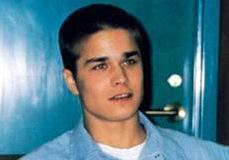
Brandon Hein
Homicide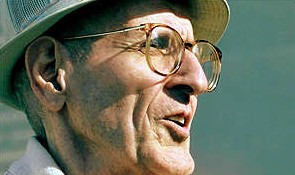 Jack Kevorkian
Homicide · USA · 1990
Jack Kevorkian (born May 26, 1928) was a controversial American pathologist. He…
130 victims
Jack Kevorkian
Homicide · USA · 1990
Jack Kevorkian (born May 26, 1928) was a controversial American pathologist. He…
130 victims
 David Koresh
Homicide · USA · 1993
David Koresh (born Vernon Wayne Howell; August 17, 1959 – April 19, 1993) led t…
79 victims
David Koresh
Homicide · USA · 1993
David Koresh (born Vernon Wayne Howell; August 17, 1959 – April 19, 1993) led t…
79 victims
 Todd Hall
Homicide · USA · 1996
Todd Hall was described by neighbors as "mentally slow" and was said to have su…
9 victims
Todd Hall
Homicide · USA · 1996
Todd Hall was described by neighbors as "mentally slow" and was said to have su…
9 victims
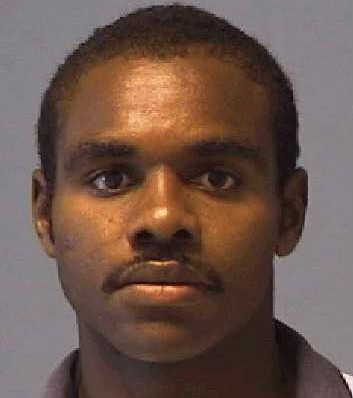 Clinton Bankston
Homicide · USA · 1987
15 August 1987 — Ann Morris (63), her sister Sally Nicholson (59), and Sally’s…
5 victims
Clinton Bankston
Homicide · USA · 1987
15 August 1987 — Ann Morris (63), her sister Sally Nicholson (59), and Sally’s…
5 victims
 Joshua Jenkins
Homicide · USA · 1996
Joshua Jenkins was a 15-year-old American killer who killed five members of his…
5 victims
Joshua Jenkins
Homicide · USA · 1996
Joshua Jenkins was a 15-year-old American killer who killed five members of his…
5 victims
 Jeffery Daugherty
Serial killer · USA · 1976
Jeffrey Joseph Daugherty was executed by electrocution in Florida on November 7…
5 victims
Jeffery Daugherty
Serial killer · USA · 1976
Jeffrey Joseph Daugherty was executed by electrocution in Florida on November 7…
5 victims
 Najwa Petersen
Murderer · South Africa · 2006
Najwa Petersen was the wife of South African singer, composer and theatre direc…
1 victim
Najwa Petersen
Murderer · South Africa · 2006
Najwa Petersen was the wife of South African singer, composer and theatre direc…
1 victim
 Earl Clanton
Homicide/Murderer · USA · 1972
Earl Clanton Jr. was executed in the electric chair. He was 33 years old when h…
2 victims
Earl Clanton
Homicide/Murderer · USA · 1972
Earl Clanton Jr. was executed in the electric chair. He was 33 years old when h…
2 victims
 Shelley Casterline
Murderer · USA · 2013
Shelley Casterline was 41 when she pleaded guilty to second-degree murder. Baro…
1 victim
Shelley Casterline
Murderer · USA · 2013
Shelley Casterline was 41 when she pleaded guilty to second-degree murder. Baro…
1 victim
 Crossan Hoover
Homicide · USA · 1982
Crossan David Hoover was a seventeen-year-old employee of Mark Richards and And…
1 victim
Crossan Hoover
Homicide · USA · 1982
Crossan David Hoover was a seventeen-year-old employee of Mark Richards and And…
1 victim
 James Montell Chappell
Murderer · USA · 1995
James Montell Chappell was sentenced to death on March 20, 2007, after a Distri…
1 victim
James Montell Chappell
Murderer · USA · 1995
James Montell Chappell was sentenced to death on March 20, 2007, after a Distri…
1 victim
- Gender
- male
- Country
- USA
- Location
- Agoura Hills, Los Angeles County, California , USA
- Date of birth
- February 17, 1977
- Age at first offence
- 18
- Characteristics
- juvenile (17)
- Victim profile
- Jimmy Farris, 16 (the son of an LAPD police officer)
- Method of murder
- Stabbing with knife
- Date(s) of murder
- May 22, 1995
- Years active
- 1995
- Date of arrest
- —
- Status
-
Life imprisonment
Sentenced to life imprisonment without possibility of parole; commuted to 29 years to life in prison on March 17, 2009
Case details
Brandon Wade Hein (born February 17, 1977) was sentenced to life imprisonment without possibility of parole for his involvement in the 1995 stabbing murder of 16 year-old Jimmy Farris, the son of an LAPD police officer. Hein was convicted under the felony murder rule as a participant in a felony during which the murder occurred.
He was one of five youths who were drinking alcohol and cruising in a pickup truck around Agoura Hills in Los Angeles County, California. Less than an hour before the stabbing, one of the group, Jason Holland, 18, grabbed a wallet from an unlocked vehicle in the parking lot of a public park. The wallet was witnessed by its owner, a mother playing in the park with her children, and the theft was followed by threats and intimidation in which the mother confronted the group and demanded and received her wallet back.
The group then drove to the home of Michael McLoren, who was known to sell marijuana from a desk drawer in a ramshackle one-room “fort” in his backyard. Micah Holland, 15, led four of the group over a fence into the backyard and into the fort. Micah entered the fort and Anthony Miliotti, 17, stood in the doorway. Hein, 18, entered into the fight at the fort.
Jason Holland, who testified that he was drunk and lagging behind the others, described that when he entered the fort, he saw that the two dropped their heads and started fighting. A folding pocketknife was used; Jason opened a folding pocketknife and “pricked” McLoren twice in the back to get him off Micah, then stabbed him in the chest. When Farris entered the fort to help McLoren, Jason stabbed Farris twice in the torso, and Hein punched Farris in the head and face. McLoren survived his wounds, and Farris died in the emergency room.
Timeline
- May 22, 1995 — Five youths ranging in age from 15 to 18 were drinking alcohol and cruising in a pickup truck around Agoura Hills, California. Less than an hour before the stabbing, Jason Holland grabbed a wallet from an unlocked vehicle in the parking lot of a public park; the wallet’s owner confronted the five and demanded and received her wallet back. Later the group drove to Michael McLoren’s home to obtain marijuana kept for sale from a desk drawer in the backyard “fort.” The fort was entered by hopping over a fence; McLoren and Farris were present nearby. McLoren was stabbed and Farris was stabbed and then beaten by Hein in the head and face with fists. McLoren and Farris ran to McLoren’s house; they reported that “. . . they (appellants) came to get our stuff . . .” and that “appellants” had stabbed them. Farris later died in the emergency room.
- June 8, 1995 — A murder trial was ordered for Brandon Wade Hein in Malibu Municipal Court; Judge James A. Albracht ordered him held without bail pending arraignment June 22. Hein faced charges of murder, attempted murder and robbery related to the May 22 slaying of James Farris III and the stabbing of Michael McLoren. (This item included references to additional suspects and separate juvenile court proceedings.)
- January 29, 2001 — The California Court of Appeal ruled on appeal, stating that reversal required a determination that alleged misconduct had prejudiced appellants’ right to a fair trial and concluding that “the evidence against appellants was overwhelming.”
- April 25, 2001 — The California Supreme Court denied petitions for review.
- October 1, 2001 — A United States Supreme Court petition for a writ of certiorari filed by Hein was denied.
- September 23, 2002 — A petition for a writ of habeas corpus with the California Supreme Court was filed.
- May 12, 2004 — The habeas corpus petition filed on September 23, 2002 was summarily denied by the California Supreme Court.
- March 17, 2009 — Hein’s sentence was commuted by Governor Schwarzenegger, from life without possibility of parole plus four years to 29 years to life with the possibility of parole.
- October 7, 2009 — The Ninth Circuit Court of Appeals heard the consolidated appeals on the federal issues.
- January 17, 2008 — The Ninth Circuit granted a motion to consolidate the appeals of the four appellants.
- April 12, 2010 — The Ninth Circuit denied the appeals.
- July 16, 2010 — The Ninth Circuit issued an order stating that the full court was advised of petitions for rehearing en banc and no judge requested a vote; petitions for panel rehearing and petitions for rehearing en banc were denied.
- November 15, 2010 — Attorneys filed a petition for a writ of certiorari with the Supreme Court of the United States.
- April 18, 2011 — The petition for certiorari was denied.
- April 28, 2011 — Miliotti appeared before the Board of Parole Hearings; the board found he was “not yet suitable for parole and would pose an unreasonable risk of danger or a threat to public safety if released from prison,” and gave him a ten-year denial.
The offence
On May 22, 1995, the group of youths was drinking alcohol and cruising around Agoura Hills, Los Angeles County, California. Less than an hour before the stabbing, Jason Holland, 18, grabbed a wallet from an unlocked vehicle in the parking lot of a public park. The wallet’s owner, a mother playing with her children, witnessed the theft. The theft was followed by confrontation in which she demanded and received her wallet back after facing threats and intimidation.
Looking for marijuana, the five drove to the home of Michael McLoren, known to sell marijuana from a desk drawer in a ramshackle one-room “fort” in his backyard. Micah Holland, 15, and Anthony Miliotti, 17, entered the fort after hopping over a fence. Hein, 18, was part of the group that entered after Micah and Miliotti.
A key dispute during the murder trial was whether the youths intended to buy marijuana or to steal it. The prosecution presented a theory that the entry and confrontation at the fort constituted attempted robbery. California felony murder law allowed murder charges to be “enhanced” by special circumstances if the murder occurred during certain other crimes, including robbery and burglary. The special circumstances of robbery and burglary were alleged, and murders under special circumstances required the imposition of the death penalty or life without possibility of parole.
In the described fight in the “SUMMARY OF FACTS AND PROCEEDINGS” from the January 29, 2001 California Court of Appeal findings, the jury found that the appellants entered the McLoren backyard and fort without permission or invitation. Appellants did not have permission or invitation to enter the fort, and there had not been prior arrangement for the sale of marijuana between McLoren and appellants.
“Give me the key fool”
“Give me the key, ese. You want shit with Gumbys, ese?”
In that summary of facts, McLoren refused to relinquish the key. Appellants Micah, Jason and Hein then verbally and physically assaulted McLoren. Sharp, debilitating, pulsating sensations were described, later proved to be multiple stab wounds. After McLoren was stabbed, Farris entered the fort and became involved in the melee. In the summary, Jason stabbed Farris twice in the torso, and Hein immediately thereafter beat Farris in the head and face with his fists. Farris did not resist or otherwise defend himself from the blows.
McLoren and Farris broke away from the fight and ran to McLoren’s house and reported to McLoren’s mother that “. . . . .” and that they had stabbed them. Mrs. McLoren saw a stab wound in the center of Farris’ chest. A witness observed appellants together leaving the McLoren yard, being met by the Velardo pickup truck, and driving away in Velardo’s pickup truck. Another witness testified that he observed the four appellants on the street as they left the McLoren backyard apparently talking among themselves and smiling.
Jason Holland later went into hiding after learning from his mother that he was wanted for murder and then voluntarily surrendered several weeks later.
Investigation and arrest
In the June 8, 1995 proceeding described in the record, witnesses sketched out the crime scene for the judge in a preliminary hearing, describing the fort as a plywood shack. The record also described evidence found in the locked desk drawer after it was unlocked with help from McLoren’s family: five small bags of marijuana and some cash, indicating drug sales had been going on. It also described testimony from law enforcement regarding the physical events, including that deputies stopped Holland, Hein and three juveniles in a pickup truck less than two hours later and found a knife in a pouch on Holland’s belt and that there was no blood on it.
Defense counsel argued in the Malibu Municipal Court proceeding that prosecutors had offered no proof that there was a robbery and no proof that Hein had stabbed anyone. Judge Albracht disagreed, stating that Deputy District Attorney Jeffrey Semow had offered proof that Hein aided and abetted the other suspects in trying to rob the fort and stabbing McLoren and Farris.
Trial
The severity of the charges polarized Agoura Hills and attracted international attention. The case was heard in the Superior Court of Los Angeles County in Malibu, California, with Judge Lawrence Mira presiding.
The issue of intent was critical and hotly contested. The defendants argued that they went to the fort to buy, not steal, marijuana that day, so there was no burglary or attempted robbery. McLoren testified as a prosecution witness under promise of immunity from prosecution on drug charges and said there had been no prior arrangement for the sale of marijuana.
The earlier wallet theft was introduced, with Judge Mira instructing the jury it could be considered only to determine if it tended to show the criminal intent required for the offenses charged later that day. The prosecution said the two incidents were alike, involving theft-type offenses involving group action and intimidating conduct by members of the group.
Evidence relating to gang activity
Extensive media coverage before the trial suggested that the defendants were members of Gumbys, a local street gang. In pre-trial proceedings, Judge Mira found insufficient evidence that the defendants were gang members and ruled that evidence of gang membership would be excluded. During cross-examination the prosecution twice asked Jason Holland about Gumbys, including whether he was a member. Judge Mira instructed the jury to ignore these questions. During closing arguments, the prosecution again suggested gang activity. These suggestions were later raised in appeal as prejudicial misconduct affecting the right to a fair trial.
Verdicts and findings
On May 28, 1996, the jury found four defendants guilty of burglary, attempted robbery, and murder committed during the course of a burglary and an attempted robbery, that is, felony murder. Jason Holland was also convicted of assault with a deadly weapon.
The jury found the allegations of special circumstances to be true and found that the murder, burglary and attempted robbery were of the first degree.
Sentencing
The four were sentenced to state prison as follows:
- Jason Holland — life without possibility of parole plus eight years.
- Brandon Hein — life without possibility of parole plus four years.
- Anthony Miliotti — life without possibility of parole plus four years.
- Micah Holland — 29 years to life.
Christopher Velardo pleaded guilty separately to voluntary manslaughter and conspiracy to commit robbery and was sentenced to eleven years. Velardo was released from prison in 2000.
Appeals
State appeals (California)
The case attracted support and controversy, and appeals were filed alleging misconduct and presenting inadmissible evidence, including alleging the defendants belonged to the Gumbys street gang. The appeal also alleged improper presentation of the earlier wallet theft, egregious personal attacks on defense counsel, inconsistent verdicts, juror misconduct, judicial bias, and faulty instructions.
Deputy District Attorney Victoria Bedrossian defended the sentences, arguing that while only Jason Holland wielded the knife, the defendants acted “in concert.” She also argued that each appellant was a major participant who acted with reckless indifference to Jimmy Farris’ life and that the sentences did not offend fundamental notions of human dignity.
On January 29, 2001, the California Court of Appeal ruled that “In order to warrant reversal, it must be determined that the alleged misconduct has prejudiced appellants’ right to a fair trial. In this case, the evidence against appellants was overwhelming.” The Court affirmed the convictions and sentencing of Jason Holland, Brandon Hein and Micah Holland.
The special circumstance finding against Anthony Miliotti, who stood and watched, was struck from the record and his crime was reduced to second-degree murder. His case was sent back to the trial court for resentencing, resulting in a new sentence of nineteen years to life.
The California Supreme Court denied petitions for review on April 25, 2001.
Hein filed a petition for a writ of certiorari with the United States Supreme Court, which was denied on October 1, 2001.
A petition for a writ of habeas corpus with the California Supreme Court was filed on September 23, 2002 and summarily denied on May 12, 2004.
Federal appeals (United States District Court and Ninth Circuit)
After exhaustion of their appeals in state court, Hein, Miliotti, Micah and Jason Holland filed individual Petitions for Writ of Habeas Corpus in the United States District Court for the Central District of California in May and July 2004. The petitions raised identical, overlapping, and separate claims including Brady violations, prosecutorial misconduct, ineffective assistance of counsel, improper exclusion or admission of evidence, juror misconduct, judicial misconduct, cruel and unusual punishment, and arbitrary and capricious sentence reduction.
On April 3, 2007, a United States Magistrate Judge assigned to the case filed a joint Report and Recommendation recommending that the petitions be denied. The United States District Judge adopted the Report and Recommendation without modification after each appellant filed objections.
Each appellant then requested a Certificate of Appealability, which were granted in whole or in part by the District Court. On January 17, 2008, the Ninth Circuit consolidated the appeals of the four appellants. On October 7, 2009, the appeals were heard by a three-judge panel.
On April 12, 2010, the Ninth Circuit denied the appeals, acknowledging some instances of prosecutorial misconduct but holding that their combined effect and nondisclosure of McLoren’s immunity were not sufficient to render the trial fundamentally unfair.
On May 26, 2010, attorneys for Hein, Miliotti, and Jason Holland filed a “Joint Petition for Rehearing En Banc,” and attorneys for Micah Holland filed a separate “Petition for Rehearing En Banc.” The petitions argued that the April 12 opinion “conflicts with a well-settled body of law within the Ninth Circuit” and that “En banc review is necessary to secure and maintain the uniformity of this Court’s decisions.”
On July 16, 2010, the three-judge panel issued an order stating:
“The full court has been advised of the petitions for rehearing en banc and no judge has requested a vote on whether to rehear the matter en banc. The petitions for panel rehearing and the petitions for rehearing en banc are denied.”
On November 15, 2010, attorneys for the four petitioners filed a petition for a writ of certiorari with the Supreme Court of the United States. The petition was denied on April 18, 2011.
Commutation and current status
Hein’s sentence was commuted by Governor Schwarzenegger on March 17, 2009, from life without possibility of parole plus four years to 29 years to life with the possibility of parole. California laws require that 85 percent of a sentence must be served to be eligible for parole, so Hein would be eligible in early 2020.
After federal and state appeals were exhausted, Brandon Hein, Anthony Miliotti, Micah Holland, and Jason Holland remained in prison. Miliotti appeared before the Board of Parole Hearings on April 28, 2011. The board found that Miliotti was “not yet suitable for parole and would pose an unreasonable risk of danger or a threat to public safety if released from prison,” and gave him a ten-year denial. Under Marsy’s Law, a life inmate denied parole may, in three-year intervals, request that the hearing be moved to an earlier date. Hein and Micah Holland were to be eligible for parole in 2020.
Other details
People involved
- Jimmy Farris was 16 years old and died after being stabbed twice in the torso; he died in the emergency room.
- Michael McLoren was present in the yard outside the fort and survived his wounds.
- Jason Holland was 18 years old and was charged and tried with the others, including being the actual killer who admitted stabbing McLoren and Farris.
- Micah Holland was 15 years old.
- Anthony Miliotti was 17 years old.
- Christopher Velardo was 17 years old and remained in the truck throughout the incident; he was tried separately.
- Jason Holland’s mother was referenced in connection with his going into hiding after learning he was wanted for murder and then voluntarily surrendering.
- Los Angeles police chief Willie Williams wrote to Judge Mira recommending the maximum punishment for all four defendants: life in prison without the possibility of parole.
Quotes included in the record
Mrs. McLoren’s mother asked: ”How much is too much time for killing someone? For taking away and changing our lives completely, forever?”
In the record’s discussion of gang-activity controversy, the following quote was attributed to a spokesman for the defendants’ families in the CBS 60 Minutes II segment:
“It’s about a police officer’s son who died. And the only way they could convict all these kids was use the felony murder rule.”
James Farris Sr. was quoted: “The fact that I’m a policeman has nothing to do with anything. I just happen to be a policeman whose son was murdered. That’s it.”
Another quote included in the record attributed to James Farris Sr. was: “The fact that I’m a policeman has nothing to do with anything. That's it.”
In a quote attributed to Defense counsel’s narrative in the CBS segment, Alan Dershowitz was quoted:
“terrorized”
In the record’s description of Hein’s circumstances in the CBS segment, a quote from Jason Holland was included:
“I didn’t try to kill him, I didn't mean to kill him,”
“But he died. I can't give it back, but I took responsibility for it.”
The record also included a statement attributed to Jason Holland:
“Going there to buy some weed,”
“We were just partying, having a good time.”
The felony murder rule criticism included this statement attributed to Jeff Laden:
and this statement attributed to Jim Farris:
“The fact that I'm a policeman has nothing to do with anything. I just happen to be a policeman whose son was murdered. That's it.”
and this statement attributed to Jimmy Farris’s mother, Judy:
“How much is too much time for killing someone? For taking away and changing our lives completely, forever?”
Documentary and supporters/critics
A documentary film titled Reckless Indifference was made about the murder, trial and resulting prison sentences. Director William Gazecki made the documentary and argued that the defendants received an unfair trial and overly harsh sentences. The film interviewed Hein and received much media attention, while equally heavy sentences were handed out to other defendants. Supporters said the case was attracted international attention due largely to felony murder rule application and the long sentences imposed. Detractors argued that it was prompted by the victim’s father’s status as an LAPD police officer and that the defendants were punished not only for what they did but for who was killed.
A sympathetic play titled The Prosecution of Brandon Hein was written and directed by Charles Grodin. A bill by former California state senator Tom Hayden to revise California’s felony murder rule died in the Senate.
Legal disputes described
Critics disputed whether an underlying felony, the attempted robbery of McLoren’s marijuana, actually took place. Critics also argued the prosecution suggested gang activity despite Judge Mira’s ruling excluding gang membership evidence, and the process included instructions by Judge Mira for the jury to ignore those suggestions. Critics also addressed claims about the trial involving jury fairness and prosecutorial misconduct, including failure to disclose evidence favorable to the defense, and claims about McLoren’s immunity. In the Ninth Circuit’s denial of the federal appeals, the court acknowledged some instances of prosecutorial misconduct but concluded their combined effect and nondisclosure of McLoren’s immunity were not sufficient to render the trial fundamentally unfair.
Naming of additional prosecutors
In the CBS segment discussion, Dan Rather was mentioned in relation to the felony murder law, and the record also mentioned Los Angeles deputy district attorneys Mike Latin and Jeff Semow. In the trial discussion, Deputy District Attorney Laura Foland-Priver was mentioned in relation to juvenile court proceedings. Deputy District Attorney Jeffrey Semow was mentioned in the Malibu Municipal Court proceeding as having offered proof that Hein aided and abetted the other suspects in trying to rob the fort and stabbing McLoren and Farris.
Spotted an error, or have more information about this case?