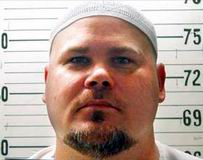
Marlon Kiser
Murderer Russell Ellwood
Murderer · USA · 1991
Russell Ellwood was a former taxi driver. Authorities suspected him of killing…
20 victims
Russell Ellwood
Murderer · USA · 1991
Russell Ellwood was a former taxi driver. Authorities suspected him of killing…
20 victims
 Robert Martines Perez
Murderer · USA · 1994
Name: Robert Martines Perez · Other name used in proceedings: Robert Martinez P…
15 victims
Robert Martines Perez
Murderer · USA · 1994
Name: Robert Martines Perez · Other name used in proceedings: Robert Martinez P…
15 victims
 Billy Frank Vickers
Murderer · USA · 1993
Billy Frank Vickers Vickers was executed by lethal injection in Texas on Januar…
14 victims
Billy Frank Vickers
Murderer · USA · 1993
Billy Frank Vickers Vickers was executed by lethal injection in Texas on Januar…
14 victims
 Erica Sheppard
Murderer · USA · 1993
Erica Sheppard was named as the defendant in a capital murder and robbery case.…
1 victim
Erica Sheppard
Murderer · USA · 1993
Erica Sheppard was named as the defendant in a capital murder and robbery case.…
1 victim
 John Emil List
Mass murderer · USA · 1971
John Emil List was a devout member of the Lutheran church who taught Sunday sch…
5 victims
John Emil List
Mass murderer · USA · 1971
John Emil List was a devout member of the Lutheran church who taught Sunday sch…
5 victims
 Changyin & Changping Shen
Serial killers · China · 1999
Changyin Shen and Changping Shen were convicted and sentenced to death for kill…
12 victims
Changyin & Changping Shen
Serial killers · China · 1999
Changyin Shen and Changping Shen were convicted and sentenced to death for kill…
12 victims
 Robert Edward Maury
Serial killer · USA · 1985
Robert Edward Maury was sentenced to death on October 27, 1989. · October 27, 1…
3 victims
Robert Edward Maury
Serial killer · USA · 1985
Robert Edward Maury was sentenced to death on October 27, 1989. · October 27, 1…
3 victims
 George Lamson
Murderer · United Kingdom · 1881
George Lamson was an English physician who, after the Crimean War, suffered fro…
1 victim
George Lamson
Murderer · United Kingdom · 1881
George Lamson was an English physician who, after the Crimean War, suffered fro…
1 victim
- Gender
- male
- Country
- USA
- Location
- Hamilton County, Tennessee, USA
- Date of birth
- February 18, 1970
- Age at first offence
- 31
- Characteristics
- arson, to avoid arrest
- Victim profile
- Donald Kenneth Bond Jr. (Hamilton County Sheriff's Deputy)
- Method of murder
- Shooting ( high-powered assault rifle)
- Date(s) of murder
- September 6, 2001
- Years active
- 2001
- Date of arrest
- Same day
- Status
-
Sentenced to death
Sentenced to death on November 20, 2003
Case record: Marlon Duane Kiser
Background
Marlon Duane Kiser was sentenced to death in November 2003 for the 2001 first-degree murder of Hamilton County Deputy Sheriff Donald Kenneth Bond, Jr. Deputy Sheriff Donald Bond was shot several times with a high-powered assault rifle when he interrupted Kiser’s arson attempt at a Chattanooga fruit stand.
The offence
In the early morning hours of September 6, 2001, Deputy Sheriff Donald Kenneth Bond, Jr., of the Hamilton County Sheriff’s Department was shot to death while on duty patrolling the East Brainerd area of Chattanooga.
The State’s proof showed that Kiser hated the police and, when confronted by an officer while trying to commit another crime, murdered him.
At the time of the murder, Kiser was trying to commit arson at a fruit stand.
Investigation
Investigating officers noticed the odor of kerosene or gasoline around the produce stand and a greasy film on the Ford’s windshield, its hood, the truck’s passenger side, and the nearby ground. Analysis of a soil sample taken from underneath the passenger door of the truck revealed the presence of gasoline.
Prints from a size 13 shoe were discovered behind the truck. Investigators also found shell casings, cartridge casings, and bullets on the ground at the fruit stand.
Forensic testing revealed that nine of the shell casings found at Nunley’s stand and bullet fragments removed from the victim’s body had been fired from Kiser’s gun. Other casings found at Nunley’s produce stand had come from the victim’s gun.
Gunshot residue was found on Kiser’s hands in an amount sufficient to conclude that he had shot a gun. Particles on the sweat pants and sweatshirt found near the deck were consistent with gunshot primer residue.
The partial shoe tracks near the Ford truck at the scene were consistent in size, shape and tread design with the sole of the left boot discovered under the deck. Microscopic examination of fibers obtained by vacuuming the victim’s patrol car and fibers from the burlap sewn onto the sweatshirt showed that the two were consistent with one another. Fibers microscopically similar to fibers from the sweat pants and T-shirt were found on the interior driver’s side of the victim’s car.
Hairs on the T-shirt, sweat pants and sweatshirt were microscopically similar to Kiser’s hair; and Kiser’s DNA was found in the waist band of the sweat pants. Gasoline was also present on the clothing. DNA testing established that the blood on Chattin’s truck belonged to the victim, Donald Bond.
Arrest
Based on information from Mike Chattin at about 4 a.m., a SWAT team was sent to Chattin’s house around 5 o’clock that morning.
At least three team members saw Kiser walk out of the house onto the deck and drop several objects off of the deck. About ten or twenty minutes later, Kiser came out of the basement and approached his car, where SWAT team members apprehended him.
When officers attempted to handcuff him, Kiser tried to grab an officer’s gun, and a fight broke out between Kiser and SWAT team members. Kiser was eventually subdued and taken to the hospital for treatment of injuries suffered during his arrest.
A search of the area below the deck, where the SWAT team members had seen Kiser throw the objects, yielded the front half of Deputy Bond’s bulletproof vest and his .40 caliber Glock pistol as well as black sweat pants, a black hooded sweatshirt with a camouflage cape attached by fishing line, a black T-shirt, and a size 13 boot.
Inside the open doorway to the basement, officers found Kiser’s MAK-90 rifle with two magazines. The gun was ready to fire. In the basement, officers also recovered a backpack and other items, including a cellphone. In the backpack they found a spool of fishing line, another magazine of ammunition, and boxes of Wolf ammunition.
A bullet hole was discovered on the passenger’s side of Chattin’s Dodge truck, which was parked at the house. A substance appearing to be blood was observed on the exterior passenger side, the windshield, and the hood of the vehicle.
Trial
The trial court ordered a special venire, see Tenn. Code Ann. § 20-4-201(2) (Supp. 2008), and a jury was selected in Davidson County, Tennessee. Trial was held in Hamilton County from November 10-20, 2003.
Guilt-innocence phase
Kiser was indicted by a Hamilton County grand jury for first degree premeditated murder, first degree felony murder in the perpetration of theft, and first degree felony murder in the perpetration of arson.
The State sought to prove that Kiser hated the police and, when confronted by an officer while trying to commit another crime, murdered him.
The defense sought to show that Kiser was framed in the murder by his friend and housemate, James Michael Chattin.
Events leading to the murder
In November 2000, Uncle Charlie’s Produce, a fruit stand owned by Charles Sims on Brainerd Road about a mile from Chattin’s house, burned down under suspicious circumstances.
Several weeks before Bond’s murder, Kiser and his friends Mike Chattin and Carl Hankins stopped by Sims’ rebuilt fruit stand. Kiser remained in Chattin’s truck while Chattin and Hankins spoke with Sims, who told them he suspected that a competitor, the owner of Nunley’s fruit stand across the street, had burned down his old stand.
Later that day, Kiser suggested burning Nunley’s fruit stand because Kiser thought “an eye for an eye” should apply. According to the State’s theory, this encounter caused Kiser to begin planning the arson of the fruit stand.
Kiser lived with Chattin at Chattin’s house on Brainerd Road in Chattanooga until he moved to his girlfriend’s house on Gann Road in Hamilton County about six weeks before Bond’s murder.
On the afternoon of September 5, 2001, after receiving a telephone call from Chattin, Kiser left his girlfriend’s house with his MAK-90 semiautomatic assault rifle and a backpack. That evening, Kiser, Hankins, and Murphy Cantrelle, another of Chattin’s friends, were at Chattin’s house. Cantrelle and Hankins left at about 10 to 11 p.m., near the time that Chattin and his girlfriend, Carol Bishop, arrived.
Before Hankins departed, Kiser told him that it was time for him to leave, “that there was either things going on or things [Hankins] didn't need to be a part of, that it would be better off if [Hankins] just left.”
When Chattin and Bishop went to bed around 11:30 p.m., Kiser was still at Chattin’s house.
Witness observations at Nunley’s produce stand
Around 1:30 a.m. on September 6, 2001, Nola Rannigan, who lived in the house next to Nunley’s produce stand, noticed a car in the parking lot with its lights on. She later heard “a big bam and then ․ several bams after that and then a couple pops.” Rannigan looked out the window and saw that the car was still there.
About five or seven minutes later she saw a truck with its lights off pull out of the parking lot and slowly proceed west on Brainerd Road. Rannigan saw only one person, the driver, in the truck. When the driver straightened himself up, she could tell that he was “a fairly big man, at least six f[ee]t.”
That same morning Deputy Bond was patrolling the East Brainerd Road area in his marked patrol car. When he did not respond to calls from the dispatcher, officers began looking for him.
At about 2:30 a.m., Officer Kevin Floyd of the Hamilton County Sheriff’s Department found Deputy Bond’s body lying in the parking lot at Nunley’s fruit stand.
Injuries and missing items
Deputy Bond suffered multiple severe gunshot wounds, seven inflicted with a high-powered large caliber weapon. Two other wounds were consistent with a .40 caliber Glock pistol.
The wounds were spread over the victim’s body from his mouth and neck to his arms, abdomen, thigh, and knee. The gunshot wound in the victim’s mouth occurred while the victim’s mouth was partially open, rupturing the victim’s lips, and exited the base of the victim’s skull.
Bond’s shirt was open, and the front part of his bulletproof vest and his .40 caliber Glock service weapon were missing. There was no blood on the front of Deputy Bond’s shirt in the area where his bulletproof vest would have been, but blood was present on the back panel of the vest.
Bond’s patrol car was still on the lot, running and with its lights on. Another vehicle, a black Ford truck, was also parked at Nunley’s.
Physical evidence at the scene
Investigating officers noticed kerosene or gasoline odor and a greasy film on the Ford’s windshield, hood, truck’s passenger side, and nearby ground.
In addition to shell casings, cartridge casings, and bullets found at the fruit stand, there were gasoline-range products identified during forensic fire debris analysis.
Officer confrontation and Kiser’s alleged actions
Mike Chattin testified that Kiser knocked on the door of the bedroom where Chattin and Carol Bishop were sleeping at about 2:30 a.m. and asked to speak with Chattin privately. Chattin followed Kiser to a second bedroom, where Kiser told him that he had borrowed Chattin’s Dodge Ram truck and pointed to the bed where Deputy Bond’s service weapon, the front of Bond’s bulletproof vest, and Kiser’s assault rifle were lying.
Defendant then announced that he had killed a policeman. Defendant said that he regretted leaving shell casings and not getting an entire bulletproof vest but that the killing had provided him “stress relief.”
He told Chattin that he had killed fifteen to seventeen other people, two or three of whom were policemen. When the two men heard an ambulance pass by, Kiser chuckled and said, “[i]t ain't going to do them no good, they're too late.”
Defendant told Chattin he had gone to Nunley’s to burn it. When he saw Deputy Bond pull into the parking lot, he crouched behind the truck. When Bond approached, he came out from behind the truck and shot Bond.
Kiser told Chattin that he picked up Bond and tried to pull off the vest, which came apart and caused Bond’s head to hit the ground. According to Chattin, Defendant had “liked it so much that [he] picked him up and did it again.”
Kiser offered to give Deputy Bond’s gun to Chattin and expressed the need to “get rid of that stuff” but refused Chattin’s offer to help him do so.
After going outside to talk with Chattin’s neighbor, Pam Treadway, about police cars rushing to Nunley’s produce stand, Kiser asked Chattin to take him back to the crime scene; Chattin refused.
Kiser related to Chattin that when Chattin’s truck had not started after he shot Bond, he tried to drive away in Bond’s patrol car but could not get it into gear. Finally, he started Chattin’s truck and drove away.
Kiser presented Chattin some tomatoes he had brought from Nunley’s as a “present.” Defendant said that he would need food and protection and that Charlie Sims should know about what had happened.
Chattin explained that Kiser was not excited while telling him about the murder but “was very calm, [and] showed great pleasure.”
After hearing Kiser’s story, Chattin returned to his bedroom, woke up Bishop, and told her what Kiser had told him.
Implementing a plan to elude Kiser and escape the house, Chattin told Kiser that he was leaving in his own car to eat breakfast with Bishop. Bishop left first in her car around 3:30 a.m. and headed to her own home. Chattin stopped to get gasoline, unsuccessfully tried to contact a friend of his who was a policeman, and stopped again for gas. After checking to see that Bishop was safely at home and trying once again to reach his friend, Chattin called 911, then waited at the convenience store where he encountered the police officer at 4 a.m.
Chattin testified that he did not kill Deputy Bond.
Civil rights lawsuit and alleged statements
The parties stipulated that Kiser filed a civil rights lawsuit in federal district court in Chattanooga in 1999 seeking monetary damages from three Chattanooga police officers and the City of Chattanooga. This case was set for trial in mid-September 2001.
The State presented proof that Malcolm Headley, a friend of Kiser, sold Kiser the MAK-90 assault rifle used to kill the victim. Defendant also asked Headley to sell him a bulletproof vest. Headley refused but told Defendant where he could purchase one.
Defendant told Headley that he had had “trouble with some law officers” and “had a lawyer working on it.” Defendant said that he was “going to take care of this problem.”
When Headley asked if Defendant was going to court, Defendant replied, “Well, yeah, and if I could kill somebody, I will, even if I have to sneak up on them and do it.”
When Headley gave Defendant a “funny” look, Defendant said that he was joking.
Carl Hankins testified that Defendant told him when they were talking about the police that Defendant “very much disliked the police department.” Defendant also told Hankins that if a police officer tried to take him into custody, Defendant “would kill a man before he would ever take a beating like he took before.”
Defense case
The defense theory at trial was that Chattin was the real killer and had framed Defendant.
The proof showed that Chattin owned several guns and that ammunition of the type used in the MAK-90 was found in his house. After the murder, Chattin had warned persons to whom he had given or sold guns not to let the police know where the weapons had come from.
Chattin’s wife, Tina Hunt, left him in the spring of 2001 because of physical abuse and his drug use. Sheriff’s officers thereafter served a restraining order on Chattin and left a warning at his house when he violated the order by stalking his wife at her work.
The defense presented testimony that Chattin thought his wife was dating a policeman and that the police were harassing him.
The wife of one of Chattin’s drug dealer friends testified that the weekend before September 6, Chattin told her that he wanted to kill somebody or burn something.
The defense presented inconsistencies in Chattin’s accounts of the circumstances surrounding Defendant’s telling him about the killing and Chattin’s “escape” from the house afterward.
Pam Treadway, Chattin’s neighbor, testified in May 2001 that Chattin asked her to lie to a sheriff’s officer and tell the officer that he was not at home. Later that night, Chattin came to Treadway’s house, laid some papers and a .9 mm gun on her coffee table, and told her not to touch the gun, that he was going to “kill him a cop.” Chattin left the gun with Treadway.
Treadway also testified that on the night of the killing she looked through her window and saw Defendant sleeping on the couch in Chattin’s living room.
Treadway said she saw Chattin and Bishop leave Chattin’s house around midnight September 6 and come back at 12:30 a.m. Chattin then followed Bishop in his car as she drove away in her car. Around 1:30 a.m., she saw Cantrelle leave in Chattin’s truck. About 2 a.m., Treadway observed Cantrelle packing garbage bags and “stuff” behind the seat of a Chevette and then drive away.
Later that night, as she and Defendant were watching police cars respond to the murder, Defendant acted like someone who had just woken up.
After the murder, Treadway said, Chattin told her to keep her mouth shut or he would shut it for her; he also threatened to set fire to her house and unscrewed the bulbs out of her security lights.
The defense called Dr. Marilyn Miller, a professor of forensic science and crime scene investigation. Dr. Miller testified about shortcomings in the criminal investigation, including inadequate security at the crime scene; the failure to test for fingerprints on the hood of Chattin’s truck; and “meaningless” gunshot residue tests. Dr. Miller also testified that chemical examination of the fibers found in the victim’s patrol car disclosed that they had not come from the same source as the burlap fabric sown on the sweatshirt found beneath the deck at Chattin’s house.
To raise doubt about Kiser’s willingness to commit a murder on the night of September 5, the defense called the attorney representing Kiser in his federal law suit to testify that he and Kiser had an appointment scheduled for 8:30 a.m. on September 6 to discuss a possible settlement of the case.
On cross-examination of the attorney, the State introduced Kiser’s July 2001 answer to an interrogatory, in which he stated that he had “grown to despise the police” and felt that they were “crooked.”
Verdicts
Following deliberations, the jury returned verdicts convicting Kiser of:
- first degree premeditated murder,
- first degree felony murder committed during the perpetration of arson, and
- first degree felony murder committed during the perpetration of theft.
Sentencing
Before sentencing, defense counsel notified the trial court of Kiser’s decision not to present any mitigating evidence at the sentencing hearing.
A colloquy was recorded between the trial court and Kiser:
Q [by the trial court]: With reference to the sentencing hearing, it's also my understanding you do not wish that your counsel put on any defense proof, any mitigating circumstances, any evidence at all; is that correct? A [by Defendant]: Yes, sir.
Q: Do you understand that you have the right to present mitigating evidence, determine-and you understand the importance of presenting mitigating evidence, in both the evidence that was presented-any mitigating evidence that may arise from the guilt or innocence phase of the trial, as well as any mitigating evidence that you can put on through your attorneys during the sentencing phase of the trial; do you understand the importance of that? A: Yes, sir.
Q: And do you understand the risk of not putting on any mitigating evidence during this sentencing phase of the trial; the risk, by not putting on any mitigating evidence, it may not offset the aggravating circumstance the State's offering in this case, do you understand that? A: I do.
Q: And by putting on mitigating evidence, it may offset that aggravating circumstance; do you understand that? A: Yes, sir.
Q: And have you discussed with your attorneys about this? A: I have.
THE COURT: And [defense counsel] Ms. Green, have you and [defense counsel] Ms. Gothard discussed this with [Defendant], about the risks involved in not putting on any mitigating evidence? MS. GREEN: We have discussed the risks, yes, sir.
THE COURT: And the fact that the mitigating evidence could possibly offset the aggravating circumstance? MS. GREEN: We've discussed only in general terms, Your Honor. [Defendant] has refused for some months now to allow us to actually present to him what we would be presenting in the hearing itself.
Q: (By the Court) Do you understand-of course, this was mentioned back when we were in Nashville selecting the jury in this case, your counsel, of course, mentioned to the jury, we talked about mitigating circumstances at that time. Of course, you certainly understand, [Defendant], do you not, what I mean by mitigating circumstances? A: Yes, sir, I do.
Q: And you understand that the defense has investigated, spent a lot of time investigating possibilities of mitigating circumstances and are prepared to present mitigating evidence in this trial; do you understand that? A: Yes, sir, I do.
Q: Knowing all that, is it your conscious decision and your voluntary decision to forego presenting any mitigating evidence in this trial? A: That is correct.
Q: Has anybody put any pressure on you in any way to get you to do this? A: No, sir.
Q: Do you have any questions you'd like to ask me about this, [Defendant]? A: Not at this moment.
THE COURT: All right. Let me say further, that after listening to [Defendant] in this case and counsel, I do find that [Defendant] is competent to waive mitigation in this case and I do find that he is waiving the presentation of mitigating evidence knowingly and voluntarily and understandingly at this time.
After the State presented victim impact statements by Deputy Bond’s mother and mother-in-law, the jury sentenced Kiser to death for each of his murder convictions.
The jury found the aggravating circumstance that the murder was committed against a law enforcement officer engaged in the performance of official duties, and that Kiser knew or reasonably should have known that the victim was such an officer. The jury also found that the aggravating circumstance outweighed mitigating circumstances beyond a reasonable doubt.
After the State presented victim-impact witnesses, the trial court yet again questioned Kiser about his decision to waive mitigation proof. Kiser responded that he did not wish to present mitigation proof and that it was his belief “that there's nothing that could be said on [his] behalf or anybody that knows [him] to change anybody's mind.”
Appeals
After a jury convicted Kiser and sentenced him to death in November 2003, the Court of Criminal Appeals affirmed the convictions and sentence but remanded for the trial court to merge the convictions and enter a single judgment of conviction for first degree murder.
Kiser’s automatic direct appeal reached the Tennessee Supreme Court.
The Tennessee Supreme Court held:
- Defendant’s constitutional rights were not violated by his waiver of his right to present mitigating evidence at sentencing.
- The State did not exercise its peremptory challenges in an impermissibly discriminatory manner.
- The trial court did not commit reversible error by refusing to instruct the jury on residual doubt.
- The trial court did not err by limiting Defendant’s proof.
- The trial court did not err by excluding (a) a telephone call from an unidentified caller claiming that Defendant did not commit the murder or (b) a written note whose author was unidentified.
- The evidence was sufficient to support the verdicts.
- The death sentence was valid under the Tennessee Supreme Court’s mandatory review pursuant to Tennessee Code Annotated section 39-13-206(c)(1).
- Tennessee’s lethal injection protocol was constitutional.
The Tennessee Supreme Court affirmed Kiser’s convictions and sentence and remanded for entry of a single judgment of conviction for first degree murder.
Kiser’s execution date was set at May 19, 2010.
A collateral post-conviction stage also occurred: Kiser filed an appeal for a new trial because he said he received ineffective counsel, and a judge denied a new trial.
Kiser’s post-conviction proceedings included the Tennessee Supreme Court upholding the death sentence and setting the execution date.
An attorney for Kiser later sought permission to review physical evidence.
Outcome
Kiser’s convictions and sentence of death were affirmed, and the matter was remanded to the trial court for entry of a single judgment of conviction of first degree murder. The sentence of death was carried out as provided by law on the 19th day of May, 2010, unless otherwise ordered by the court or other proper authority.
Aftermath
After the sentence and automatic review, Kiser’s attorneys sought review of evidence kept by the Criminal Court Clerk’s Office. Hamilton County Criminal Court Judge Don Poole ruled that Kiser’s attorneys could review evidence being kept by the Criminal Court Clerk’s Office.
A District Attorney, Bill Cox, stated he still believed the jury made the right decision, saying “There was a lot of forensic evidence,” and that “The evidence was heard by a jury and reviewed by the Tennessee Supreme Court and was overwhelming.”
Kiser was described as being on death row.
Other details
During the guilt-innocence phase and subsequent rulings, the record included disputes and rulings on evidence issues, including exclusion of an anonymous phone call and exclusion of a handwritten memorandum whose author was unidentified.
During jury selection, defense counsel asserted orally that nine of the State’s nineteen peremptory challenges were exercised against minorities. The trial court overruled the objection. The Tennessee Supreme Court addressed this Batson challenge and rejected the claim of purposeful discrimination.
During sentencing, Kiser waived presentation of mitigating evidence and refused to allow his attorneys to present mitigating evidence, including information about his mental health background.
The Tennessee Supreme Court’s analysis included the discussion of competence to waive mitigation, including reference to a report from James R. Merikangas, M.D., and its content. That report stated:
[Defendant] is a brain-damaged individual, with structural damage to the frontal lobe of his brain demonstrated by CAT scan prior to the crime for which he is charged. This damage is in a location associated with dyscontrol of impulses, impairment of abstract reasoning and planning ability.
In addition, [Defendant] has paranoid ideation and delusional ideation of the sort commonly seen in patients with the diffuse brain atrophy demonstrated by his previous CAT scan and his current MRI brain scans. The examination of his blood tests is also probative, because of the finding on 4/04/03 in the Erlanger Health System records of a blood glucose level of 59. This abnormally low blood sugar level [hypoglycemia] is in the range reported in the scientific literature as the causal of violent, delirious, and unplanned activity. There is ample forensic precedent for hypoglycemia being exculpatory in criminal cases.
IN SUMMARY: [Defendant] is an individual with long-standing brain damage and serious hypoglycemia whose developmental history, psychological testing, previous medical and psychiatric treatment, and collateral information [see separate reports] document serious impairment of the ability to understand, control, and plan his action in the face of day-to-day functioning, and particularly in the face of stress or threat. This impairment is not the result of any factor within the control of [Defendant], having both congenital and acquired causes.
The Tennessee Supreme Court also quoted a portion of Kiser’s affidavit defense attorney Green filed with respect to reasons Kiser preferred a death sentence rather than life imprisonment, including: he didn’t want to spend the rest of his life in prison; he would stand a better chance of overturning his conviction in collateral proceedings if he was under a death sentence because death-sentenced inmates received two lawyers and funding for support services; on death row he would not have to share a cell with another inmate; he would not have to deal with prison gangs on death row; and he didn’t want embarrassing facts about himself or his family to be presented in open court.
Spotted an error, or have more information about this case?