
Daryl Keith Holton
Mass murderer Gameel Al-Batouti
Mass murderer · USA · 1999
Gameel Al-Batouti (also rendered “Gamil ElBatouty” or “El Batouty” in U.S. offi…
216 victims
Gameel Al-Batouti
Mass murderer · USA · 1999
Gameel Al-Batouti (also rendered “Gamil ElBatouty” or “El Batouty” in U.S. offi…
216 victims
 Timothy McVeigh
Mass murderer · USA · 1995
Timothy James McVeigh (April 23, 1968 – June 11, 2001) was a United States Army…
168 victims
Timothy McVeigh
Mass murderer · USA · 1995
Timothy James McVeigh (April 23, 1968 – June 11, 2001) was a United States Army…
168 victims
 Julio Gonzalez
Mass murderer · USA · 1990
Julio Gonzalez was sentenced to 174 twenty-five-year sentences (a total of 4,35…
87 victims
Julio Gonzalez
Mass murderer · USA · 1990
Julio Gonzalez was sentenced to 174 twenty-five-year sentences (a total of 4,35…
87 victims
 David Burke
Mass murderer · USA · 1987
David Augustus Burke (May 18, 1952–December 7, 1987) was an employee of USAir,…
43 victims
David Burke
Mass murderer · USA · 1987
David Augustus Burke (May 18, 1952–December 7, 1987) was an employee of USAir,…
43 victims
 Seung-Hui Cho
Mass murderer · USA · 2007
Seung-Hui Cho was a mass murderer who shot and killed 32 people and wounded man…
32 victims
Seung-Hui Cho
Mass murderer · USA · 2007
Seung-Hui Cho was a mass murderer who shot and killed 32 people and wounded man…
32 victims
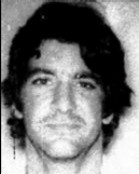 George Jo Hennard
Mass murderer · USA · 1991
George Jo Hennard carried out a mass killing at a Luby’s Cafeteria in Killeen,…
23 victims
George Jo Hennard
Mass murderer · USA · 1991
George Jo Hennard carried out a mass killing at a Luby’s Cafeteria in Killeen,…
23 victims
 Thomas Doty
Mass murderer · USA · 1962
Thomas G. Doty was a passenger on Continental Airlines Flight 11. He was a marr…
44 victims
Thomas Doty
Mass murderer · USA · 1962
Thomas G. Doty was a passenger on Continental Airlines Flight 11. He was a marr…
44 victims
 Beth Ann Markman
Murderer · USA · 2000
Beth Ann Markman was convicted in connection with the October 2000 murder of Le…
1 victim
Beth Ann Markman
Murderer · USA · 2000
Beth Ann Markman was convicted in connection with the October 2000 murder of Le…
1 victim
 Lyle & Erik Menendez
Murderers · USA · 1989
Joseph Lyle Menendez (born January 10, 1968) and Erik Galen Menendez (born Nove…
2 victims
Lyle & Erik Menendez
Murderers · USA · 1989
Joseph Lyle Menendez (born January 10, 1968) and Erik Galen Menendez (born Nove…
2 victims
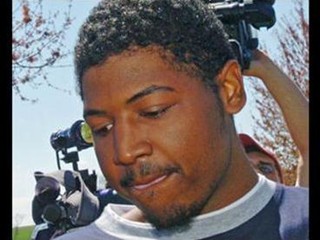 Jesse Wise
Mass murderer · USA · 2006
Jesse Dee Wise, also known as “Jay,” lived with his grandparents at the home wh…
6 victims
Jesse Wise
Mass murderer · USA · 2006
Jesse Dee Wise, also known as “Jay,” lived with his grandparents at the home wh…
6 victims
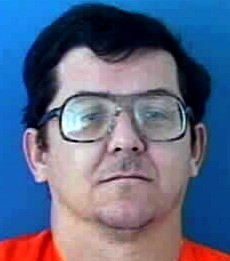 Robert Dewey Glock
Murderer · USA · 1983
Robert Dewey Glock, II was a Florida prison inmate who was convicted and senten…
1 victim
Robert Dewey Glock
Murderer · USA · 1983
Robert Dewey Glock, II was a Florida prison inmate who was convicted and senten…
1 victim
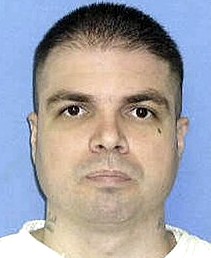 Yosvanis Valle
Murderer · USA · 1999
Yosvanis Valle was born on 09/07/1975. He was a Hispanic male and was from Hava…
4 victims
Yosvanis Valle
Murderer · USA · 1999
Yosvanis Valle was born on 09/07/1975. He was a Hispanic male and was from Hava…
4 victims
- Gender
- male
- Country
- USA
- Location
- Bedford County, Tennessee, USA
- Date of birth
- 1962
- Age at first offence
- 35
- Characteristics
- parricide
- Victim profile
- Stephen Edward Holton, 12, Brent Holton, 10, Eric Holton, 6, Kayla Marie Holton, 4 (his four children)
- Method of murder
- Shooting ( Russian SKS semi-automatic assault rifle)
- Date(s) of murder
- November 30, 1997
- Years active
- 1997
- Date of arrest
- Same day (surrenders)
- Status
-
Executed
Executed by electrocution in Tennessee on September 12, 2007
Parties and identities
- Defendant: Daryl Keith Holton (described as a Gulf War veteran).
- Victims (four children): Stephen Edward Holton (12), Brent Holton (10), Eric Holton (6), Kayla Marie Holton (4).
- Victim relationships: Kayla was not Holton’s daughter, but Holton considered her his child.
- Ex-wife: Crystal (Crystle) Holton (mother of the victims).
- Uncle/garage owner: the uncle owned the auto repair garage where Holton lived for several months and where the killings occurred.
- Dispatcher: the police dispatcher testified at trial.
- Forensic pathologist/medical examiner: Dr. Charles Harlan testified; Dr. Bruce Levy was the chief state medical examiner; Dr. Charles Harlan and other medical professionals testified in the trial proceedings.
- Judicial opinion: State v. Holton, 126 S.W.3d 845 (Tenn. 2004) (Direct Appeal).
Timeline
- 1984 — Daryl Keith Holton and Crystal Holton married while he was serving in the United States Army and stationed at Fort Jackson in South Carolina.
- 1985 — Stephen Holton was born in Germany.
- 1987 — Brent Holton was born in Germany.
- September 17, 1991 — Eric Holton was born while Holton was stationed in the United States for a period and the family remained in the U.S.
- February 27, 1996 — Bedford County Juvenile Court granted Crystal Holton custody of the children with visitation at the discretion of the mother; Holton agreed to entry of the order.
- 1995 — An incident occurred during a weekend when Holton refused to let the children get out of the car, said his ex-wife was “going to regret it,” and later surrendered the children to police.
- Late summer or early fall of 1997 — Crystal Holton obtained an order of protection against Holton and moved to a new address.
- November 30, 1997 — Holton murdered Stephen, Brent, Eric, and Kayla at his uncle’s auto repair garage; he then walked into the Shelbyville Police Department and reported “homicide times four.”
- June 16, 1999 — Holton was sentenced to death for killing the four children.
- September 19, 2006 — The Tennessee Supreme Court set Sept. 19 as a new execution date after legal filings.
- September 12, 2007 — Holton was executed by electrocution in Tennessee.
Background
Holton was described as a Gulf War veteran. The case involved a custody and domestic history between Holton and Crystal (Crystle) Holton.
Holton and Crystal Holton married in 1984 while Holton was serving in the Army and stationed at Fort Jackson in South Carolina. Shortly after their marriage, Holton was reassigned to a post in Germany where he administered a dental clinic. While stationed in Germany, the couple had two sons, Stephen (born in 1985) and Brent (born in 1987). After his tour of duty in Germany, Holton was stationed at Fort Gordon in Georgia and volunteered for service in Saudi Arabia at the conclusion of the 1991 Gulf War. The family remained in the United States, and Eric was born on September 17, 1991. Eric was hearing-impaired.
The relationship deteriorated at times, and the record described serious financial difficulties that followed incorrect routing of Holton’s paychecks. During the fall of 1991, Crystal Holton left her children home alone overnight while she went to a country music bar and dance hall; the police were called after one of the children arrived at a neighbor’s house looking for his mother. When Crystal Holton returned home, the police declined to bring criminal charges, and representatives of the Georgia Department of Children’s Services allowed Crystal Holton to retain custody. Holton secured an emergency leave of absence and returned to the United States for several days, during which he moved his family from Georgia to his father’s home in Shelbyville, Tennessee. After Holton returned to Saudi Arabia, Crystal Holton left Shelbyville to visit a cousin in Indiana and thereafter moved to South Carolina, leaving the children in the custody of Holton’s father.
Holton obtained a hardship discharge and returned to Shelbyville to care for his children. In June 1992, he returned to Georgia and obtained a divorce from Crystal Holton on grounds of desertion and custody of the three boys. Holton and the children returned to Shelbyville, and Crystal Holton testified that Holton brought the children to visit her in South Carolina two or three times each month.
In late 1992, Crystal Holton became pregnant following a “one night stand.” On June 22, 1993, Crystal Holton gave birth to Kayla Marie. According to Crystal Holton, Holton accepted Kayla “rather well” and gave her his last name. Although the couple did not remarry, they lived together in Shelbyville with the four children for approximately two years. During this time, Crystal Holton drank heavily, and the record described violent fights in which Holton struck her and blamed his violence on her drinking. Eventually, Crystal Holton and the children left and moved into public housing in Murfreesboro, Tennessee.
Holton visited the children on a daily basis while they lived in Murfreesboro and was at some point awarded weekend visitation rights. Crystal Holton testified that Holton would pick up the children on Friday and return them on Sunday. Crystal Holton testified that Holton expressed concern about the crime rate in the neighborhood and complained about the condition of her apartment. She admitted she was a mediocre housekeeper, regularly accepted money from Holton for the purchase of alcohol, and purchased pint-sized bottles of liquor each week, while denying she demanded money or liquor as a condition of visitation.
In 1995, during a weekend visitation, Holton refused to let the children get out of the car and ordered Crystal Holton to get into the car if she ever wanted to see the children again. Crystal Holton said she did not see any weapons but got the impression Holton was armed. She refused, and Holton drove away saying, “Fine. You are going to regret it.” Crystal Holton called police immediately. After learning of the call from a police scanner in his car, Holton surrendered the children to police unharmed. Thereafter, Crystal Holton testified that Holton continued to threaten that she would “regret it” if she ever took his children away.
The record stated that the Tennessee Department of Children’s Services briefly obtained legal custody of the children while Crystal Holton retained physical custody. On February 27, 1996, the Bedford County Juvenile Court granted custody to Crystal Holton with visitation at the discretion of the mother; Holton agreed to the order that stated: “it would be in the best interest of the minor children that full custody be granted to the natural mother with visitation to be at the discretion of the mother.”
Holton continued visiting the children until late summer or early fall of 1997, when Crystal Holton obtained an order of protection against Holton and moved to a different residence. Holton was not informed of the move and did not see the children again until November 30, 1997, the day of the murders. In the fall of 1997, Crystal Holton became romantically involved with Morris Rhodes, and in October 1997 she and the children moved to Rhodes’ home in Spring Hill, Tennessee.
The offence
On November 30, 1997, Holton murdered four children: Stephen Edward Holton (12), Brent Holton (10), Eric Holton (6), and Kayla Marie Holton (4). Holton had been armed with an SKS semi-automatic rifle, described as Russian-made in the appellate discussion and as an “SKS semi-automatic assault rifle” in other narrative portions of the case material. Holton also made homemade incendiary devices described as similar to molotov cocktails.
Holton lined up the children and shot them. His account described an older pair first and then the younger pair, with Holton telling the children not to peek and instructing them to close their eyes with their hands over their eyes. After the shootings, Holton covered the bodies with a tarpaulin.
After the murders, Holton prepared for a planned next phase that included firebombing and further violence involving Crystal Holton, but the plan was curtailed when Holton decided he did not have enough time to execute the remainder. He returned to the garage, had difficulty looking at the bodies, considered suicide, and then resolved to surrender to police.
Holton later reported to police that he wished to report “homicide times four” and confessed that he had killed his four children.
Investigation
Responding officers found the bodies of the four children at Holton’s uncle’s auto repair garage, including that the bodies were stacked underneath a tarpaulin in the rear bay of the garage.
Officers also found an SKS rifle and homemade incendiary devices at the garage. Holton told police that the murder weapon and the bodies were still inside the garage. Police found five incendiary devices described as similar to molotov cocktails, and Holton said he had made bombs intended for his wife and her home.
The record described that Holton warned officers about the “bomb” in the garage while the officers were leaving to investigate his claim.
Arrest and surrender
Holton walked into the Shelbyville Police Department and informed the dispatcher that he wished to report a “homicide times four.” The dispatcher testified at trial that Holton appeared calm and displayed no emotion and asked him to wait in the lobby while radioing for assistance.
An officer approached Holton, and after confirming Holton’s identity, Holton again indicated he wished to report four homicides. When the officer asked how Holton had learned of the homicides, Holton responded that he had killed his four children. Holton stood and placed his hands behind his back to allow the officer to handcuff him. Holton continued talking, in a matter-of-fact tone, and explained to the officer that he had murdered the children because his wife and the Department of Human Services had withheld them for several months without permitting him visitation.
Trial
Holton was charged with four counts of premeditated first degree murder.
During the trial, the critical issue was Holton’s mental state at the time of the killings. The State charged Holton with four counts of premeditated murder. The appellate discussion described that the defense evidence focused on insanity or diminished capacity and possible carbon monoxide poisoning, while experts testified about depression.
Confession and statements
Holton gave the police statements describing the manner in which he shot the children and reported preparations related to incendiary devices.
The appellate discussion included verbatim quotations from Holton’s account in multiple places:
- “homicide times four.”
- “Fine. You are going to regret it,”
- “I planned a lot of different scenarios and chose the one that time permitted. I was constantly subtracting-going over what ... options ...-were left.”
- “I had done what I wanted to do. I wanted to shock [my ex-wife] to death. I was done. I was done.”
- “Um, yeah — two words: I do.”
The appellate discussion included an additional quotation presented as part of custody order background:
- “it would be in the best interest of the minor children that full custody be granted to the natural mother with visitation to be at the discretion of the mother.”
Victim age and death findings
The appellate discussion identified that Holton shot and killed his four children who were four, six, ten, and twelve years old.
The record described forensic testimony from Dr. Charles Harlan, who performed autopsies and described the findings as consistent with Holton’s account of shooting from behind while the victims were positioned to close their eyes and not peek. The appellate discussion stated that Dr. Harlan testified that all four children died as the result of multiple gunshot wounds to the chest and/or abdomen and opined that the angle of the gunshot wounds was consistent with someone kneeling behind the victims and shooting upwards with the children standing in the positions described by Holton.
The record also included detailed testimony describing specific wounds for each child:
- Brent Holton (10): multiple gunshot wounds to the chest/back with contact entry and exit wounds, and a “re-entry gunshot wound” was described; the pathologist opined the contact wounds and exit wounds were consistent with a person kneeling behind Brent pointing the gun in an upward angle and pulling the trigger; the doctor also described wounds occurring in close time proximity and suggested ricochet and re-entry as a possibility described by the testimony.
- Stephen Holton (12): multiple gunshot wounds to the chest and abdomen; a “re-entry gunshot wound” in the posterior chest/back was described; the doctor described corresponding exit wounds and a “graze gunshot wound” to the chin and nose; entry and exit wounds to the right hand were described.
- Kayla Holton (4): multiple gunshot wounds; contact entry wound and corresponding exit wound were described, and the doctor testified the wounds were consistent with a scenario where a shooter knelt behind her, held a gun at an upward angle with the barrel touching her back, and pulled the trigger; the doctor also described another entry wound and a “partial exit” wound; the doctor retrieved an “extremely deformed bullet” and “smaller lead fragments.”
- Eric Holton (6): multiple gunshot wounds to the chest and abdomen; multiple entry wounds were described; at least one entry wound possibly involved “re-entry”; the doctor described uncertainty about whether three or four bullets caused the wounds and referenced how a projectile might split; exit wounds and a gunshot wound to the right wrist were described. The pathologist’s conclusions were described as consistent with Eric being positioned in front of Kayla when she was shot and Eric being told not to peek, with hands over his eyes.
Forensic and mental health evidence
The appellate discussion described expert testimony addressing mental health and depression, with the defense presenting theories of major depression and possible carbon monoxide poisoning, and the State presenting rebuttal including tests for carbon monoxide.
- A jail administrator testified Holton was placed on suicide watch during the first week after arrest and described Holton as quiet and cooperative.
- A defense toxicologist testified that carbon monoxide can affect memory, decrease IQ, and cause depression, psychosis, and neurologic deficit, but had not examined Holton.
- A mechanical engineer testified about inadequate ventilation and that it was probable carbon monoxide had been present where Holton slept, while conceding he could not state exposure on or before November 30, 1997 and that a heater test showed functioning properly and not emitting significant carbon monoxide.
- Another defense neurologist described effects of carbon monoxide poisoning and reviewed Holton’s reported symptoms, but could not diagnose Holton with carbon monoxide poisoning.
- A clinical neuropsychologist testified that Holton’s IQ was superior (120) and described deficits consistent with exposure to carbon monoxide but stated she could not definitively conclude exposure, and opined that at the time of the homicides Holton suffered from major depression caused by termination of his marriage and concerns over his children.
- A psychiatrist testified Holton had been suffering from major depression at the time he killed his children and discussed filicide profiles and depression.
- The State presented rebuttal testimony including safety consultant recreation tests showing no evidence of carbon monoxide and forensic neuropsychologist testimony that found major depression, passive-aggressive personality disorder, and a schizoid personality, and that Holton knew the nature and consequences of his behavior and knew killing his children was wrong.
Verdict
The jury found Holton guilty on all four counts of first degree premeditated murder. The jury imposed a death sentence for each offense.
The appellate discussion stated that the jury found aggravating circumstances:
- “mass murder,” defined as the murder of three or more persons whether committed during a single episode or at different times within a forty-eight-month period.
- For three convictions, that the murder was committed against a person less than twelve years of age and the defendant was eighteen years of age or older.
The appellate discussion also described that the defendant did not dispute the applicability of the aggravating circumstances, and that the jury found aggravating circumstances outweighed mitigating circumstances beyond a reasonable doubt.
Sentencing
Holton received a death sentence for each conviction. The record described:
- Holton was sentenced to death on June 16, 1999.
- The State sought two aggravating circumstances with respect to all four convictions, including “mass murder,” and with respect to three killings also sought the aggravating circumstance of victims being under 12 years of age with the defendant being 18 or older.
- Mitigation was limited by the defendant’s instructions to testimony by the jail administrator that Holton had been a good prisoner who obeyed rules, performed assigned tasks well, and interacted well with prison staff, and other mitigating circumstances were argued by the defense.
Appeals
The case was State v. Holton, 126 S.W.3d 845 (Tenn. 2004) (Direct Appeal).
The appellate holdings included that:
- Evidence was sufficient to support convictions.
- The insanity statute did not unconstitutionally shift the burden of proof to the defendant to negate an essential element of the offense.
- Alleged residual doubts as to mental state did not entitle Holton to relief from death sentences.
- Certain elements of Tennessee’s capital sentencing scheme were not unconstitutional.
- Evidence supported jury findings of aggravating circumstances that outweighed mitigating circumstances beyond a reasonable doubt.
- Death sentences were not disproportionate to penalties imposed in similar cases.
The appellate discussion stated that the convictions and death sentences were affirmed, and that the sentences of death were to be carried out as provided by law on the 3rd day of June, 2004 unless otherwise ordered by the court or other proper authority.
Execution and last statements
Holton was executed by electrocution in Tennessee.
On September 12, 2007, Holton was pronounced dead at 1:25 a.m. CDT. The record described that the warden, Ricky Bell, asked Holton if he had any last words. Holton replied, “Um, yeah— two words: ‘I do.’ ” The reply was also described as “Two words: I do.”
The execution was carried out at Riverbend Maximum Security Institution. A black shroud was placed over Holton’s head, and a cable was connected to the bottom of the chair. A 20-second shock was administered around 1:16 a.m. CDT, followed by a 15-second pause and a second shock that lasted 15 seconds; Holton was pronounced dead seconds later.
After the execution, a statement was read on behalf of Crystal Holton:
- “Today all the anger, hatred and a long time of nightmares can finally leave me. It will be replaced by all the sweet, innocent, wondrous love that only a child can give. And I am blessed that I have and will always have, that love times four.”
A separate portion of the statement included:
- “Marie has not only had to deal with the death of four grandchildren, but now is dealing with the death of her own son. You are in my thoughts and prayers. You will always be a mother figure for me. I still love and miss you very much.”
Holton chose the electric chair over the state’s preferred execution method of lethal injection. Under Tennessee law, death row inmates who committed their crimes before 1999 could choose their method of execution.
The execution involved procedural features described in the record, including a wet sponge and metal plate placed on Holton’s head, wet sponge water and towel drying, and a shroud placed over Holton’s head.
The record described that witnesses observed Holton hyperventilating and that Holton did not request a specific last meal, eating what was served to other inmates: riblets on a bun, mixed vegetables, baked beans, white cake with white icing, and iced tea; other portions listed a sandwich, mixed vegetables, baked beans, iced tea, and white cake.
Other details
The appellate discussion included several additional case facts:
- The State charged four counts of premeditated murder.
- Holton was described as declining to testify in his own behalf at trial.
- Holton declined to file appeals for the most part in the years prior to execution, but asked Nashville defense attorney David Raybin to witness the electrocution and protect his rights.
- An administrator of the Bedford County Jail testified Holton was placed on suicide watch during the first week after arrest.
- The trial record included evidence about possible carbon monoxide exposure, including tests and expert opinions from Dr. Donna Seger (toxicologist) and Dr. Leighton Sissom (mechanical engineer), and a neurologist, Dr. Howard S. Kirshner, as well as a clinical neuropsychologist, Dr. Pamela Auble.
- The State’s rebuttal included a safety consultant, Ralph Mosley, who recreated conditions to test for carbon monoxide contamination and found no evidence.
- Dr. Daniel Martell provided rebuttal testimony and concluded Holton knew the nature and consequences of his behavior and knew killing his children was wrong, and dismissed carbon monoxide poisoning theory based on negative test results and psychological testing.
- The record described that Holton’s uncle testified Holton lived in the rear bay of the garage for four months before the killings and had used a propane heater.
- The outside temperature on the day of the murders was described as between forty and fifty degrees Fahrenheit during a reconstruction test described in the appellate discussion.
- A depositions of experts were described as part of the defense proof, including Dr. Howard S. Kirshner’s neurologist deposition.
The victim interaction and custody arrangements included:
- Holton took the children for a Sunday visit arranged to pick them up at a Wal-Mart in Murfreesboro around 3 p.m., with an expected return time at 9:30 p.m.
- Brent drew a drawing with the words, “From Brent and Kayla. I love you Daddy.”
- Holton told police he “had to play along to avoid any suspicion on the children’s part.”
- The record described that after the murders, Holton planned to return to Murfreesboro, “to basically shoot” the young daughter of his ex-wife’s current boyfriend and to firebomb his ex-wife’s new residence, and that Holton ascertained the ex-wife’s new address using a telephone book, street maps, and the number retrieved from the caller ID unit on his telephone.

Spotted an error, or have more information about this case?