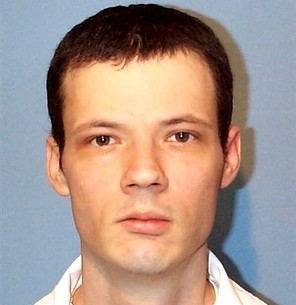
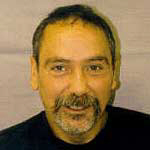
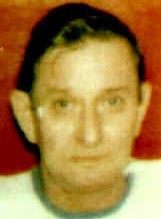
Larry Eugene Hutcherson
Murderer Brian Kevin Rosenfeld
Murderer · USA · 1985
Brian Kevin Rosenfeld Brian Kevin Rosenfeld was sentenced to three concurrent l…
23 victims
Brian Kevin Rosenfeld
Murderer · USA · 1985
Brian Kevin Rosenfeld Brian Kevin Rosenfeld was sentenced to three concurrent l…
23 victims
 Russell Ellwood
Murderer · USA · 1991
Russell Ellwood was a former taxi driver. Authorities suspected him of killing…
20 victims
Russell Ellwood
Murderer · USA · 1991
Russell Ellwood was a former taxi driver. Authorities suspected him of killing…
20 victims
 Robert Martines Perez
Murderer · USA · 1994
Name: Robert Martines Perez · Other name used in proceedings: Robert Martinez P…
15 victims
Robert Martines Perez
Murderer · USA · 1994
Name: Robert Martines Perez · Other name used in proceedings: Robert Martinez P…
15 victims
 Billy Frank Vickers
Murderer · USA · 1993
Billy Frank Vickers Vickers was executed by lethal injection in Texas on Januar…
14 victims
Billy Frank Vickers
Murderer · USA · 1993
Billy Frank Vickers Vickers was executed by lethal injection in Texas on Januar…
14 victims
 Enriqueta Martí
Serial killer · Spain · 1902
Enriqueta Martí i Ripollés was a Spanish child murderer, kidnapper and procures…
10 victims
Enriqueta Martí
Serial killer · Spain · 1902
Enriqueta Martí i Ripollés was a Spanish child murderer, kidnapper and procures…
10 victims
 Robert Garrow
Spree killer · USA · 1973
Robert Garrow was sentenced to a term of 25 years to life in prison in 1974. He…
4 victims
Robert Garrow
Spree killer · USA · 1973
Robert Garrow was sentenced to a term of 25 years to life in prison in 1974. He…
4 victims
 Marcus Shrader
Serial killer · USA · 1974
Marcus Shrader was a Navy corpsman who was stationed at Camp Lejeune at the tim…
4 victims
Marcus Shrader
Serial killer · USA · 1974
Marcus Shrader was a Navy corpsman who was stationed at Camp Lejeune at the tim…
4 victims
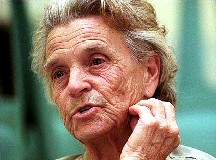 Faye Copeland
Serial killer · USA · 1986
Faye Della Copeland was born in 1921 and died on December 30, 2003. She was des…
5 victims
Faye Copeland
Serial killer · USA · 1986
Faye Della Copeland was born in 1921 and died on December 30, 2003. She was des…
5 victims
 Matthew Grant Webster
Murderer · Australia · 1989
Matthew Grant Webster was described as the man who raped and murdered Newcastle…
1 victim
Matthew Grant Webster
Murderer · Australia · 1989
Matthew Grant Webster was described as the man who raped and murdered Newcastle…
1 victim
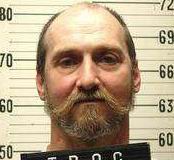 David Earl Miller
Murderer · USA · 1981
David Earl Miller was convicted of first-degree murder for the May 1981 killing…
1 victim
David Earl Miller
Murderer · USA · 1981
David Earl Miller was convicted of first-degree murder for the May 1981 killing…
1 victim
- Gender
- male
- Country
- USA
- Location
- Mobile County, Alabama, USA
- Date of birth
- September 3, 1969
- Age at first offence
- 23
- Characteristics
- torture, alcohol, drugs, burglary, rape
- Victim profile
- Irma Thelma Gray (female, 89)
- Method of murder
- St abbing with knife
- Date(s) of murder
- June 26, 1992
- Years active
- 1992
- Date of arrest
- Next day
- Status
-
Executed
Executed by lethal injection in Alabama on October 26, 2006
Case information
Defendant: Larry Eugene Hutcherson (age 37) Victim: Irma Thelma Gray (age 89)
Timeline
- June 26, 1992 — Irma Thelma Gray was assaulted and had her throat cut during a burglary at her home; she was nearly decapitated.
- June 19, 1999 — Hutcherson’s conviction became final.
- December 8, 2005 — A district court dismissed Hutcherson’s first petition, ruling it was filed too late.
- September 25, 2006 — The Alabama Supreme Court set October 26, 2006 as the execution date.
- October 18, 2006 — A federal judge dismissed Hutcherson’s bid to halt the execution set for the next week.
- October 20, 2006 — Hutcherson appealed the district court’s denial of his § 1983 action.
- October 19, 2006 — Hutcherson filed an Application for Leave to File a Successive Habeas Petition and a Motion to Stay; the court denied it in a separate order.
- October 26, 2006 — Hutcherson was executed by lethal injection and pronounced dead at 6:18 p.m. (another report said 6:21 p.m.).
The offence
On June 26, 1992, the body of 89-year-old Irma Thelma Gray was discovered in her home on Moffat Road in Mobile, Alabama. Her throat had been cut so severely that she was almost decapitated.
Hutcherson assaulted Gray after breaking into her home while she confronted him around midnight burglarizing her house. He cut her throat, and trial testimony described her body lying on the kitchen floor. There was evidence that Gray had been sodomized, and the trial record described her as having numerous injuries consistent with a beating, including cuts, bruises, and multiple fractured ribs.
A forensic medical examiner testified that the cut on Gray’s throat was 10 inches long, beginning at her left earlobe and progressing to within one and one-half inch of her right earlobe. The cut severed her windpipe and her carotid artery and went all the way to her spine. The examiner testified that the victim had many other injuries that occurred before her throat was cut. The evidence also included that Gray’s nose was smashed.
Hutcherson confessed that he took Valium and consumed whiskey or liquor before committing the burglary and murder. He said he went into the home, asked where her money and jewelry were, and when she tried to leave he grabbed her and cut her throat. He also said he took off her panties and poured powder over her which he found in the bathroom.
He left his driver’s license and other evidence at the crime scene. He returned the next day and took additional items, including an air conditioner and microwave, and more of Gray’s belongings; he stated that he sold some and gave some away.
Investigation
When Lieutenant Frank Woodward of the Mobile Police Department arrived to investigate Gray’s death, he found the door to the screened porch punched inward and a window had been broken, with broken glass and blood on the window sill. The inside of the house was in total disarray, the television antenna was on the floor, and a bracket where an air conditioner would have been was empty. Woodward found Gray’s body lying face down on the kitchen floor, with blood near her head and talcum powder on her lower body. A bloody footprint and blood were also found in the bathroom.
Woodward also stated that the garage door was partially open, a windowpane in the garage door was broken, and there was a trail of blood leading from the broken window to the driver’s side of the automobile in the garage. Missing from the home were various appliances including a microwave oven, television, and radio.
Officer Lamar Whitten of the Mobile Police Department searched the house and found Hutcherson’s driver’s license in front of a closet in one of the bedrooms. Near the driver’s license was a bloody knife. A fingerprint was discovered on the washing machine and matched Hutcherson’s right thumb.
Sarah Scott of the state forensic department retrieved blood samples from certain areas in the house and testified about blood consistent with Hutcherson’s blood type on a rag found in the garage and on the garage window sill and bloodstains lifted from the front porch. She also testified that bloodstains on jeans Hutcherson was wearing when he was arrested were consistent with the victim’s blood type.
Arrest
On June 27, 1992, Sergeant Lester Clark took Hutcherson into custody on a traffic attachment out of Prichard. Clark testified that when he found Hutcherson he was asleep in his car outside the Tarpon Lounge, located about one-half mile from the victim’s house.
Clark read Hutcherson his Miranda rights. Initially Hutcherson stated he did not wish to make a statement. About 45 minutes later, Hutcherson asked to speak with Clark. Clark transcribed Hutcherson’s statement.
Hutcherson’s statement included:
“ ‘[I] want to tell you about the murder.’ I again advised him that he did not have to say anything, but he stated that he had to tell someone and he wanted it to be me. The suspect continued to talk stating that, ‘I killed her.’ He stated, ‘I went to the house on Wednesday night, or it could have been early Thursday morning. Might have been after twelve o'clock. I had just left the Tarpon [Lounge] and was looking for a house to break in as I walked west on Moffat Road. I picked that house because there were no cars in the driveway and it was dark. I went in the bathroom window.’ And he said, ‘That is not-’ he hesitated and he said, ‘That is not too clear because I had taken five Valiums and drank a lot of whiskey. I knew that I knocked out-I knew that I knocked the pane out of the window to get in. I remember I cut my arm when I broke out the garage window.' “ ‘I had been in the house for awhile before I saw the old lady, who just showed up in the kitchen. I asked her where her money was and the jewelry. She wouldn't tell me and I began-she began to try to get out of the back door. I kept pulling her back, and I cut her throat. I took off her panties and poured powder over her which I found in the bathroom. “ ‘I tried to get the car started, but it wouldn't. I left and called my mamma to pick me up. She picked me up on Moffat. I went back into the house Thursday night. I had passed several times during the day and saw that no one had found her. I went through parts of the house that I did not go through Wednesday night. This is when I took out the air conditioner and the rest of the stuff, and put it next to the fence. “ ‘I got Hardy [Avera] to stop after leaving the Tarpon Friday morning and pick up the stuff. Most of the stuff might have been-might have left town by now. I sold some and I just almost gave some away to people I owed. The air conditioner I know is still here. I know where it is. It is at my stepfather's house, Jackie Lang. “ ‘The microwave, I know where it is, but she is related to my wife, and I wouldn't want to get her involved, but I know it is there. Now, I feel better. I've told you.’ ”
Trial
Hutcherson was convicted of capital murder for a murder made capital because the murder occurred during the course of a sodomy and a burglary, violations of §§ 13A-5-40(a)(3) and 13A-5-40(a)(4), Code of Alabama 1975.
The jury recommended the death penalty by a vote of 11 to 1. The trial court accepted the jury’s recommendation and sentenced Hutcherson to death by electrocution.
Sentencing
A Mobile County jury recommended the death penalty by an 11-1 vote, and a judge adopted the jury’s penalty. Hutcherson thanked the judge for the death sentence.
After the Alabama Supreme Court reversed Hutcherson’s first conviction, Hutcherson pleaded guilty to capital murder in 1996. Upon the recommendation of the jury, the circuit court again sentenced Hutcherson to death.
Appeals
Direct appeal and state postures
Hutcherson v. State, 677 So.2d 1174 (Ala. Crim. App. 1994) — The Court of Criminal Appeals affirmed the conviction and sentence to death.
The case record stated that the Court of Criminal Appeals held, among other things, that:
- the indictment was not defective;
- Hutcherson was not denied a fair trial when members of the jury saw him in handcuffs and in prison uniform;
- an arresting officer had authority to arrest Hutcherson on an outstanding traffic warrant;
- Hutcherson knowingly waived his right to counsel;
- the prosecution’s use of peremptory strikes to exclude women from the jury was not a Batson violation;
- the prosecutor did not improperly comment on Hutcherson’s postarrest silence; and
- erroneous admission of DNA testimony was harmless.
The record further stated that the Alabama Supreme Court reversed and remanded for further proceedings.
Ex parte Hutcherson, 677 So.2d 1205 (Ala. 1996) — The Alabama Supreme Court reversed, holding that admitting DNA evidence without laying foundation was prejudicial, and that admitting DNA evidence without proper foundation can never be harmless error. The case was reversed and remanded.
Guilty plea and further appeals
A Mobile County jury recommended the death penalty by an 11-1 vote. A judge adopted the jury’s penalty.
Hutcherson v. State, 727 So.2d 846 (Ala. Crim. App. 1997) — The Court of Criminal Appeals affirmed, and the Alabama Supreme Court affirmed in Ex parte Hutcherson, 727 So.2d 861 (Ala. 1998). The United States Supreme Court denied certiorari review in Hutcherson v. Alabama, 527 U.S. 1024.
Post-conviction proceedings and federal habeas posture
Hutcherson filed post-conviction petitions pursuant to Rule 32, Ala. R. Crim. P. A state mandamus action resulted in an order dismissing Hutcherson’s petition on jurisdictional grounds: Ex parte Hutcherson, 847 So.2d 386 (Ala. 2002). A later Rule 32 dismissal as untimely was affirmed by both levels of Alabama appellate courts, including Hutcherson v. State, 886 So.2d 181 (Ala. Crim. App. 2003) and Ex parte Hutcherson, 887 So.2d 212 (Ala. 2004).
Hutcherson filed a successive Rule 32 petition that the circuit court dismissed as time-barred and otherwise lacking merit. Hutcherson was represented by counsel in these Rule 32 proceedings and did not appeal.
Hutcherson also filed a federal habeas corpus petition under 28 U.S.C. § 2254. The district court dismissed it as untimely on December 8, 2005, and the court denied a certificate of appealability on appeal. Hutcherson sought no further appellate review.
Execution and final statement
On October 26, 2006, Hutcherson was executed by lethal injection in Alabama. He was pronounced dead at 6:18 p.m. in one report and 6:21 p.m. in another.
Hutcherson issued a final statement apologizing to Gray’s family and asking for forgiveness. He said:
“I'm so very sorry for hurting you like this. It's been a long time coming. If I could go back in time and change things, I most certainly would. I hope this gives you closure and someday find forgiveness for me.”
A chaplain knelt beside the gurney and held Hutcherson’s left hand and both prayed as he died.
Aftermath
Gray’s daughter, Fran Sprott, said: “He's so guilty — very, very guilty.” She said the family was completely united in the execution and had been ready for 14 years.
Sprott also stated after the execution: “There was no closure for us,” and “The only person there that got closure was him. We have to live with what he did for the rest of our lives.”
Hutcherson’s attorney, Al Pennington, said Hutcherson did not want to ask Gov. Bob Riley for clemency and said Hutcherson “didn't want to beg.”
U.S. Supreme Court action was described as rejecting Hutcherson’s appeal on the day of execution.
On the day of execution, prison officials said Hutcherson met with 23 family members, including his ex-wife Tracie Havens, and his daughter Candace Hutcherson, who took home his letters, photos, and three Bibles. Hutcherson did not request a last meal and instead ate from vending machines with family members. Hutcherson was described as very calm.
Family members named as visiting included Hutcherson’s daughter Candace Hutcherson; two sisters, Tanya Turner and Jacqueline Gaskey; and his ex-wife, Tracie Havens.
A motion to stay and related claims about counsel training and Alabama’s death penalty system were litigated in federal court and were denied; Hutcherson’s § 1983 action was affirmed as dismissed, and the motion to stay execution was denied.
Spotted an error, or have more information about this case?