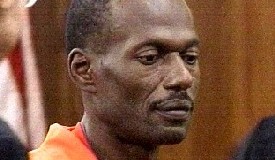
Terry Blair
Serial killer Carl Eugene Watts
Serial killer · USA · 1974
Carl Eugene Watts (born November 7, 1953; died September 21, 2007), also known…
100 victims
Carl Eugene Watts
Serial killer · USA · 1974
Carl Eugene Watts (born November 7, 1953; died September 21, 2007), also known…
100 victims
 Rodney Alcala
Serial killer · USA · 1977
Rodney James Alcala (born August 23, 1943) was also known as Rodrigo Jacques Al…
100 victims
Rodney Alcala
Serial killer · USA · 1977
Rodney James Alcala (born August 23, 1943) was also known as Rodrigo Jacques Al…
100 victims
 Donald Leroy Evans
Serial killer · USA · 1975
Donald Leroy Evans (born July 5, 1957) was an American serial killer who murder…
60 victims
Donald Leroy Evans
Serial killer · USA · 1975
Donald Leroy Evans (born July 5, 1957) was an American serial killer who murder…
60 victims
 Michael Swango
Serial killer · USA · 1981
Michael Swango (Joseph Michael Swango) was a physician and American serial kill…
60 victims
Michael Swango
Serial killer · USA · 1981
Michael Swango (Joseph Michael Swango) was a physician and American serial kill…
60 victims
 Efren Saldivar
Serial killer · USA · 1989
Efren Saldivar (born 30 September 1969) was an American serial killer who murde…
50 victims
Efren Saldivar
Serial killer · USA · 1989
Efren Saldivar (born 30 September 1969) was an American serial killer who murde…
50 victims
 Gary Ridgway
Serial killer · USA · 1982
Gary Leon Ridgway Ridgway was born 18-February-1949 in Salt Lake City, UT. He w…
49 victims
Gary Ridgway
Serial killer · USA · 1982
Gary Leon Ridgway Ridgway was born 18-February-1949 in Salt Lake City, UT. He w…
49 victims
 Timothy Dale Bunch
Murderer · USA · 1982
Timothy Dale Bunch was convicted by jury trial and sentenced to death for murde…
1 victim
Timothy Dale Bunch
Murderer · USA · 1982
Timothy Dale Bunch was convicted by jury trial and sentenced to death for murde…
1 victim
 James Granvil Wallace
Murderer · USA · 1984
James Granvil Wallace lived with Susan Insalaco and her two children, 16-year-o…
3 victims
James Granvil Wallace
Murderer · USA · 1984
James Granvil Wallace lived with Susan Insalaco and her two children, 16-year-o…
3 victims
 Angelo Buono
Serial killer · USA · 1977
Angelo Buono, Jr. (October 5, 1934 – September 21, 2002) was an American serial…
10 victims
Angelo Buono
Serial killer · USA · 1977
Angelo Buono, Jr. (October 5, 1934 – September 21, 2002) was an American serial…
10 victims
 Manling Williams
Murderer · USA · 2007
Manling Tsang Williams was 32 years old at sentencing and lived in a Rowland He…
3 victims
Manling Williams
Murderer · USA · 2007
Manling Tsang Williams was 32 years old at sentencing and lived in a Rowland He…
3 victims
 John Mills
Murderer · USA · 1982
John Mills Jr. was a Florida prison inmate. In 1982, a jury convicted him of fi…
1 victim
John Mills
Murderer · USA · 1982
John Mills Jr. was a Florida prison inmate. In 1982, a jury convicted him of fi…
1 victim
- Gender
- male
- Country
- USA
- Location
- Kansas City, Missouri, USA
- Date of birth
- September 16, 1961
- Age at first offence
- 21
- Characteristics
- rape, serial rapist
- Victim profile
- His pregnant ex-girlfriend, Angela Monroe / Sheliah McKinzie, 38; Anna Ewing, 42; Patricia Wilson Butler, 45; Darci I. Williams, 25; Carmen Hunt, 40; and Claudette Juniel, 31
- Method of murder
- Strangulation
- Date(s) of murder
- 1982 / June-September 2004
- Years active
- 1982–2004
- Date of arrest
- September 10, 2004
- Status
-
Life imprisonment
Sentenced to 25 years imprisonment in 1982; Paroled in 2003; Sentenced to life in prison with no possibility of parole in March 2008
Case record: Terry Blair
Background
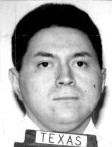
Terry Blair (born September 16, 1961) was an American serial killer who raped and killed at least seven women in Kansas City, Missouri.
Blair was born into a family that had many encounters with the criminal justice system. He was the fourth eldest of 10 siblings. His mother had only finished the 9th grade and suffered from mental illness.
While in jail for a separate incident, Blair’s brother Walter Blair Jr met a man who offered to pay him $6,000 to kill Katherine Jo Allen so she could not testify at his rape trial. Blair confessed to abducting Allen from her apartment before taking her to a vacant lot and shooting her. Walter Blair later recanted and his clemency request raised questions about the credibility of the state’s chief witness. Walter Blair was executed in 1993.
Half brother Clifford Miller was convicted in the 1992 abduction of a woman from a bar. Miller shot the woman in the arm and drove her to an abandoned house before raping her repeatedly and beating her until she passed out. The woman suffered a gunshot wound, fractured skull, broken jaw and broken cheek bones, and spent two months in the hospital recovering. Clifford Miller was sentenced to two life sentences plus 240 years for charges including kidnapping and forcible sodomy.
Blair’s mother Janice Blair fatally shot Elton E. Gray, but was sentenced to probation after entering an Alford plea. Terry Blair had already spent 21 years incarcerated for murdering Angela Monroe, the pregnant mother of his two children, prior to being charged with these additional six murders. According to court records he was angry with Angela Monroe for performing acts of prostitution.
Blair was released from prison for two months committing his second murder after Monroe before heading back to prison for a parole violation.
People
- Terry Blair — accused and convicted of first-degree murder and connected forcible rape charges
- Angela Monroe — pregnant ex-girlfriend; mother of two of Blair’s children; murder victim
- Anna Ewing — murder victim, 42
- Patricia Wilson Butler — murder victim, 58
- Sheliah McKinzie — murder victim, 38
- Darci I. Williams — murder victim, 25
- Carmen Hunt — murder victim, 40
- Claudette Juniel — murder victim, 31
- Sandra Reed — accused in a murder charge that was dismissed
- Nellia Harris — accused in a murder charge that was dismissed
- Walter Blair Jr — brother involved in a murder-for-hire scheme; executed in 1993
- Katherine Jo Allen — alleged victim in the murder-for-hire scheme involving Walter Blair Jr
- Clifford Miller — half brother; convicted and sentenced to two life sentences plus 240 years
- Janice Blair — mother; entered an Alford plea and received probation after killing Elton E. Gray
- Elton E. Gray — killed by Janice Blair
- Michael Hunt — assistant prosecutor
- Cynthia Dryden — defense attorney
- Thomas Purnell — linguistics expert who testified for the defense
- John O’Malley — Jackson County Circuit Judge
- Michael Sanders — Jackson County Prosecutor who filed papers seeking death penalty if convicted
- Marcel Johnson — quoted as Blair’s son was present in court
- Irene Williams — mother of victim Darci Williams
- Trish Davis — daughter of victim Patricia Wilson Butler
- Trish Davis — quoted about women being “somebody’s mother”
- Steve Egger — criminology professor and author; quoted about culture of violence
- Peggy Breit — reported on KMBC
The offence
Blair was convicted of killing at least seven women.
He was charged with eight counts of first-degree murder, one count of first-degree assault, and three counts of forcible rape on October 15, 2004. The murders were connected to 911 calls that helped police locate bodies in the Prospect Corridor.
Blair was charged with killing six women whose bodies were found along the Prospect Corridor in 2004, with victims including Sheliah McKinzie, Patricia Wilson Butler, Darci I. Williams, Anna Ewing, Carmen Hunt, and Claudette Juniel. The women were reported to have been strangled.
Blair was also accused in two other murders (Sandra Reed and Nellia Harris), an assault, and three rapes. Those additional charges were later dismissed.
Blair was described by prosecutors as calculating and determined to kill as many prostitutes as he could. At least one woman had been strangled, and the causes of death of other women could not be determined because their bodies had decomposed badly. One judge said Blair’s “irrational, evil hatred of women” was part of what led to the killings.
Investigation
The case began with 911 cell phone calls to police on Sept. 3 and Sept. 4, 2004. The caller told police he killed two women whose bodies had just been found and four others, and told them where to find three of the bodies. The caller provided details only the killer would know.
Police arrested Blair within weeks of the calls after DNA matched semen in and on victim Sheliah McKinzie. During more than seven hours of interrogation, Blair denied knowing McKinzie or having sex with her and confessed to nothing.
Defense arguments included that DNA proved nothing because hairs, saliva or semen from other men were on McKinzie or other victims. Defense lawyers also contended investigators did not prove Blair made the 911 calls, and that the evidence was unreliable and too little to convict.
A defense voice analysis expert testified that the voice on the 911 calls did not match Blair’s voice patterns.
A linguistics expert, Thomas Purnell, testified that the caller on the 911 calls was unlikely to be the same person as Blair, describing analysis of the 911 calls and telephone conversations between Blair and his grandmother and between Blair and a television reporter while Blair was in jail awaiting trial.
911 caller quotations
“How do you know a dead body is there?” the dispatcher asks.
“I put it there,” the caller responds.
“Look up under the branches under the bushes by the alley,” he says.
“It’s an abandoned house. It’s red.”
He says the body has been there for two months.
“You killed them also?”
“Yeah.”
The dispatcher asks how he killed them.
“You strangled her?”
The caller hangs up.
On the second call:
“It’s a disgrace,” he says.
He says one of the bodies has been there a week and is starting to stink.
He refuses to give his name, but says he can be referred to as “Scott,” and that he will call the next day.
He says there are six more bodies to be found.
Arrest
Blair was arrested in September 2004 while on parole for the 1982 murder of his pregnant ex-girlfriend, Angela Monroe, the mother of two of his children. He had served 21 years in prison.
He was also described as having been arrested on a parole violation and being paroled seven months earlier.
Trial
On December 13, 2004, Blair pleaded not guilty Monday to all charges. His attorney entered not guilty pleas for one count of first-degree assault and three counts of forcible rape.
Circuit Judge John R. O’Malley denied a request for bond on the other counts. Prosecutors said the bond request was irrelevant because even if Blair made bond, he would remain in jail for violating parole in a previous homicide case. O’Malley earlier agreed to allow Blair to appear in court in street clothes rather than prisoner's jumpsuits; on Monday Blair wore a tan sweater and dark pants. A gag order had been issued on Blair and attorneys in the case.
Blair agreed to waive his right to a jury trial and avoid the death penalty by being tried without a jury before Jackson County Circuit Judge John O’Malley.
During trial, prosecutors showed that Blair’s semen was found on victim Sheliah McKinzie’s body and presented evidence they said showed Blair may have been the one who called 911 to tell police where to find the bodies.
Prosecution arguments included that:
- A former prostitute testified that Blair once told her he wanted to “kill all prostitutes.”
- The mother of one victim last saw her alive when she dropped her daughter off to meet with Blair and two other men.
- A teen witness testified that Blair told her that whoever was killing the women probably had a good reason.
- A defense expert said the voice on the 911 calls was that of an African-American man raised in the United States.
“If they can’t,” she said, “they cannot convict.”
Defense attorney Cynthia Dryden argued that DNA evidence included material from other men and attacked the 911 call and investigation evidence as too unreliable and circumstantial.
The judge acknowledged the case had conflicting expert testimony and “small pieces of circumstantial evidence.”
O’Malley said that the placement of semen indicated McKinzie hadn’t moved or attempted to clean herself after having sex. He concluded that Blair was present as McKinzie expired, with his throat-crushing described as being done by his hands and his “irrational, evil hatred of women.”
Sentencing
Blair avoided the death penalty by agreeing to waive his right to a jury trial.
He was sentenced to 25 years imprisonment for the murder of his first known victim, Angela Monroe. Blair was paroled in 2003.
After being released early (after 21 years), he was convicted of killing six more women. For these additional six murders, he was sentenced to life in prison with no possibility of parole in March 2008.
He was housed in the Potosi Correctional Center in Mineral Point, Missouri.
Appeals
The materials did not describe any appeal outcomes for Blair.
Outcome
On March 27, 2008, a judge found Blair guilty of six counts of first-degree murder in the deaths of Sheliah McKinzie, Anna Ewing, Patricia Wilson Butler, Darci I. Williams, Carmen Hunt, and Claudette Juniel. The verdicts came in a non-jury trial.
Before trial, prosecutors made a deal with Blair to drop charges for two other murders, three rapes and an assault, and Blair agreed to trial before O’Malley without a jury.
Before the verdict, O’Malley criticized the Kansas City Police Department for media coverage. O’Malley stated police officers should be more concerned about solving crimes than television and suggested pursuit of criminals over cameras. He also said mistakes were caused by the presence of cameras.
Charges against Blair in two other slayings—those of Nellia Harris and Sandra Reed—were dismissed in October. Charges in three rapes and an assault that involved four victims who survived their attacks were also dropped.
Timeline
- October 15, 2004 — Terry Blair was charged with eight counts of first-degree murder, one count of first-degree assault, and three counts of forcible rape.
- December 13, 2004 — Blair pleaded not guilty to all charges; his attorney pleaded not guilty to one count of first-degree assault and three counts of forcible rape.
- September 2004 — Blair was arrested while on parole for the 1982 murder of Angela Monroe.
- Sept. 3, 2004 — 911 cell phone calls to police included a caller reporting two just-found bodies and additional victims.
- Sept. 4, 2004 — 911 cell phone calls to police included a caller reporting additional bodies and where some could be found.
- March 27, 2008 — Blair was found guilty of six counts of first-degree murder in the deaths of six women whose bodies were dumped along the Prospect Corridor; the case ended with verdicts in a non-jury trial.
Crimes (victims and causes attributed in the materials)
Blair was convicted of killing:
- Angela Monroe — the murder victim; Blair was sentenced to 25 years imprisonment for her murder.
- Anna Ewing (42) — found dead on or before July 14, 2004; due to strangulation and a broken neck.
- Patricia Wilson Butler (58) — died on or before September 2, 2004; due to strangulation.
- Sheliah McKinzie (38) — died on or before September 2, 2004; due to strangulation and a broken neck.
- Darci I. Williams (25) — died on or before September 4, 2004; due to strangulation and a broken neck.
- Carmen Hunt (40) — died on or before September 4, 2004; due to strangulation.
- Claudette Juniel (31) — died on or before September 4, 2004; due to strangulation and a broken neck.
Blair was accused in two other murders whose charges were dismissed:
- Nellia Harris (33) — charged; killed in 2003; charges dismissed in October.
- Sandra Reed (47) — charged; charges dismissed in October.
Other details
Blair avoided the death penalty by agreeing to be tried without a jury.
The investigation and trial included conflicting expert testimony and discussion of evidence handling. Defense attorneys fought to throw out an interrogation; a judge decided it did not violate Blair’s constitutional rights to a fair trial.
The case of seven homicides he was convicted of was featured in the episode “A Serial Killer Calls” of the TV show The First 48, which followed detectives receiving information up until Blair’s capture.
Blair’s sentencing status later included life in prison with no possibility of parole.
Steve Egger said:
“Once you have someone socialized into a culture of violence,” Egger said, “they learn to express themselves in a violent manner and it becomes second nature.”
Irene Williams, mother of victim Darci Williams, said:
“I knew from the beginning that it would come out this way because the truth will always survive over lies and evil,” Williams said.
“You could look in his eyes, and it’s a blankness. But when he looks at a woman, it's an evil look. It's just like hatred.”
She also said:
“What time I have now, I know that justice has been served. Even here on earth he may not get all he deserves, but he will get it in the hereafter,” Williams said.
Trish Davis, daughter of victim Patricia Wilson Butler, said:
“I'm her daughter. She was somebody's mother. They weren't prostitutes, drug addicts -- they were somebody's mother. They were women,”
Marcel Johnson said:
“They don't have anything, so I'm not worried about it. I'm really not worried about it. If they do find him guilty, it'll be off press, not evidence because they don't have any of that,”
Trish Davis’s quote about justice was also included:
“We've wanted justice.”
Spotted an error, or have more information about this case?