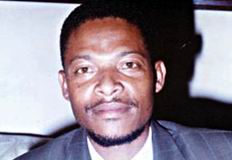
Nasser Kara
Murderer Dr. Wouter Basson
Murderer · 1992
Wouter Basson (born July 6, 1950) was a South African cardiologist and the form…
230 victims
Dr. Wouter Basson
Murderer · 1992
Wouter Basson (born July 6, 1950) was a South African cardiologist and the form…
230 victims
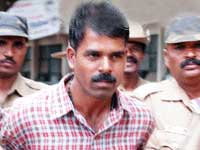 Umesh Reddy
Murderer · India · 1998
Umesh Reddy was sentenced to death on October 27, 2006. The Karnataka High Cour…
18 victims
Umesh Reddy
Murderer · India · 1998
Umesh Reddy was sentenced to death on October 27, 2006. The Karnataka High Cour…
18 victims
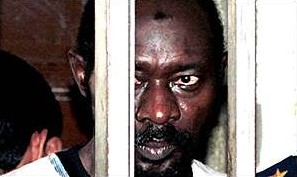 Mohammed Adam Omar
Murderer · Yemen · 1995
Mohammed Adam Omar was a morgue assistant at Sanaa University’s medical faculty…
16 victims
Mohammed Adam Omar
Murderer · Yemen · 1995
Mohammed Adam Omar was a morgue assistant at Sanaa University’s medical faculty…
16 victims
 Robert Martines Perez
Murderer · USA · 1994
Name: Robert Martines Perez · Other name used in proceedings: Robert Martinez P…
15 victims
Robert Martines Perez
Murderer · USA · 1994
Name: Robert Martines Perez · Other name used in proceedings: Robert Martinez P…
15 victims
 Billy Frank Vickers
Murderer · USA · 1993
Billy Frank Vickers Vickers was executed by lethal injection in Texas on Januar…
14 victims
Billy Frank Vickers
Murderer · USA · 1993
Billy Frank Vickers Vickers was executed by lethal injection in Texas on Januar…
14 victims
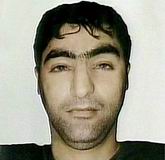 Farda Gadirov
Murderer · Azerbaijan · 2009
Farda Gadirov (also given as Farda Asad oglu Gadirov; Azeri: Fərda Qədirov; Geo…
12 victims
Farda Gadirov
Murderer · Azerbaijan · 2009
Farda Gadirov (also given as Farda Asad oglu Gadirov; Azeri: Fərda Qədirov; Geo…
12 victims
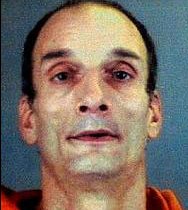 Robert Spahalski
Serial killer · USA · 1990
Robert Spahalski was sentenced to 100 years in prison on December 13, 2006. Spa…
4 victims
Robert Spahalski
Serial killer · USA · 1990
Robert Spahalski was sentenced to 100 years in prison on December 13, 2006. Spa…
4 victims
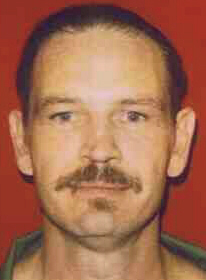 James Neil Tucker
Murderer · USA · 1992
James Neil Tucker was imprisoned and later sentenced to death in South Carolina…
2 victims
James Neil Tucker
Murderer · USA · 1992
James Neil Tucker was imprisoned and later sentenced to death in South Carolina…
2 victims
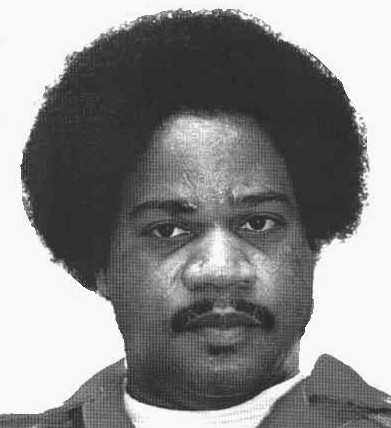 Tommie Smith
Murderer · USA · 1980
Tommie Smith was executed by lethal injection in Indiana on July 18, 1996. His…
1 victim
Tommie Smith
Murderer · USA · 1980
Tommie Smith was executed by lethal injection in Indiana on July 18, 1996. His…
1 victim
 Robert Farquharson
Murderer · Australia · 2005
Robert Donald William Farquharson (born 1969) was an Australian father convicte…
3 victims
Robert Farquharson
Murderer · Australia · 2005
Robert Donald William Farquharson (born 1969) was an Australian father convicte…
3 victims
- Gender
- male
- Country
- Malawi
- Location
- Malawi
- Date of birth
- 1970
- Age at first offence
- 32
- Characteristics
- rape?
- Victim profile
- H is wife, Liwoli, 25, and her friend Chimwemwe Kanfose, 25 / His driver, Alex Mbewe
- Method of murder
- Beating
- Date(s) of murder
- February/March 6, 2002
- Years active
- 2002
- Date of arrest
- May 4, 2002
- Status
-
Life imprisonment
Sentenced to death on February 4, 2004; commuted to life in prison on April 8, 2004
Case information
Nasser Ismail Wali Kara was a Malawian politician and a member of the National Assembly of Malawi for the opposition Malawi Congress Party.
The offence
Kara was tried for the murder of his driver, Alexander Kankhwani Mbewe.
The body of Alexander Mbewe was found in a Mercedes Benz in a river two months after Kara’s wife, Liwoli, and her friend, Chimwemwe Kamfoso, disappeared.
Witnesses during the trial suggested that the driver’s murder was linked to the disappearance of Kara’s wife and a friend.
The discovery of Alexander Mbewe’s body, stuffed in Kara’s Mercedes Benz car and pushed into a river, followed the mysterious disappearance of Kara’s wife Liwoli and her friend, Chimwemwe Kanfonse.
Witnesses testified that Mbewe was killed because he had evidence incriminating Kara in the women’s disappearance.
Investigation
In early 2002, Kara’s wife Liwoli and her friend, Chimwemwe Kamfoso, disappeared.
Kara’s driver’s remains were found in Kara’s Mercedes Benz car in a river.
Police produced a written confession in which Kara admitted to killing his wife, his driver, and Kamfoso.
Police said that in a written confession, Kara said he killed his wife Liwoli and her girlfriend Chimwemwe Kanfose for stealing money from his business.
Police stated that Kara reportedly said he dumped the two women’s bodies in a crocodile-infested river after bundling them in a sack.
Police spokesperson George Chikowi said the confession was not made under duress but volunteered after Kara was confronted with evidence.
Police said Kara killed his driver because he knew too much.
Police said that after murdering the two women, Kara gave the driver a house in the capital, Lilongwe, and doubled his salary to $53 a month to shut him up.
Police said the driver then tried to blackmail Kara, according to the confession cited by police, and reportedly that the driver would start hallucinating that he was seeing Mrs Kara’s face and needed more money to exorcise the ghosts.
Police said Kara’s bodyguards advised him to get rid of the driver, who was poisoned and beaten to death in March, and that his body was dumped in a swamp.
The MP went into hiding when fishermen found it, leading to the arrest of his bodyguards.
Police said the bodyguards had already confessed.
Police said Kara’s wife was allegedly killed because she was accused of swindling him out of millions of Kwacha and using the money to attract other men.
Police said her friend was allegedly killed because she was with Kara’s wife at the time.
Police said that they were questioning Nasser Walli Kara following his arrest last week, and that police had been seeking him for a number of weeks.
Police said they would like Kara to help locate the remains of the two women.
Arrest
Kara was sought for a number of weeks after his arrest in May 2002 after being sought for a number of weeks.
Kara was arrested when a police patrol spotted him hitch-hiking in Blantyre.
Trial
Court and charge
In the High Court of Malawi, Lilongwe District Registry, Criminal Case No. 94 of 2002, the case was styled: The Republic Vs. Nasser Ismail Walli Kara and Two Others.
The court was presided over by Hon. Justice Kumange.
Counsel for the State was F. Assani/P. Kayira.
Counsel for the Accused was R. Kasambara/Msowoya.
The Court Interpreter was L.N. Msiska.
Court Reporters were Z. Mthunzi/I. Namagonya.
The three accused persons were Hon. Nasser Ismail Wali Kara M.P presently aged 32 years, Philip Singo aged 38, and Charles Kulemeka aged 23.
The three accused stood charged with the offence of murder, contrary to section 209 of the Penal Code.
They were jointly suspected of having caused the death of a man named Alexander Kankhwani Mbewe.
Preliminary objections and ruling on joinder
Before the commencement of the trial, the Defence raised two preliminary objections.
The first objection related to joinder of offenders, with counsel requesting that the three accused persons ought not to have been charged jointly in one charge sheet due to the likelihood of prejudice.
The Defence argument stated that in their statements made to police, all the three accused persons showed a confession and admission that they indeed killed the deceased Alexander Mbewe, and that the prosecution founded the charge against the first accused on the basis of confession statements made by the second and third accused persons.
Counsel argued that after subjecting the first accused person to “Thorough interview” he admitted, and that the defence got the impression that nobody can admit an offence which he formerly denied except where torture has been applied.
The second objection related to caution statements of the second and third accused persons, including that the deceased was alleged to have been given poison called termic, a fact not certified by the medical report, and that absence of expert evidence exposed the statement to a pack of lies rather than evidence of truth.
The Defence further argued that the medical report had not revealed internal injuries or fracture of certain organs despite the statements disclosing that the deceased had been run over by the first accused’s Mercedes Benz of 280 CC engine, and that this statement had been presented only in the second and third accused persons’ statements, suggesting it was done at the instruction of the police to make a strong case against the first accused person.
The Defence argued that the second and third accused persons were arrested earlier than the first accused person, and that when the first accused person’s whereabouts after the crime were unknown, the latter two denied the alleged killing, throwing suspicion on the first accused person.
The Defence also argued that the first accused person took responsibility for all funeral arrangements of the dead body.
The defence argument included that 28th March, 2002 was the date for recording the caution statements of the second and third accused persons, with 4th May as the date for recording the statement of the 1st accused person, and that the recording time of 7.45 pm showed long and excruciating investigation directed at the first accused person.
The Defence doubted whether the jury panel could appreciate elements of the crime and the impact such false statement could bring upon the first accused person.
Counsel backed up the argument with:
- O’Boyle Vs R (1991) 92 Criminal Appeal Report page 2002, described as a case where the trial judge wrongly failed to accede to an application for separate trials when a co-defendant sought to cross-examine the appellant on a confession allegedly made in the United States and ruled inadmissible, with reference to the team being led by a Mafia.
- Smith Vs Queen (1966) 51 C A.R page 22, described as a case quashing the conviction due to a judge misdirecting himself and quashing the conviction regarding admitting caution statements.
Counsel relied on section 42 of the Republic of Malawi Constitution guaranteeing fair trial to an accused person.
The Defence also argued that there was confusion in the order of offenders because the prosecution’s summary of “Known facts” positioned the first accused person as the third accused person.
Counsel argued that on page 3, the third paragraph suggested that the first accused person admitted the charge after a “Thorough investigations” of him, and that “thoroughly in investigated” suggested severe torture.
Counsel further contended that if torture was common to all accused persons, the statements ought to be removed from the list of prosecution evidence, and referenced section 19 guaranteeing human dignity by avoiding acts contrary to the provision, prohibiting torture.
A case on the point was said to be R Vs Palito, by Hon. Justice Mwaungulu in criminal Appeal No. 32 of 2002, described as making statements inadmissible in evidence if torture was clearly established.
The DPP’s response in reply was that it was necessary for the three to be tried together, including reasons that prior to the death of Alexander Mbewe the three were together with him on 6th March, 2003 and that the State had evidence through witnesses that the three were seen together, go around places together, drink together, and gave statements showing how the plan was orchestrated by the first accused and carried out by all three.
The DPP referred to a principle behind the Assim case and submitted that the factor that started the infraction of the law (offence) was a domestic feud that developed in the house of the first accused person leading to the disappearance of the first accused’s wife.
The DPP referred to the medical report and submitted that there could have been no fractures seen on the dead body because no internal examination would possibly be conducted as the body reached the Queen Elizabeth hospital in a decomposed state, and that this applied to poison called termic claimed by the second and third accused persons before being run over.
The court ruled that the charges should stand in its entirety and allowed the trial to commence, unless subject to an appeal, with the ruling pronounced in open court at Nkhota-kota Assizes of the Lilongwe District Registry on this 8th Day of April, 2003.
Trial facts and evidence presented
The prosecution stated that the three were jointly suspected of causing the death of Alexander Mbewe, and that they were together with him on 6th March, 2003.
The Defence stated that the caution statements included that the deceased was given poison called termic and that the deceased had been run over by Kara’s Mercedes Benz of 280 CC engine.
The DPP said that the cases involved statements and evidence about a plan orchestrated by the first accused and carried out by all three.
The Defence argued that “A thorough investigation” could not represent violent or torturing investigation.
The judge reasoned that the word “thorough” meant exhausting or complete or comprehensive and extensive and did not equate to violent or torturing investigation, and that the three were along from 5th March, 2002 moving together, including going to Dedza, Lilongwe, Dwangwa and Nkhotakota.
The judge said the court could not separate the three without deceiving the court and the witnesses, and that statements showed the other two were present when Alexander Mbewe was being tortured or poisoned, whether by the first accused or any of the remaining accused.
The judge stated that the offence related to the killing of Alexander Mbewe, that they did it in the same transaction, and that the transaction was done at Nabvunde Bridge.
The judge referenced Section 127(4)(a) of the Criminal Procedure and Evidence Code as meeting ingredients to compel joint charge.
Sentencing
Conviction and acquittal
In February 2004, Kara was convicted by a jury of the murder of his driver, Alexander Mbewe.
The bodyguards Charles Kulemeka and Phillip Singo were acquitted.
A jury returned the 9-2 verdict against Wali Nasser Kara after a 10-day trial.
The jury deliberated for 20 minutes before reaching its verdict.
Death sentence
Kara was sentenced to death by hanging.
Presiding Judge Dial Kumange upheld the jury’s ruling and sentenced Kara to death.
Kara was the first MP in Malawi’s history to be sentenced to death.
Commutation
Kara’s death sentence was commuted to life in prison on April 8, 2004.
Appeals
Kara’s lawyer said he may appeal, and Kara considered an appeal.
Kara’s lawyer Ralph Kasambara was quoted saying: "This is travesty of justice," and adding that his client was considering an appeal.
Kara maintained a stoic posture.
Outcome
Kara’s sentence changed from death to life imprisonment.
Other details
Kara’s driver’s murder was described as taking place two months after Kara’s wife Liwoli and her friend Chimwemwe Kamfoso disappeared.
Under Malawian law, unless a body is found, no murder prosecution could proceed until seven years had elapsed.
Under Malawian law, a person was presumed alive until seven years after their disappearance.
Kara retained his parliamentary seat for the duration of his trial and would be forced to relinquish it after conviction.
Kara was on death row in Zomba Central Prison in Maula, a suburb of Lilongwe.
Malawi had not executed a prisoner since 1992.
The parliamentary speaker, Sam Mpasu, said Kara was still an MP until convicted.
Sam Mpasu also added that MPs could lose their seats if they missed three consecutive sessions without a written notice to the speaker's office.
The dean of law at the University of Malawi, Edge Kanyongolo, was quoted stating it was astounding that Malawi could have a potential serial killer in parliament without anyone noticing.
Kara’s conviction case was described as having riveted the nation.
Timeline
- May 2002 — Kara was arrested after being sought for a number of weeks.
- March 6, 2002 — The bodyguards admitted driving Alexander Mbewe to a remote area near Salima and beating him to death.
- March 8, 2002 — The judge date for recording statements and the trial context referenced caution statement recording; 28th March, 2002 was stated for recording caution statements of the second and third accused persons, with 4th May as the date for recording the statement of the first accused person.
- April 8, 2003 — The court ruled on joinder and allowed the trial to commence.
- February 4, 2004 — Kara was sentenced to death.
- April 8, 2004 — Kara’s death sentence was commuted to life in prison.
Spotted an error, or have more information about this case?