Alexander Kuzminykh
Mass murderer Dmitry Vinogradov
Mass murderer · Russia · 2012
Dmitry Vinogradov was held in prison awaiting trial. · 7 November 2012 — A gunm…
6 victims
Dmitry Vinogradov
Mass murderer · Russia · 2012
Dmitry Vinogradov was held in prison awaiting trial. · 7 November 2012 — A gunm…
6 victims
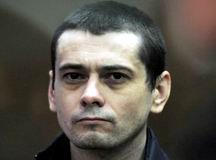 Sergei Pomazun
Mass murderer · Russia · 2013
Sergey Pomazun was accused in connection with the Belgorod shooting in Belgorod…
6 victims
Sergei Pomazun
Mass murderer · Russia · 2013
Sergey Pomazun was accused in connection with the Belgorod shooting in Belgorod…
6 victims
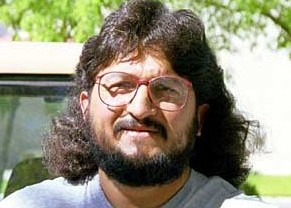 Robert Stewart Flores
Murderer · USA · 2002
Robert Stewart Flores Jr. was 41. He was a Gulf War veteran and worked at the S…
3 victims
Robert Stewart Flores
Murderer · USA · 2002
Robert Stewart Flores Jr. was 41. He was a Gulf War veteran and worked at the S…
3 victims
 Ronald Prible
Mass murderer · USA · 1999
Ronald Prible, Jr. was born 04/18/1972 and received his case on 11/04/2002 at a…
5 victims
Ronald Prible
Mass murderer · USA · 1999
Ronald Prible, Jr. was born 04/18/1972 and received his case on 11/04/2002 at a…
5 victims
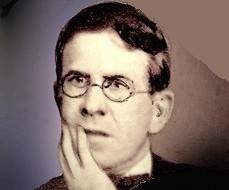 Dr. Bennett Clark Hyde
Murderer? · USA · 1909
Dr. Bennett Clark Hyde was accused in Kansas City of murdering members of the S…
3 victims
Dr. Bennett Clark Hyde
Murderer? · USA · 1909
Dr. Bennett Clark Hyde was accused in Kansas City of murdering members of the S…
3 victims
 Brynn Hartman
Murderer · USA · 1998
Brynn Hartman Brynn Hartman committed suicide by shooting herself the same day.…
1 victim
Brynn Hartman
Murderer · USA · 1998
Brynn Hartman Brynn Hartman committed suicide by shooting herself the same day.…
1 victim
 William Clifford Bryson
Murderer · USA · 1988
William Clifford Bryson was convicted in Oklahoma of first-degree murder for th…
1 victim
William Clifford Bryson
Murderer · USA · 1988
William Clifford Bryson was convicted in Oklahoma of first-degree murder for th…
1 victim
 David Wayne Spence
Murderer · USA · 1982
David Wayne Spence was executed by lethal injection in Texas on April 3, 1997.…
3 victims
David Wayne Spence
Murderer · USA · 1982
David Wayne Spence was executed by lethal injection in Texas on April 3, 1997.…
3 victims
- Gender
- male
- Country
- Russia
- Location
- Severomorks, Russia
- Date of birth
- 1979
- Age at first offence
- 19
- Characteristics
- —
- Victim profile
- Men (fellow crew members)
- Method of murder
- Stabbing with a chisel - Shooting (AK-47 assault rifle)
- Date(s) of murder
- September 10, 1998
- Years active
- 1998
- Date of arrest
- —
- Status
-
Died in custody
Committed suicide on an Akula-class Russian nuclear submarine before law-enforcers could lay their hands on him after stealing a machine gun and shooting eight crewmen to death before barricading himself in the vessel's torpedo section
Background
Alexander Kuzminykh was a 19-year-old sailor in the Russian navy. He had been in the navy since last year and was a draftee. He was described as having volunteered to serve on a nuclear submarine. He had passed all medical tests when he was conscripted at a St. Petersburg enlistment office and was found fit even though he had suffered from a mental disorder and had been inhaling toxicants. When Kuzminykh volunteered for the submarine service, he passed additional medical and psychiatric tests with high marks. The editor-in-chief of the Defense Ministry's Military Medical Journal, Leonid Galin, said that the tests administered often fail to reveal all mental and psychiatric disorders, and that some latent disorders develop into an acute, and thus detectable, condition only in times of increased stress.
Kuzminykh was detained on punishment charges before the shooting spree.
The offence
Kuzminykh stole a machine gun and shot eight crewmen to death. He then barricaded himself in the torpedo section of the submarine.
Reports described additional violence and casualties:
- Russian officials said eight sailors were dead during the standoff.
- Other reporting gave a different death toll, with Tass putting the total death toll at nine.
- A sentry guarding the vessel was killed by Kuzminykh, with some reports saying he used a chisel and other reports saying he used a hammer.
- After killing the sentry, Kuzminykh grabbed the guard's assault rifle and went below decks, where he shot dead five other conscripts.
- Two servicemen were also taken hostage and later killed.
There were also reported threats by Kuzminykh to set the submarine on fire and blow it up. He repeatedly threatened to set a fire to detonate the torpedoes while barricaded for about 20 hours. The threats created the potential for what a scientist called a “floating Chernobyl.” Another depiction described Kuzminykh as making threats to blow up the vessel, and that he was unable to be persuaded to surrender.
Investigation
Attempts to persuade Kuzminykh to surrender failed.
An anti-terrorist commando unit of the Federal Security Service (FSB) was sent to the base.
An FSB officer told Interfax news agency that:
"He's determined and he has a very good grasp of how the submarine works"
FSB officers in Murmansk were quoted by Interfax news agency as saying:
"There was no way to preserve Alexander Kuzminykh's life"
The Defence Ministry said there were no nuclear weapons aboard the Akula [shark] class submarine and that the submarine's nuclear reactor would not normally be in operation when the submarine was docked.
A senior naval officer told Itar-Tass news agency that it would be virtually impossible for an explosion to be triggered without electricity, which had been cut off. The reactor was described as being three compartments from the No.2 torpedo room. As a precaution, other nuclear submarines had been moved away from the hostage vessel.
A regional director of the Federal Security Service (FSB), Vladimir Prikhodko, described the threatened detonation as:
"a nuclear catastrophe ... a second Chernobyl."
Bellona researcher Thomas Nilsen told Reuters in Oslo:
"The scariest part of this is we don't know if the nuclear reactor is being maintained"
Arrest / seizure
Kuzminykh broke out from his quarters while being detained on punishment charges. He killed his guard, seized an assault rifle, and then went below decks.
He locked himself in the torpedo bay/torpedo room and held control of the submarine for about 20 hours while the standoff continued until the assault.
Timeline
- after midnight on Saturday local time — Armed officers stormed the nuclear submarine near the port of Murmansk and a standoff ended with Kuzminykh dead.
- night of Friday / early hours of the morning (overnight) — Kuzminykh stole a machine gun, shot crew to death, killed the sentry, took hostages, and barricaded himself in the torpedo room.
- September 10, 1998 (shortly before midnight) — Vepr was in port at Severomorsk; Kuzminykh broke out from his quarters, killed the guard with a chisel, seized an AK-47 assault rifle, shot dead five more sailors, took two hostages, and barricaded himself in the torpedo room while threatening to set a fire to detonate the torpedoes.
- around midday (0800 GMT) — The teenager said he wanted to sleep while also making his threat to blow up the submarine.
- early on the morning of 12 September — A special FSB anti-terrorist commando unit stormed the torpedo room; early reports indicated he was killed by the FSB, later reports indicated he committed suicide.
- September 12, 1998 (early today/early Saturday) — Russian security forces stormed the submarine and killed the armed conscript who had commandeered it after killing eight fellow crew members.
Trial / sentencing / appeals
No trial, sentencing, or appeals were described.
Outcome
Kuzminykh committed suicide before law-enforcers could lay their hands on him. Russian officials said he killed himself as security forces stormed the vessel at Murmansk in northern Russia after attempts to persuade him to surrender had failed.
Early reports indicated Kuzminykh had been killed by the FSB, but later reports indicated that he committed suicide.
The Defence Ministry said there was an emergency on a submarine of the Northern Fleet involving the death of personnel.
Aftermath
Admiral Vladimir Kuroyedov, the head of the navy, flew to the Skalisty base.
Kuzminykh's mother was flown to the naval base at Skalisty near Murmansk before officers stormed the submarine, but she was unable to persuade her son to give himself up.
The submarine was identified in reporting as an Akula-class submarine, also referred to as the Akula (Shark) codename by NATO and as Bars (Snow Leopard) by the Russians. It was described as a frontline defense submarine of the Russian navy, commissioned in 1991, and as capable of hunting silently for weeks and carrying missiles and torpedoes able to destroy enemy surface ships and other submarines, with some able to carry nuclear-tipped tactical weapons. The typical ship's company was described as around 62, half of them officers.
Murmansk was described as base for dozens of Soviet-era submarines, many nuclear powered, which rarely put to sea for want of fuel and even food. Neighboring Norway complained of pollution and nuclear contamination of the Arctic Sea, and Bellona expressed alarm.
The incident was described as one of many similar incidents involving conscripts’ anger at poor conditions or endemic bullying by other servicemen, and as occurring during a time of concerns about Russia's security at nuclear facilities.
Spotted an error, or have more information about this case?