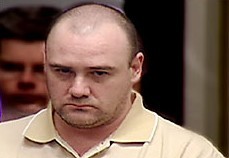
Paul Leahy
Murderer Robert Martines Perez
Murderer · USA · 1994
Name: Robert Martines Perez · Other name used in proceedings: Robert Martinez P…
15 victims
Robert Martines Perez
Murderer · USA · 1994
Name: Robert Martines Perez · Other name used in proceedings: Robert Martinez P…
15 victims
 Billy Frank Vickers
Murderer · USA · 1993
Billy Frank Vickers Vickers was executed by lethal injection in Texas on Januar…
14 victims
Billy Frank Vickers
Murderer · USA · 1993
Billy Frank Vickers Vickers was executed by lethal injection in Texas on Januar…
14 victims
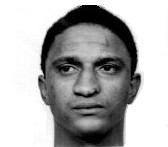 David Hicks
Murderer · USA · 1988
David Hicks was executed by lethal injection in Texas on January 20, 2000. Ocol…
1 victim
David Hicks
Murderer · USA · 1988
David Hicks was executed by lethal injection in Texas on January 20, 2000. Ocol…
1 victim
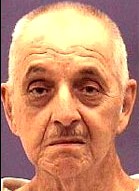 William Pierce
Serial killer · USA · 1970
William Pierce was paroled from the Georgia state prison at Reidsville in May 1…
9 victims
William Pierce
Serial killer · USA · 1970
William Pierce was paroled from the Georgia state prison at Reidsville in May 1…
9 victims
- Gender
- male
- Country
- USA
- Location
- Plymouth County, Massachusetts, USA
- Date of birth
- 1961
- Age at first offence
- 41
- Characteristics
- convicted rapist
- Victim profile
- Alexandra Zapp, 30
- Method of murder
- St abbing with knife
- Date(s) of murder
- July 18, 2002
- Years active
- 2002
- Date of arrest
- Same day
- Status
-
Life imprisonment
Sentenced to life in prison without parole on September 24, 2003
Background
Paul Leahy was a fast-food cook and a convicted rapist.
Alexandra Zapp was a sailing enthusiast who had a passion for charity and yachting. She worked as a trainer for U.S. Sailing and later quit her job with plans to move to New Zealand and work with the America's Cup organization.
The offence
Zapp was fatally stabbed at a Massachusetts rest stop bathroom.
Leahy stabbed Alexandra Zapp in a predawn incident at a highway rest stop on Route 24 in Bridgewater. Prosecutors said Leahy laid in wait for Zapp outside a restroom, holding a knife and planning his attack, before stabbing her in a bloody rampage. Leahy’s defense argued the killing was an unplanned episode that got out of control.
Leahy admitted he intentionally stabbed Zapp, including admitting to stabbing her in the chest when confronted with autopsy results. At first, Leahy conceded that he had only stabbed Zapp twice in the arm.
Leahy told police that Zapp fought hard: she head-butted him, bit him, and escaped from him twice toward the door, only to be dragged back inside.
Leahy said that during a lull in the fight, Zapp tried to reason with him and told him that she would tell people he had saved her from an attacker if he agreed to let her go. Leahy said he refused because he did not think anyone would believe her.
Investigation
A state trooper used the men’s restroom and heard screams drowned out by loud music coming from the women’s restroom. He went to investigate, saw drops of blood near the door of the restroom, drew his gun, and entered.
He saw Paul Leahy washing his hands of blood. Zapp was slumped over a toilet with stab wounds to her neck and chest, and she was already dead.
At the time of Leahy’s arrest, police found the key to Zapp’s car in Leahy’s pocket.
Videotape from a surveillance camera showed a figure hanging around the restrooms at about the time Zapp woke up and went inside to use the restroom.
Crime scene evidence presented to jurors included grisly crime scene photos. Zapp’s white blouse and pants were almost completely brown from being soaked in blood; they were framed in Plexiglas and presented to jurors.
The medical examiner said Zapp suffered 27 knife wounds, including five that severed her aorta and jugular vein.
Prosecutors said blood splattered across the restroom and was found on the door handle, showing Leahy mercilessly drove Zapp around the room as she tried to escape.
Prosecutors also said Leahy’s claim that he did not premeditate the killing was contradicted by the location of her stab wounds: six directed at Zapp’s heart and four at her neck.
Arrest
Leahy was arrested after being found in the restroom area with Zapp’s body.
Jurors later convicted Leahy of kidnapping, armed robbery, and armed assault with intent to rob.
At Leahy’s arrest, investigators and police officers found the key to Zapp’s car in Leahy’s pocket.
Trial
Leahy was charged with first-degree murder, kidnapping, armed robbery, and armed assault with intent to rob.
The trial began in September 2003.
Prosecutor Frank Middleton said he boasted a “slam-dunk” case against Paul Leahy. Middleton said the evidence was overwhelming, largely due to testimony from Lt. Stephen O’Reilly, the trooper who caught Leahy cleaning up after the alleged murder.
In closing arguments, Middleton said Leahy lied when he claimed he was mulling whether to rob Zapp and then killed her only after she saw the knife and began screaming and clawing at him.
Middleton told the jury:
“He attacked her and she did the only thing she could do -- she fought”
Defense attorney Frank Spillane concentrated on proving Zapp’s death was not an intentional act of murder. Spillane argued that Leahy’s actions were in response to the circumstances confronting him and that Leahy did not plan, plot, or lie in wait for Alexandra Zapp.
Spillane argued that when Leahy was waiting for Zapp to come out of the restroom, he was deciding whether or not to rob her. Spillane said that when she came out and saw him with the knife and started screaming, he reacted by waving the knife to calm her down.
Spillane argued that the battle in the bathroom erupted spontaneously and that the defendant was reacting to a situation that had spiraled out of control.
Spillane told the court:
“The defendant was simply reacting to a situation that had spiraled out of control.”
Spillane also said:
“This was an unplanned incident that got completely out of control” and “It was started by Mr. Leahy, but it wasn't planned by him.”
Spillane elicited testimony reinforcing the confrontation between Alexandra and the defendant, including testimony that some of her serious wounds were caused by Zapp defending herself.
In court remarks, O’Reilly testified he heard Zapp’s muffled scream and at least two thuds against the wall from an adjacent men’s room. He found Leahy with blood on his hands and arms and holding Zapp’s wallet, which contained $25.
Jurors deliberated for two hours and 15 minutes and were composed of seven men and five women.
Sentencing
Before sentencing, Judge Richard Chin heard victim impact statements from Alexandra Zapp’s mother, Andrea Casanova, and stepfather, Steven Stiles.
Stiles told a chilling story of what he suspected took place. Before beginning, he challenged Leahy to “be a man and look at him.”
Stiles and Casanova stated they believed Leahy intended to rape Zapp when he attacked her. Stiles said Zapp would “sooner die than have sex with likes of you,” and he said “And she did.”
Stiles addressed Leahy directly and called him a “mean, evil person,” telling him to “be a man” and look him in the eye.
Outcome
The jury found Leahy guilty of all charges, including first-degree murder.
A jury also convicted Leahy of kidnapping, armed robbery, and armed assault with intent to rob.
Judge Richard Chin sentenced Leahy to life in prison without parole.
Appeals
Aftermath
Zapp’s relatives became vocal activists advocating changes to make rest stops safer. They also lobbied the Massachusetts legislature to close legal loopholes prosecutors encountered when they petitioned for Leahy’s civil commitment, saying they believed that if Leahy had been civilly committed in October 2001, Alexandra Zapp would still be alive.
Leahy’s prior criminal history was described as beginning in 1981, with a history of sexual offenses beginning in 1984. The account stated that some of his victims were as young as 13 years old.
Leahy served 13 years of an 8-to-15-year term for the aggravated rape at knifepoint of a 21-year-old woman who worked in a pizza restaurant. As Leahy tried to strangle her, a customer walked in, allowing the victim to escape.
After Leahy was released from prison, he was charged with lewd and lascivious behavior and accosting a person of the opposite sex after he allegedly demanded oral sex from an underage girl. The account said he was on probation for DUI at the time and was ordered to serve six months behind bars on a probation violation.
Before Zapp’s murder, the Plymouth County District Attorney’s Office sought to have Leahy civilly committed in a petition filed in October 2001. A judge dismissed it, criticizing prosecutors for failing to include an opinion by a mental health professional. Prosecutors filed an amended petition including a report from a psychologist agreeing with the assessment that Leahy would be at great risk of committing another offense if released into the community, but the judge denied the petition.
The narrative said civil commitment of defendants could occur if they were serving a sentence for sexual assault, and that at the time Leahy was incarcerated for accosting or annoying a person of the opposite sex in conjunction with a sentence for drunk driving, which it said fell short of the requirement for a statutory offense.
At trial, it was stated that Leahy’s criminal record for rape was not admissible in court.
It was also stated that investigators and Zapp’s family believed Leahy’s intent was to rape Zapp, but that suspicions were kept out of the trial to prevent speculations from sidetracking the jury.
Zapp’s mother, Andrea Casanova, wept as she read a poem written in remembrance by Zapp’s younger sister, Caroline, before sentencing. The poem included:
“Alexandra, your brilliance will always be with me. I love you completely, truly and unconditionally always.”
Casanova urged stronger laws protecting the public from criminal sex offenders and said:
“She was one of the greatest people I've ever met,” “She did not deserve to be tortured and executed, she did not deserve to die by a disconnect in the law.” “In our family we close each telephone call with 'I love you.' Alexandra we love you and we will never ever ever forget you,” she concluded.
Zapp’s stepfather, Steven Stiles, addressed Leahy and accused him of lying about what happened in the restroom. Stiles said he believed Leahy asked for a sexual favor and killed Zapp when she refused, and he told Leahy:
“You are a coward and you know it,” “I don't know what happens to evil people like you, but one day we'll all find out.”
As the courtroom emptied, Casanova hugged prosecutors and police officers, including Lt. Stephen O’Reilly, the off-duty state police trooper who found Leahy with Zapp’s body immediately after the stabbing. O’Reilly said softly:
“Throw away the key,” and later said Zapp’s killing affected him more than most he had seen in his 25 years as state trooper, saying: “Here's a girl who just stopped to use a restroom. She did nothing wrong ... that's all she did,”
Jurors began deliberations at midday Wednesday, and they considered first-degree and second-degree murder charges before convicting Leahy.
Jurors were found guilty of first-degree murder and the other charges after considering first-degree and second-degree murder charges.
Zapp was on her way home to Newport, R.I., after an evening cruise in Boston Harbor when she stopped at the rest area on Route 24 in Bridgewater early on July 18, 2002.
Spotted an error, or have more information about this case?