Nancy Farrer
Serial killer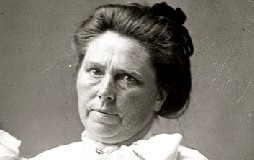 Belle Gunness
Serial killer · USA · 1880
Belle Gunness was Norwegian-born. She was born as Brynhild Paulsdatter Størseth…
42 victims
Belle Gunness
Serial killer · USA · 1880
Belle Gunness was Norwegian-born. She was born as Brynhild Paulsdatter Størseth…
42 victims
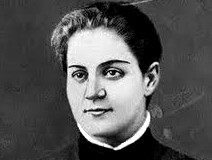 Jane Toppan
Serial killer · USA · 1887
Jane Toppan (1880-1901) was a nurse from Boston, Massachusetts. Another record…
31 victims
Jane Toppan
Serial killer · USA · 1887
Jane Toppan (1880-1901) was a nurse from Boston, Massachusetts. Another record…
31 victims
 Bertha Gifford
Serial killer · USA · 1909
Bertha Gifford (1872- August 20, 1951) was a farmwife in rural Catawissa, Misso…
17 victims
Bertha Gifford
Serial killer · USA · 1909
Bertha Gifford (1872- August 20, 1951) was a farmwife in rural Catawissa, Misso…
17 victims
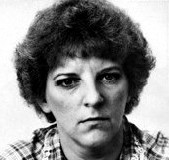 Genene Jones
Serial killer · USA · 1977
Genene Anne Jones (born July 13, 1950) was a former pediatric nurse who worked…
11 victims
Genene Jones
Serial killer · USA · 1977
Genene Anne Jones (born July 13, 1950) was a former pediatric nurse who worked…
11 victims
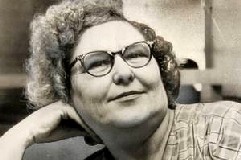 Nannie Doss
Serial killer · USA · 1954
Nannie Doss Nannie Doss pleaded guilty on May 17, 1955, and was sentenced to li…
11 victims
Nannie Doss
Serial killer · USA · 1954
Nannie Doss Nannie Doss pleaded guilty on May 17, 1955, and was sentenced to li…
11 victims
 Vickie Dawn Jackson
Serial killer · USA · 2000
Vickie Dawn Jackson was a former nurse who received a life sentence after plead…
10 victims
Vickie Dawn Jackson
Serial killer · USA · 2000
Vickie Dawn Jackson was a former nurse who received a life sentence after plead…
10 victims
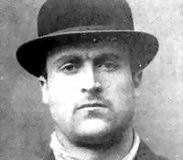 William Henry Kennedy
Murderer · United Kingdom · 1927
William Henry Kennedy was executed by hanging at Wandsworth prison on May 31, 1…
1 victim
William Henry Kennedy
Murderer · United Kingdom · 1927
William Henry Kennedy was executed by hanging at Wandsworth prison on May 31, 1…
1 victim
 Anthony Balaam
Serial killer · USA · 1994
Anthony Balaam was a crack addict from Trenton, New Jersey. He confessed to sod…
4 victims
Anthony Balaam
Serial killer · USA · 1994
Anthony Balaam was a crack addict from Trenton, New Jersey. He confessed to sod…
4 victims
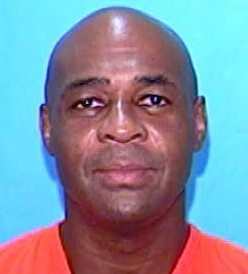 Douglas Ray Meeks
Murderer · USA · 1974
Douglas Ray Meeks was a Florida prison inmate. In two separate trials, Meeks wa…
2 victims
Douglas Ray Meeks
Murderer · USA · 1974
Douglas Ray Meeks was a Florida prison inmate. In two separate trials, Meeks wa…
2 victims
 Timothy McVeigh
Mass murderer · USA · 1995
Timothy James McVeigh (April 23, 1968 – June 11, 2001) was a United States Army…
168 victims
Timothy McVeigh
Mass murderer · USA · 1995
Timothy James McVeigh (April 23, 1968 – June 11, 2001) was a United States Army…
168 victims
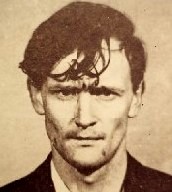 Gwynne Evans
Murderer · United Kingdom · 1964
Gwynne Evans was convicted for the capital murder of John Alan West, committed…
1 victim
Gwynne Evans
Murderer · United Kingdom · 1964
Gwynne Evans was convicted for the capital murder of John Alan West, committed…
1 victim
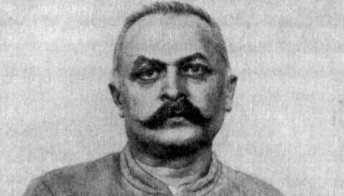 Ernst Wagner
Spree killer · Germany · 1913
Ernst August Wagner (September 22, 1874 – April 27, 1938) was a German spree ki…
14 victims
Ernst Wagner
Spree killer · Germany · 1913
Ernst August Wagner (September 22, 1874 – April 27, 1938) was a German spree ki…
14 victims
- Gender
- female
- Country
- USA
- Location
- Cincinnati, Ohio, USA
- Date of birth
- ????
- Characteristics
- poisoner, mentally ill
- Victim profile
- Four persons in a family for whom she was working
- Method of murder
- Poisoning (arsenic)
- Date(s) of murder
- 1851 - 1852
- Years active
- 1851–1852
- Date of arrest
- —
- Status
-
Convicted of murder in 1852; Supreme Court of Ohio ordered a new trial; on retrial she was found insane and was sent to a lunatic asylum
Case record: Nancy Farrer
Background
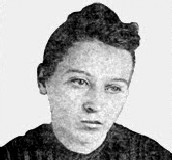
Nancy Farrer of Cincinnati, Ohio was put on trial in 1852 for committing a series of murders by poisoning.
She was a nurse. In the early 1850s, Nancy was highly regarded by the patients she cared for and by their families, and the record described her as kind and affectionate. The Ohio Supreme Court wrote in 1853:
“There is full testimony to the effect, that in several households, Nancy, though awkward, and in many respects incapable, proved herself to be a kind and affectionate nurse,”
“She hardly ever spoke except when spoken to — asked no questions — never ran after company — readily did what she was bid.”
The Ohio Supreme Court also expressed a low regard for Nancy, and it tied that view in part to the now-disproved “science” of phrenology, which the court described as a system by which advocates believed a person’s intelligence, health and general psyche could be determined by the shape and character of the skull. The court wrote:
“In person, she is remarkably ugly,”
“The eyes encroach on the space proper to the brain.”
“Her head, in shape rather than size, is unfavorable to the usual presumption of sound mind and full capacity.”
Justice John A. Corwin relied on Nancy’s appearance and also referred to family history. He wrote:
“Testimony shows, that, thus marked out from the common characteristics of our fellow beings by her personal appearance, and thus apparently deficient in capacity, the facts of Nancy’s history agree with the conclusions so given by medical men,”
“Nancy was not such a woman as others.”
“And her training was such, as rather to destroy than to improve the little mind with which nature may have gifted her.”
“Her father, an Englishman, (who became a Mormon, and with Nancy and her mother, lived for some time at Nauvoo,) died of drunkenness in the hospital at Cincinnati.”
“Her mother was a Mormon, and fancied herself a prophetess — Nancy imagined herself “the same as her mother.””
The offence
In 1851, Nancy entered the service of the Elisha Forrest family and poisoned every member of the family, resulting in deaths of Mrs. Forrest and two children within a week of her arrival.
The record described a conflict involving kitchen cleaning after Mrs. Forrest spilled water. A friend, Mary Ann Dankey, testified at Nancy’s trial:
“She had a notion of speaking back about it,”
“But she thought she’d fix her for it.”
Shortly after that exchange, Mrs. Forrest took ill after eating a supper Nancy prepared. The narrative described that Nancy told a member of the household that Mrs. Forrest was taken with “vomiting and heaving,” “just like Mrs. Green.” Nancy said:
“Mrs. Forrest has been taken with vomiting and heaving, just like Mrs. Green,”
While Mrs. Forrest lingered and appeared to be recovering, another servant remarked that it was odd that the mistress of the house would take a turn for the worse after beginning to recover. Nancy again referred to the late Mrs. Green and said:
“It was just the same way with Mrs. Green,”
“She replied.”
“Mrs. F. took to heaving just like Mrs. Green and I do not think she will recover.”
Mrs. Forrest did not recover and died the next day.
A week after Mrs. Forrest was buried, her son, John Edward Forrest, took ill in the same fashion. He died shortly after he began vomiting a greenish bile.
After Johnny died, someone pointed out that Nancy was “unfortunate to live where so many people died.” Nancy answered:
“Yes,”
Nancy also responded to a remark that “Five have died where I lived.” The narrative states that she spoke about the sequence of deaths:
“First were Mrs. Green and her baby, and Mrs. Isherwood’s baby died a day or two after I left.”
Nancy predicted more tragedy for the Forrest household. She said:
“Jimmy will go next, and Billy, and the old man, and I expect they’ll all go of one complaint,”
She then tried to make light of the situation and said:
“How lucky I am with sick folks,”
“They all die.”
Dankey responded by saying:
“Maybe you killed them,”
Nancy replied:
“Maybe I did,”
Jimmy Forrest was described as Nancy’s next victim. Before Jimmy became ill, Nancy predicted Jimmy’s demise to another witness and said:
“In a week or two, Jimmy will die,”
Dankey testified that Jimmy was outside playing with other children and looked healthy. When the witness asked what Nancy meant, Nancy said:
“I don’t know. Only he won’t eat,”
Jimmy became sick, vomiting green bile like his mother and brother. Jimmy died quickly, but not without suffering, and it was claimed to have been caused by “onion syrup” that Nancy was giving him. While Jimmy was in his sickbed, Nancy refused to eat dinner with the rest of the family, although that was described as her custom.
That night, Elisha and Billy Forrest both became violently ill and then recovered.
The number of deaths in the Forrest household prompted Elisha Forrest to ask that Jimmy’s corpse be autopsied. A Dr. Dandridge conducted the post-mortem in the Forrest home and ruled that Jimmy had taken arsenic. Elisha Forrest responded to Dr. Dandridge’s question about rat poison:
“He asked if Forrest had any rat poison around, to which Elisha replied no.”
The narrative states that Dr. Dandridge later testified that when poison was mentioned, Nancy became “quite excited and anxious.” It also recorded that Nancy refused to let Dandridge and Forrest discuss the matter outside her hearing and that:
“if we were talking, she would walk up close to to wish to know what we were saying.”
The day after Jimmy’s funeral, Elisha Forrest found a paper outside Nancy’s room. The wrapping paper bore the label “Dr. Salter’s Drug Store.” William Salter testified that about three weeks before the stomach of James Forest was brought to his brother to analyze, Salter sold Nancy five cents worth of arsenic, packaged in paper like that produced by Mr. Forrest. The narrative records that Nancy said she wanted it:
“to kill rats.”
Other druggists testified to Nancy’s purchases of large quantities of arsenic at different times and places, including one druggist who believed he sold Nancy arsenic as long as six months before the death of James. One druggist said she got from him “enough to poison twenty people.”
Investigation
A Dr. Dandridge conducted a post-mortem (in the Forrest home) on Jimmy’s corpse and ruled that Jimmy had taken arsenic.
The narrative recorded that the day after Jimmy’s funeral, Elisha Forrest found wrapping paper labeled “Dr. Salter’s Drug Store” outside Nancy’s room.
William Salter testified about a sale of arsenic to Nancy packaged in paper like that produced by Mr. Forrest, and Nancy said she wanted it “to kill rats.”
Trial
Nancy Farrer’s trial in 1852 was described as a notable event in the community of Cincinnati.
The trial involved questions of insanity as a legal issue. Unlike later cases, the narrative states that there were no expert witnesses at Nancy’s trial to debate whether her actions were those of a sane person. Instead, witnesses to her crimes were presented, and the jury was instructed—by Justice Corwin later described as erroneous instructions—about mental competency.
The trial court asked the jury to decide:
“Was Nancy Farrer, at the time this act was committed, capable of judging whether this act was right or wrong, and did she know at the time that it was an offence against the laws of God and man? “
“So far as the girl Nancy is concerned, you will carefully examine the testimony, touching her knowledge of right and wrong, and if you find she was able to distinguish between them, then, no matter of how low an order may be her intellect, or how depraved her character, she is guilty as charged, if you have no reasonable doubt as to her commission of the act.”
Justice Corwin criticized the reliance on reasonable doubt for sanity. He wrote:
“The court characterized the old rule, requiring insanity to be proved beyond all reasonable doubt, as a doctrine, which though useful in its time, is too hard to uphold,”
“Corwin wrote.”
“And I cannot see that a reasonable doubt of a prisoner’s sanity can legally arise, except upon a preponderance of testimony .”
The jury did not find Nancy to be insane beyond a reasonable doubt.
Corwin said he would have preferred an additional instruction about “irresistable impulse” and wrote:
“The power of self-control — ‘free agency’ — is said to be quite as essential to criminal accountability as the power to distinguish between right and wrong”
He also indicated that if the jury had not misbehaved in other ways, he would have let stand its guilty verdict.
Jury misconduct found in post-conviction review
After conviction, Corwin had grounds to overrule the jury verdict due to jury misconduct and the mistaken instructions on insanity.
The post-conviction review showed that:
- A member or members of the jury, on the second or third day of their deliberation, obtained a newspaper containing what purported to be a part of the proceedings had at the trial.
- Two members of the jury received and consumed of spirituous liquors. The narrative states that one instance “may have been prescribed by a physician” and in the other “may have been necessary to health, though not prescribed.”
- After the jury received the charge of the court, some jurors held communication with friends and acquaintances in the street from open windows of their consulting room.
- Various questions were put to the jury about deliberations and agreement on a verdict, and some questions were answered from the jury room.
- The prosecuting attorney was desired by one of the jurors to cause a change of clothing to be sent to one of the jurors, and it appears the prosecuting attorney made no reply.
- Other communications and conversations passed between jurors at the windows and persons on the sidewalk below.
Corwin found that these errors, together with the mistaken instructions on insanity, were sufficient to overrule the jury verdict.
Appeals
The narrative describes that the Supreme Court of Ohio ordered a new trial, and on retrial Nancy Farrer was found insane.
Justice Corwin also ruled that it was clear that Nancy Farrer was insane and not criminally responsible for her actions.
Sentencing
After retrial, Nancy Farrer was sent to a lunatic asylum.
Outcome
Nancy Farrer was convicted of murder in 1852.
The Supreme Court of Ohio ordered a new trial.
On retrial, she was found insane and was sent to a lunatic asylum.
Other details
Justice Corwin wrote in 1853 about Nancy’s conduct and background and discussed her family’s Mormon affiliation and her father’s death from drunkenness in the hospital at Cincinnati.
The narrative included multiple verbatim statements attributed to Nancy during illness and poisoning events, including “Yes,” “Maybe I did,” “Jimmy will go next,” “They all die,” and “Maybe you killed them” / “Maybe I did.”
Spotted an error, or have more information about this case?