Richard McGown
Homicide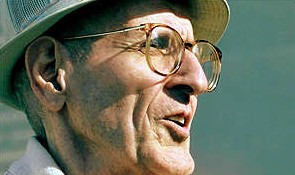 Jack Kevorkian
Homicide · USA · 1990
Jack Kevorkian (born May 26, 1928) was a controversial American pathologist. He…
130 victims
Jack Kevorkian
Homicide · USA · 1990
Jack Kevorkian (born May 26, 1928) was a controversial American pathologist. He…
130 victims
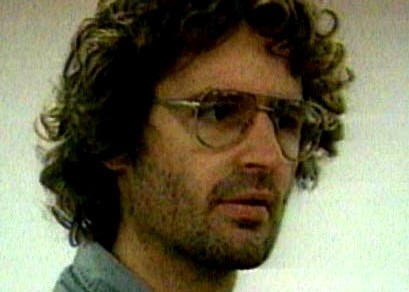 David Koresh
Homicide · USA · 1993
David Koresh (born Vernon Wayne Howell; August 17, 1959 – April 19, 1993) led t…
79 victims
David Koresh
Homicide · USA · 1993
David Koresh (born Vernon Wayne Howell; August 17, 1959 – April 19, 1993) led t…
79 victims
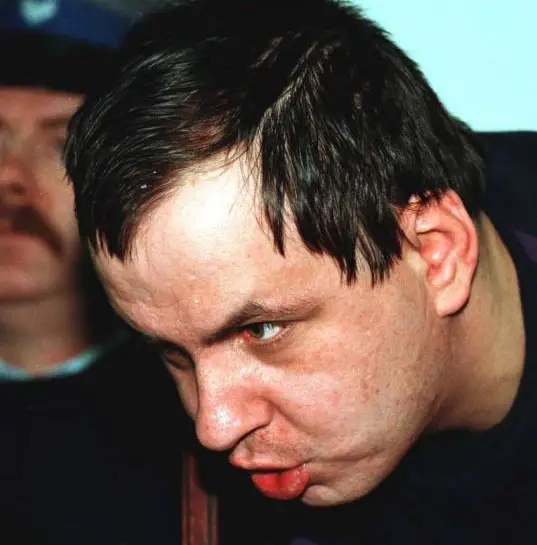 Leszec Pekalski
Homicide · Poland · 1984
1984–1992 — Leszek Pękalski was believed to have killed at least 17 people. · 1…
17 victims
Leszec Pekalski
Homicide · Poland · 1984
1984–1992 — Leszek Pękalski was believed to have killed at least 17 people. · 1…
17 victims
 Todd Hall
Homicide · USA · 1996
Todd Hall was described by neighbors as "mentally slow" and was said to have su…
9 victims
Todd Hall
Homicide · USA · 1996
Todd Hall was described by neighbors as "mentally slow" and was said to have su…
9 victims
 Edward Charles Allaway
Homicide · USA · 1976
Edward Charles Allaway Edward Charles Allaway was found not guilty by reason of…
7 victims
Edward Charles Allaway
Homicide · USA · 1976
Edward Charles Allaway Edward Charles Allaway was found not guilty by reason of…
7 victims
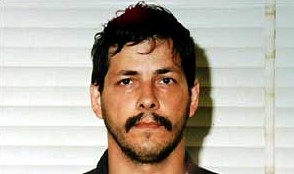 Marc Dutroux
Serial killer · Belgium · 1995
Marc Dutroux (born 6 November 1956 in Brussels) was a Belgian serial killer and…
5 victims
Marc Dutroux
Serial killer · Belgium · 1995
Marc Dutroux (born 6 November 1956 in Brussels) was a Belgian serial killer and…
5 victims
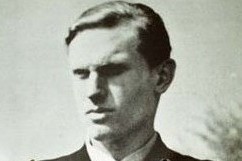 Walter Seifert
Mass murderer · Germany · 1964
Committed suicide by poisoning himself with cyanide the same day; died next day…
10 victims
Walter Seifert
Mass murderer · Germany · 1964
Committed suicide by poisoning himself with cyanide the same day; died next day…
10 victims
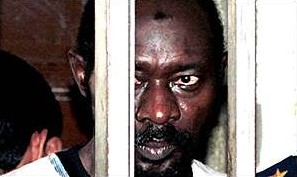 Mohammed Adam Omar
Murderer · Yemen · 1995
Mohammed Adam Omar was a morgue assistant at Sanaa University’s medical faculty…
16 victims
Mohammed Adam Omar
Murderer · Yemen · 1995
Mohammed Adam Omar was a morgue assistant at Sanaa University’s medical faculty…
16 victims
- Gender
- male
- Country
- Zimbabwe
- Location
- Harare, Zimbabwe
- Date of birth
- 1937
- Age at first offence
- 49
- Characteristics
- poisoner, history of mental illness, abuse
- Victim profile
- Lavender Khaminwa, 9 / Kalpesh Nagindas, 19 -month-old (p a tients)
- Method of murder
- Poisoning (morphine )
- Date(s) of murder
- 1986 - 1992
- Years active
- 1986–1992
- Date of arrest
- —
- Status
-
Found guilty of culpable homicide and sentenced to a year in jail in 1995
Case identification
Richard Gladwell McGown was a British doctor who worked in Zimbabwe as an anesthetist. He was compared to a Nazi death camp doctor. He later faced a General Medical Council (GMC) hearing in London because he was on the UK medical register and licensed to practice in the UK.
Timeline
- March 29, 1993 — A British doctor was arrested after lawmakers claimed he carried out medical experiments on 500 patients, most of them Black and some of whom died.
- February 6, 1995 — A White doctor in Harare, Zimbabwe was found guilty of professional negligence in the deaths of two children; the court ruled that negligence caused the deaths of two patients.
- February 11, 1995 — The High Court in Harare released Dr Richard McGown on bail pending an appeal after being found guilty of culpable homicide and sentenced to a year in jail.
- July 13, 1988 — A 19-month-old infant (Child A) was admitted to Avenues Clinic in Harare, Zimbabwe, for a circumcision and was given morphine into the spine after the operation.
- 1986 to 1992 — A judge ruled that Dr McGown gave unusually high dosages of morphine when administering anesthetics to five patients who died during this period.
- 1989 — Dr McGown wrote an article stating that "under no circumstances should a child be allowed to leave the care and support of the hospital for at least 24 hours if given a caudal morphine injection".
- November 22, 2002 — The General Medical Council heard evidence about the baby boy (Child A) who died hours after routine circumcision and also evidence about a nine-year-old girl who died following an appendix operation.
Background
Dr Richard Gladwell McGown was an anesthetist in Zimbabwe for several years. He built his reputation as a consultant anaesthetist and developed an interest in post operative pain relief, writing in several prominent medical journals about his methods of caudal epidural anaesthesia. He presented papers on the subject in Paris and Lisbon in the late 1980s.
In 1993, a parliamentary report alleged that Dr McGown carried out clinical trials to discover new ways of monitoring pain without following laid down procedures. The report claimed that 500 patients had been used and that at least five had died.
Dr McGown was educated in Scotland, studied medicine at Edinburgh University, and graduated in 1959. He worked in Sweden and Zambia before moving to Zimbabwe and then Rhodesia in the late 1960s. He was born in India and brought up in Glasgow.
The alleged medical experiments and charges
A British doctor, Dr Richard Gladwell McGown, was arrested after lawmakers claimed he carried out medical experiments on 500 patients, most of them Black and some of whom died. One legislator likened his test on Black women and children to the Nazi's experiments on Jews and Poles in concentration camps.
Police alleged that Dr McGown conducted medical tests using new drugs and anesthetics without the authority of the Zimbabwe Drugs Control Council and without the knowledge of patients. Under parliamentary privilege, MPs likened Dr McGown to a Nazi doctor and accused him of experimenting on black people "as if they were cats and baboons."
The case involved allegations that he gave lethal doses of morphine to black patients, described as "experiments."
When the trial began, the charges of experimentation were dropped.
Investigation and arrest
Following the parliamentary report and lawmakers’ claims, Dr McGown was arrested and charged with culpable homicide. The charges of experimentation were dropped when the trial began.
Trial
Convictions and acquittals within the trial
On February 6, 1995, a judge ruled that Dr McGown gave unusually high dosages of morphine when administering anesthetics to five patients who died between 1986 and 1992. Four of the five who died were Black, and the fifth was of Greek descent.
The court ruled that the doctor's negligence caused the deaths of just two of the patients.
On February 11, 1995, the High Court in Harare found him guilty of the culpable homicide of Lavender Khaminwa, aged 9, who died after an operation to remove her appendix, and Kalpesh Nagindas, who died after being circumcised.
Dr McGown was sentenced to a year in prison, with six months suspended, and fined pounds sterling760.
Three other charges of culpable homicide were dismissed.
Claims by parties in the trial period
The parents of the patients who died fought to bring the case to trial. Mr Charles Khaminwa, the father of Lavender, said:
"This is a mockery of justice and a cover up. There is much evidence which has not been allowed to be presented to the court. I still want justice to be seen to be done before Zimbabwe and the world."
Defence and appeal
Dr McGown’s defence counsel appealed against the judgment to the Supreme Court.
Sentencing
Dr McGown was sentenced to a year in prison, with six months suspended, and was fined pounds sterling760.
Appeal and interim status
On February 11, 1995, Dr McGown was released on bail pending an appeal after being found guilty of culpable homicide and sentenced to a year in jail.
Outcome
Dr McGown was found guilty of culpable homicide relating to the deaths of Lavender Khaminwa, aged 9, and Kalpesh Nagindas.
Aftermath and later proceedings (GMC)
The case shook the confidence of Zimbabwe's health service and raised questions about the efficiency of state control. There were also fears about the quality of staff. The number of skilled doctors fell steadily during the 1980s, despite the fact some 60 physicians graduated every year from Harare's medical school.
One Harare based doctor, who asked not to be named, said:
"Dr McGown's techniques have often been used in Britain and in Europe. But their success largely depends on after care treatment by experienced nurses, and I'm afraid that some of his patients may have died because of bad postoperative care by locally trained nurses."
General Medical Council (GMC) hearing in London (2002)
Child A: circumcision and morphine
The GMC professional conduct committee heard how a baby boy, known as Child A, was admitted to Avenues Clinic in Harare, Zimbabwe on 13 July 1988 for a circumcision because he had problems urinating. Dr McGown gave the toddler an injection of morphine into the spine to relieve the pain after the operation. The committee heard that Dr McGown was fully aware of the risks associated with morphine injection.
According to GMC lawyers, Dr McGown wrote an article in 1989 stating:
"under no circumstances should a child be allowed to leave the care and support of the hospital for at least 24 hours if given a caudal morphine injection"
The committee heard that Dr McGown sent Child A home 75 minutes after the operation. Child A died just hours after the routine circumcision. The father of the child, who was not named, described how he was given no instructions on how to care for the baby following the operation and said he had not been told that his son had been given morphine.
The father said about how he received the child:
"He said: 'Here is your child. I've brought him back from the dead.' It seemed like a joke."
The father described that the baby was irritable and later fell into a deep sleep. He began vomiting yellow liquid and was taken back to the hospital where he died, six hours after his operation.
Dr McGown denied serious professional misconduct and acknowledged that the high dose of morphine contributed to the infant's death. He told the GMC committee:
"Had he not had this anaesthetic, he would still have been alive."
He also said:
"I have had great difficulties during a criminal trial and during this hearing in trying to get across the fact that large doses are not only permitted but required when using caudal morphine."
GMC counsel Joanna Glynn said:
"The decision to discharge him after 75 minutes was wholly indefensible. It falls below the standards of a competent medical practitioner,"
She also said:
"Neither of these healthy children should have died. Their deaths were preventable. "They were caused by culpable failures set out in the charges."
Nine-year-old girl: appendix operation
Dr McGown was accused of failing to provide proper care to a nine-year-old girl who died following an appendix operation. This accusation was addressed in the GMC proceedings.
Charges, motive, and disposition fields (as stated)
- The case involved overdosed hospital patients with morphine in "experiments."
- DISPOSITION: Six-month sentence for two "negligent" deaths, 1995.
- DISPOSITION entry: Michael Newton - An Encyclopedia of Modern Serial Killers - Hunting Humans.
Spotted an error, or have more information about this case?