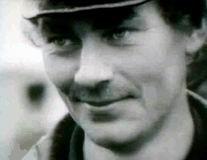
Gennady Mikhasevich
Serial killer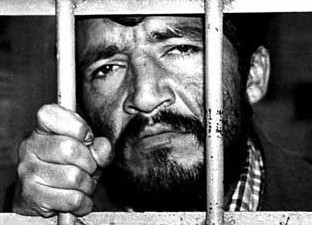 Pedro Alonso Lopez
Serial killer · Peru - Ecuador - Colombia · 1969
Name: Pedro Alonso Lopez · Nationality/Background: Colombian-born · Birth: born…
300 victims
Pedro Alonso Lopez
Serial killer · Peru - Ecuador - Colombia · 1969
Name: Pedro Alonso Lopez · Nationality/Background: Colombian-born · Birth: born…
300 victims
 Donald Henry Gaskins
Serial killer · USA · 1969
Donald Henry Gaskins, also known as Donald “Pee Wee” Gaskins, was a serial kill…
200 victims
Donald Henry Gaskins
Serial killer · USA · 1969
Donald Henry Gaskins, also known as Donald “Pee Wee” Gaskins, was a serial kill…
200 victims
 Carl Eugene Watts
Serial killer · USA · 1974
Carl Eugene Watts (born November 7, 1953; died September 21, 2007), also known…
100 victims
Carl Eugene Watts
Serial killer · USA · 1974
Carl Eugene Watts (born November 7, 1953; died September 21, 2007), also known…
100 victims
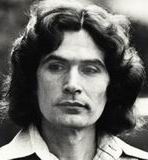 Rodney Alcala
Serial killer · USA · 1977
Rodney James Alcala (born August 23, 1943) was also known as Rodrigo Jacques Al…
100 victims
Rodney Alcala
Serial killer · USA · 1977
Rodney James Alcala (born August 23, 1943) was also known as Rodrigo Jacques Al…
100 victims
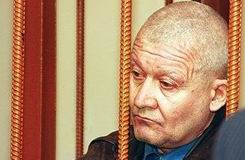 Serhiy Tkach
Serial killer · Ukraine · 1980
Serhiy Tkach (Russian: Серге́й Фёдорович Ткач, born 12 September 1952 in Kisely…
100 victims
Serhiy Tkach
Serial killer · Ukraine · 1980
Serhiy Tkach (Russian: Серге́й Фёдорович Ткач, born 12 September 1952 in Kisely…
100 victims
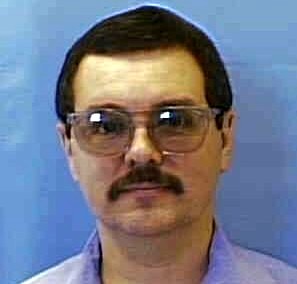 Donald Harvey
Serial killer · USA · 1970
Donald Harvey was known as an American serial killer and a self-professed “Ange…
87 victims
Donald Harvey
Serial killer · USA · 1970
Donald Harvey was known as an American serial killer and a self-professed “Ange…
87 victims
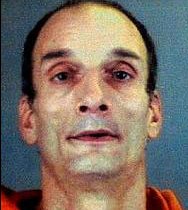 Robert Spahalski
Serial killer · USA · 1990
Robert Spahalski was sentenced to 100 years in prison on December 13, 2006. Spa…
4 victims
Robert Spahalski
Serial killer · USA · 1990
Robert Spahalski was sentenced to 100 years in prison on December 13, 2006. Spa…
4 victims
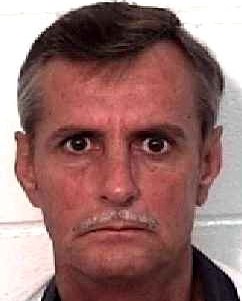 Tommy Lee Waldrip
Murderer · USA · 1991
Tommy Lee Waldrip (51) was sentenced to death on November 4, 1994. Keith Lloyd…
1 victim
Tommy Lee Waldrip
Murderer · USA · 1991
Tommy Lee Waldrip (51) was sentenced to death on November 4, 1994. Keith Lloyd…
1 victim
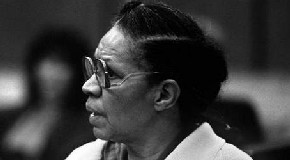 Priscilla Ford
Mass murderer · USA · 1980
Priscilla Ford was sentenced to death for killing six people and injuring 23 mo…
6 victims
Priscilla Ford
Mass murderer · USA · 1980
Priscilla Ford was sentenced to death for killing six people and injuring 23 mo…
6 victims
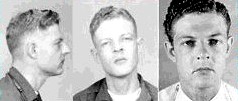 Richard Lewis Jordan
Murderer · USA · 1954
Richard Lewis Jordan was convicted of murder in Tucson, Arizona, involving the…
1 victim
Richard Lewis Jordan
Murderer · USA · 1954
Richard Lewis Jordan was convicted of murder in Tucson, Arizona, involving the…
1 victim
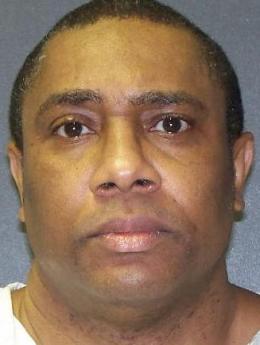 Kenneth Mosley
Murderer · USA · 1997
Kenneth Mosley was convicted of capital murder and was executed by lethal injec…
1 victim
Kenneth Mosley
Murderer · USA · 1997
Kenneth Mosley was convicted of capital murder and was executed by lethal injec…
1 victim
- Gender
- male
- Country
- B elarus
- Location
- B elarus
- Date of birth
- 1947
- Age at first offence
- 24
- Characteristics
- rape, convicted rapist, serial rapist, dismemberment, torture, abuse, domestic violence, drugs
- Victim profile
- Women
- Method of murder
- Strangulation
- Date(s) of murder
- 1971 - 1985
- Years active
- 1971–1985
- Date of arrest
- December 9, 1985
- Status
-
Executed
Executed by firing squad on February 3, 1988
Case record: Gennady Mikhasevich
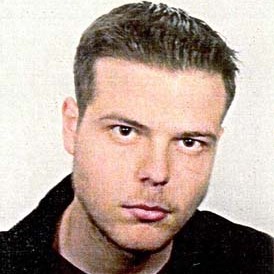
Gennady Mikhasevich (also given as Gennady Modestovich Mikhasevich; Russian: Геннадий Модестович Михасевич) was a Soviet serial killer.
Background
Mikhasevich was described as a metal worker. He was also described as having served in the army and as having graduated from a technical school in Vitebsk in 1973. He returned to Ist and started to work in a sovkhoz. He became married in 1976 and had two children. He was described as a good family man, a teetotaller, and a conscientious worker. He was also described as a member of the Communist Party, serving as a local party functionary, and as a member of Voluntary People’s Druzhina.
He was described as possessing a red Zaporozhets.
The offence
Mikhasevich murdered women during the period from 1971 to 1985. He murdered 36 women during that period in Vitebsk, Polotsk and the rural areas in nearby regions of the Byelorussian SSR.
He was described as savagely killing women in the territory of the Soviet Republic of Byelorussia, and as having “savagely killed women in the territory of the Soviet Republic of Byelorussia.”
The killings were described as coinciding with rape, and he was described as strangling or smothering his victims. It was stated that he attacked victims in solitary locations and, during later years, after luring them (including hitchhikers) into his own car or into the machines of his workplace. He was described as not carrying weapons or other instruments of murder and instead using improvised means, including a cord made of rye.
Besides killing, he was described as robbing victims of money and valuable items. It was also stated that he sometimes robbed victims of household items like scissors. His gifts to his wife were mentioned as sometimes including money and valuable items taken from victims.
Victim count
A range of victim counts appeared in the record: 33 women over the past 15 years; 36 women from 1971 to 1985; and 36+.
Investigation
Authorities were described as having worked on the case since 1973. It was stated that “the investigation veered from the right track.”
It was described that, by the time Mikhasevich was arrested, 14 people had already been convicted for the crimes committed by Mikhasevich. It was also described that suspects had been forced to confess by torture and that a couple of them had been sentenced to death and executed for crimes they did not commit.
Officials responsible for miscarriages of justice were reportedly charged and punished.
The record described an investigator, Nikolay Ignatovich, as advancing the case and standing up for the idea that all the killings of females near motorways were committed by one person, a serial killer, rather than separate murderers. It was also stated that Militsiya detected that the serial killer was using a red Zaporozhets and began checking people in the oblast who possessed such a car.
The record described Mikhasevich participating in these actions, as a druzhinnik, in a way searching for himself and enabling him to learn of investigative steps beforehand.
It was described that the year 1985 was especially “prolific,” with 12 females killed in that year alone.
Arrest and confession
Mikhasevich made a “fatal mistake” by sending an anonymous letter to a local newspaper on behalf of an imaginary underground organization, “Patriots of Vitebsk,” calling on “his fellow militants to intensify their struggle of killing communists and lewd women.”
When he left a similar hand-written note next to a new victim and signed it on behalf of “Patriots of Vitebsk,” investigators started to ascertain the handwriting of male residents of the oblast. Experts checked 556 thousand samples and detected a striking resemblance between the handwriting of Gennady Modestovich Mikhasevich and the handwriting on the murderers’ notes.
Further investigation revealed other evidence convincing investigators of his guilt.
It was stated that he was finally arrested in 1985. He confessed after initial denial. He was sentenced to death and executed in 1987 in one portion of the record. Another portion states he was executed by firing squad on February 3, 1988, and that Tass reported the execution on February 3, 1988.
In one section, it was described that he led investigators to a spot where he had hidden belongings of victims. He was described as confessing that he did not have trouble enticing the women and offering them a ride in his red Zaporozhets.
Trial and sentencing
Mikhasevich was convicted and sentenced to death. He was sentenced to death by firing squad.
The record also described a “Vitebsk Case” (“Витебское дело”) as notorious in the USSR for exposing incapability of the militsiya and corruption of law enforcement agencies, including the convictions of innocent defendants.
Innocent men convicted and sentenced
The record listed people described as “innocent guys” who were convicted for crimes attributed to the killings:
- O. P. Glushahov — sentenced to 10 years (1974).
- N. S. Tereniv — executed (1980).
- V. Gorelov — spent six years in prison where he went blind.
- Oleg Adamov — sentenced to 15 years in prison.
The record also included an additional description that one of the innocent suspects had been executed, another had killed himself in custody, and a third innocent defendant went blind in prison. Another portion described that a dozen innocent men were convicted and sentenced for various crimes in the series following “breaches of law” by homicide investigators.
Appeals
No appeals information was included as a distinct factual section.
Outcome
On February 3, 1988, the Soviet news agency Tass reported that Mikhasevich had been executed by firing squad. Tass’s report was described as stating he had “savagely killed women in the territory of the Soviet Republic of Byelorussia” and that “the investigation veered from the right track.”
Mikhasevich’s execution was described as having occurred by firing squad, with execution details in the record including “February 3, 1988.”
Aftermath
The record described his case as becoming notorious in the USSR as “The Vitebsk Case” (“Витебское дело”), revealing both incapability of the militsiya and corruption of law enforcement agencies, including forced confessions by torture and death sentences for some who were convicted of crimes they did not commit.
Timeline
- 1971 — Mikhasevich committed his first murder on 14 May 1971.
- 1971 (October) — He murdered again in October 1971.
- 1972 — He strangled 2 other women in 1972 near Vitebsk.
- 1973 — He graduated from a technical school in Vitebsk in 1973.
- 1973 — Authorities were described as working on the case since 1973.
- 1976 — He became married in 1976.
- 1978 — The record stated it was unclear whether he was charged with the decapitation murders of four women slain around Moscow in 1978.
- 1979 — The record stated it was unclear whether he was charged with the decapitation murders of four women slain around Moscow in 1979.
- 1980 — N. S. Tereniv was executed in 1980.
- 1984 — A girl student was murdered in February 1984; 14 victims were described as murdered in the peak year of 1984.
- 1985 — He was arrested in 1985, confessed after initial denial, and was described as having killed 12 females in 1985.
- February 3, 1988 — Tass reported that he was executed by firing squad.
Other details
The record described an early killing on 14 May 1971: Mikhasevich was on the way from Vitebsk to Polotsk, late enough that he could not catch a bus to Polotsk where his parents lived. He reported feeling desolate because his girlfriend had left him and become married. He said he had prepared a loop to hang himself. He accidentally met a young woman on the road and decided to kill her, venting his anger on her.
He was described as having had an initial denial and then making a clean breast of it after intense interrogation.
The record described multiple investigative approaches and volumes of paperwork, including checking:
- 556 thousand handwriting samples.
- over 200,000 red car registrations.
- over 312,000 citizens’ passports.
A letter was described as being sent to police, signed “Patriot of Vitebsk,” attributing the slayings to “revenge against adulterous women.” The record also described similar notes placed next to the killer’s last two victims in 1985.
One portion stated that it was not known when Mikhasevich got executed, but most likely it happened between 1985 and 1988. Another portion stated he was sentenced to death and executed in 1987. Another portion stated he was executed by firing squad on February 3, 1988, as reported by Tass.
The record also included claims of a victim count and uncertain reliability in Western reports, stating that some Western reports cited a body count of 36 and that the reliability of those accounts was still unclear.
The record mentioned that no weapons were carried by him and that he used improvised means, including a cord made of rye.
Spotted an error, or have more information about this case?