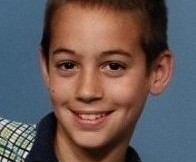
Christopher Pittman
Homicide David Koresh
Homicide · USA · 1993
David Koresh (born Vernon Wayne Howell; August 17, 1959 – April 19, 1993) led t…
79 victims
David Koresh
Homicide · USA · 1993
David Koresh (born Vernon Wayne Howell; August 17, 1959 – April 19, 1993) led t…
79 victims
 Todd Hall
Homicide · USA · 1996
Todd Hall was described by neighbors as "mentally slow" and was said to have su…
9 victims
Todd Hall
Homicide · USA · 1996
Todd Hall was described by neighbors as "mentally slow" and was said to have su…
9 victims
 Joshua Jenkins
Homicide · USA · 1996
Joshua Jenkins was a 15-year-old American killer who killed five members of his…
5 victims
Joshua Jenkins
Homicide · USA · 1996
Joshua Jenkins was a 15-year-old American killer who killed five members of his…
5 victims
 Alex Baranyi
Homicide · USA · 1997
Alex Baranyi and David Anderson were 17-year-old high-school dropouts from Bell…
4 victims
Alex Baranyi
Homicide · USA · 1997
Alex Baranyi and David Anderson were 17-year-old high-school dropouts from Bell…
4 victims
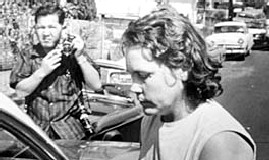 Maggie Young
Homicide · USA · 1965
Maggie Young was a despondent, mentally ill mother who had been treated for a m…
5 victims
Maggie Young
Homicide · USA · 1965
Maggie Young was a despondent, mentally ill mother who had been treated for a m…
5 victims
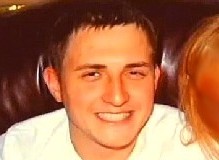 Nikolay Lazukin
Mass murderer · USA · 2012
Nikolay “Nick” Lazukin was a 27-year-old man suspected of killing his wife and…
5 victims
Nikolay Lazukin
Mass murderer · USA · 2012
Nikolay “Nick” Lazukin was a 27-year-old man suspected of killing his wife and…
5 victims
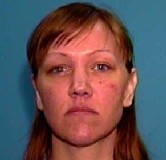 Leslie Demeniuk
Murderer · USA · 2001
Leslie Demeniuk was a mother accused of murdering her twin 4-year-old sons, Jam…
2 victims
Leslie Demeniuk
Murderer · USA · 2001
Leslie Demeniuk was a mother accused of murdering her twin 4-year-old sons, Jam…
2 victims
 Alexander Pichushkin
Serial killer · Russia · 1992
Alexander Yuryevich “Sasha” Pichushkin (Russian: Алекса́ндр Ю́рьевич Пичу́шкин,…
49 victims
Alexander Pichushkin
Serial killer · Russia · 1992
Alexander Yuryevich “Sasha” Pichushkin (Russian: Алекса́ндр Ю́рьевич Пичу́шкин,…
49 victims
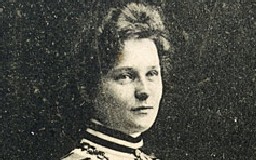 Grete Beier
Murderer · Germany · 1907
Marie Margarethe (Grete) Beier was executed by guillotine on July 23, 1908. She…
1 victim
Grete Beier
Murderer · Germany · 1907
Marie Margarethe (Grete) Beier was executed by guillotine on July 23, 1908. She…
1 victim
 William Clifford Bryson
Murderer · USA · 1988
William Clifford Bryson was convicted in Oklahoma of first-degree murder for th…
1 victim
William Clifford Bryson
Murderer · USA · 1988
William Clifford Bryson was convicted in Oklahoma of first-degree murder for th…
1 victim
- Gender
- male
- Country
- USA
- Location
- Chester County, South Carolina, USA
- Date of birth
- April 9, 1989
- Age at first offence
- 12
- Characteristics
- juvenile (12), arson
- Victim profile
- Joe Pittman, 66, and his wife, Joy, 62 ( his grandparents )
- Method of murder
- Shooting
- Date(s) of murder
- November 28, 2001
- Years active
- 2001
- Date of arrest
- Next day
- Status
-
Imprisoned
Sentenced to two concurrent terms of 30 years in prison on February 15, 2005
Case record: Christopher Pittman
STATUS
Christopher Pittman was sentenced to two concurrent terms of 30 years in prison on February 15, 2005.
People
Christopher Pittman — convicted offender, born April 9, 1989 in Huntsville, Alabama; juvenile at the time of the offences (age 12)
Danielle Pittman Finchum — Christopher Pittman’s sister; said on NBC’s “Today” show that her brother is not guilty and that the family would keep fighting for his release
Joe Pittman — Christopher Pittman’s father and the victims’ adult son; told the judge he supported his son and called on Gov. Mark Sanford and President Bush to pardon him
Joy Pittman — Christopher Pittman’s mother (referred to as wife of Joe Pittman and as “Joy, 62” in connection with the victims in an Associated Press account); grandparent victim, age 62
Joe Pittman, 66 — grandparent victim in the Associated Press account
Arnold Vickery (also referred to as Andy Vickery) — defence attorney in the Associated Press account; said they would file an appeal questioning whether the state could constitutionally try someone so young in adult court
John Meadors — prosecutor in the Associated Press account
Barney Giese — prosecutor in the Associated Press account
Andy Vickery — referenced in connection with a prior attempt to get the case heard in Family Court in the Associated Press account
Arnold Hite — jury foreman in the Associated Press account
Danny Pieper — Circuit Court Judge who ordered the sentences to run concurrently in the Associated Press account
Christine Peterson — juror in the Associated Press account, grandmother of a 12-year-old; discussed the jury’s deliberations about the drug’s impact and Christopher Pittman’s youth
Dr. Lanette Atkins — forensic psychiatrist in the New York Times account; retained by Christopher’s public defender; testified at a hearing that she believed Christopher committed the murders while in a psychotic state induced by Zoloft
Dr. Pamela M. Crawford — forensic psychiatrist asked by the prosecutor to examine the boy; concluded in her report that Christopher knew what he was doing when he took his grandparents’ lives
Dr. Peter R. Breggin — psychiatrist mentioned in the New York Times account as scheduled to testify on Christopher Pittman’s behalf
Chester County Solicitor John R. Justice — prosecutor mentioned in the New York Times account as hospitalised and unavailable to comment; referenced in connection with statements about Pfizer providing information
Christopher Taylor — assistant country solicitor in the New York Times account; said he thought Pfizer had contacted Mr. Justice
Jennifer Yoder — spokeswoman for Eli Lilly & Company in the New York Times account
Mariann Caprino — Pfizer spokeswoman in the New York Times account
Dr. Fassler — Dr. David G. Fassler, a child and adolescent psychiatrist in Burlington, Vt., in the New York Times account; attended a hearing and recalled being struck by the number of pediatric studies he had never known about
Ann Blake Tracy — director of the International Coalition for Drug Awareness in the New York Times account
Karen Barth Menzies — plaintiffs’ lawyer in the New York Times account who filed similar lawsuits
Mark Sanford — identified in the Associated Press account as a governor whom Joe Pittman called on to pardon his son
President Bush — identified in the Associated Press account as a president whom Joe Pittman called on to pardon his son
Timeline
- October 5, 2006 — the South Carolina Supreme Court heard oral arguments on his appeal.
- January 31, 2005 — his trial as an adult began.
- February 15, 2005 — he was convicted of murder and sentenced to 30 years in prison.
- February 16, 2005 — Associated Press account reported he was sentenced to 30 years in prison for murdering his grandparents.
- June 11, 2007 — the South Carolina Supreme Court affirmed his conviction by a vote of 4-1.
- April 14, 2008 — the Supreme Court declined to hear an appeal to reduce his 30 year sentence.
- November 2001 — the Associated Press account placed the killing of his grandparents in November 2001.
- late 2001 — the New York Times account described the night he killed his grandparents as late 2001.
- October 2001 — the New York Times account stated Christopher Pittman arrived in Chester in October 2001 to live with his paternal grandparents.
Background
Christopher Pittman said he remembered everything about the night in late 2001 when he killed his grandparents, including the shotgun blasts, voices urging him on, and the smoke detectors that screamed after setting fire to their rural South Carolina home and driving away.
At age twelve, Christopher Pittman was put on Paxil for mild depression. The depression escalated when he threatened suicide in front of his sister. His father sent him away from their home in Oxford, Florida to live with his grandparents in Chester, South Carolina where he frequently visited.
His mother had run out on him twice, and his father was described as frequently abusive. His paternal grandparents were described as a source of stability to him for years.
Paxil was not available in Chester, and a doctor gave him samples of Zoloft instead. The doctor increased the dosage from 100mg daily to 200mg daily after Pittman allegedly began to experience negative side-effects, including a burning sensation all over his body requiring pain medication. His sister described him as “manic.”
He had an argument on the school bus, choked a fellow student, and later disturbed the person playing piano in his church. After the murder he set fire to the house using a candle and papers.
A few weeks before the killings, he ran away from his parents’ Florida home and was committed to a psychiatric institution. Doctors prescribed medication including the antidepressant Zoloft. He later said that when he committed the crime he was hearing voices that told him to kill his grandparents. He also reportedly said that beforehand, he had been locked in his room and, when he tried to leave, beaten by his grandfather.
In the New York Times account, psychiatric reports suggested that his tailspin began when his parents revived their relationship in 2001 only to end it again. After his mother left this time, he threatened to kill himself and was hospitalized. His diagnosis was described as mild chronic depression accompanied by defiant and negative behavior, and he was put on Paxil. After about a week, his father decided to remove him from the hospital and send him to live with his grandparents, where a doctor put him on Zoloft.
In the New York Times account, Christopher told a forensic psychiatrist with the South Carolina Department of Juvenile Justice:
"I haven't had that good a life; my real mom left when I was 2"
The New York Times account also said his mood changed on the medication to the extent that he “didn't have any feelings,” and described a physician’s notes as:
"Lots of energy. No plans to harm self. Not flying off the handle."
The New York Times account said that the notes reflected he was seeing before the killings, and said the reports about his reactions to Zoloft varied sharply.
The offence
Christopher Pittman murdered his grandparents with their own shotgun which he had been taught how to use. The Associated Press account described that after shooting them as they slept, he burned the couple’s home and drove away in their car.
In the New York Times account, he said he remembered blood, the shotgun blasts, voices urging him on, and smoke detectors that screamed as he drove away after setting the home on fire.
After the murder, he took his grandparents’ car, their guns, his dog and $33 and left. In the Associated Press account, he drove away in their car after the shootings and burning.
The New York Times account stated that the move seemed like his last, best chance to find stability when he arrived in Chester in October 2001.
In the New York Times account, Dr. Pamela M. Crawford concluded that Christopher knew what he was doing when he took his grandparents’ lives and provided “nonpsychotic reasons” for killing his grandparents, setting fire to the house, taking money from his grandparents, and stealing their car. Her report also said that after his detention by police, Christopher made self-protective statements to avoid arrest prior to admitting his actions:
"nonpsychotic reasons"
Investigation and police statements
Christopher Pittman initially told police that a black man shot his grandparents, burned down the house, and kidnapped him. After shooting them as they slept and after setting fire to the house, he fled.
He was picked up after getting stuck two counties away.
Before confessing, he told a story of a large black male who had kidnapped him after murdering his grandparents and setting fire to their house.
When he ultimately confessed he proclaimed that his grandparents deserved what they got.
In the Associated Press account, Prosecutor Barney Giese reminded jurors how the boy carried out the killings, stating:
"I don't care how old he is. That is as malicious a killing — a murder — as you are ever going to find"
Confession and medication-related defence claims
Christopher Pittman later claimed that he was under the influence of an overdose of Zoloft.
He claimed Zoloft caused Command Hallucinations, a voice telling him to murder his grandparents, and that it was almost like a dream or a television show he was watching but couldn’t stop.
The New York Times account included a report that he told a forensic psychiatrist:
"Something kept telling me to do it"
The New York Times account also included a quotation from Christopher written in prison and read by his father during an FDA hearing:
"Through the whole thing, it was like watching your favorite TV show,"
"You know what is going to happen but you can't do anything to stop it."
He had been prescribed Paxil and later put on Zoloft. A Associated Press account noted that about a month before the slayings, Pittman was hospitalized after threatening to kill himself. It also noted that the government ordered warnings on both antidepressants, and that risks were tied to children considering suicide.
The Associated Press account described that Pfizer said in a statement after the verdict:
"Zoloft didn't cause his problems, nor did the medication drive him to commit murder. On these two points, both Pfizer and the jury agree."
In the CNN account, his lawyers maintained that due to the Zoloft he was taking, Pittman was involuntarily intoxicated and that he committed manslaughter, not murder.
In the CNN account, his defence was described as claiming that his ingestion of prescribed Zoloft caused him to become involuntarily intoxicated and that this mitigated the malice aforethought required to convict Pittman of first-degree murder.
Trial
On Monday, January 31st 2005, his trial as an adult began.
On February 15th 2005, Pittman was convicted of murder and sentenced to 30 years in prison.
In an Associated Press account describing the sentencing, Circuit Court Judge Danny Pieper ordered the sentences to run concurrently — described as the minimum penalty he could give. The maximum sentence was described as life in prison. The Associated Press account said he was sentenced to 30 years on each count of murder.
Before sentence, Pittman told the judge:
"I know it's in the hands of God. Whatever he decides on, that's what it's going to be,"
After the verdict was read, the Associated Press account said he hung his head.
The Associated Press account described controversy about the verdict, saying two jurors admitted feeling coerced into their decision, and another juror openly discussed the trial with his wife and bartender during deliberations.
The Associated Press account quoted jury foreman Arnold Hite:
"If Chris Pittman had been 25, we could have come to a decision much earlier. Because of his age it was very, very difficult,"
and also said he spoke only for himself.
The Associated Press account quoted juror Christine Peterson:
"It bothered me a lot,"
"It was not an easy decision. But everyone kept saying, 'Look at the evidence. Look at the evidence.'"
and added:
"I'm sure many of us had sleepless nights."
Prosecutors countered that he was simply angry at Joe Pittman, 66, and his wife, Joy, 62, when he killed them in November 2001. They said they did not think the Zoloft defence was viable; Prosecutor John Meadors said later:
"I really think that was a smoke screen,"
"He just happened to be on an antidepressant when this happened."
The Associated Press account said the defence tried unsuccessfully to get the case heard in Family Court and said South Carolina set no minimum age for trying defendants as an adult.
Sentencing
On February 15, 2005, Christopher Pittman was sentenced to two concurrent terms of 30 years in prison.
The Associated Press account said Circuit Court Judge Danny Pieper ordered the sentences to run concurrently and described the maximum sentence as life in prison. It also said the minimum penalty he could give was concurrent 30-year terms.
Appeals
On October 5th, 2006 the South Carolina Supreme Court heard oral arguments on his appeal.
The Justices were also asked to hold off on moving Pittman to the adult penitentiary, but the delay was denied.
On June 11, 2007, the Court affirmed Pittman’s conviction by a vote of 4-1.
On April 14, 2008, the Supreme Court declined to hear an appeal to reduce his 30 year sentence.
Outcome
Christopher Pittman remained in SC adult prison after his conviction was affirmed and after the Supreme Court declined to hear the appeal to reduce his 30 year sentence.
Discovery Channel later aired an episode of 48 Hours: Hard Evidence devoted to the Pittman case.
Other details
A petition to pardon Pittman was also presented at the time of the South Carolina Supreme Court oral arguments.
Christopher Pittman’s legal team included allegations that the prescription drug Zoloft caused him to act. The CNN account described that Pittman’s defence tried to argue manslaughter rather than murder based on involuntary intoxication, and that prosecutors said he had been lucid and clear when he confessed.
The New York Times account said that Pfizer helped the county solicitor who was prosecuting Christopher Pittman and that plaintiffs’ lawyers from Houston and Los Angeles signed onto the defence team. It also said that groups opposed to pediatric antidepressant use championed the case.
The New York Times account said Pfizer declined to make company executives or lawyers available to be interviewed for the article and said the company previously stated that no regulatory agency had found a connection between Zoloft and suicidal or homicidal behavior.
The New York Times account said Christopher Pittman arrived in Chester in October 2001 to live with his paternal grandparents, Joe and Joy Pittman. It described his relationship with his father as troubled and his mother as having left when he was two.
In the Associated Press account, Christopher’s family said they would keep fighting for his release. Danielle Pittman Finchum said:
"I think everybody failed him in some way or another. I mean, you can't go through life and not fail somebody in a certain way,"
"We're going to fight for him and if I have to keep fighting for the next 29 years to get him out, he's not going to stay in there the full time that he's supposed to."
It also quoted Joe Pittman calling on Gov. Mark Sanford and President Bush to pardon his son. In the Associated Press account, Joe Pittman told the judge:
"I love my son with all of my heart, as I did my mom and dad,"
"And mom and dad, if they were here today, would be begging for mercy as well."
The New York Times account included a reference to the psychiatrist Dr. Lanette Atkins worrying about publicity and said she remarked:
"I wished it could be staying in Chester, S.C., with this one kid"
In the New York Times account, the involvement of drug company representatives in the criminal proceeding was described as not unusual, and it said Jennifer Yoder said a “Prozac defense” had been raised about 75 times in criminal cases and that she was unaware of any case in which the Prozac defense succeeded.
The New York Times account described that plaintiffs’ lawyers asked the presiding judge to order the release of Pfizer company documents about pediatric trials of Zoloft and said the records were reviewed as part of a Los Angeles federal court case against Pfizer that was dismissed before trial.
The New York Times account said the presiding judge had yet to rule on the document disclosure issue.
In the New York Times account, it said Christopher Pittman’s trial scheduled to begin that fall might be delayed because of the illness of the prosecutor John R. Justice. It also said his lawyers were trying to move his case to juvenile court.
In the New York Times account, it described Christopher’s sister Danielle and said recently she married a US Marine and gave birth to a baby girl named Joy after her paternal grandmother.
Spotted an error, or have more information about this case?