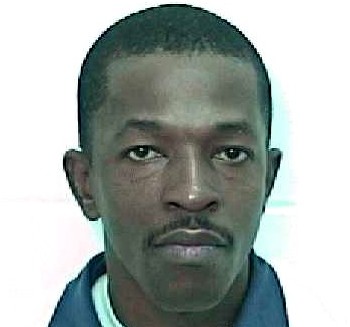
Willie James Pye
Murderer Brian Kevin Rosenfeld
Murderer · USA · 1985
Brian Kevin Rosenfeld Brian Kevin Rosenfeld was sentenced to three concurrent l…
23 victims
Brian Kevin Rosenfeld
Murderer · USA · 1985
Brian Kevin Rosenfeld Brian Kevin Rosenfeld was sentenced to three concurrent l…
23 victims
 Russell Ellwood
Murderer · USA · 1991
Russell Ellwood was a former taxi driver. Authorities suspected him of killing…
20 victims
Russell Ellwood
Murderer · USA · 1991
Russell Ellwood was a former taxi driver. Authorities suspected him of killing…
20 victims
 Robert Martines Perez
Murderer · USA · 1994
Name: Robert Martines Perez · Other name used in proceedings: Robert Martinez P…
15 victims
Robert Martines Perez
Murderer · USA · 1994
Name: Robert Martines Perez · Other name used in proceedings: Robert Martinez P…
15 victims
 Billy Frank Vickers
Murderer · USA · 1993
Billy Frank Vickers Vickers was executed by lethal injection in Texas on Januar…
14 victims
Billy Frank Vickers
Murderer · USA · 1993
Billy Frank Vickers Vickers was executed by lethal injection in Texas on Januar…
14 victims
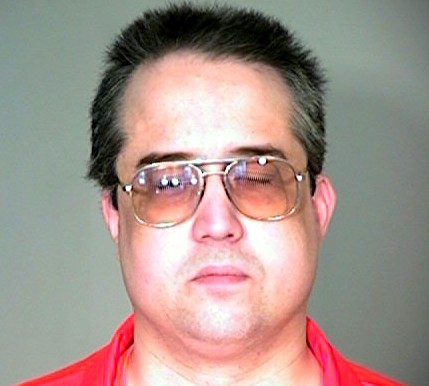 Ronald Schackart
Murderer · USA · 1984
Ronald Dwight Schackart and Charla Regan had known each other since high school…
1 victim
Ronald Schackart
Murderer · USA · 1984
Ronald Dwight Schackart and Charla Regan had known each other since high school…
1 victim
 Debora Green
Murderer · USA · 1995
Debora Green (born Debora Jones, February 28, 1951) was an American physician.…
2 victims
Debora Green
Murderer · USA · 1995
Debora Green (born Debora Jones, February 28, 1951) was an American physician.…
2 victims
 Bernard Bolender
Murderer · USA · 1980
January 7, 1980 — Bernard Bolender and two codefendants, Paul Thompson and Jose…
4 victims
Bernard Bolender
Murderer · USA · 1980
January 7, 1980 — Bernard Bolender and two codefendants, Paul Thompson and Jose…
4 victims
 Michael Briere
Murderer · Canada · 2003
Michael Briere was a Canadian software developer in Toronto. He abducted Holly…
1 victim
Michael Briere
Murderer · Canada · 2003
Michael Briere was a Canadian software developer in Toronto. He abducted Holly…
1 victim
 Vladimir Kondratenko
Serial killer · Ukraine · 1991
Vladimir Kondratenko overdosed on prescription medication and died while in pol…
16 victims
Vladimir Kondratenko
Serial killer · Ukraine · 1991
Vladimir Kondratenko overdosed on prescription medication and died while in pol…
16 victims
 Terry Darnell Edwards
Murderer · USA · 2002
Name: Terry Darnell Edwards TDCJ Number: 999463 Date of birth: 08/10/1973 Gende…
2 victims
Terry Darnell Edwards
Murderer · USA · 2002
Name: Terry Darnell Edwards TDCJ Number: 999463 Date of birth: 08/10/1973 Gende…
2 victims
- Gender
- male
- Country
- USA
- Location
- Spalding County, Georgia, USA
- Date of birth
- 1965
- Age at first offence
- 28
- Characteristics
- kidnapping, rape, robbery
- Victim profile
- Alicia Lynn Yarbrough (female, 21)
- Method of murder
- Shooting
- Date(s) of murder
- November 16, 1993
- Years active
- 1993
- Date of arrest
- —
- Status
-
Sentenced to death
Sentenced to death on July 16, 1996
Overview
Willie James Pye was sentenced to death in Spalding County in July 1996. He was convicted of the November 1993 rape, sodomy, and shooting death of a 21-year-old woman in a supposed drug deal gone bad. His co-defendant was sentenced to life in prison. Mr. Pye still claimed he was innocent and a motion for a new trial was pending.
Timeline
- November 16, 1993 — The crimes occurred involving Willie James Pye and the victim.
- February 7, 1994 — A grand jury indicted Pye.
- April 19, 1994 — The State filed its notice of intent to seek the death penalty.
- May 28, 1996 – June 7, 1996 — The trial was held.
- July 3, 1996 — Pye filed a motion for new trial.
- July 16, 1996 — Pye was sentenced to death.
- August 22, 1997 — The motion for new trial was denied.
- September 16, 1997 — Pye filed his notice of appeal.
- April 13, 1998 — The case was orally argued.
- September 21, 1998 — The case was decided.
Background
Pye was involved in a sporadic romantic relationship with the victim, Alicia Lynn Yarbrough. At the time of her murder, Ms. Yarbrough was living with another man, Charles Puckett.
Pye had heard that Puckett had just collected money from the settlement of a lawsuit. Pye was also angry because Puckett had signed the birth certificate of a child whom Pye claimed as his own.
Pye later told the police that he had not seen the victim in at least two weeks.
The offence
A jury found Pye guilty of malice murder, kidnapping with bodily injury, rape, armed robbery, and burglary.
The jury found that, for the murder, Pye had committed that crime while engaged in the commission of the offenses of kidnapping with bodily injury, rape, armed robbery, and burglary, as four separate statutory aggravating circumstances under OCGA 17-10-30 (b) (2).
Planned robbery and attack
Pye and two companions, Chester Adams and Anthony Freeman, planned to rob Puckett because Pye had heard that Puckett had just collected money from the settlement of a lawsuit.
Pye and his two companions drove to Griffin in Adams’ car. In a street transaction, Pye bought a large, distinctive .22 pistol. A witness observed Pye in possession of the large .22.
Just before midnight, the three left the party and drove toward Puckett’s house. As they were leaving, a witness heard Pye say, “it’s time, let's do it.”
All of the men put on the ski masks which Pye had brought with him, and Pye and Adams also put on gloves. They approached Puckett’s house on foot and observed that only Ms. Yarbrough and her baby were home.
Pye tried to open a window and Ms. Yarbrough saw him and screamed. Pye ran around to the front door, kicked it in, and held Ms. Yarbrough at gunpoint. After determining that there was no money in the house, they took a ring and a necklace from Ms. Yarbrough and abducted her, leaving the infant in the house.
Motel, rape, and shooting
The men drove to a nearby motel where Pye rented a room using an alias.
In the motel room, the three men took turns raping Ms. Yarbrough at gunpoint.
Pye was angry with Ms. Yarbrough and said, “You let Puckett sign my baby's birth certificate.”
After attempting to eliminate their fingerprints from the motel room, the three men and Ms. Yarbrough left in Adams’ car. Pye whispered in Adams’ ear and Adams turned off onto a dirt road.
Pye ordered Ms. Yarbrough out of the car, made her lie face down, and shot her three times, killing her.
As they were driving away, Pye tossed the gloves, masks, and the large .22 from the car.
Investigation
The police later recovered these items and found the victim’s body only a few hours after she was killed.
A hair found on one of the masks was consistent with the victim’s hair. A ballistics expert determined that there was a 90 percent probability that a bullet found in the victim’s body had been fired by the .22.
Semen was found in the victim’s body, and DNA taken from the semen matched Pye’s DNA.
When Pye talked to the police later that day, he stated that he had not seen the victim in at least two weeks.
Freeman confessed and later testified for the State.
Arrest
No separate arrest facts were provided in the case material.
Trial
Jury selection and Batson issue
Pye contended that the State violated Batson v. Kentucky by using four peremptory strikes against black prospective jurors. The record showed that the State gave reasons for these four peremptory strikes, making the necessity of a preliminary showing of prima facie discrimination moot.
After a hearing, the trial court ruled that Pye did not meet his burden of showing discriminatory intent. The appellate court stated that this ruling would be affirmed unless clearly erroneous.
In one instance, the State exercised a peremptory strike because inquiries in the community led the prosecutor to believe the prospective juror was argumentative and might prevent the return of a unanimous verdict.
The prosecutor struck another prospective juror who testified that she was conscientiously opposed to the death penalty and believed that life without parole was a greater deterrent than a death sentence. The prosecutor also stated that his assistant had known this juror for years and believed she would be unable to vote for the imposition of the death penalty.
The prosecutor struck a third prospective juror because she testified she was conscientiously opposed to the death penalty, even though she later said she could vote for a death sentence. The prosecutor further stated that this prospective juror’s son was a public defender in Atlanta.
The State struck the fourth prospective juror because he seemed confused by the voir dire questions and repeatedly contradicted himself about his opinion on the deterrent value of a death sentence, his impartiality, and whether he was conscientiously opposed to the death penalty.
The appellate court concluded none of the four instances showed the trial court’s Batson ruling was clearly erroneous.
Voir dire questions about mitigation and automatic death penalty
Pye complained that the trial court failed to ask prospective jurors whether they would consider mitigating circumstances or automatically impose a death sentence if convicted of murder. The appellate court concluded Pye could not complain because he did not request those questions, and also stated the alleged error was harmless because Pye could have asked the questions himself and did so in some instances.
Alternate juror investigation
Pye urged the trial court conducted an inadequate investigation into possible misconduct by alternate juror Alvin Yarbrough. After the jury was seated, two jurors informed the trial court that, on the first day of voir dire, Yarbrough had commented that he was the victim’s cousin.
The trial court questioned Yarbrough. He responded that when he heard the victim’s name announced, he said he was the victim’s cousin only because they had the same last name. Yarbrough stated that he was not related to the victim and did not know her.
The trial court allowed Yarbrough to remain an alternate juror and informed the two concerned jurors that it had ascertained Yarbrough was not related to the victim.
Pye did not object to the investigation conducted by the trial court or request further investigation. The appellate court also stated any error was harmless because Yarbrough was not needed to replace regular jurors and therefore did not participate in deliberations or influence the verdict.
Guilt-innocence phase evidence and corroboration of accomplice testimony
The evidence authorized the jury to find that Pye had been in a sporadic romantic relationship with Alicia Lynn Yarbrough, and that at the time of her murder she was living with Charles Puckett.
The evidence described Pye, Chester Adams, and Anthony Freeman planning to rob Puckett because of a settlement money collection, purchasing a distinctive .22 pistol, putting on ski masks and gloves, approaching Puckett’s house, kicking in the front door, holding Ms. Yarbrough at gunpoint, abducting her and leaving the infant in the house, taking turns raping Ms. Yarbrough at gunpoint in a motel room rented with an alias, attempting to eliminate fingerprints, driving away with Ms. Yarbrough, ordering her out of the car, making her lie face down, and shooting her three times.
The evidence also described police recovery of the gloves, masks, and the .22, finding the body a few hours after the killing, hair consistency on one mask with the victim’s hair, the ballistics probability relating the bullet to the .22, semen and DNA matching Pye’s DNA, Pye’s statement to police that he had not seen the victim for at least two weeks, and Freeman’s confession and testimony.
The appellate court concluded the evidence was sufficient beyond a reasonable doubt for malice murder, kidnapping with bodily injury, armed robbery, rape, and burglary; and sufficient to authorize the jury to find that kidnapping with bodily injury, armed robbery, rape, and burglary were aggravating circumstances supporting the death sentence.
Freeman’s inculpatory testimony was corroborated by other evidence that Pye was seen with the murder weapon shortly before the victim was killed, Pye lied to police when first questioned about the victim’s death, and Pye had previously threatened the victim’s life. The appellate court concluded this evidence was sufficient to corroborate accomplice testimony as required by OCGA 24-4-8.
Exclusion and limits on cocaine-related evidence
A deputy who first discovered the victim’s body testified that she recognized the victim. Pye asked the deputy how she knew the victim, but the State objected that Pye was attempting to introduce irrelevant cocaine use by the victim. The trial court twice ruled Pye could not introduce evidence of the victim’s cocaine habit until relevance was shown.
At the time of those rulings there was no evidence the victim’s drug use played any part in her death. Later, Pye testified he rented the motel room to sell drugs, that Adams and Freeman showed up with the victim, and that the victim willingly traded sex for crack cocaine and left with Adams and Freeman.
Pye contended the trial court erroneously refused to allow him to corroborate his subsequent testimony by presenting evidence of the victim’s cocaine habit and willingness to trade sex for cocaine. The appellate court concluded the trial court did not preclude all inquiry and merely limited cross-examination until relevance was shown.
The trial court had told Pye he could pursue the subject of the victim’s cocaine habit and willingness to trade sex for cocaine if there was evidence that cocaine was in her system when she died, or if Pye testified about an exchange of sex for drugs. After Pye’s testimony, the appellate court concluded he made no further attempt to develop such evidence.
Admission of prior threats and motive
Pye contended the trial court erred by admitting evidence of two prior incidents in which he threatened the victim. The trial court ruled the incidents were admissible to show motive.
The appellate court concluded the threats, including that Pye previously threatened the victim with a handgun and threatened to kill her if she began a relationship with another man, were probative of the relationship between Pye and the victim, and of Pye’s motive and bent of mind. The appellate court also concluded the State’s revenge and attempted robbery theory against Puckett did not foreclose additional evidence explaining Pye’s subsequent violence against the victim.
Polygraph/liedetector mention
Puckett volunteered on direct examination that police gave him a lie detector test. The State did not seek to elaborate and Pye did not object. A subsequent passing reference to the fact that Puckett had testified that he was given a polygraph test again prompted no objection. The appellate court concluded Pye waived the right to enumerate error by failing to object.
Character evidence issues and curative instruction
Pye contended the State improperly placed his character into evidence in two instances.
In one instance, Puckett testified on cross-examination that Pye was in jail when Puckett’s baby was conceived. Defense counsel did not object, move to strike, or request curative instructions; the appellate court stated it would not consider that instance.
In the second instance, after Pye testified he was a drug dealer and that he rented the motel room to sell drugs on the night the victim was killed, the trial court permitted the State to reopen its case and introduce Pye’s prior convictions for burglary and entering an automobile. The appellate court stated the trial court erroneously permitted this, but also stated the trial court later recognized its error and instructed the jury at length to disregard Pye’s prior convictions. The appellate court concluded Pye did not object to the curative instructions, request additional instructions, or move for a mistrial, and therefore the issue was not preserved for appellate review.
Bolstering of Freeman
Pye contended the State improperly bolstered Freeman’s trial testimony when a police witness testified about Freeman’s prior statement. The appellate court concluded the defense had already used the same statement to cross-examine Freeman and attack his veracity, so the State was at liberty to bring out the remainder.
Fiber expert and clothing evidence
Pye claimed the State used information never introduced into evidence to obtain his conviction and that he was therefore unable to confront all evidence against him. The appellate court described that the fiber expert testified about fibers from Pye’s clothes consistent with fibers found on other articles of clothing, and that while not all articles were introduced, all clothing was available to Pye for cross-examination and inspection.
At the conclusion of the fiber expert’s testimony, the State asked the trial court to allow the expert to take the clothing back to the lab because the State needed it for Adams’ upcoming murder trial. The trial court agreed after Pye’s counsel said he had no objection. The appellate court concluded Pye waived any objection to the absence of formal introduction of all clothing.
Victim photograph
Pye contended it was error to admit a photograph of the victim taken while she was alive. The appellate court stated it was not error to admit such a photograph. It also noted Pye did not object when the victim’s boyfriend identified the photograph.
Reliability of scientific evidence
Pye urged the State used scientific evidence that was inherently unreliable, specifically DNA, hair comparison, fiber comparison, and plaster tire track comparison, which he argued relied on mathematical odds.
The appellate court concluded all experts were properly qualified and Pye had no objection to any witness’ qualification. It also concluded the scientific evidence was not novel and had been widely accepted in Georgia courts.
For DNA evidence, the appellate court described that the trial court made the required determination concerning validity of general scientific principles and techniques and that the DNA tester performed procedures acceptably.
Because Pye did not object at trial on unreliability or improper procedures, the appellate court concluded he could not raise those issues for the first time on appeal.
Doyle/right-to-counsel issue
Pye contended the State improperly commented on his right to remain silent and right to counsel in violation of Doyle v. Ohio. The appellate court noted that where the defendant is not silent but makes a statement, the State can impeach trial testimony with inconsistencies or omissions in the pre-trial statement.
The appellate court described that the trial court correctly permitted the State to cross-examine Pye about dramatic differences between his trial testimony and pre-trial statement. It also described that Pye volunteered during cross-examination that his lawyer was responsible for failure to correct his pre-trial statement and reveal some exculpatory information until trial.
Defense counsel did not object; on redirect, further questions were asked about reasons for not giving police information before trial. The appellate court concluded that even if the State had made an improper comment, the lack of objection precluded reversible error.
Closing argument in guilt-innocence phase
Pye asserted the State’s closing argument during the guilt-innocence phase was improper. The appellate court stated Pye did not object to any portion of the closing argument, so reversible error review required a showing that improper argument reasonably probability changed the result. The appellate court concluded there was no error sufficient to overcome procedural default.
Sentencing
Issues raised in sentencing phase
Pye contended the State improperly cross-examined his sister about their other brothers’ convictions. The appellate court concluded the sister’s testimony that her brothers were often accused of things they did not do opened the door to questioning about other brothers’ crimes, entitling the State to thorough cross-examination on that issue. The appellate court referenced OCGA 24-9-64.
Pye also contended the State’s attorney “testified” by asking two improper, prejudicial questions on cross-examination. When the witness did not answer the first question, the prosecutor withdrew it. After the trial court sustained Pye’s objection, no further action was requested. The appellate court concluded there was no reversible error absent a request for further corrective action. For the second question, Pye did not object, so the appellate court did not consider it on appeal.
State’s closing argument and future dangerousness
Pye complained of improper closing arguments. The prosecutor commented on future dangerousness by arguing Pye would kill a prison guard in order to escape.
The appellate court concluded the issue of future dangerousness was relevant in the sentencing phase and that the State had considerable latitude in imagery and illustration. The appellate court concluded it was a reasonable inference based on Pye’s conviction of several violent crimes, including murder.
The prosecutor also argued that Pye was sorry he did not kill Freeman so Freeman could not “put the finger on him,” and that if Pye’s lawyer had been present on the night of the murder and had tried to talk Pye out of killing the victim, “the only difference that it would have made is that there would have been two bodies instead of one,” defense counsel’s and the victim’s.
The appellate court concluded the argument’s thrust was that Pye showed no mercy during the murder and intended to kill the victim, and showed no remorse but was sorry only that an eyewitness was left alive. The appellate court concluded it was not improper to argue lack of remorse or failure to show the victim mercy.
It also concluded the State’s violent imagery did not exceed the latitude allowed, and that Pye made no objection to any part of the argument. The appellate court concluded there was no reasonable probability that even improper argument changed the result in the sentencing phase.
Jury instructions
Pye complained of the trial court’s instructions about jury consideration of aggravating and mitigating circumstances. The appellate court concluded after reviewing the charge that it was proper.
Statutory review and proportionality
The appellate court concluded the death sentence was not imposed under the influence of passion, prejudice, or any other arbitrary factor under OCGA 17-10-35 (c) (1), and that it was not disproportionate to penalties in similar cases under OCGA 17-10-35 (c) (3).
It referenced similar cases in the Appendix as supporting imposition of the death penalty because they involved deliberate killings during the commission of kidnapping with bodily injury, rape, armed robbery, or burglary.
Outcome
The appellate court affirmed the judgments. All the Justices concurred except Fletcher, P. J., who concurred specially.
Aftermath
Pye was sentenced to death in July 1996. In addition to the death sentence for the murder, the trial court imposed three additional life sentences plus twenty years, all served consecutively.
Pye filed a motion for new trial on July 3, 1996; it was denied on August 22, 1997. Pye filed a notice of appeal on September 16, 1997, and the case was orally argued on April 13, 1998, with decision on September 21, 1998.
Pye still claimed he was innocent and sought a new trial.
Other details
Parties and counsel
The appellate brief included:
- William T. McBroom III, District Attorney,
- Daniel A. Hiatt, Assistant District Attorney,
- Thurbert E. Baker, Attorney General,
- Susan V. Boleyn, Senior Assistant Attorney General,
- Wesley S. Horney, Beth Attaway, Assistant Attorneys General, for appellee.
- Johnny B. Mostiler, for appellant.
Judges and justices
The opinion was by CARLEY, Justice. The trial was before Judge Whalen. Fletcher, P. J., filed a special concurrence.
Co-defendant
The co-defendant was sentenced to life in prison.
Special concurrence quotations and positions
Fletcher, P. J., concurred specially and stated:
Because the prosecutor's closing arguments in the sentencing phase included statements about Pye's future dangerousness that were not based on evidence in the record, I cannot agree with Division 19 of the majority opinion.
The concurrence continued:
The prosecutor's argument that Pye would kill a prison guard was not a reasonable inference from any evidence in the record.
It further stated:
Thus, sentencing trials will now routinely include witnesses to testify about the defendant's current behavior in prison, expert witnesses to testify about the defendant's probable behavior in prison, and corrections personnel to testify about security in prisons holding inmates serving sentences of life or life without parole.
And:
Although the speculative arguments made by the prosecutor in this case are objectionable and should not be permitted, the defendant raised his objections only on appeal. Therefore, reversible error may be found only if there is a reasonable probability that the improper argument changed the result in the sentencing phase.
The special concurrence concluded:
I concur in the majority's conclusion that Pye has not satisfied this high standard.

Spotted an error, or have more information about this case?