Gaspare Zinnanti
Homicide Vincenzo Campanella
Homicide · Italy · 1990
Vincenzo Campanella was a 17-year-old cousin of Santina Renda. He had mental pr…
2 victims
Vincenzo Campanella
Homicide · Italy · 1990
Vincenzo Campanella was a 17-year-old cousin of Santina Renda. He had mental pr…
2 victims
 Lino Renzi
Homicide · Italy · 2013
Lino Renzi, aged 45, was ordered to closed psychiatric confinement on July 2013…
1 victim
Lino Renzi
Homicide · Italy · 2013
Lino Renzi, aged 45, was ordered to closed psychiatric confinement on July 2013…
1 victim
 Hu Wanlin
Homicide · China · 1997
Hu Wanlin (胡万林), born 1949, was from Mianyang, Sichuan Province. · 1993 — While…
146 victims
Hu Wanlin
Homicide · China · 1997
Hu Wanlin (胡万林), born 1949, was from Mianyang, Sichuan Province. · 1993 — While…
146 victims
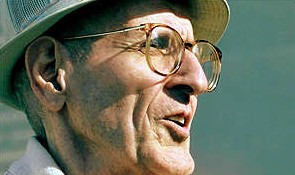 Jack Kevorkian
Homicide · USA · 1990
Jack Kevorkian (born May 26, 1928) was a controversial American pathologist. He…
130 victims
Jack Kevorkian
Homicide · USA · 1990
Jack Kevorkian (born May 26, 1928) was a controversial American pathologist. He…
130 victims
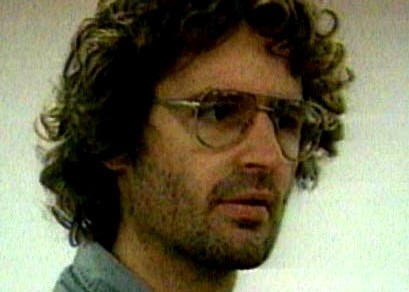 David Koresh
Homicide · USA · 1993
David Koresh (born Vernon Wayne Howell; August 17, 1959 – April 19, 1993) led t…
79 victims
David Koresh
Homicide · USA · 1993
David Koresh (born Vernon Wayne Howell; August 17, 1959 – April 19, 1993) led t…
79 victims
 Todd Hall
Homicide · USA · 1996
Todd Hall was described by neighbors as "mentally slow" and was said to have su…
9 victims
Todd Hall
Homicide · USA · 1996
Todd Hall was described by neighbors as "mentally slow" and was said to have su…
9 victims
 Jeff Emery
Murderer · USA · 1979
Jeff Emery was executed by lethal injection in Texas on December 8, 1998. He wa…
1 victim
Jeff Emery
Murderer · USA · 1979
Jeff Emery was executed by lethal injection in Texas on December 8, 1998. He wa…
1 victim
 Holly McFeeture
Murderer · USA · 2006
Holly McFeeture was convicted of poisoning Matthew Podolak with antifreeze and…
1 victim
Holly McFeeture
Murderer · USA · 2006
Holly McFeeture was convicted of poisoning Matthew Podolak with antifreeze and…
1 victim
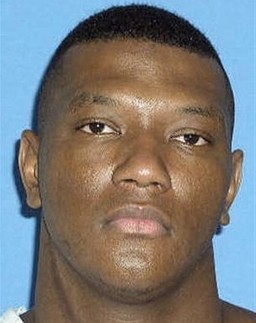 Ronald Ray Howard
Murderer · USA · 1992
Ronald Ray Howard faced execution in Texas for the murder of Department of Publ…
1 victim
Ronald Ray Howard
Murderer · USA · 1992
Ronald Ray Howard faced execution in Texas for the murder of Department of Publ…
1 victim
 Luis Morine Mata
Murderer · USA · 1977
Luis Morine Mata and his brother, Alonzo, were at their Phoenix apartment with…
1 victim
Luis Morine Mata
Murderer · USA · 1977
Luis Morine Mata and his brother, Alonzo, were at their Phoenix apartment with…
1 victim
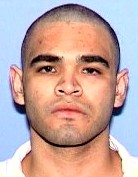 Juan Raul Navarro-Ramirez
Mass murderer · USA · 2003
Name: Juan Raul Navarro-Ramirez · TDCJ Number: 999490 · Date of birth: 03/11/19…
6 victims
Juan Raul Navarro-Ramirez
Mass murderer · USA · 2003
Name: Juan Raul Navarro-Ramirez · TDCJ Number: 999490 · Date of birth: 03/11/19…
6 victims
- Gender
- male
- Country
- Italy
- Location
- Milano, Italy
- Date of birth
- 1961
- Age at first offence
- 36
- Characteristics
- drug addict, serial rapist, kidnapping
- Victim profile
- Francesca Coelli , 52 / Alvaro Calvi, 58 / Vincenzo Zenzola, 43
- Method of murder
- Beating with a hammer
- Date(s) of murder
- March 21, 1997
- Years active
- 1997
- Date of arrest
- March 1997
- Status
-
Died in custody
Internment in a psychiatric hospital; committed suicide by hanging himself in July 2001
Background
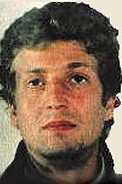
Gaspare Zinnanti was a man of thirty-four years of palermitane origins who was sought by police in relation to a series of killings in Milan in the late 1990s. He was described as a serial killer and was also referred to as a “serial killer” in police statements and subsequent expert comments.
Zinnanti grew up with a difficult childhood. He was an orphan of a father, and he grew up and stayed in an institution until the age of fourteen. He lived a life involving drugs, and he later completed military service, which seemed to put him back on track. He decided to marry and look for work, but the marriage did not go well, and at work he had frequent arguments with his superiors.
He had a history of living with heroin, hashish, and Roipnol, and he was involved in theft, car theft, and robberies of shops. He also engaged in prostitution. When not in prison, he slept at the Central Station, on benches, and sometimes at the home of an acquaintance. He later spent a total of six years in prison. After that, he met Francesca Coelli.
Zinnanti later had a relationship with Francesca Coelli. Their relationship ended in March 1997 after an afternoon in which he used a hammer to strike her on the head.
His mother, Maria Letizia, lived in Magenta (Milano). Zinnanti said he had only had a few encounters with her in recent years. He was described as the only child of a truck driver and a housewife.
People
- Gaspare Zinnanti — defendant/suspect, who confessed to multiple homicides and also described motives related to “purification” and “saving” other souls.
- Francesca Coelli — victim; fifty-two years old; an ex-divorced teacher, wealthy, who lived in an elegant apartment in via Vanvitelli in the Città Studi district; her body was found on 21 March.
- Genoveffa Nuzzo — victim; forty years old; a housewife; she was pushed from the platform at the Sondrio station of the yellow metro line and survived after hospital care.
- Alvaro Calvi — victim; fifty-eight years old; ex-sailor and ex-cash porter, retired; he lived in viale Monza; his body was discovered on 22 March by his brother-in-law.
- Vincenzo Zenzola — victim; forty-three years old; a drug addict; he had small prior police records; his body was found in an abandoned building in via Sibari after being recovered on Zinnanti’s directions.
- Lucio Carluccio — head of the Squadra Mobile, who discussed the objective findings emerging in the case.
- Laura Cairati — prosecutor who discussed the findings and described the status of evidence and investigations.
- Gianluigi Ponti — professor of forensic psychopathology and criminology at the Università di Milano; he conducted three interviews with Zinnanti and concluded he was affected by severe and acute schizophrenia with very high social dangerousness.
- Renato Bricchetti — gip who declared Zinnanti non imputabile and annulled the trial in Corte di Assise.
- Francesco De Fazio — criminologist who commented on the case and said it should not be defined as a serial killer, describing instead a mystical purification delirium linked to mental pathology.
- Francesco Bruno — criminologist who commented on the murders as a “mass murder.”
- Rosario Spina — pm who requested as a safety measure fifteen years of detention in a psychiatric hospital.
- Alessandro Vianello — occasional companion during a robbery; described as twenty-seven years old, from Mestre, and as a drug addict.
- “Sandro” — occasional accomplice in a robbery of a radio journalist near the Central Station; Zinnanti cooperated with him.
- The brother of Francesca Coelli — the person who found her body (the record says the body was found by the brother on 21 March).
- The custodian of the building in via Vanvitelli — the person who found a hammer in the trash.
- The journalist radiofonica — a radio journalist who was robbed of 73 mila lire by Zinnanti and an occasional accomplice “Sandro” and who recognized him from photos.
Timeline
- 1992 — Zinnanti met Francesca Coelli.
- March 1997 — the relationship between Zinnanti and Francesca Coelli ended when Zinnanti used a hammer and struck her on the head.
- 21 March — Francesca Coelli’s body was found by her brother.
- 22 March — Alvaro Calvi’s body was found by his brother-in-law; Zinnanti later directed police to the body of Vincenzo Zenzola.
- March 1997 (12 March mentioned) — Genoveffa Nuzzo was pushed onto the metro tracks at the Sondrio station while waiting for a train.
- March 1997 (late March) — Zinnanti was arrested while committing a robbery near the Stazione Centrale di Milano.
- July 2001 — Zinnanti was found dead by hanging himself in the psychiatric facility.
- 13 March 1998 — the gip Renato Bricchetti declared Zinnanti non imputable due to complete mental infirmity and annulled the trial in Corte di Assise.
- 24 March 1997 — multiple expert and journalistic descriptions of the killings and Zinnanti’s motives were provided (including statements carrying ANSA datelines).
The offence
Zinnanti was accused in connection with a series of homicides in Milan.
Homicide of Francesca Coelli
Zinnanti struck Francesca Coelli on the head with a hammer during an afternoon in March 1997, injuring her mortally. Her body was found by her brother on 21 March. He had lived with her and described the relationship as more sexual in nature, with the break occurring in March 1997.
When Zinnanti confessed, he said he had told himself he had heard Francesca say: “Tu sai cosa devi fare”. In that confession context, the record includes his belief that Francesca had asked him to kill her.
Homicide of Genoveffa Nuzzo attempt
On a Sunday morning, Zinnanti was connected to a robbery near the Stazione Centrale, where a journalist recognized him from photos published by newspapers. The record then describes that Zinnanti later moved through the Central Station and entered the metro, stopping at line yellow station Sondrio.
Before the train passed, Zinnanti placed his hand on the back of Genoveffa Nuzzo and pushed her off the platform onto the tracks. Genoveffa Nuzzo was taken to hospital for a head trauma and cerebral edema. She was operated on, remained in coma for eleven days, and was ultimately saved.
The confession presented in the record included an explanation connected to his feelings of lacking “air,” and his view that he needed to do something before dying. The record states that he pushed the woman onto the tracks because he “mancava l'aria” and “doveva 'fare qualcosa prima di morire'”.
A prosecutor and police investigators stated that there were no objective confirmations yet “per il momento” regarding the attempted homicide, referring to the attempt against Genoveffa Nuzzo.
Homicide of Alvaro Calvi
On the same day as the incident involving Genoveffa Nuzzo, Zinnanti went to viale Monza, where he had a friend of long standing, Alvaro Calvi. Calvi accepted Zinnanti in his monolocale until he wanted to stay. The record describes a homosexual relationship between them.
Zinnanti struck Alvaro Calvi on the head with a hammer, killing him. Calvi’s body was found on Saturday 22 March by his brother-in-law.
In Zinnanti’s confession, he said: “Gliel'ho letto negli occhi che mi chiedeva di ucciderlo”.
Homicide of Vincenzo Zenzola
After killing Calvi, Zinnanti was described as homeless and directed himself to the Stazione Centrale, where he encountered Vincenzo Zenzola. Zenzola was described as a drug addict of forty-three years and as a person recorded by police for small prior offences.
Zinnanti agreed to follow Zenzola into an abandoned building area in via Ripamonti, on the outskirts of the south of the city. The next morning, the record states Zinnanti woke up alone and Zenzola’s head was “sfondata,” indicating severe head injury.
The record states that Zinnanti confessed the homicide to the police, which recovered the body in an building in via Sibari.
In the confession described in the record, Zinnanti said he had committed an act of “purificazione”.
The record further describes that Zenzanti confessed that his motive involved “purificazione” and “salvation” of the victims, and it presents statements including “Io volevo bene […] io non li odiavo […] non volevo che soffrissero, la vita è triste, è fatta di tanti passaggi, si deve passare da uno stadio all'altro, io volevo far del bene”.
Confession and alleged motive
Zinnanti confessed to the police and provided explanations for why he killed. The record indicates he initially had a number of retractions, then provided a complete confession.
The record includes that he stated Francesca had asked him: “Tu sai cosa devi fare”. Regarding Alvaro Calvi, Zinnanti said: “Gliel'ho letto negli occhi che mi chiedeva di ucciderlo”. Regarding Vincenzo Zenzola, the record states he described the act as “purificazione”.
The record also states that he pushed Genoveffa Nuzzo onto the tracks because he “mancava l'aria” and “doveva 'fare qualcosa prima di morire”. It also includes his statement: “Io volevo bene […] io non li odiavo […] non volevo che soffrissero, la vita è triste, è fatta di tanti passaggi, si deve passare da uno stadio all'altro, io volevo far del bene”.
The record reports that the phrasing was “frasi sconnesse, deliranti” and that this led the substitutes procurators to request a psychiatric assessment.
Evidence and investigative findings
Police statements included claims that objective findings emerged on the killings of Francesca Coelli, Alvaro Calvi, and Vincenzo Zenzola. Regarding the attempted homicide of Genoveffa Nuzzo, investigators expressed doubt, stating that there were “nessun riscontro, per il momento” on that attempt.
Investigators said Zinnanti had been frequenting Francesca Coelli for a long time and was living with her, and he also frequented Alvaro Calvi. A hammer used for the first murder was found in the trash by the custodian of the building in via Vanvitelli where Coelli lived.
When Zinnanti was captured, the record states his pants were stained with blood and he had not changed clothes for a week. Investigators also stated that a second hammer used to kill had not been found; Zinnanti said he had thrown it into a garbage container, and police were verifying where it was bought.
Zinnanti reportedly expressed confusion about the dates of the offences but investigators considered that he had articulated “un disegno coerente” and had expressed “alcuni pensieri razionali”.
The record also provided details of reconstructions:
- It said Zinnanti first admitted killing Francesca Coelli, and police found her on Friday 21 March in her apartment on via Vanvitelli. The body was described as kneeling on a carpet with the skull cracked by a hammer, and the record suggested death may have occurred even 10–12 days earlier.
- It said he then claimed to have resumed relations with Alvaro Calvi and killed him, with Calvi’s body discovered the day after in the monolocale in viale Monza.
- It said police linked the two murders through Zinnanti, while he continued to kill another person, Vincenzo Zenzola. His body was described as semi-nude, with lowered pants, and was found the day after on indication by Zinnanti in an abandoned building in the outskirts south of Milan, in via Sibari.
Arrest and related events
Zinnanti’s arrest was linked to a robbery and to his recognition by a journalist.
The record stated that Zinnanti was arrested at around 13.30 on Sunday when he was in the area of the Stazione Centrale and police were searching for him, officially as “teste-chiave” for two murders but in practice as suspect no. 1.
The record stated that shortly before, a radio journalist had been robbed of 73 mila lire by Zinnanti together with an occasional accomplice called “Sandro” and that the robbery involved a syringe. Two Polfer agents intervened after the journalist reported that she had recognized in one of the robbers the man whose photos had appeared in newspapers. Zinnanti ended up at the police station and made initial admissions there, followed by a complete confession.
The record also states that arrest may have “salvato” the accomplice Alessandro Vianello of 27 years from Mestre, who was also described as a drug addict, and also “qualche 'barbone' della Stazione Centrale” whom Zinnanti wanted “non soffrissero più”. Zinnanti was described as having stopped because he feared reaction: “non volevo che reagissero”.
Psychological assessment and mental condition
A psychiatric assessment was requested due to the disconnected and delusional nature of parts of Zinnanti’s confession.
Professor Gianluigi Ponti met Zinnanti during three interviews. The record states that Ponti concluded Zinnanti was “affetto da una grave e acuta schizofrenia e dotato di elevatissima pericolosità sociale”.
Zinnanti was described as believing his actions were guided by supernatural forces. The record states that a crucifix spoke to him, he heard voices, and he sensed presences in a concert of hallucinations. The record states that he believed he was offered salvation and he killed people who gave him affection as part of this belief.
The record also stated that Zinnanti’s illness course was not predictable and that the chances of recovery were very low.
Trial and legal status
Zinnanti was found to be unable to stand trial due to mental incapacity. The record states that the gip Renato Bricchetti declared him non imputabile in that he was totally mentally infirm. In this sense, the record states that Bricchetti annulled the process in Corte di Assise.
The record also describes that Zinnanti had to be held indefinitely in a psychiatric hospital for the judiciary in Reggio Emilia, with checks every six months to monitor his health conditions.
It also reports that the pm Rosario Spina had requested as a safety measure fifteen years of detention in the psychiatric hospital.
Outcome
Zinnanti was detained in a psychiatric hospital for the judiciary and remained there for an indefinite period. In July 2001, agents found his body, and he was reported to have committed suicide by hanging himself in the prison facility where he was held.
Aftermath
A police reconstruction and press commentary described competing expert interpretations of whether the killings could be called serial murders.
Criminologist Francesco De Fazio said he excluded defining Zinnanti as a serial killer, saying “I suoi - dice De Fazio - non sono omicidi seriali, manca la spinta perversa che muove il serial killer. Qui piuttosto sembra di essere di fronte ad un delirio di purificazione”. The record also states that De Fazio described the case as “delirio paranoicale con base mistica” and linked it to psychiatric pathology.
Criminologist Francesco Bruno said the murders showed “più che di un serial killer si rileva la mano di un mass murder (omicida di massa)”. The record further reports that Bruno explained that “Il serial killer - spiega Bruno - è sano di mente e comincia ad uccidere da giovane.” It said Bruno considered that Zinnanti seemed to have started late, saying: “Ha ucciso prima gli amici per arrivare, se non fosse stato arrestato, a sopprimere chissà quanta gente”. It also quotes Bruno about mass murder and a “missionario” pat pathology: “E' un mass murder - dice Bruno - perchè sembra avere la tipica patologia mentale del 'missionario' che agisce ad una spinta interiore incontrollabile. Da qui un comportamento disorganizzato che lo porta a lasciare un'infinità di tracce e ad essere arrestato presto”.
The record also includes a police characterization of Zinnanti’s conduct during interrogation. Investigators described him as apparently mild, well-mannered, and affable, but also as having contradictory personality traits. In delusional moments, he said he wanted to “salvare” other souls, and investigators described an episode where he told one investigator that a new victim was needed in that moment to continue his mission: “salvare” was explicitly reported in the record, and the investigator later experienced a “brivido” when Zinnanti said that a new victim was needed.
It also included behavioral details: the record states that he always killed from behind as if he did not want to face their gaze; he approached victims from behind when they were quiet and serene, struck them quickly and suddenly, and then, if necessary, delivered additional blows. It added that his psychiatric examination might help understand when and what triggered the murderous madness.
Other details
The record states that Zinnanti was ritenuto incapace di intendere e di volere and dangerous to others and himself, leading judges to order immediate internment in a judicial psychiatric hospital, with a requirement to stay there for at least ten years.
He was described as having a recent prison stay that had ended two months before the press coverage dated 24 March 1997.
The record also indicates an additional description of his alleged sexual and social attributes: Zinnanti was described as having relationship preferences with omosessuali and as keeping relationships with women “solo per convenienza”.
The record includes discussion of a “mascella di sangue” linkage between three murders and mentions that a hammer used for the first offence was found in the trash. The record also states that police verified aspects of the case including places of purchase for the missing second hammer.

Spotted an error, or have more information about this case?