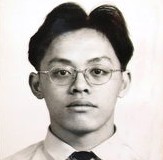
Chiang Kuo-ching
Innocent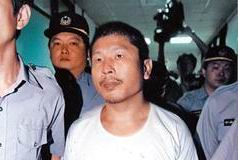 Chen Chin-hsing
Murderer · Taiwan · 1997
Chen Chin-hsing was executed by firing squad on October 6, 1999. Pai Hsiao-yen…
4 victims
Chen Chin-hsing
Murderer · Taiwan · 1997
Chen Chin-hsing was executed by firing squad on October 6, 1999. Pai Hsiao-yen…
4 victims
 Serafino Pelizzioni
Innocent · United Kingdom · 1865
The Negretti Murder Case The Golden Anchor, a pub in London EC1, was owned by e…
0 victims
Serafino Pelizzioni
Innocent · United Kingdom · 1865
The Negretti Murder Case The Golden Anchor, a pub in London EC1, was owned by e…
0 victims
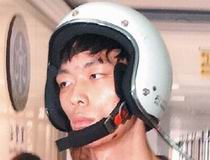 Cheng Chieh
Mass murderer · Taiwan · 2014
Cheng Chieh (鄭捷) was a 21-year-old university student. He was a second-year stu…
4 victims
Cheng Chieh
Mass murderer · Taiwan · 2014
Cheng Chieh (鄭捷) was a 21-year-old university student. He was a second-year stu…
4 victims
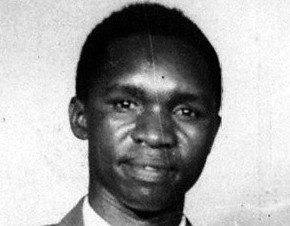 Joseph Kibweteere
Mass murderer · Uganda · 2000
Joseph Kibweteere led a breakaway sect known as the Movement for the Restoratio…
1000 victims
Joseph Kibweteere
Mass murderer · Uganda · 2000
Joseph Kibweteere led a breakaway sect known as the Movement for the Restoratio…
1000 victims
 Dr. Wouter Basson
Murderer · 1992
Wouter Basson (born July 6, 1950) was a South African cardiologist and the form…
230 victims
Dr. Wouter Basson
Murderer · 1992
Wouter Basson (born July 6, 1950) was a South African cardiologist and the form…
230 victims
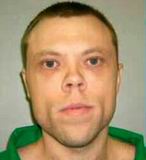 Jeffrey Motts
Murderer · USA · 1995
Jeffrey Brian Motts was executed by lethal injection in South Carolina on May 6…
3 victims
Jeffrey Motts
Murderer · USA · 1995
Jeffrey Brian Motts was executed by lethal injection in South Carolina on May 6…
3 victims
 Albert Foulcher
Murderer · France · 1993
Albert Foulcher was described as a former insurance agent and a gun enthusiast.…
5 victims
Albert Foulcher
Murderer · France · 1993
Albert Foulcher was described as a former insurance agent and a gun enthusiast.…
5 victims
 Daniel Matthew Carter
Homicide · USA · 2002
July 16, 2002 — Jack Carter bled to death after a violent struggle with Daniel…
1 victim
Daniel Matthew Carter
Homicide · USA · 2002
July 16, 2002 — Jack Carter bled to death after a violent struggle with Daniel…
1 victim
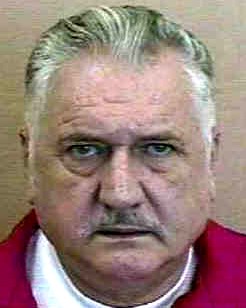 Zane Brown Hill
Murderer · USA · 1990
Zane Brown Hill was 62 years old, and he was from Buncombe County. He was execu…
1 victim
Zane Brown Hill
Murderer · USA · 1990
Zane Brown Hill was 62 years old, and he was from Buncombe County. He was execu…
1 victim
- Gender
- male
- Country
- Taiwan
- Location
- Taipei, Taiwan
- Date of birth
- 1976
- Age at first offence
- 20
- Characteristics
- miscarriage of justice, rape
- Victim profile
- A five-year-old girl surnamed Hsieh
- Method of murder
- ???
- Date(s) of murder
- September 12, 1996
- Years active
- 1996
- Date of arrest
- October 2, 1996
- Status
-
Acquitted / overturned
Executed on August 13, 1997 by lethal injection to put him to sleep then he was shot in the head; exonerated on September 13, 2011
Name
Chiang Kuo-ching (江國慶)
Status / Legal outcome
A military court acquitted Chiang Kuo-ching in a posthumous trial on September 13, 2011, after an extraordinary appeal sought to reopen the case.
Chiang had been executed on August 13, 1997 by lethal injection to put him to sleep then he was shot in the head. His exoneration followed findings that his statements were made against his will and that forensic re-examination could not prove Chiang’s involvement in the murder.
Timeline
- September 12, 1996 — Chiang Kuo-ching was caught after a five-year-old girl's remains were found in the drain outside a toilet at the Air Force Command headquarters.
- September of the same year (1996) — Chiang Kuo-ching was indicted by military prosecutors on charges of raping and murdering a young girl at the Air Force Command Headquarters compound on Renai Road in Taipei.
- October 1996 — Military prosecutors indicted Chiang Kuo-ching on charges of raping and murdering a young girl at the Air Force Command Headquarters compound on Renai Road in Taipei.
- Late 1996 — Chiang Kuo-ching recanted his confession during his trial, saying he admitted to the crime only because he was tortured while being interrogated by military investigators.
- May 24 (year not stated) — The Supreme Prosecutors’ Office Special Investigation Division concluded that Chiang was not guilty of the crime.
- May (year before September 2011, last year as described) — The Military Supreme Court Prosecutors’ Office filed an extraordinary appeal with the Military Supreme Court to reopen the case.
- June (year not stated) — A task force comprising members from Taipei and Taichung district courts, and the military court was established.
- September 13, 2011 — The Military Northern District Court handed down the ruling acquitting Chiang Kuo-ching in a posthumous trial.
- September 14, 2011 — The acquittal was described as having been handed down by the Military Northern District Court and it was presented to Chiang’s mother by an official.
- February 2, 2011 — President Ma Ying-jeou visited the family of Chiang Kuo-ching and promised to clear Chiang’s name in a speedy manner.
- August 13, 1997 — Chiang Kuo-ching was executed by lethal injection and then shot in the head.
- Three months before August 13, 1997 — Hsu Jung-chou confessed to the rape-murder of the girl.
- 2003 — Hsu Jung-chou was jailed again after sexually assaulting two five-year-old girls.
- Late last year (year not stated) — Hsu Jung-chou was released.
The offence
Chiang Kuo-ching was convicted of sexually abusing and murdering a five-year-old girl.
The girl’s remains were found in the drain outside a toilet at the Air Force Command headquarters.
Investigation
Findings leading to the acquittal included that Chiang’s statements were made against his will.
Forensic re-examination concluded that blood-soaked toilet paper and a knife used as evidence against Chiang could not prove Chiang’s involvement in the murder.
Investigators re-examined evidence and compared DNA and fingerprints with those of service members in the air force at the time.
Investigators concluded that DNA and palm prints belonging to Hsu Jung-chou (許榮洲) were present at the scene of the crime.
Arrest / custody and interrogation
While in custody, Chiang was tortured into admitting to the crime he did not commit.
Prosecutors said Chiang was tortured during questioning, including exposure to strong lights and being forced to watch a video of the girl’s autopsy.
Prosecutors said Chiang was threatened with an electric prod and deprived of sleep while being forced to undergo strenuous physical activities.
One account described that Chiang underwent 37 hours of interrogation and torture after investigators did not make progress investigating the murder for three weeks.
Chiang cried out that he was not innocent and said he would remember every person’s name who tortured him and who falsely accused him of rapping the girl.
Chiang wrote letters to his family with the names of everyone who had betrayed him and tortured him.
Chiang later confessed to the crime after being tortured, and the air force closed the investigation.
Trial
Chiang was indicted by military prosecutors in October 1996 on charges of raping and murdering a young girl at the Air Force Command Headquarters compound on Renai Road in Taipei.
During his trial in late 1996 and 1997, Chiang recanted his confession, saying he admitted to the crime only because he was tortured while being interrogated by military investigators.
After a military court convicted Chiang, an appeals court voided the verdict and ordered the case retried.
The Air Force Command intervened by putting the case in the hands of the panel of judges who originally convicted Chiang, and they found him guilty again in the new trial.
Sentencing
Chiang was executed on August 13, 1997.
Appeals
An extraordinary appeal was filed by the Military Supreme Court Prosecutors’ Office to reopen the case.
Control Yuan findings led to the case being reopened, following findings of discrepancies.
A task force comprising members from Taipei and Taichung district courts, and the military court was established in June.
The Military Northern District Court handed down the acquittal ruling on September 13, 2011.
Outcome
The Military Northern District Court acquitted Chiang Kuo-ching in a posthumous trial on September 13, 2011.
The ministry stated that it was the final verdict and it would help Chiang’s family apply for national compensation.
The Supreme Prosecutors’ Office Special Investigation Division concluded on May 24 that Chiang was not guilty.
The ministry said the court ruled that Chiang’s statements were made against his will and that the blood-soaked toilet paper and knife used as evidence against Chiang were re-examined by forensic experts, who concluded that they could not prove Chiang’s involvement in the murder.
Aftermath
An official with the ministry’s Judicial Department, Shen Shih-wei (沈世偉), delivered a copy of the ruling to Chiang’s mother, Wang Tsai-lien (王彩蓮), at her apartment.
Chiang’s attorney, Greg Yo (尤伯祥), and two other attorneys were in the court to hear the ruling.
Greg Yo said Chiang’s family was expected to receive about NT$100 million (US$3.3 million) in compensation.
Greg Yo called on Taipei district prosecutors to quickly complete an investigation into the role and responsibility of former minister of national defense Chen Chao-min (陳肇熹敏) and other military officers in the wrongful execution.
Wang Tsai-lien said: “I will bring the acquittal ruling to my son and my husband’s shrines.”
Wang Tsai-lien added that she would not forgive those military officials responsible and wanted to see the verdicts against former air force counterintelligence official Ko Chung-ching (柯仲慶) and others.
The Supreme Prosecutors’ Office charged a new suspect, Hsu Jung-chou (許榮洲), with the girl’s murder; Hsu’s case was pending in the Taipei District Court.
Prosecutors said Hsu left bloody palm prints at the scene of the crime, and a DNA test confirmed those were his.
A separate narrative described that after Chiang’s execution, Chiang’s father embarked on a mission to clear his son's name and died last year without seeing it come true.
Control Yuan instructed the case to be reopened after finding discrepancies the same year.
President Ma Ying-jeou apologized personally to Chiang Kuo-ching’s family and vowed to clear Chiang’s name in a speedy manner.
Ma said: “I am here to tell the whole world that Chiang Kuo-ching is innocent,” during a visit to Chiang’s family.
Ma told Chiang’s mother that he could understand the sorrow and pain she sustained over what had happened to her only son 15 years ago.
Ma said he personally held up the execution of suspects convicted in a murder case because he detected possible flaws in the probe and trial when serving as justice minister in 1996.
Ma also said: “the government will clear Chiang's name.”
Ma apologized to Chiang’s family and cautioned that it would still take time to see Chiang’s name cleared through the judicial system.
Ma instructed the Ministry of National Defense and the Ministry of Justice to help Chiang’s family apply for national compensation and find out who should be held responsible for the mishandling of the case.
Ma promised not to take sides in the new investigation.
The president offered informal compensation of NT$200,000 to Chiang’s family, and Defense Minister Kao Hua-chu offered an apology along with NT$50,000 in compensation.
Chiang was described as an air force conscript serviceman.
Chiang’s father worked at the cooperative of the camp, and in relation to the later suspect it was stated that Hsu Jung-chou’s father called for the utmost caution in the new investigation and court trial so that his son will not be mistakenly charged and convicted like Chiang.
Hsu Jung-chou (new suspect)
Hsu Jung-chou (許榮洲) was arrested by Taipei prosecutors.
Taipei prosecutors said Hsu admitted to being responsible in the rape-murder case 15 years ago.
Hsu confessed to the crime three months before Chiang’s execution.
Hsu was arrested after being caught sexually assaulting a six-year-old girl at a bowling court, and he said: “I say I did it, you all say I didn't!”
Investigators ignored Hsu’s statement because a medical report said Hsu was subnormal.
Hsu escaped the murder charge but was still sent to military prison for the bowling alley incident.
After his release, Hsu sexually assaulted two five-year-old girls and went to jail again in 2003.
A mental examination report confirmed Hsu to be a paedophilia.
It was stated that Hsu was a victim of domestic violence and was forced to help the father slaughter 200 to 300 geese daily.
Hsu was released late last year.
Other details
Control Yuan findings included that a military court was censured over the case, citing seven major flaws in the trial.
In one account, a colleague of Chiang alleged that Chiang might have been involved in the rape and murder of a five-year-old girl surnamed Hsieh (謝), whose body had been found on an air base six days earlier.
Judicial authorities said former air force commander-in-chief Huang Hsien-jung ordered the air force’s counterintelligence unit to provide assistance in the investigation.
In one account, investigators found a tissue paper with the girl’s blood and Chiang’s semen in a dustbin at the toilet, leading investigators to believe he was the murderer.
A task force later found that Chiang had masturbated in the toilet and some drops of his semen fell onto the tissue, and they said the girl's blood had spilled on the toilet when she was killed.
In a description of the trial and evidence, it was stated that the “evidence” against Chiang was tissue in the bathroom that had his DNA, and it was alleged that it was not his sperm but snot from his nose.
Spotted an error, or have more information about this case?