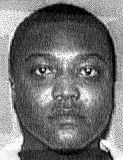
Anthony Graves
Mass murderer? David Housler
Mass murderer? · USA · 1994
Court of Criminal Appeals of Tennessee: State of Tennessee v. David G. Housler…
4 victims
David Housler
Mass murderer? · USA · 1994
Court of Criminal Appeals of Tennessee: State of Tennessee v. David G. Housler…
4 victims
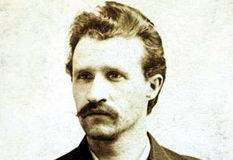 August Spies
Mass murderer? · USA · 1886
August Vincent Theodore Spies (December 10, 1855 – November 11, 1887) was an an…
7 victims
August Spies
Mass murderer? · USA · 1886
August Vincent Theodore Spies (December 10, 1855 – November 11, 1887) was an an…
7 victims
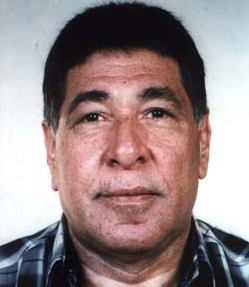 Gameel Al-Batouti
Mass murderer · USA · 1999
Gameel Al-Batouti (also rendered “Gamil ElBatouty” or “El Batouty” in U.S. offi…
216 victims
Gameel Al-Batouti
Mass murderer · USA · 1999
Gameel Al-Batouti (also rendered “Gamil ElBatouty” or “El Batouty” in U.S. offi…
216 victims
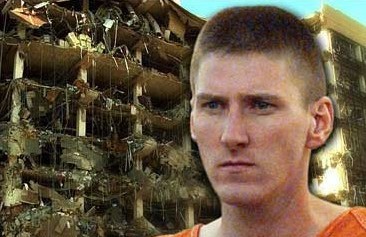 Timothy McVeigh
Mass murderer · USA · 1995
Timothy James McVeigh (April 23, 1968 – June 11, 2001) was a United States Army…
168 victims
Timothy McVeigh
Mass murderer · USA · 1995
Timothy James McVeigh (April 23, 1968 – June 11, 2001) was a United States Army…
168 victims
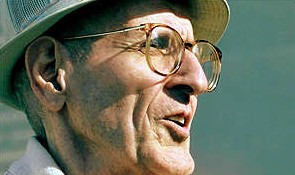 Jack Kevorkian
Homicide · USA · 1990
Jack Kevorkian (born May 26, 1928) was a controversial American pathologist. He…
130 victims
Jack Kevorkian
Homicide · USA · 1990
Jack Kevorkian (born May 26, 1928) was a controversial American pathologist. He…
130 victims
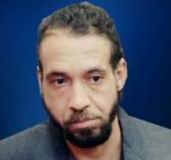 Julio Gonzalez
Mass murderer · USA · 1990
Julio Gonzalez was sentenced to 174 twenty-five-year sentences (a total of 4,35…
87 victims
Julio Gonzalez
Mass murderer · USA · 1990
Julio Gonzalez was sentenced to 174 twenty-five-year sentences (a total of 4,35…
87 victims
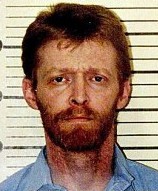 Daryl Keith Holton
Mass murderer · USA · 1997
Defendant: Daryl Keith Holton (described as a Gulf War veteran). · Victims (fou…
4 victims
Daryl Keith Holton
Mass murderer · USA · 1997
Defendant: Daryl Keith Holton (described as a Gulf War veteran). · Victims (fou…
4 victims
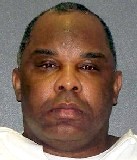 Jonathan Green
Murderer · USA · 2000
Jonathan Green was convicted by a Montgomery County jury of capital murder for…
1 victim
Jonathan Green
Murderer · USA · 2000
Jonathan Green was convicted by a Montgomery County jury of capital murder for…
1 victim
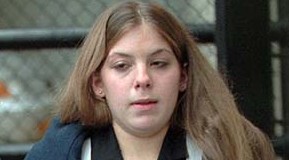 Amy Grossberg
Homicide · USA · 1996
Amy Grossberg (born 1978) dated Brian C. Peterson while both were students at R…
1 victim
Amy Grossberg
Homicide · USA · 1996
Amy Grossberg (born 1978) dated Brian C. Peterson while both were students at R…
1 victim
 Stacey Schoeck
Murderer · USA · 2010
Stacey Schoeck was convicted in connection with the murder-for-hire killing of…
1 victim
Stacey Schoeck
Murderer · USA · 2010
Stacey Schoeck was convicted in connection with the murder-for-hire killing of…
1 victim
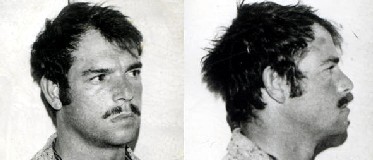 Manuel Delgado Villegas
Serial killer · Spain / Italy / France · 1964
Manuel Delgado Villegas, also known as El Arropiero, was born in Seville, Spain…
48 victims
Manuel Delgado Villegas
Serial killer · Spain / Italy / France · 1964
Manuel Delgado Villegas, also known as El Arropiero, was born in Seville, Spain…
48 victims
- Gender
- male
- Country
- USA
- Location
- Brazoria County, Texas, USA
- Date of birth
- August 29, 1965
- Age at first offence
- 27
- Characteristics
- arson, abuse, murder for hire
- Victim profile
- Bobbie Davis, 45, Nicole Davis, 16, and four little children: D’Nitra, 9, Brittany, 6, Lea Erin, 5, and Jason, 4
- Method of murder
- St abbing with knife - Hitting with a hammer - Shooting
- Date(s) of murder
- August 18. 1992
- Years active
- 1992
- Date of arrest
- —
- Status
-
Acquitted / overturned
Sentenced to death on November 7, 1994; exonerated October 27, 2010
Case record: Anthony Graves
Background
Anthony Graves was convicted in 1994 of assisting Robert Carter in multiple murders in 1992.
Graves was released from a Texas prison on October 27, 2010, after Washington-Burleson County District Attorney Bill Parham filed a motion to dismiss all charges that had resulted in Graves being sent to death row 16 years earlier.
The offence
The murders took place in the small town of Somerville, Texas, in 1992.
The victims were:
- Bobbie Davis, 45
- Nicole Davis, 16
- D’Nitra, 9
- Brittany, 6
- Lea Erin, 5
- Jason, 4
Three weapons were used: a knife, a hammer and a .22 calibre gun.
To cover up the killings, the house was set on fire.
Soon afterwards, Robert Carter, father of one of the victims, was arrested. He confessed to having taken part in the killings. Carter was executed in 2000.
Anthony Graves’ trial also took place in 1994. The main witness for the prosecution was Carter, who named Graves as his accomplice. The jury gave Graves the death penalty.
Two weeks before Carter was scheduled to be executed in 2000, he provided a statement saying he lied about Graves’s involvement in the crime. He repeated that statement minutes before his execution: “Anthony Graves had nothing to do with it. ... I lied on him in court.”
Charles Sebesta, then district attorney, did not believe Carter.
Even after he no longer held the post, Sebesta held to his beliefs, calling Graves “cold-blooded” and taking out an ad in two Burleson County newspapers in 2009 to dispute media reports criticizing the conduct of prosecutors. Sebesta acknowledged it was not his strongest case: “I've had some slam-dunk cases,” and “It was not a slam-dunk case.”
Investigation
The evidence against Graves relied primarily on Carter’s testimony that Graves was his accomplice, and on jailhouse statements purportedly overheard by law enforcement officers.
Over the years, increasing evidence raised doubts about the validity of the conviction. Students in a University of St. Thomas journalism class worked with The Innocence Project at the University of Houston to review the Graves case in detail.
Nicole Casarez, the journalism professor who taught the class, and one of her students interviewed Carter’s brother. Their work included an affidavit and other evidence gathered to help persuade the 5th Circuit Court of Appeals to order a hearing, which eventually led to the new trial.
Casarez said: “I think the dismissal motion filed this morning says it best: There is no credible evidence to inculpate this defendant.”
Casarez said: “I’m just thrilled that it has finally come to this. I think it was a lot of people working very hard, perhaps even divine intervention, so that it all worked out today.”
Arrest
Soon afterwards Robert Carter was arrested following the killings and his confession to having taken part in the killings.
Trial
In a trial in 1994, Robert Carter was sentenced to death.
The trial of Anthony Graves also took place in 1994.
Arthur Curry, Graves’ youngest brother, testified at Graves’ 1994 trial, telling jurors that Graves had been at home sleeping at the time when the murders occurred. Jurors did not believe him.
Arthur Curry said: “The sun couldn't shine any brighter,” and “It's just like celebrating a resurrection, almost, because it was almost like a death in our family. But it was a slow death, continuously, just waiting for that demise.”
Graves’ appellate attorneys, Jay Burnett and Roy Greenwood, knew it was far less, and they were soon convinced their client had no knowledge of or participation in the crime, just as he had claimed since the moment of his arrest.
Sentencing
Anthony Graves was sentenced to death on November 7, 1994.
Appeals
In 2006, the U.S. Court of Appeals for the Fifth Circuit overturned Graves’ conviction and ordered a new trial after finding that prosecutors elicited false statements and withheld testimony that could have influenced the jurors.
A three-judge panel said he deserved a new trial after ruling that prosecutors elicited false statements from two witnesses and withheld two statements that could have changed the minds of jurors.
After D.A. Parham began to reassemble the case and review the evidence, he hired former Harris County assistant district attorney Kelly Siegler as a special prosecutor.
Siegler said: “After months of investigation and talking to every witness who's ever been involved in this case, and people who've never been talked to before, after looking under every rock we could find, we found not one piece of credible evidence that links Anthony Graves to the commission of this capital murder. This is not a case where the evidence went south with time or witnesses passed away or we just couldn't make the case anymore. He is an innocent man,”
Siegler said: “This is not a case where the evidence went south with time or witnesses passed away or we just couldn't make the case anymore,” and “He is an innocent man.”
Outcome
After Parham began reassembling the case and reviewing the evidence, Parham filed a motion to dismiss all charges that had resulted in Graves being sent to death row.
Graves was released from a Texas prison on October 27, 2010.
The prosecutor filed a motion to dismiss charges that had sent Graves to Texas’ death row for most of his adult life.
Aftermath
Graves returned to his mother’s home in Brenham and no longer characterized as “cold-blooded killer” in the prosecutor’s earlier description.
Graves’ attorney, Jimmy Phillips Jr., said: “The first place he wanted to go is to go hug his mama,” and “He is a free man, and he's home.”
Phillips said Graves called his mother to tell her he was coming home, and by the time Doris Curry returned home, Graves was already there, surrounded by family and friends.
Doris Curry said: “I hugged him and I hugged him and I cried and we both cried and we hugged and we cried,” and “He said: 'Mama, it's over. Mama, 18 years we've fought this fight a long time. It's over. Justice has been done for me.' ”
Doris Curry said: “A mother knows her child,” and “I know what kind of person he was. He wasn't that person they built him up to be.”
Doris Curry said: “He's lost a lot,” and “But he can build his life on what he has and move on,”
Doris Curry also said: “He's lost a lot. He was 26 years old when they took him. Now he's 45. He's got grandchildren he's never touched.”
Bill Parham said: “He's an innocent man,” and “There is nothing that connects Anthony Graves to this crime.”
Parham said: “I did what I did because that's the right thing to do.”
An attorney for Graves said Graves was released from Burleson County Jail, where he had been awaiting a retrial.
Timeline
- 1992 — The murders occurred in Somerville, Texas.
- 1994 — Anthony Graves was tried and sentenced to death; Robert Carter was sentenced to death.
- November 7, 1994 — Anthony Graves was sentenced to death.
- March 3, 2006 — The federal 5th Circuit Court decided to award Anthony Graves a new trial.
- 2006 — The U.S. Court of Appeals for the Fifth Circuit overturned Graves’ conviction and ordered a new trial after finding prosecutors elicited false statements and withheld testimony.
- May 31, 2000 — Robert Carter was executed; minutes before his execution he said: “Anthony Graves had nothing to do with it. ... I lied on him in court.”
- 2009 — Charles Sebesta took out an ad in two Burleson County newspapers to dispute media reports criticizing the conduct of prosecutors.
- October 27, 2010 — Anthony Graves was released from a Texas prison after a motion to dismiss all charges.
- Wednesday (release date in report) — Bill Parham gave Graves his release and said, “There is nothing that connects Anthony Graves to this crime. I did what I did because that's the right thing to do.”
Other details
Graves was described as 45 years old at release; the report described Doris Curry as a 62-year-old woman and Arthur Curry as 37.
The evidence described the murders as “butchery of a family in Somerville.”
The case involved the prosecutor dispute described as an ad in two Burleson County newspapers in 2009.
The trial of Graves after appellate proceedings was described as set to begin in February 2011 in Brenham, in Washington County, Texas.
Spotted an error, or have more information about this case?