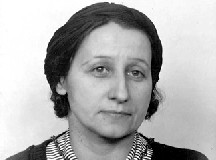
Sue Logue
Murderer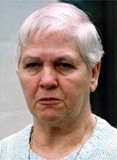 Marie Noe
Murderer · USA · 1949
Marie Noe was convicted in June 1999 of murdering eight of her children. Betwee…
8 victims
Marie Noe
Murderer · USA · 1949
Marie Noe was convicted in June 1999 of murdering eight of her children. Betwee…
8 victims
 Winnie Ruth Judd
Murderer · USA · 1931
Winnie Ruth Judd (January 29, 1905 – October 23, 1998) was a Phoenix, Arizona m…
2 victims
Winnie Ruth Judd
Murderer · USA · 1931
Winnie Ruth Judd (January 29, 1905 – October 23, 1998) was a Phoenix, Arizona m…
2 victims
 Alice Wynekoop
Murderer · USA · 1933
Name: Alice Wynekoop Alice Wynekoop was sentenced to 25 years in prison on Marc…
1 victim
Alice Wynekoop
Murderer · USA · 1933
Name: Alice Wynekoop Alice Wynekoop was sentenced to 25 years in prison on Marc…
1 victim
 Frances Kidder
Murderer · United Kingdom · 1867
Frances Kidder (c. 1843 – 2 April 1868) was executed by hanging in front of Mai…
1 victim
Frances Kidder
Murderer · United Kingdom · 1867
Frances Kidder (c. 1843 – 2 April 1868) was executed by hanging in front of Mai…
1 victim
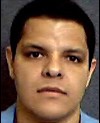 Marco Antonio Montez
Murderer · USA · 1987
Marco Antonio Montez was convicted of aggravated murder and sentenced to death,…
1 victim
Marco Antonio Montez
Murderer · USA · 1987
Marco Antonio Montez was convicted of aggravated murder and sentenced to death,…
1 victim
 David Kevin Hocker
Murderer · USA · 1998
March 21, 1998 — David Kevin Hocker stabbed and beat his boss, Jerry Wayne Robi…
1 victim
David Kevin Hocker
Murderer · USA · 1998
March 21, 1998 — David Kevin Hocker stabbed and beat his boss, Jerry Wayne Robi…
1 victim
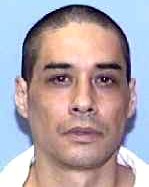 Perry Allen Austin
Murderer · 1992
Perry Allen Austin TDCJ Number: 999410 Date of birth: 06/23/1959 Sex: male Race…
1 victim
Perry Allen Austin
Murderer · 1992
Perry Allen Austin TDCJ Number: 999410 Date of birth: 06/23/1959 Sex: male Race…
1 victim
 Sandy Lee Locklear
Murderer · USA · 2012
Sandy Lee Locklear was the wife of Amos Hatfield, 66. Locklear was also connect…
2 victims
Sandy Lee Locklear
Murderer · USA · 2012
Sandy Lee Locklear was the wife of Amos Hatfield, 66. Locklear was also connect…
2 victims
- Gender
- female
- Country
- USA
- Location
- Edgefield, Edgefield County, South Carolina, USA
- Date of birth
- 1896
- Age at first offence
- 45
- Characteristics
- revenge, murder for hire
- Victim profile
- Davis W. Timmerman (the neighbor who killed her husband)
- Method of murder
- Shooting
- Date(s) of murder
- September 17, 1941
- Years active
- 1941
- Date of arrest
- November 16, 1941
- Status
-
Executed
Sentenced to death on January 26, 1942; executed by electrocution on January 15, 1943 (the first woman ever electrocuted in South Carolina)
Background
Sue Logue was a teacher and a farmer's wife in South Carolina. Her husband, Wallace Logue, had previously been killed by their neighbor, Timmerman, over a feud concerning a dead calf. Sue Logue later arranged for someone to kill Timmerman.
Rumors said that Strom Thurmond had had an affair with Sue when he was a superintendent at the school where Sue worked as a teacher. Lore included a tale of Sue and Strom being “caught in the act” in the superintendent’s office.
The offence
Sue Logue hired Clarence Bagwell to kill their neighbor, Timmerman.
The killing followed a dispute in which Davis Timmerman’s mule got into Wallace Logue's field and kicked and killed Logue's calf. Logue demanded that Timmerman pay him $20 for the calf, and Timmerman agreed. Logue later went to Timmerman’s rural store and decided he wanted $40 in restitution instead of $20, and Timmerman refused to pay. Logue became infuriated, grabbed an ax handle, and began beating Timmerman. Timmerman pulled a gun he kept hidden in a drawer, shot twice, and killed Logue. Timmerman was said to have locked the body in store and, despite being seriously injured, drove to Edgefield to report the shooting to then Sheriff L.H. Harling. Sheriff Harling, Coroner John Hollingsworth, and Solicitor Jeff Griffith drove back to the store. Based on their interpretation of the evidence, Timmerman was held over for trial. After the trial the jury ruled Timmerman acted in self-defense and he was acquitted.
After the acquittal, Logue's widow, Sue Logue, and her brother, George Logue, did not agree with the jury's verdict. They hired Joe Frank Logue, George and Wallace's nephew, giving him $500 to find somebody to kill Timmerman. Joe Frank was an officer with the Spartanburg Police Department and he hired Clarence Bagwell to do the job.
A year after Wallace died, Joe Frank and Bagwell went to Timmerman's store. Joe Frank waited in the car while Bagwell went in and asked for a pack of cigarettes (some say it was a pack of gum). When Timmerman turned to get the item, Bagwell fired five shots at point-blank range with a .38 caliber revolver, killing him instantly. Joe Frank and Bagwell returned back to Spartanburg and carried on as if nothing happened.
Bagwell was a heavy drinker and during one of his binges bragged to a young woman that he had made $500 for killing a man. The woman went to police. When Bagwell was questioned, he learned that he had been seen at Timmerman's store on the day of the murder. Other reports said he was spotted casing the store prior to the murder as well. Feeling trapped, Bagwell confessed and fingered Joe Frank as well. Joe Frank admitted hiring Bagwell, and told authorities that the money had come from his aunt and uncle, Sue and George Logue.
Investigation
On Sunday, Nov. 16, 1941, newly elected Sheriff Wad Allen and Deputy W.L. “Doc” Clark picked up the warrants from magistrate A.L. Kemp and headed for Sue Logue's home. Someone had warned George Logue that the law was on the way. Logue and a sharecropper, Fred Dorn, ambushed the two officers. Sheriff Allen died after being shot in the head and Deputy Clark was shot in the stomach and arm. Clark was able to wound both men before staggering from the house and making his way to Highway 378 where he was picked up by a passing motorist. Gov. R.M Jeffries later ordered state patrolmen and deputies from Saluda County to arrest Logue and Dorn.
With dozens of officers surrounding the house and officials wanting to avert further bloodshed, they appealed to then local Circuit Court Judge Strom Thurmond, a Logue family friend, to try to reason with the Logues. Thurmond walked alone across the yard and into the house. The Logues followed his advice and surrendered a short time later. Two days later, Deputy Clark died. Logue's friend, Fred Dorn, died the day before.
Four months later, George, Sue and Bagwell were tried for Timmerman's murder. The three-day trial was held in Lexington County with Solicitor Griffith serving as prosecutor. The jury took only two hours to convict the trio.
Trial
The three-day trial for Timmerman's murder was held in Lexington County. Solicitor Griffith served as prosecutor. The jury took only two hours to convict George, Sue, and Bagwell.
Sentencing
Sue Logue was sentenced to death on January 26, 1942.
On Jan. 15, 1943, Sue Logue was electrocuted.
Appeals
No appeal details were provided.
Outcome
Sue Logue was executed by electrocution on January 15, 1943, after being sentenced to death on January 26, 1942.
George Logue and Clarence Bagwell also took their place in the electric chair less than an hour after Sue Logue was executed.
Joe Frank Logue received the death penalty for his participation in the killing and his execution date was set for Jan. 23, 1944. Shortly before midnight, Gov. Olin D. Johnston visited Joe Frank and as a result of that visit, Johnston commuted Joe Frank Logue's sentence to life.
Within 10 years, Joe Frank Logue was given a job with SLED as a bloodhound handler and trainer. In 1960, 37 of the state's 40 sheriffs supported Joe Frank's bid for parole.
Aftermath
There were later reports and discussion about disputed details of the Logue-Timmerman feud. The store and the Logue home were still standing.
The blood-stained arrest warrant was kept on file at the Edgefield County Courthouse until someone walked off with it, an action that angered current Solicitor Donnie Meyers, who collected documents, newspaper accounts and anecdotes on the feud. The story attracted attention across the US and was written up in numerous detective magazines.
Books available at the Tompkins Library in Edgefield were:
- The Guns of Meeting Street, by T. Felder Dorn, a descendant of Fred Dorn, priced at $25
- Wanton Woman, by Anna Flowers, priced at $29
Other details
Sue Logue sat on the back seat with Strom as she was driven from the women’s penitentiary to the death house at the main penitentiary in Columbia. According to the driver, they were “huggin' and kissin' the whole day”.
Sue Logue was concerned about her appearance. On the evening before her execution she cried softly as her long black hair was shaven off.
On January 15, 1943, Sue went to the electric chair. She padded across the floor in white socks (according to one report she also had white sports sandals), wearing a white open-necked blouse with a lace handkerchief in the pocket, grey slacks, and a towel arround her shaven head. The towel was left on while she was strapped in, and only removed just before the copper electrode was attached to her head.
At 6:18 a.m. Sue received her first surge. Her body jerked and was lifted about four inches high. The face mask fell off, revealing facial contortions and bulging eyes.
Less than an hour after Sue was executed, George and Bagwell took their place in the electric chair.
One book reported that Strom Thurmond accompanied Sue on the trip to the “death house” and had relations with her during the trip, according to Thurmond’s driver interviewed for the book.
From “Ol’ Strom: An Unauthorized Biography of Strom Thurmond”, Randall Johnson, a black man who supervised “colored help” at the State House and often served as driver and messenger, drove Sue from the women’s penitentiary to the death house at the main penitentiary in Columbia. In the back seat with her, he said many years later, was Thurmond, then an Army officer on active duty. Johnson said: “They were ‘a-huggin’ and a-kissin’ the whole day,” and Thurmond later as governor considered a trusted driver.
In whispered “graveyard talk” — the kind of stories not to be told outsiders — the word around SLED (State Law Enforcement Division) was that Joe Frank said his aunt Sue was the only person seduced on the way to the electric chair.
The execution was described as the first and only woman to die in the electric chair in South Carolina.


Spotted an error, or have more information about this case?