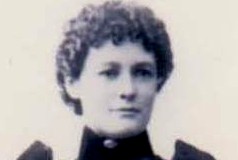
Martha Needle
Serial killer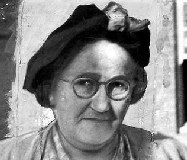 Caroline Grills
Serial killer · Australia · 1947
Caroline Grills (born Caroline Mickelson; 1890 – October 1960), was an Australi…
4 victims
Caroline Grills
Serial killer · Australia · 1947
Caroline Grills (born Caroline Mickelson; 1890 – October 1960), was an Australi…
4 victims
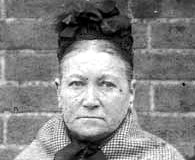 Amelia Dyer
Serial killer · United Kingdom · 1880
Amelia Dyer was convicted for the murder of Doris Marmon. She was known as a “b…
100 victims
Amelia Dyer
Serial killer · United Kingdom · 1880
Amelia Dyer was convicted for the murder of Doris Marmon. She was known as a “b…
100 victims
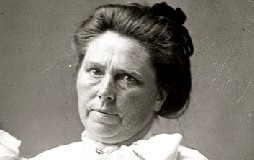 Belle Gunness
Serial killer · USA · 1880
Belle Gunness was Norwegian-born. She was born as Brynhild Paulsdatter Størseth…
42 victims
Belle Gunness
Serial killer · USA · 1880
Belle Gunness was Norwegian-born. She was born as Brynhild Paulsdatter Størseth…
42 victims
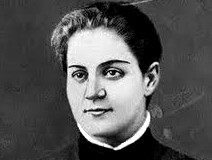 Jane Toppan
Serial killer · USA · 1887
Jane Toppan (1880-1901) was a nurse from Boston, Massachusetts. Another record…
31 victims
Jane Toppan
Serial killer · USA · 1887
Jane Toppan (1880-1901) was a nurse from Boston, Massachusetts. Another record…
31 victims
 Maria Swanenburg
Serial killer · Netherlands · 1880
Maria Catherina Swanenburg (Leiden 9 September 1839 - Gorinchem 11 April 1915)…
27 victims
Maria Swanenburg
Serial killer · Netherlands · 1880
Maria Catherina Swanenburg (Leiden 9 September 1839 - Gorinchem 11 April 1915)…
27 victims
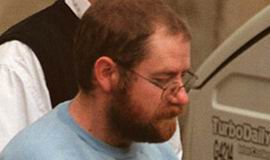 John Justin Bunting
Serial killer · Australia · 1992
John Justin Bunting (born 4 September 1966 in Inala, Queensland) was an Austral…
11 victims
John Justin Bunting
Serial killer · Australia · 1992
John Justin Bunting (born 4 September 1966 in Inala, Queensland) was an Austral…
11 victims
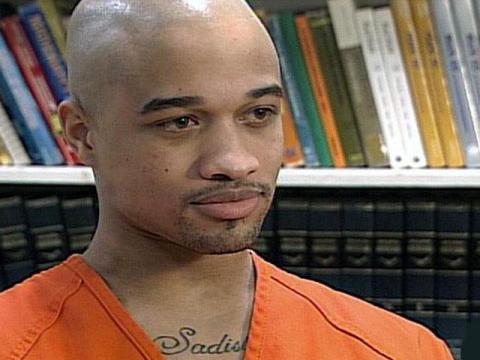 Ulysses Handy
Murderer · USA · 2006
Ulysses Handy III was 24 when he walked into court and entered pleas regarding…
3 victims
Ulysses Handy
Murderer · USA · 2006
Ulysses Handy III was 24 when he walked into court and entered pleas regarding…
3 victims
 John Earl Bush
Murderer · USA · 1982
Defendant: John Earl Bush Victim: Frances Julia Slater Status: Executed by elec…
1 victim
John Earl Bush
Murderer · USA · 1982
Defendant: John Earl Bush Victim: Frances Julia Slater Status: Executed by elec…
1 victim
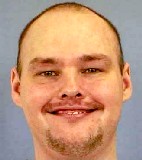 Jan Michael Brawner
Mass murderer · USA · 2001
In December 1997, Jan Michael Brawner married Barbara Craft. In March 1998, the…
4 victims
Jan Michael Brawner
Mass murderer · USA · 2001
In December 1997, Jan Michael Brawner married Barbara Craft. In March 1998, the…
4 victims
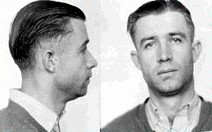 David Benjamin Knight
Murderer · USA · 1935
Howard C. Speakman and Judge Earl Anderson were involved in the case. Deputy C.…
1 victim
David Benjamin Knight
Murderer · USA · 1935
Howard C. Speakman and Judge Earl Anderson were involved in the case. Deputy C.…
1 victim
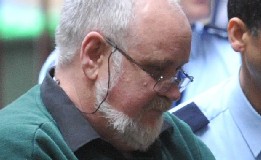 John Coombes
Serial killer · Australia · 1984
John Leslie Coombes was convicted of murdering and dismembering childcare worke…
3 victims
John Coombes
Serial killer · Australia · 1984
John Leslie Coombes was convicted of murdering and dismembering childcare worke…
3 victims
- Gender
- female
- Country
- Australia
- Location
- Melbourne, Victoria, Australia
- Date of birth
- April 9, 1863
- Age at first offence
- 22
- Characteristics
- poisoner, parricide, attempted rape
- Victim profile
- Her husband, Henry Needle / Her three children, Mabel, 3, Elsie, 6, and May, 4 / The brother of her fiance, Louis Juncken
- Method of murder
- Poisoning (arsenic)
- Date(s) of murder
- 1885 - 1894
- Years active
- 1885–1894
- Date of arrest
- May 1894
- Status
-
Executed
Executed by hanging at the Old Melbourne Gaol on October 22, 1894
Case record: Martha Needle
Status / outcome
Martha Needle was executed by hanging at the Old Melbourne Gaol on October 22, 1894.
Martha Needle was executed at 8.00am on 22 October 1894. When asked for last words after insisting her own innocence, Martha replied, "I have nothing to say."
Timeline
- 23 February 1885 — Little Mabel Needle died after a short illness.
- 4 October 1889 — Henry Needle died of a mysterious illness.
- 28 February 1885 — One of the children, Mabel, sickened and died.
- 1890 — Elsie died later in 1890.
- May 1890 — May died later that year (as described in the run-on account of deaths).
- 15 May 1894 — Louis Juncken died (after suspected poisoning).
- June 1894 — Herman travelled to Melbourne to handle late brother's affairs, ate a meal prepared by Martha, and suddenly became ill; he later recovered and then became ill again after eating breakfast.
- 8.00am on 22 October 1894 — Martha Needle was executed.
- 22 October 1894 — Martha Needle was hanged at the Old Melbourne Gaol.
- 15 July 1920 — Alexander Newland Lee, the son of Martha's older sister Ellen, was hanged at Adelaide Gaol for the April 1 murder of his wife Muriel.
- 1 April 1920 — Muriel Lee was murdered (April 1 murder referenced).
- 2 July 2012 — Russell Robinson’s article titled "The Black Widow of Richmond Martha Needle killed five with poison" was published (as included in the run-on text).
Background / personal details
Martha Needle was born near Morgan, South Australia in 1863. In one version of her biography, Martha was born Martha CHARLES on the 9 April 1863 on the Murray River near Morgan in South Australia. She was described as an attractive woman with a kindly disposition, but she grew up in a violent and abusive household and had shown signs of mental instability from an early age.
At 17, Martha married Henry Needle at North Adelaide. In 1882 she gave birth to a daughter Mabel. Elsie was born in 1883. May was born in 1885.
The family moved to the Melbourne suburb of Richmond in 1885. The family lived in Richmond and, in one account, lived at Cubitt Street Richmond in the first years in Melbourne.
Martha's mother was described as formerly CHARLES. In June 1894, Martha's mother Mrs FORAN formerly CHARLES, who had re married David FORAN in Port Lincoln in South Australia in 1870, told a reporter at the Melbourne Argus about Martha's family details and early life.
Otto Juncken (referred to as Louis and Otto Juncken’s family in the narrative) had relatives described in a section included in the run-on text: Otto Johann Wilhelm YUNCKEN 1865-1945 was described as the son of Danish born Otto YUNCKEN 1826-1890 and Irish born Margaret Mary FITZGERALD 1835-1913, and he had 4 brothers Herman, Louis, Franz Thomas and Albert. Otto married Bertha ABRECHT 1880-1949 on the 31 July 1901 in Melbourne. The name YUNCKEN was said to have been reported as JUNCKEN but the family spell it with a 'Y'.
Henry NEEDLE was described as born in 1860 at Weedon, Northamptonshire, the son of Thomas Wilson NEEDLE b:1823 and Hannah Margaret BRAIN 1822-1908. Henry and his family were described as arriving on Ship "Forfarshire" with 5 children, Fanny, Martha, Caroline, Thomas and Henry.
Martha's half-brother was also named Daniel Foran, described as a chronic alcoholic. He died in a cell at Wallaroo, South Australia on the 29 March 1902.
The offence
Martha Needle was known for poisoning her husband, 3 children and future brother-in-law. Her known victims within the narrative included:
- Mabel Needle
- Henry Needle
- Elsie Needle
- May Needle
- Louis Juncken
Herman Juncken was described as being seized by painful violent cramps after eating lunch prepared by Martha, and he recovered, later becoming ill again after breakfast. Detectives intervened during the trap involving arsenic in tea, and Martha was charged with attempted murder before the exhumations later led to a murder charge for Louis Juncken.
Martha Needle was convicted for the murder of Louis Juncken, brother of her fiance Otto Juncken, on 15 May 1894.
Investigation / evidence
Dr. Boyd informed the police of his suspicions and a trap was set. Hermann was asked to make lunch and then was asked to sit at Martha's table one more time.
After being served a cup of tea, Hermann raised the alarm and detectives arrived as Martha was struggling with Hermann to upset the tea cup. The tea cup was found to contain enough arsenic to kill five people. Martha was charged with attempted murder.
After that initial charge, the body of Louis Juncken, interned in Lyndoch, South Australia was exhumed and samples were sent to Melbourne.
The bodies of Henry Needle and the three girls, interned in Kew, were also exhumed. All five bodies were found to contain fatal levels of arsenic and Martha was charged with the murder of Louis Juncken.
In one run-on biography section, doctors were described as baffled by Henry’s death, and later poison was detected by a forensic examination of vomit samples:
- Doctor Boyd treated Herman for suspected poisoning and took a sample of Herman's vomit and sent it to the Government laboratory for analysis.
- The analyst reported that the sample contained arsenic.
In that same biography section, it stated that:
- "Detectives WHITNEY and FRYER disinterred Louis JUNCKEN's body from the cemetery of Lyndoch in South Australia and 34 grains of arsenic were found."
- "Later the bodies of Henry Needle, and the prisoner's two children were exhumed, and traces of poison were found in all except that of May, who had been too long dead to allow of analysis."
Another part of the run-on text stated the trap contained enough arsenic to kill five people and that the contents were later found to contain about 10 grains of arsenic.
Arrest / charges
Martha Needle was initially arrested for attempted murder.
After the exhumations and tests, she was charged with the murder of Louis Juncken.
Trial
Martha Needle pleaded not guilty. Her trial lasted three days, and she was found guilty and sentenced to death. One part of the run-on text stated that Martha was pronounced guilty after a four day trial before Mr. Justice HODGES at the Melbourne Criminal Court, and another part stated the trial lasted three days before she was found guilty.
The verdict was guilty.
The jury in one excerpt returned a guilty verdict after deliberating for 40 minutes.
During trial, Martha pleaded her innocence.
Sentencing
Martha Needle was sentenced to death.
In one excerpt, Supreme Court Justice Hodge gave the death sentence, and Martha accepted it without emotion.
A quotation included in the run-on text described her demeanor: "The prisoner received the death sentence with extraordinary calmness. She walked out of the dock unassisted, with a firm step and unblanched face,'' one newspaper reported.
Execution / incarceration details
One excerpt also stated that Martha was executed at "Monday the 22 October 1894 at Old Melbourne Gaol."
When asked for last words, Martha responded, "I have nothing to say."
There was mention that Martha's death mask could be seen at Old Melbourne Gaol. The other women hanged at the Old Melbourne Gaol were described as:
- Elizabeth Scott (1863)
- Frances Knorr (1894)
- Emma Williams (1895)
The run-on text also described other execution details included in bluestone walls built during the Great Depression:
- Brighton City Council built bluestone walls to protect local beaches from erosion.
- Stones were taken from the outer walls of the Old Melbourne Gaol and included headstones of all those executed and buried on the grounds.
- Martha's stone was faced outwards and the initials MN and date is still clearly visible in the Green Point wall.
- It mentioned the initials and date of execution engraved on a stone at the head of the graves.
Appeals
No appeals or appeal outcomes were provided in the case material.
Aftermath / related information
A letter Martha wrote to Otto was included. The letter was dated "Melbourne Gaol, Monday, 4 o'clock." It said it was written on her last morning on earth, and that she received it the next day.
Martha’s letter to Otto (verbatim, with quotation marks not added because it is already in quoted form in the run-on text): "My Darling— As you wished me to write I will do so, but truly I do not know what to say to you on this my last morning on earth. In a few hours I shall be free from all sorrow, but you, dear Otto, must live on for as time. It may be a very long time or it may not, but whichever way God wishes it will be. But, never mind try to bear up under the very sad blow. Rest assured we shall meet again where there is no parting. Your good father, also poor Louis and my dear little ones will welcome you. You know, dear, Elsie and May loved you on earth they will do so in heaven. Think how they will all welcome you to our happy home on high. I must ask you not to think unkindly of me for saying what I did last night to Mr Scott. I think it right that you should know what that man did say about you but I want you to thoroughly understand that I did not believe that you ever did say so to him, and I told him so. You must not think what he said upset me, for it did not, only it annoyed me to think that such a man would tell an untruth. True, he may think he was doing right we must hope he did think so. Now you will want to know what sort of a night I have had — fairly good. You and all dear ones have been in my thoughts and prayers, dear Otto. Please read the 139th Psalm from the 7th to the 13th verse, as I have asked God to forgive me anything that I have done to displease Him, and trust to His forgiveness, so do I forgive all that have ever done me any sort of unkindness, for I know that they are very sorry now for me, be the wrong little or big. Give my everlasting love to all enquiring friends. I must now say good-by to you for a time. When you receive this you can think of me as being in a happy home with my loved ones waiting and watching for you. I know, dear Otto that you will get ready for that happy meeting with us all. With love and sympathy from your loving Martha."
A note also stated that her will was made five days before the date of death and witnessed by the sub-matron of the gaol and a law clerk. In the will, it said: "I give, devise and bequeath all my real and personal property to Otto Juncken, of Bridge Road, Richmond, for his own absolute use. I appoint the said Otto Juncken sole executor of this my will."
The only property left by the deceased was described as an amount of £25 payable under a policy of insurance on the life of the deceased by Citizens' Life Assurance Co.
Otto Juncken was described as sticking by Martha throughout and saying, "She didn't know what she was doing".
During the Great Depression, bluestone walls built by Brighton City Council included materials taken from the outer walls of the Old Melbourne Gaol. The run-on text linked these walls to engraving of initials and execution dates for those buried and executed on the grounds.
The run-on text also included a later execution described as involving Alexander Newland Lee, the son of Martha's older sister Ellen, who was hanged at Adelaide Gaol on 15 July 1920 for the April 1 murder of his wife Muriel. Muriel had been poisoned with strychnine.
Other details
Martha’s family and insurance details were included:
- After Mabel's death, Martha collected 100 pounds life insurance on Mabel's death.
- Henry Needle was insured for 200 pounds.
- Doctors were baffled by Henry's death.
- Martha spent almost all the insurance money on an elaborate family grave which she visited regularly.
One excerpt stated that Louis Juncken and his brother Otto operated a saddlery business at "137 Bridge Road, Richmond" with Otto and Louis. Another section said Martha sub-let the attached house and took in lodgers in 1891.
In 1893 Martha began an affair with Otto. The narrative stated that Louis and his other brother Herman disapproved and attempted to prevent their engagement. It stated that Martha became engaged in April 1894, and that Louis objected to his brother marrying any person who exhibited "such frightful outbursts of temper as she displayed." The mother also objected by letter on the ground of Mrs Needle's weak health.
In the narrative, Louis was described as becoming ill and dying of suspected typhoid. Another section said Louis appears to have been first poisoned on August 18, 1893 and was ill for 10 or 13 days, and then he was given another chance until April 1894 when the same symptoms returned. It stated that on the night about 7.30, Mrs Needle purchased a box of Rough on Rats. Louis then died on May 15, with Dr McColl stating it was due to exhaustion and inflammation of the stomach and membranes of the heart.
A forensic and policing sequence was described: Doctor Boyd sent a sample of vomit for analysis; the analyst reported arsenic. Police asked Hermann to ask Martha to make lunch. After the cup of tea, Hermann “blew the whistle”, summoning detectives who arrived as Martha was struggling with Hermann to upset the tea cup.
The run-on text included the statement: "Martha Needle W. Mason & Co. Photographers. c.1880s/90s. National Trust of Australia (Victoria) Old Melbourne Gaol Collection Martha Needle's death mask."
The material also included a quotation from a Melbourne newspaper about Martha’s character and behavior after condemnation. The quotation included: "None of those who are thrown into contact with Martha Needle can fathom her character. The condemned woman's mask of impenetrable reserve has confessedly baffled the governor of the gaol. Dr Shields, the Government medical officer, and both her spiritual advisers (Mr H. F Scott, Church of England chaplain, and Mrs Hutchinson, of the Salvation Army). Even to these experienced eyes the extraordinary woman is as inscrutable as the Sphinx. No hope of a reprieve has been expressed by her at any time in fact she has firmly stated that she prefers death. This sentiment does not appear to be, as is so often observed in prisoners similarly situated, the outcome of religious conviction. Mrs Needle has not manifested any of the fervency which distinguished Mrs Knorr and the young man Knox, who were recently hanged in the Melbourne Gaol. She is, notwithstanding, taking some interest in matters spiritual, as is evidenced by her choice of a Bible, a prayer book, and hymn book for regular reading. Her only reference to the crimes for which she has been condemned is the oft-repeated and unfaltering statement that she is entirely innocent, and she expresses the conviction that she will go to heaven."
In the same run-on biography portion, there were medical descriptions of Henry Needle’s death and his behavior before death, including that he refused nourishment offered by his wife and could dash nourishment away or against the wall. It stated that upon Henry's death she obtained the services of The Trustees, Executors, and Agency Company to administer for her, and a sum of £60 odd was paid to her as her third share of the £200 life policy, less expenses, with the balance invested for the benefit of the two children then living.
That run-on biography also stated:
- On the 9th December 1890, Elsie died after a three weeks' illness from "gangrenous stomatitis and exhaustion." Mr Hodgson attended her.
- After Elsie's death, Mrs Needle received the child's share of the £200—about £60.
- On the 27th August 1891, May, aged 4 years and 11 months, died from "tubercular meningitis."
- In January 1892, Mrs Needle became house keeper to the two Junckens, Otto and Louis, at Bridge road, Richmond, with the family coming from Lyndoch, South Australia.
The run-on biography included a description that Louis was first poisoned on August 18, 1893, then later again in April 1894, with vomiting fits. Another detail stated that she prepared breakfast after buying Rough on Rats and Louis was again seized with vomiting fits.
The run-on text added disputed or uncertain phrasing about timelines and medical findings by providing multiple different sequences of dates and medical interpretations; it also included statements like suspected typhoid and suspected poisoning.
No specific appeal grounds were included, and no appeal result was provided.

Spotted an error, or have more information about this case?