
Christina Walters
Murderer Megan Huntsman
Murderer · USA · 1996
Megan Huntsman was 40 at sentencing. She was a mother of three children who wer…
6 victims
Megan Huntsman
Murderer · USA · 1996
Megan Huntsman was 40 at sentencing. She was a mother of three children who wer…
6 victims
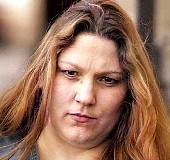 Angela Johnson
Murderer · USA · 1993
Angela Jane Johnson was convicted in federal court of aiding and abetting the m…
5 victims
Angela Johnson
Murderer · USA · 1993
Angela Jane Johnson was convicted in federal court of aiding and abetting the m…
5 victims
 Michele Kalina
Murderer · USA · 1996
Michele Kalina pleaded guilty to murder for one of five infants she initially w…
5 victims
Michele Kalina
Murderer · USA · 1996
Michele Kalina pleaded guilty to murder for one of five infants she initially w…
5 victims
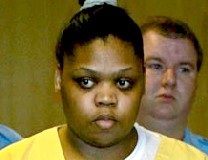 Tiffany Hall
Murderer · USA · 2006
Tiffany Hall was 24 when she was charged in September 2006. She later entered a…
5 victims
Tiffany Hall
Murderer · USA · 2006
Tiffany Hall was 24 when she was charged in September 2006. She later entered a…
5 victims
 Banita Jacks
Murderer · USA · 2007
Banita Jacks was a Washington, DC resident convicted of murdering her four daug…
4 victims
Banita Jacks
Murderer · USA · 2007
Banita Jacks was a Washington, DC resident convicted of murdering her four daug…
4 victims
 Susan Eubanks
Murderer · USA · 1996
Susan Dianne Eubanks, also referred to as Susan Eubanks, was convicted by a jur…
4 victims
Susan Eubanks
Murderer · USA · 1996
Susan Dianne Eubanks, also referred to as Susan Eubanks, was convicted by a jur…
4 victims
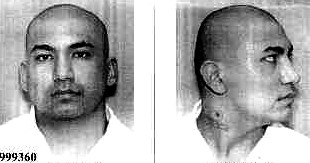 Juan Martin Garcia
Murderer · USA · 1998
Juan Martin Garcia was convicted of capital murder in Harris County, Texas, und…
1 victim
Juan Martin Garcia
Murderer · USA · 1998
Juan Martin Garcia was convicted of capital murder in Harris County, Texas, und…
1 victim
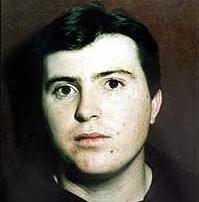 Paul Denyer
Serial killer · Australia · 1993
Paul Charles Denyer (b. 1972) was an Australian serial killer. He was serving l…
3 victims
Paul Denyer
Serial killer · Australia · 1993
Paul Charles Denyer (b. 1972) was an Australian serial killer. He was serving l…
3 victims
 Philip Ray Workman
Murderer · USA · 1981
Name: Philip Ray Workman · Status: Executed by lethal injection in Tennessee on…
1 victim
Philip Ray Workman
Murderer · USA · 1981
Name: Philip Ray Workman · Status: Executed by lethal injection in Tennessee on…
1 victim
 Colin Howell
Murderer · United Kingdom · 1991
Colin Howell (born 14 March 1959) was a Northern Irish convicted double murdere…
2 victims
Colin Howell
Murderer · United Kingdom · 1991
Colin Howell (born 14 March 1959) was a Northern Irish convicted double murdere…
2 victims
 David Lee Holland
Murderer · USA · 1985
David Lee Holland was convicted for the capital murder of Helen Barnard while i…
2 victims
David Lee Holland
Murderer · USA · 1985
David Lee Holland was convicted for the capital murder of Helen Barnard while i…
2 victims
- Gender
- female
- Country
- USA
- Location
- Fayetteville, Cumberland County, North Carolina, USA
- Date of birth
- July 15, 1978
- Age at first offence
- 20
- Characteristics
- kidnapping, robbery
- Victim profile
- Tracy Lambert, 18, and Susan Moore, 21
- Method of murder
- Shooting ( .32-caliber handgun)
- Date(s) of murder
- August 17, 1998
- Years active
- 1998
- Date of arrest
- 2 days after
- Status
-
Sentenced to death
Death sentence commuted to life in prison without the possibility of parole on December 12, 2012, after a sentence of death on July 6, 2000
Case record: Christina Walters
Background
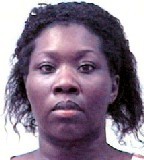
Christina S. Walters was American Indian. She was 20 years old at the time of the crime. Her date of birth was 7-15-1978. Her prior prison record was yes. Her prior occupation was unknown and her education was unknown. She was the leader of a local Crips gang.
The cases involved the murders of two white female victims: Tracy Lambert and Susan Moore. The record also involved an attempted murder of Debra Cheeseborough.
The offence
Christina Walters was convicted in the August 17, 1988, murders of 18-year-old Tracy Lambert and 21-year-old Susan Moore. She was also tried for the attempted murder of Debra Cheeseborough.
Walters admitted to shooting several .32-caliber bullets into Cheeseborough and thinking she had successfully killed her. The murders were done as a gang-initiation and the victims were chosen at random.
Walters was indicted on 4 January 1999 for:
- two counts each of first-degree murder, first-degree kidnapping, and robbery with a dangerous weapon, as well as one count each of conspiracy to commit first-degree murder, conspiracy to commit first-degree kidnapping, and conspiracy to commit robbery with a dangerous weapon.
In a second multicount indictment issued 25 January 1999, Walters was also indicted for:
- attempted first-degree murder
- conspiracy to commit first-degree murder
- assault with a deadly weapon with intent to kill inflicting serious injury
- first-degree kidnapping
- robbery with a dangerous weapon
The trial court entered judgments after the jury found Walters guilty of all charges. The jury found her guilty of both murders on the basis of premeditation and deliberation and under the felony murder rule.
During the capital sentencing proceeding, the jury recommended a sentence of death for each of the murders, and the trial court entered judgments accordingly. The trial court also sentenced her to consecutive terms of imprisonment for each of the nine other felony convictions.
The State’s evidence at trial tended to show that Walters was one of nine gang members who set out to steal a car on the evening of 16 August 1998. The gang members included Walters, Francisco Tirado, Eric Queen, John Juarbe, Ione Black, Tameika Douglas, Carlos Frink, Carlos Nevills, and Darryl Tucker. The gang gathered at and then left from Walters’s residence, a trailer at 1386 Davis Street in Fayetteville, North Carolina. All nine gang members were “Crips” but of varying subgroups called “sets.” The gang needed money, and members decided they would steal a car, drive it into the window of a pawn shop, and steal the property in the pawn shop.
Several gang members, including Walters, went to the local Wal-Mart to steal toiletry items and clothing, and to buy bullets for the occasion. The bullets were taken to the Davis Street trailer, where Tirado painted the tips blue, the color identified with the “Crips” gang, with fingernail polish from Walters’s bedroom.
Soon thereafter, Walters and an unidentified deaf black male who was not part of the gang drove Douglas, Black, and Nevills to a neighborhood location and dropped them off with instructions to find a victim to rob, to steal the victim’s car, to put the victim in the trunk of the car, and then to return to Walters’s trailer within an hour and a half.
Walters provided Nevills with a gun, and then she and the deaf black male drove away, leaving Douglas, Black, and Nevills. The three gang members walked around looking for someone to rob.
At about 12:30 a.m. on Monday, 17 August, they spotted Debra Cheeseborough leaving the Bojangles where she was the manager. Douglas, Black, and Nevills abducted Cheeseborough at gunpoint and drove around in her car with her in the backseat for a period of time before they stopped the car and put her in the trunk, also robbing her of her jewelry and money. They returned to Walters’s trailer, where the remainder of the gang gathered around the car while discussing what to do with Cheeseborough.
Thereafter, with Cheeseborough still in the trunk, Walters, Douglas, Frink, and Queen got into Cheeseborough’s car and drove her to Smith Lake, a location on the Fort Bragg military base. Walters told Cheeseborough to get down on one knee. Walters attempted to fire the gun at Cheeseborough, but it jammed. Walters said “hold up” and tried to unjam the gun. Walters then raised the gun again, this time to the level of Cheeseborough’s waist, and fired the bullet into Cheeseborough’s right side.
After the shot knocked Cheeseborough down onto her stomach, Walters shot her seven more times. The final shot went through Cheeseborough’s glasses, grazed her eyelid, and hit her thumb. Cheeseborough pretended to be dead. She was discovered the next morning by a passerby and was subsequently taken to a hospital.
Debra Cheeseborough testified that no one told Walters to shoot her, the gun jammed before any shots were fired, it was Walters who told her to go down on one knee, there was no break in the firing of the bullets sufficient for Walters to have handed the gun to any other person to shoot her, and it was Walters who shot her.
After Walters shot Cheeseborough and left her for dead, the gang members returned to Walters’s trailer and concluded that they needed a second car. Tucker, Black, Queen, and Walters rode around in Cheeseborough’s car, ultimately targeting a car driven by Susan Moore in which Tracy Lambert was a passenger. The gang trapped Moore’s car at the end of a dead-end road, and Walters handed a gun to Tucker, telling him to “go do what you got to do.”
Defendant, Frink, and Queen then drove away in Cheeseborough’s car after Queen directed Black, Tucker, and Douglas to be back at Walters’s trailer in forty-five minutes. Tucker and Douglas forced Moore and Lambert into the trunk at gunpoint, and then Black, Tucker, and Douglas returned to Walters’s trailer with the women in the trunk.
At one point during the drive, the car was stopped so the gang members could open the trunk and rob the women of their jewelry. Upon the return to Walters’s trailer, the entire gang surrounded the car and discussed who would kill the women. Despite the women’s pleas for mercy, the entire gang—half in Cheeseborough’s car and half in Moore’s car—drove to a location in Linden where the women were forced out of the trunk and executed, each by a blue-tipped bullet to the brain. Queen shot one of the women, and Tirado shot the other.
The gang members once again returned to Walters’s trailer. After talking for awhile, the group split up, with instructions from Tirado to return by 3:30 p.m. Sometime around dawn, Frink called Walters with news that some bodies had been found.
Seven members of the gang, including Walters, subsequently fled to Myrtle Beach using Moore’s cell phone to place calls to Walters’s trailer. Black and Nevills did not accompany the gang to Myrtle Beach. On Tuesday, 18 August, Juarbe and Tucker were apprehended in Cheeseborough’s car by Myrtle Beach police officers. On Wednesday, 19 August, Walters, Frink, Douglas, Queen, and Tirado were apprehended and arrested at the Bon Villa motel in Myrtle Beach in a room rented by Walters.
The record also described that Walters was convicted of randomly abducting and murdering Tracy Rose Lambert and Susan Raye Moore as part of an initiation into the Crips gang in August 1998. The jury also found Walters guilty of attempted murder for carjacking and shooting Deborah Cheeseborough several times, leaving her to die in the woods at Fort Bragg in August 1998.
Investigation
Investigators now believed a double murder and a carjacking in Cumberland County were related. Investigators said they arrested seven people, one of them a juvenile, who were allegedly involved in a Los Angeles gang initiation.
During a morning news conference, investigators told the media all seven people had been taken into custody in Myrtle Beach, S.C. The six adults had been charged with murder, kidnapping, armed robbery and conspiracy. Petitions had been filed against the juvenile, reportedly a 16-year-old female. All seven suspects were Cumberland County residents and all were under the age of 21. They all lived together in a mobile home in Cumberland County.
Preliminary reports indicated blue painted bullets, indicative of the Crips gang, were used in both crimes, which appeared to be random acts of violence. Late Wednesday night, detectives found other gang paraphernalia, Cheeseborough’s purse, and the license plates from two of the victims’ cars in the mobile home. The cars, with stolen dealer tags, were found in Myrtle Beach. Officers had a hunch the suspects were there.
The suspects were wearing gang-related blue bandanas. Cumberland County Chief Deputy Cuyler Windham said: "One of the cell phones from the victims ... there were some calls being made on that telephone Tuesday," "[The calls] came from the beach area of South Carolina."
On Monday, investigators found the bodies of Susan Raye Moore and Tracy Rose Lambert in a field in Cumberland County. Both had been shot to death execution style. Debra Cheeseborough, a manager at the Raeford Road Bojangle’s restaurant, was also found Monday after being carjacked, shot seven times and left for dead. She was recovering, and was listed in stable condition.
Michael Cheeseborough, husband of the carjacking victim, said: "I'm mad at the teachers of these guys." "Because good upbringing would not bring this about in this society."
Police formally charged six of the suspects in connection with the carjacking. Investigators said Christina Walters and a juvenile had confessed to the carjacking. Detectives said the carjacking incident that left Cheeseborough wounded was the first act of the crime spree.
Detectives said the suspects should all be back in Cumberland County by Thursday night. The suspects were believed to be members of a branch of the gang based in Los Angeles. Suspects John Juarbe and Darryl Tucker, Jr., who were found driving a victim’s car, were said to be cooperating with investigators.
Fayetteville police were investigating the carjacking. Cumberland County Sheriff Earl “Moose” Butler said there had been many violent incidents in the county that had consisted of attacks between gang members, but during his career, he had never heard of a gang member singling out someone at random for such violent attacks.
Arrest
During the investigation, investigators arrested seven people, one of them a juvenile. They took all seven suspects into custody in Myrtle Beach, S.C.
Trial
Walters was tried capitally. The jury found her guilty of all charges, specifically finding her guilty of both murders on the basis of premeditation and deliberation and under the felony murder rule.
Following a capital sentencing proceeding, the jury recommended a sentence of death for each of the murders, and the trial court entered judgments accordingly.
During the trial, the record described an evidentiary challenge and rulings, and included multiple issues raised on appeal.
Jury selection and pretrial matters
Walters contended on appeal that the trial court committed reversible error, or in the alternative plain error, by failing to order a change of venue or failing to order a special venire, thereby depriving her of a fair and impartial trial. The appellate discussion stated that Walters did not move for change of venue prior to trial as required by N.C.G.S. § 15A-957. The appellate discussion also stated that a motion for change of venue must be made prior to trial unless the trial court permits it later. It stated that she failed to preserve the argument for appellate review.
The appellate discussion also addressed the special venire question under N.C.G.S. § 15A-958 and concluded the trial court did not abuse its discretion by not ordering a special venire.
The appellate discussion addressed that Walters claimed eight of twelve seated jurors had obtained information relative to the case through the media. It stated that each juror indicated they would be fair and impartial and decide the case on evidence presented, and that Walters had no objection to two of the jurors.
Venue and special venire quotations and procedures
The appellate record described jury selection proceedings in which: THE COURT: And, Madam Clerk, would you go ahead and call another juror please for number five. THE CLERK: Richard Council. THE COURT: Thank you. Counsel, I have to make a phone call to my district attorney. If you'll give me just a moment, please. (Judge left the courtroom.) (Number five, Mr. Council, entered the courtroom.) THE BAILIFF: Sir, come on up and have a seat in number five. (A male media representative was talking to the juror, Mr. Council, as the juror walked by.) THE REPORTER: Tell that guy to quit talking to the juror, that media guy. (Bailiff, Sgt. David Farrell, directed number five, Mr. Council, in the box after Sgt. Farrell spoke to the media representative.) (The judge returned to the courtroom.) THE COURT: Remain seated. THE BAILIFF: Come to order. Court's in session.
The appellate discussion recorded that Walters contended the juror’s actions and those of the media member violated a 1 May 2000 order regarding media access, and the appellate discussion concluded there was no reversible error and also no prejudice shown.
Joinder of charges and severance
Walters contended the trial court erred by granting the prosecutor’s motion for joinder of the murders and related charges regarding Susan Moore and Tracy Lambert and the charges regarding Debra Cheeseborough. The appellate discussion concluded she did not cite a place in the transcript or record where she made a motion for severance, and that she waived her right to severance under N.C.G.S. § 15A-927(a).
Challenge for cause
Walters contended the trial court erred by denying her challenge for cause of prospective juror Kathrene Boxwell. The appellate discussion stated that Walters used only thirteen of her fourteen peremptory challenges and concluded she did not exhaust peremptory challenges as required by N.C.G.S. § 15A-1214(h).
Discovery about Rule 404(b) evidence and cross-examination about prior acts
Walters argued that the trial court erred in denying her motion for disclosure of Rule 404(b) evidence and erred in allowing cross-examination about certain prior bad acts. The appellate discussion concluded that Rule 404(b) evidence did not require disclosure as a discovery statute, and addressed cross-examination questions, including: Q. Did you say your dad almost killed a boy that you stabbed? A. I haven't stabbed no boy. Q. Did you say that? A. No, ma'am. I don't remember saying anything like that. Q. Do you remember saying the boy you stabbed was 20-something at the time? A. Unless the person who wrote this was talking about when I had a boyfriend who was trying to take my shirt off and I sliced him with a box cutter but that's not stabbing.
The appellate discussion then stated defense counsel did not object at the relevant time and concluded the issue was not properly preserved.
Statement to Detective Jo Autry and “opened the door”
During the State’s case-in-chief, the prosecutor presented evidence that after Walters’s arrest she gave a statement to Officer Chris Corcione. Officer Corcione testified that Walters stated she had shot Debra Cheeseborough, that Eric Queen had shot Tracy Lambert, and that Francisco Edgar Tirado had shot Susan Moore. When Walters testified, her defense counsel asked whether she had given another statement after giving the statement to Officer Corcione. Walters responded she had given another statement to Detective Jo Autry in which she said she had not shot Debra Cheeseborough. She testified that the statement given to Detective Autry was false and that she made it because she “was scared” and “wanted to go home.”
The appellate discussion concluded Walters “opened the door” to this line of cross-examination and overruled the assignment of error.
Admission of portions of Ione Black’s prior statement and 911 tape
Walters contended the trial court erred in overruling her objection to admission of a portion of a prior statement by Ione Black to Detective Autry and portions of Black’s telephone call to a 911 operator, including arguments under hearsay rules, Rule 404(b), and Bruton.
The appellate discussion described Black’s testimony and that Black called 911 and told the operator she had “seen some people get shot,” and that she described a couple of the people who were involved in the incidents. The appellate discussion noted the defendant objected because the tape contained a statement by Black that: "[T]hey might have killed them boys too."
The appellate discussion described that outside the presence of the jury Black told the judge she asked Tameika Douglas why they had to kill the women, and Douglas responded: "[T]hat wasn't s---because [Douglas] shot somebody last week."
The appellate discussion concluded that the 911 tape and Black’s statement to Detective Autry were properly admitted to corroborate Black’s earlier testimony, and that Bruton had no applicability because the trial was not a joint trial and the declarant took the stand.
Photographs admitted: exhibits H1 and H8
Walters argued the trial court erred by denying exclusion of two photographs, exhibit H1 and H8, depicting Susan Moore and Tracy Lambert.
The appellate discussion described exhibit H1 as: "a close-up facial view of ․ Susan Moore." The photograph showed: "some blood on the face and ․ a fly on the left closed eyelid of the victim[.] ․ [U]nder the victim's head appears to be tire tracks and the victim's left hand appears to have blue fingernail polish. No other part of the victim's body can be viewed except the left hand and the front area of the head and face."
The appellate discussion also included the trial court’s statement that the photograph was highly probative and not unduly prejudicial, including that: "[T]his photograph is highly probative, ․ finding that the position of the body is a material fact in the case and that the location of the head on what appears to be a tire track is consistent with testimony given by one of the state's witnesses who was allegedly present at the scene and witnessed the alleged murder." The trial court also stated that: "The court finds further that the amount of blood present is not excessive; that this is a fair and accurate representation based upon previous testimony that the court has witnessed of the body of the victim Susan Moore as it was observed by investigators who first arrived on the scene." The trial court added: "[The court] finds that the presence in and of itself of what appears to be a fly on the left eyelid is not unduly prejudicial or inflammatory, the court taking as a matter of common sense and judicial notice that flies do not only pitch or light upon bodies, but that they are a constant irritant to people who are alive as well and that there is no significance to be attached to the presence of the fly."
The appellate discussion also addressed exhibit H8, describing it as a photograph of Susan Moore’s and Tracy Lambert’s bodies lying in a field. The trial court found: "while it does duplicate to some degree the state's exhibit H7, ․ H8 gives a different perspective" and found it could be probative and valuable for determining relative positions. The trial court also found: "that there is nothing unduly prejudicial or gory about the picture."
The appellate court concluded the photographs were properly admitted.
Aggravating circumstance: especially heinous, atrocious, or cruel
Walters argued the trial court erred in submitting the aggravating circumstance that the murders were especially heinous, atrocious, or cruel under N.C.G.S. § 15A-2000(e)(9). The appellate discussion concluded the evidence was sufficient to support submission.
The appellate discussion summarized evidence including that:
- the victims were forced into the trunk at gunpoint while screaming and trying to escape
- the victims were locked back in the trunk after Susan Moore pled for their lives
- Queen held a gun to Tracy Lambert’s head and said: "Well, I'm about to open this b----'s third eye."
- Lambert started to cry, saying: "Oh, my God, Susan. We're going to die. We're going to die. I don't want to die."
- Queen told Lambert to shut up and then shot her in the head
- Susan Moore begged the gang not to cut her throat and asked to be shot instead
- Francisco Tirado shot Moore in the head
The appellate discussion concluded the evidence more than warranted submission of the (e)(9) aggravating circumstance for both murders.
Improper closing arguments
Walters argued about improper closing arguments in both guilt-innocence and sentencing phases.
The appellate discussion included a named example of the prosecutor’s closing argument in the guilt-innocence phase, quoting: "Over 50-some years ago, a man from England went to Germany to meet a fellow at a place called Berchtesgaden and he went over there to sign a peace treaty, and this man had a great big enormous picture window." and continued: "Now, the man from England that looked out the window [was] named Neville Chamberlain, when he looked out the window, he saw a world of peace. He saw a world of harmony. And he signed a little piece of paper, just like the one that this defendant tried to pawn off on this district attorney right here, signed a little piece of paper with that man-that other man from Germany that looked out the window. And he said we're at peace. The man from England took a little piece of paper, went back home waving it to his folks, We have peace in our time. He had no idea that he was talking to a man that, before it was over, would be responsible for the deaths of 50 million people on every continent, every sea." followed by: "He would be responsible for the death of over 50 million women and children." and: "But, ladies and gentlemen of the jury, oh, he met his match later on. Because Neville Chamberlain didn't remain in office." and: "A fellow named Winston Churchill took over. And you know what Winston Churchill told the fuhrer? We will fight you on the beaches. We will fight you in the air. We will fight you on land. We will never surrender." and: "And if these people have their way-they got up here political, economic, social and all that stuff, if they have their way, they will turn this county-this state and this country into a place of chaos." The appellate record also quoted the defendant’s objection and the trial court ruling: "[DEFENSE COUNSEL]: Your Honor, we object." THE COURT: Overruled. It included further quoted remarks: "That's what they'll do. Got 12 keys of life. The last few of which are money, mac and murder." "The State argues that defendant objected only to the portion of the prosecutor's argument that defendant's gang would “turn this county-this state and this country into a place of chaos” and did not object to the references to Adolph Hitler." The appellate discussion concluded the prosecutor’s argument was improper but found the necessary showing of prejudice was not met.
For sentencing phase closing argument, the appellate discussion included a quoted passage from the prosecutor: "You know what was once written about people who harm children? ‘And whosoever shall offend one of these little ones that believe in me, it is better that a millstone be tied about his neck and he be drowned in the depths of the sea.'"
The appellate discussion also described the prosecutor’s further remarks: "Do not delude yourself, ladies and gentlemen of the jury. Counsel will get up here and tell you how pitiful [defendant] is, and how by letting her live, she'll be able to see her children. They'll be able to see-come visit their mother. Ladies and gentlemen of the jury, the last thing that you ought to think of this person as is a mother. That's the person that put her children out of the house for this motley crew."
The appellate discussion concluded those comments did not constitute grossly improper conduct requiring intervention.
Burden-shifting issue in closing argument
Walters contended closing argument shifted the burden by commenting on her failure to call John Juarbe, Tameika Douglas, and Francisco Tirado to the stand.
The appellate discussion quoted defense counsel’s closing argument: "We didn't take one or two words out of context. We didn't take a statement here and a statement there and pull a couple words out and try to confuse you and not show you the statement. Heck, we even brought Eric Queen in here, put him on the stand and tried to get him to talk to you. He invoked his Fifth Amendment right which is his perfect right to do. End of story. We can't question him any more about that. We brought Darryl Tucker in here, put him on the stand and we asked him questions and he invoked his Fifth Amendment rights. Can't ask him questions any more. We did-we tried. In sum, we've tried to be completely up front with you. We tried to let you hear the whole story of what happened in this incident. We tried to let you hear it without emotional tirades, without smoke in [sic] mirrors. We tried to let you have the bare, cold facts and let you decide what happened. It's as simple as that."
The appellate discussion also quoted the prosecutor’s rebuttal: "Now, the defense wants you to believe that they called in Mr. Queen, they called in Mr. Tucker because they were trying to show you everything and give you a chance to hear everything because they want to be real truthful with you and make sure you know everything. Well, were there any other defendants in this case? You've got to wonder, now, let's see, what was this defendant's relationship to those two defendants? Well, when she was arrested, law enforcement tells you she comes out of the bedroom with Queen. She says in the statement you couldn't sleep with somebody in your same set, so she didn't have a relationship with Eric Queen. But she said on the stand, yeah, we were boyfriend-no, we weren't boyfriend and girlfriend but we had a sexual relationship. She comes out of the back bedroom there-by law enforcement, those two were in the back bedroom. She is so afraid of him. She is so afraid. She is so afraid she keeps his picture right beside her bed. She look like she is scared of anybody in that picture? Looks like they are on pretty good terms in that picture. Eric Queen-you reckon-you reckon Eric Queen is the boyfriend? He is the one that's caught in the bedroom with her when law enforcement catches her. You reckon there wouldn't be a chance he wouldn't unload on her if he did say anything if they put him on the stand? Probably wouldn't, would he? He's the boyfriend? Now, who else on this chart would this defendant be close to? Well, she kept saying what? Couldn't throw Tucker out. His daddy was my O.G. [original gangster], plus he's fam. He's fam. Got to let him stay there. Got to send the children away for days. I cannot have the children here. I can't do whatever. Can't throw out Tucker. Finally, she did. When he questioned her, you got to leave. Fam, brings him in. You reckon if he says anything, you can take that chance putting him on the stand, can't you, because if he says anything, she's close enough that he's not likely to hurt her, isn't he? So why don't they put John Juarbe on the stand? Why didn't they call Tameika Douglas? Why didn't they call Paco [Tirado]? She was plenty ready to unload on Paco all the way through her testimony. If you put Paco up there, I wonder what he would have said. Put Carlos Frink, Carlos Nevills, think about it. The defendant chose to call up there the two people that, if they said anything, what? Were closest to her. Most unlikely to do what? Hurt her. Remember that. Remember that. Because the defendant has said to you how truthful she was, how she tried to show you everything. "
The appellate discussion concluded the prosecutor’s argument did not amount to gross impropriety and the trial court did not err by not intervening ex mero motu.
Sentencing
Walters was sentenced to consecutive terms of imprisonment for each of the nine other felony convictions.
In addition to the capital sentencing proceedings that resulted in death recommendations and judgments for each of the two murders, the appellate discussion addressed statutory aggravating circumstances. It held that the record supported the jury’s findings of all four aggravating circumstances submitted as to each murder:
- the murder was committed while engaged in the commission of a first-degree kidnapping, N.C.G.S. § 15A-2000(e)(5)
- the murder was committed for pecuniary gain, N.C.G.S. § 15A-2000(e)(6)
- the murder was especially heinous, atrocious, or cruel, N.C.G.S. § 15A-2000(e)(9)
- the murders were part of a course of conduct that included the commission by Walters of other crimes of violence against other persons, N.C.G.S. § 15A-2000(e)(11)
The appellate discussion also concluded that nothing in the record suggested that the death sentence was imposed under the influence of passion, prejudice, or any other arbitrary factor. It conducted proportionality review and concluded the death sentence was proportionate.
Appeals
Walters appealed her convictions and capital sentences. The appellate decision concluded “NO ERROR.”
The appellate decision addressed multiple assignments of error, including:
- venue and special venire issues
- short-form murder indictment arguments
- joinder and severance issues
- challenge for cause and peremptory challenges
- Rule 404(b) disclosure and cross-examination issues
- evidentiary issues involving hotel room evidence and motions to suppress
- admission of prior statements and corroboration
- Bruton argument
- jury instructions regarding mitigating and aggravating circumstances
- ineffective assistance of counsel arguments
- admission of photographs
- submission of especially heinous, atrocious, or cruel aggravating circumstance
- closing argument issues
- burden shifting in closing argument
- reexamination of previously decided issues
Outcome
Walters was sentenced to death on July 6, 2000.
The North Carolina Court of Appeals decision concluded that there was no prejudicial error in her trial or capital sentencing proceeding and affirmed the convictions and sentence (stated as “NO ERROR”).
Aftermath
A North Carolina judge commuted the death sentences of three convicted killers, including Walters, to life in prison without the possibility of parole after ruling that race played an unjust role in jury selection.
Walters’s death sentence was commuted to life in prison without the possibility of parole on December 12, 2012.
The commutation was based on evidence presented over four weeks of hearings, stating prosecutors in each case made a concerted effort to reduce the number of black jurors. The record described that the ruling was based primarily on the words and deeds of prosecutors, including handwritten notes indicating they worked to get blacks eliminated from the pool of jurors, resulting in panels that were overwhelmingly white.
Cumberland County Superior Court Judge Gregory A. Weeks said: "This conclusion is based primarily on the words and deeds of the prosecutors involved in these cases," "Despite protestations to the contrary, their words, their deeds, speak volumes." "During presentation of evidence, the court finds powerful and persuasive evidence of racial consciousness, race-based decision making in the writings of prosecutors long buried in the case files and brought to light for the first time during this hearing."
The commutation order described that the three convicted murderers were Christina “Queen” Walters, Tilmon Golphin, and Quintel Augustine, and the record also described that Walters was a Lumbee Indian. It also described that Augustine and Golphin were black.
The record also included reactions in the courtroom, including a statement by Al Lowry: "Judge, you had your mind made up the first day," "said Al Lowry, a photo of his brother pinned to his lapel." He then yelled: "Golphin, you'll have me to deal with if you ever get your sorry ass out of here,"
Al Lowry also said: "I think Greg Weeks is as biased and as racist as the people that have been convicted," "This was a bunch of crap from day one." "I have nothing good to say about the justice system right now, because it's totally, totally broke." "... Just give me the two brothers that killed my brother and let me take justice in my own hands." "Because that's where this country needs to go."
Col. Michael Gilchrist, commander of the State Highway Patrol, said: "I'm certainly disappointed that these sentences for the convicted murders of three law enforcement officers has been set aside and that the jury's sentence will not be carried out," "Our purpose as law enforcement officers - we don't make laws, we support and enforce them and it is not out place to be critical of them." "It's important that we support the law enforcement officers that protect us and support their families as well, and that's what we're doing."
James E. Ferguson II, a Charlotte civil rights lawyer and member of the defense team in the case, said: "It's not surprising there would be a strong emotional reaction to justice being done in this case," "We understand the emotions the families might have." "But the judge said it all in his order when he said that equal justice under the law has not been a reality and what we're trying to do is come to the point where it is a reality." "... What happened here was the Legislature enacted a law, the judge heard evidence and applied that law to it. And it was a just result."
Spotted an error, or have more information about this case?