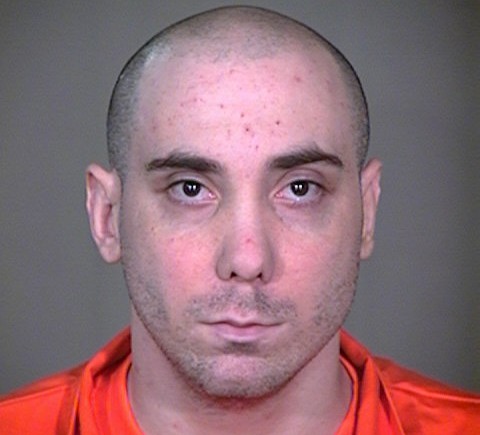
Steve Alan Boggs
Murderer Robert Martines Perez
Murderer · USA · 1994
Name: Robert Martines Perez · Other name used in proceedings: Robert Martinez P…
15 victims
Robert Martines Perez
Murderer · USA · 1994
Name: Robert Martines Perez · Other name used in proceedings: Robert Martinez P…
15 victims
 Billy Frank Vickers
Murderer · USA · 1993
Billy Frank Vickers Vickers was executed by lethal injection in Texas on Januar…
14 victims
Billy Frank Vickers
Murderer · USA · 1993
Billy Frank Vickers Vickers was executed by lethal injection in Texas on Januar…
14 victims
 Alan Matheney
Murderer · USA · 1989
The case involved Alan Matheney and the murder of Lisa Bianco. Matheney murdere…
1 victim
Alan Matheney
Murderer · USA · 1989
The case involved Alan Matheney and the murder of Lisa Bianco. Matheney murdere…
1 victim
 Donald Moeller
Murderer · USA · 1990
Donald Moeller was convicted of first-degree rape and first-degree murder invol…
1 victim
Donald Moeller
Murderer · USA · 1990
Donald Moeller was convicted of first-degree rape and first-degree murder invol…
1 victim
 Raymond Levi Cobb
Homicide · 1993
Appellant: Raymond Levi Cobb · Court: In the Court of Criminal Appeals of Texas…
2 victims
Raymond Levi Cobb
Homicide · 1993
Appellant: Raymond Levi Cobb · Court: In the Court of Criminal Appeals of Texas…
2 victims
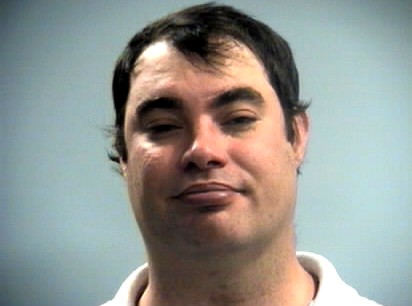 William Harry Meece
Murderer · USA · 1993
William Harry Meece was a Lexington man who was convicted of killing three peop…
3 victims
William Harry Meece
Murderer · USA · 1993
William Harry Meece was a Lexington man who was convicted of killing three peop…
3 victims
 Theodore Streleski
Murderer · USA · 1978
Theodore Streleski was a Stanford mathematician. In 1978 he bludgeoned his advi…
1 victim
Theodore Streleski
Murderer · USA · 1978
Theodore Streleski was a Stanford mathematician. In 1978 he bludgeoned his advi…
1 victim
- Gender
- male
- Country
- USA
- Location
- Maricopa County, Arizona, USA
- Date of birth
- December 1, 1978
- Age at first offence
- 24
- Characteristics
- revenge, robbery, white supremacist
- Victim profile
- Kenneth Brown, 27; Beatriz Alvarado, 31, and Fausto Jimenez, 30 (fast-food workers)
- Method of murder
- Shooting
- Date(s) of murder
- May 19, 2002
- Years active
- 2002
- Date of arrest
- June 5, 2002
- Status
-
Sentenced to death
Sentenced to death on February 21, 2006
Case record: Steve Alan Boggs
Background
Steve Alan Boggs and Christopher Hargrave formed a white supremacist organization called the Imperial Royal Guard. Hargrave met and began dating Gayle Driver, the daughter of the owners of a pawnshop. In April 2002, Hargrave began working at a Jack-In-The-Box in the Mesa/Chandler area. On May 15, 2002, Hargrave was fired from the Jack-In-The-Box for stealing. Hargrave had been living in a trailer on the Driver’s property, and he was asked to leave when he was fired from his job.
Hargrave worked at the restaurant until four days before the murder. Hargrave pledged allegiance to a racist creed, according to a prosecutor, and the militia that Boggs and Hargrave founded was called the Royal Imperial Guard.
The offence
On May 19, 2002, Boggs and Hargrave went to rob the Jack in the Box restaurant.
Hargrave dressed in his work uniform and gained entrance to the restaurant under the guise that he had been called back to work. Once inside, Hargrave distracted two employees while Boggs went through the back door. Boggs and Hargrave then took the three employees into the cooler and shot them several times in the back.
The police found that the three employees were locked in the freezer area and that the employees were shot inside the Jack in the Box freezer. Brown died in the freezer almost immediately. Alvarado and Jimenez escaped from the freezer—Jimenez dialed 911 on the telephone shortly before dying, while Alvarado lived long enough to make her way to the store’s back door.
Between 11:30 and 11:45 p.m., Luis Vargas pulled up to the Jack in the Box drive through window and heard Alvarado moaning. When Vargas approached her, she spoke with him briefly. Police Officer Beutal arrived at the Jack in the Box and also communicated with Alvarado, who stated that she was injured and “made reference to two” people still in the store. From outside the store Beutal could see Jimenez lying on the ground. Upon entering the store, the police found Jimenez and Brown deceased. The night and morning following the murders, police officers documented the crime scene. The police found shell casings, as well as bullet projectiles and fragments inside the freezer, leading to the conclusion that all three victims were shot in the freezer.
Cash registers appeared as though someone had pried them open. Less than $300 was taken from the store, with no money missing from the safe. A prosecutor said the robbers' take was about $280, not the $14,000 they expected.
After stealing money from the registers and from each victim, Boggs and Hargrave left the store. They went to a nearby bank to withdraw money using one of the victim’s stolen credit cards.
One body was found in the freezer, a second near the telephone and the third, Alvarado, was found just outside the back door. Alvarado spoke a few words to a witness and died later at a hospital.
Boggs also described a motive for the attack in a letter he wrote to Mesa police Detective Don Vogel. The letter included the statements:
"It was to rid the world of a few needless illegals. I don't feel sorry."
At closing, the prosecutor Robert Shutts quoted from the letter. Shutts also said in closing:
"This would be a military mission"
"Put Jack back in the box."
A prosecutor also said that Boggs told Vogel that he did not like Hispanics or Blacks and wanted to put Hispanics in a box and ship them back to Mexico.
Boggs had earlier confessed to Vogel that he shot Brown at least once in the back for money. Shutts said Boggs’ confession included the following statements:
"Simple motive, lives for money,"
"These people were shot and killed to eliminate witnesses. They were taken into that freezer and executed, silenced forever."
Investigation
Police officers documented the crime scene, and they found shell casings, bullet projectiles, and fragments inside the freezer.
A police criminalist testified that the casings found at the scene, bullet fragments from the scene, and bullet fragments removed from the bodies all matched the Taurus.
The DNA expert testified that DNA from the Taurus matched Hargrave at 14 locations but did not match Boggs, though the DNA expert could not eliminate Boggs as a source.
In the robbery, one of the victims managed to crawl to a nearby phone and call police, and also alert a customer, who phoned the police. Luis Vargas heard Alvarado moaning at the drive through window.
Two days after the murder, Boggs traded the murder weapon for another gun at the Driver’s pawn shop. The Drivers contacted the police, and Boggs was subsequently arrested when police confirmed the gun was the murder weapon from the restaurant.
Arrest and interviews
On May 21, 2002, Boggs pawned a Taurus handgun at a shop owned by the Drivers. Mr. Driver cleaned the gun and placed it in his safe, finding the transaction suspicious. Mrs. Driver later called the police and informed the sheriff of the Taurus that Boggs pawned a few days earlier.
On June 3, Boggs called the pawn shop and unsuccessfully requested to buy back the Taurus. Police later retrieved the Taurus from the Drivers.
Mesa Police took Boggs to the station on June 5, 2002 and interviewed him. During the June 5 interview, Detective Vogel interrogated Boggs about the Jack in the Box murders for approximately three hours. Boggs waived his Miranda rights and agreed to voluntarily answer questions.
During the June 5 interview, Boggs told several versions of what happened on the day of, and the days following, the murders.
The next day, two detectives took Boggs to secure physical evidence and transport him to his initial appearance. Boggs asked both detectives how to go about changing the story he told Vogel the previous day. At the initial appearance Boggs was appointed counsel. Afterwards, Boggs again asked one of the detectives to whom he needed to speak to change his story. The detectives arranged to bring Boggs to the interrogation room for further questioning.
During the June 6 interview, Boggs provided Detective Vogel with several varying explanations of how the murders occurred. At one point, after Vogel asked about Boggs’ son, Boggs told Vogel three times to leave him alone. Vogel did not leave the interrogation room, but asked Boggs if he wanted Vogel to leave for a few minutes. In response, Boggs began talking about how they were going to kill an innocent man and mentioned suicide.
Police videotapes showed Vogel holding Boggs, with Vogel's hands on Boggs' shoulders, during a three-hour interview on June 5, 2002. When Vogel left the room, the tape caught Boggs putting his hands to his face:
"Chris, what did you get me into?"
"Oh, my God."
Trial
The proceedings listed the presiding judge as Hon. Roland Steinle III.
The prosecutor was Vince Imbordino. The defense counsel were Gerald Gavin, Jason Leonard & Rena Glitsos. A newspaper account also referred to court-appointed attorneys seeking to save Boggs’ life as Alcantar and Nate Carr; it identified Alcantar as Hispanic and Carr as Black, and it stated that their names were Herman Alcantar Jr. and Nate Carr.
Start, verdict, and sentencing dates
On January 17, 2006, the start of trial occurred. On February 9, 2006, the verdict occurred. On February 21, 2006, sentencing occurred.
Verdict
The jury found Boggs guilty of three counts of first degree murder.
A Maricopa County Superior Court jury of 11 women and one man deliberated for about a day before reaching verdicts in the May 19, 2002 killings at a Mesa Jack In The Box at Lindsay Road and Main Street.
Evidence presented at trial
At trial, the State called Vargas to testify to Alvarado’s statements.
The court did not redact any of Vogel’s statements from the tapes.
The police videotapes of the June 5 and 6 interrogations were played for the jury during Detective Vogel’s testimony.
Aggravation phase findings
At the aggravation phase, the jury found three aggravating factors for each murder: the expectation of pecuniary gain; especially heinous, cruel, or deprived manner; and multiple homicides during commission of the offense.
Sentencing
Boggs moved to represent himself in the penalty phase, and the judge denied the motion. The judge reasoned that it was not a “wise move” and that Boggs can’t “be changing horses in the mid-stream.”
At the penalty phase, the defense presented mitigation evidence concerning Boggs’ troubled childhood and mental health evidence demonstrating Boggs’ history of hearing voices, suicidal tendencies and grand delusions.
Boggs’ expert witnesses diagnosed Boggs as suffering from post traumatic stress syndrome and bipolar disorder.
The State rebutted Boggs’ mitigating evidence by presenting evidence of the threatening letters sent to Detective Vogel and the state prosecutor.
Boggs also argued on appeal that his cooperation with the police, leading to the apprehension of Hargrave, was a substantial mitigating factor.
The jury found the mitigating evidence was not sufficiently substantial to call for leniency, and the judge sentenced Boggs to death.
Appeals and published opinions
An Arizona Supreme Court opinion was referenced as CR-05-0174-AP, described as pending before the Arizona Supreme Court. The publication label included INMATE 195143. The referenced case was State of Arizona v. Steve Alan Boggs CR-05-0174-AP.
Outcome
Boggs was sentenced to death on February 21, 2006.
Other details
The victims were identified as Alvarado, Brown, and Jimenez. The trial narrative specified that at the 24-hour store, the employees locked the doors after ten o’clock so that only the drive through window was open. It stated that between 11:15 and 11:30, all three employees were shot inside the Jack in the Box freezer. The narrative identified Kenneth Brown as 27, Beatriz Alvarado as 31, and Fausto Jimenez as 30.
The newspaper account stated that Boggs and co-defendant Christopher Hargrave, 24, founded a militia called the Royal Imperial Guard and pledged allegiance to a racist creed. It also stated that Hargrave worked at the restaurant until four days before the murder and said that he was hoping to collect his final check that night, as reported in a telephone interview.
Defense attorney Herman Alcantar Jr. argued that Hargrave had more of a motive to kill than Boggs and felt he had been unjustly fired over a dispute about $45 missing from a cash register. Alcantar said in closing arguments that Hargrave told Boggs:
"I'm going to go in there and show them who's boss."
The newspaper account said that police videotapes showed Vogel holding Boggs and showed a three-hour interview on June 5, 2002.
The aggravating circumstances listed included pecuniary gain, multiple homicides, and especially heinous, cruel or depraved.
Spotted an error, or have more information about this case?