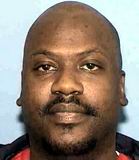
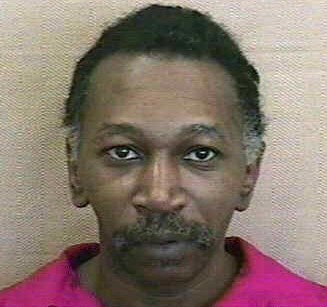
Curtis Giovanni Flowers
Mass murderer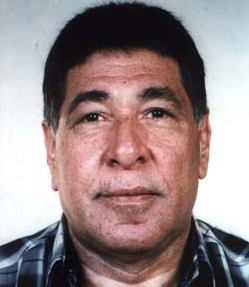 Gameel Al-Batouti
Mass murderer · USA · 1999
Gameel Al-Batouti (also rendered “Gamil ElBatouty” or “El Batouty” in U.S. offi…
216 victims
Gameel Al-Batouti
Mass murderer · USA · 1999
Gameel Al-Batouti (also rendered “Gamil ElBatouty” or “El Batouty” in U.S. offi…
216 victims
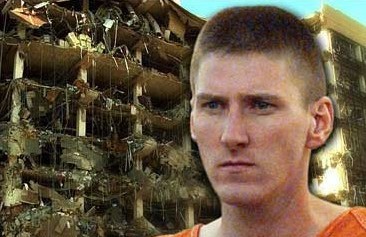 Timothy McVeigh
Mass murderer · USA · 1995
Timothy James McVeigh (April 23, 1968 – June 11, 2001) was a United States Army…
168 victims
Timothy McVeigh
Mass murderer · USA · 1995
Timothy James McVeigh (April 23, 1968 – June 11, 2001) was a United States Army…
168 victims
 Julio Gonzalez
Mass murderer · USA · 1990
Julio Gonzalez was sentenced to 174 twenty-five-year sentences (a total of 4,35…
87 victims
Julio Gonzalez
Mass murderer · USA · 1990
Julio Gonzalez was sentenced to 174 twenty-five-year sentences (a total of 4,35…
87 victims
 David Burke
Mass murderer · USA · 1987
David Augustus Burke (May 18, 1952–December 7, 1987) was an employee of USAir,…
43 victims
David Burke
Mass murderer · USA · 1987
David Augustus Burke (May 18, 1952–December 7, 1987) was an employee of USAir,…
43 victims
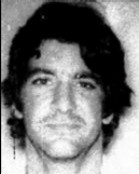 George Jo Hennard
Mass murderer · USA · 1991
George Jo Hennard carried out a mass killing at a Luby’s Cafeteria in Killeen,…
23 victims
George Jo Hennard
Mass murderer · USA · 1991
George Jo Hennard carried out a mass killing at a Luby’s Cafeteria in Killeen,…
23 victims
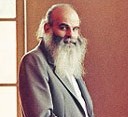 Ronald Gene Simmons
Mass murderer · USA · 1987
Ronald Gene Simmons was a retired United States Air Force sergeant. Over the Ch…
16 victims
Ronald Gene Simmons
Mass murderer · USA · 1987
Ronald Gene Simmons was a retired United States Air Force sergeant. Over the Ch…
16 victims
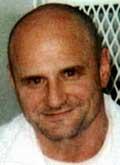 Jessie Joe Patrick
Murderer · USA · 1989
Jessie Joe Patrick was convicted of capital murder and was executed by lethal i…
1 victim
Jessie Joe Patrick
Murderer · USA · 1989
Jessie Joe Patrick was convicted of capital murder and was executed by lethal i…
1 victim
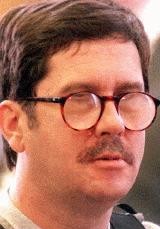 Lewis Lent
Murderer · USA · 1983
Lewis Lent was sentenced to life in prison without parole in Massachusetts in 1…
8 victims
Lewis Lent
Murderer · USA · 1983
Lewis Lent was sentenced to life in prison without parole in Massachusetts in 1…
8 victims
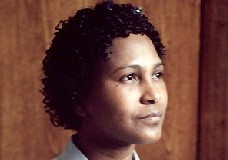 Wanda Jean Aallen
Murderess · USA · 1981
Wanda Jean Allen was born on August 17, 1959 and was executed on January 11, 20…
2 victims
Wanda Jean Aallen
Murderess · USA · 1981
Wanda Jean Allen was born on August 17, 1959 and was executed on January 11, 20…
2 victims
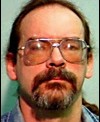 Michael Robert Tucker
Murderer · USA
Michael Robert Tucker was sentenced to death on November 15, 1988.
2 victims
Michael Robert Tucker
Murderer · USA
Michael Robert Tucker was sentenced to death on November 15, 1988.
2 victims
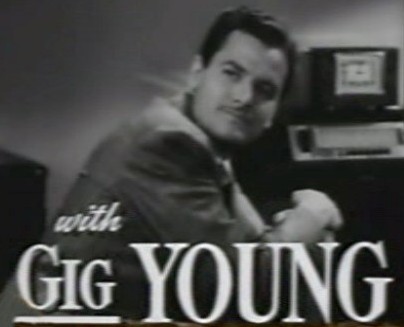 Gig Young
Murderer · USA · 1978
On 19 October 1978, three weeks after his marriage, Gig Young and his wife were…
1 victim
Gig Young
Murderer · USA · 1978
On 19 October 1978, three weeks after his marriage, Gig Young and his wife were…
1 victim
 Ronald Straight
Murderer · USA · 1976
Ronald Straight was executed by electrocution in Florida on May 20, 1986. · Jul…
1 victim
Ronald Straight
Murderer · USA · 1976
Ronald Straight was executed by electrocution in Florida on May 20, 1986. · Jul…
1 victim
- Gender
- male
- Country
- USA
- Location
- Winona, Montgomery County, Mississippi, USA
- Date of birth
- 1970
- Age at first offence
- 26
- Characteristics
- shooting spree
- Victim profile
- Tardy Furniture store owner Bertha Tardy, 59 ; bookkeeper Carmen Rigby, 45 ; delivery worker Robert Golden, 42 ; and part-time employee Derrick Stewart, 16
- Method of murder
- Shooting ( .380-caliber pistol)
- Date(s) of murder
- July 16, 1996
- Years active
- 1996
- Date of arrest
- January 13, 1997 (in Texas)
- Status
-
Sentenced to death
Sentenced to death; jury convicted him of four counts of capital murder at his sixth trial on June 18, 2010
Case details
Curtis Giovanni Flowers was an African-American man who was tried six times in the state of Mississippi, United States for murder.
The offence
Flowers was accused of shooting the owner and three workers at Tardy, a Winona furniture store from which he had been recently fired, on July 16, 1996.
Flowers was convicted of four counts of capital murder related to the July 16, 1996 shooting deaths of four people inside the Tardy family’s furniture store in downtown Winona:
- Bertha Tardy, 59, the store owner
- Carmen Rigby, 45, a bookkeeper
- Robert Golden, 42, a delivery worker
- Derrick “Bobo” Stewart, 16, a part-time employee
Investigation and evidence
Prosecution evidence stated that bloody footprints found at the crime scene were a 10½ size worn by Flowers and that they were specifically Fila Grant Hill, which witnesses said Flowers was wearing.
Projectiles found at the crime scene were most likely from a .380 calibre weapon, matching a gun recently stolen from a relative of Flowers.
Forensic evidence showed that there were gunshot particles on Flowers’ clothes.
$287 was found missing from the till, and $255 was found at the home of Flowers’ girlfriend.
Two of Flowers’ cell-mates said that Flowers admitted to them that he had stolen the money and committed the murders.
Flowers denied the murders. He stated that he had not admitted any crimes to his cell-mates, that he was wearing Nike shoes, that the clothes he was wearing did not match the description given by witnesses, and that he had been handling fireworks the day before the murders.
A prosecution firearms analyst told jurors that shell casings from the crime scene matched spent rounds provided by Doyle Simpson, which Simpson claimed were fired by the stolen gun.
A firearms expert for the defense testified that the same conclusion could not be reached without having access to the murder weapon or Simpson’s gun, both of which were never recovered.
Timeline
- July 16, 1996 — Flowers was accused of shooting the owner and three workers at the Tardy furniture store in Winona, Mississippi.
- 1997 — Flowers was convicted and sentenced to death in Lee County for the murder of the store owner Bertha Tardy.
- 12 February 2004 — A third trial that concluded on 12 February 2004 resulted in a death sentence that was later overturned by the Mississippi Supreme Court.
- 2007 — A fourth trial ended in a mistrial.
- 2008 — A fifth trial ended in a mistrial after a sole juror opposed to conviction, African-American James Bibbs, was accused of perjury and the case against Bibbs was dropped through lack of evidence.
- June 10, 2010 — A jury for a sixth trial was convened in Winona, Mississippi.
- June 18, 2010 — Flowers’ sixth trial jury convicted him of four counts of capital murder.
- June 2010 — Two earlier trials ended as mistrials; three trials ended as convictions later overturned by the Mississippi Supreme Court.
Trial history
First trial (murder of Bertha Tardy)
The jury in the first trial found Flowers guilty of the murder of store owner Bertha Tardy.
The Mississippi Supreme Court reversed the verdict and held that evidence presented by the state was prejudicial because it went beyond what was necessary to prove the murder of Tardy alone. The court also held that the prosecutor asked questions “not in good faith” and without basis in fact. The court remanded Flowers for re-trial.
The court stated:
“what may be harmless error in a case with less at stake becomes reversible error when the penalty is death”
The court also stated that Flowers’ Sixth and Fourteenth Amendment rights had been violated in “the prosecutor repeatedly mentioning the other killings”.
Second trial (murder of employee Derrick Stewart)
A second trial for the murder of employee Derrick Stewart at the Tardy store was moved to Harrison County due to the difficulties of getting a fair jury in Montgomery County.
The second trial resulted in a sentence of death, and the verdict was later overturned by the Mississippi Supreme Court. The Mississippi Supreme Court held that the court had improperly allowed evidence regarding crimes not on trial to be admitted, and that other errors were made.
Third trial (all four murders)
A third trial for all four murders concluded on 12 February 2004 and resulted in a death sentence.
The Mississippi Supreme Court overturned the death sentence because the state’s peremptory challenges were held to be racially motivated. During jury selection, the state challenged African-American jurors with its first seven strikes, which resulted in a Batson challenge by the defense.
After the state submitted non-racial grounds for its challenges, the state used its five remaining challenges to strike African-American jurors. The state also used its three alternate juror strikes on African-Americans.
The final jury consisted of two African-Americans, but one of these excused himself as he was not impartial. The county was described as 45% African-American.
The Mississippi Supreme Court stated that there was disparate treatment of black compared with white jurors on issues including the jurors’ connections with the defendants and the jurors’ willingness to use the death penalty. The court also stated that the challenge process became:
“an exercise in finding race neutral reasons to justify racially motivated strikes.”
Fourth trial (hung jury)
A fourth trial in 2007 ended in a mistrial. The prosecution did not seek the death penalty, and the jury was split 7-5 in favor of conviction, with the split occurring along racial lines.
Fifth trial (mistrial; perjury allegations)
A fifth trial was conducted with 9 white and 3 black jurors and concluded in 2008 in a mistrial after the sole juror opposed to conviction, African-American James Bibbs, was accused by the trial judge of perjury for allegedly trying to taint the jury pool by suggesting to other jurors that evidence was planted.
The case against Bibbs was dropped through lack of evidence.
A second juror, an alternate, was also charged with perjury for lying during jury selection when she said she didn’t know Flowers.
Sixth trial (conviction and death sentence)
A jury for a sixth trial was convened in Winona, Mississippi on June 10, 2010, consisting of eleven white jurors and one black juror.
Although Montgomery County was described as half black, most black potential jurors excused themselves because of connections to Flowers and his family or because of opposition to the death penalty.
In the sixth trial, the jury found Flowers guilty following 30 minutes of deliberation of four counts of capital murder.
At the sixth trial, the defense unsuccessfully renewed its request for a mistrial.
The jury decided punishment and gave Flowers the death penalty for four counts of capital murder after deliberating for about 90 minutes.
Sixth trial participants, witnesses, and juror issues
Circuit Judge Joseph Loper presided during the sixth trial. Deputy court administrator Patrick Black said the jury found Flowers guilty.
Prosecutor Doug Evans said:
“If anyone deserves the death penalty, Flowers does”
Alan Bean, involved through his non-profit group Friends of Justice, made statements including:
“I’m not surprised by the verdict, given the makeup of the jury, but I am a little surprised by the speed”
Flowers’ attorney questioned a witness during court.
Several prosecution witnesses testified that they saw Flowers the morning of the shootings, including a woman who told the jury that she saw him running from the store at about the time of the killings. To rebut her testimony, the defense called the woman’s sister, who said she was at her house that morning.
Another witness who worked at a now defunct garment factory with Flowers’ uncle testified that she saw Flowers in the factory parking lot near his uncle’s car before the shootings.
Flowers’ uncle, Doyle Simpson, testified that a .380-caliber pistol was stolen from his car that morning.
Verification dispute about evidence related to the murder weapon
A defense firearms expert testified he could not arrive at the same conclusion without having access to the murder weapon or Simpson’s gun, which were never recovered.
Allegations of evidence planting
During the fifth trial, James Bibbs was accused by the trial judge of perjury for allegedly trying to taint the jury pool by suggesting to other jurors that evidence was planted.
Sentencing
Flowers was sentenced to death for four counts of capital murder at his sixth trial.
Appeals and court rulings
Two earlier convictions were overturned by the Mississippi Supreme Court after trials in which errors were found:
- In the first trial, the Mississippi Supreme Court held that the evidence was prejudicial because it went beyond what was necessary to prove the murder of Tardy alone, and held that the prosecutor asked questions “not in good faith” and without basis in fact; the court stated that the Sixth and Fourteenth Amendment rights had been violated in “the prosecutor repeatedly mentioning the other killings”.
- In the second trial, the Mississippi Supreme Court held that the court improperly allowed evidence regarding crimes not on trial and that other errors were made.
- In the third trial, the Mississippi Supreme Court held that the state’s peremptory challenges were racially motivated, describing the challenge process as:
Three trials ended as convictions later overturned by the Mississippi Supreme Court, and two trials ended as mistrials.
Outcome
At his sixth trial, Flowers was found guilty of four counts of capital murder and was sentenced to death on June 18, 2010.
Other details
Names and family statements in the record
Randy Stewart, father of victim Derrick Stewart, said:
“All I wanted was justice for my 16-year-old son”
Stewart’s brother, Dale, said:
“I support the death penalty, but it’s not gonna bring Bobo back,”
Dale also said:
“It would be worth it for him to get life so we can move on.”
Willie George Golden said:
“It’s not easy. I’m sitting on two sides of the aisle,”
Brian Rigby said:
“I would feel just as equally toward a white man as I do toward Curtis Flowers,”
Brian Rigby said:
“When someone takes the life of a loved one, you could care less their skin color,”
Brian Rigby said:
“You don’t care about their religion, their race. You don’t care about anything. You don’t look at them as a color, but as a person who took your loved one’s life.”
Golden also said:
“No one says I’m sorry you lost your brother. There’s people in this town to this day who act like I haven’t lost anything."
Individuals named in connection with the case
- Patrick Black — deputy court administrator who said the jury found Flowers guilty
- Joseph Loper — circuit judge during the sixth trial
- Doug Evans — prosecutor
- Alan Bean — involved through Friends of Justice
- Randy Stewart — father of Derrick Stewart
- Dale — Stewart’s brother
- Carmen Rigby — victim, bookkeeper
- Robert Golden — victim, delivery worker
- Willie George Golden — brother of Robert Golden
- Derrick “Bobo” Stewart — victim, 16
- Bertha Tardy — victim, store owner
- Doyle Simpson — Flowers’ uncle; testified about the stolen .380-caliber pistol
- James Bibbs — juror in the fifth trial, accused of perjury; the case against him was dropped through lack of evidence
- Fila Grant Hill — identified in prosecution evidence about footprints and shoe size
- Flowers’ girlfriend — where $255 was found
Location and venue details mentioned
The sixth trial was in Winona, Mississippi, with jury selection convened on June 10, 2010. A prior trial venue change placed a second trial in Harrison County due to difficulties getting a fair jury in Montgomery County.
Tardy Furniture’s storefront was located on Front Street in downtown Winona.
Spotted an error, or have more information about this case?