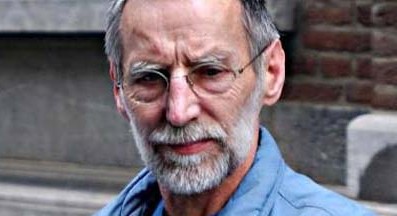
Michel Fourniret
Serial killer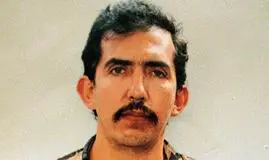 Luis Alfredo Garavito
Serial killer · Colombia/Ecuador · 1992
Luis Alfredo Garavito Cubillos, also known as "La Bestia" ("The Beast") or "Tri…
192 victims
Luis Alfredo Garavito
Serial killer · Colombia/Ecuador · 1992
Luis Alfredo Garavito Cubillos, also known as "La Bestia" ("The Beast") or "Tri…
192 victims
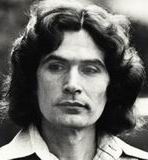 Rodney Alcala
Serial killer · USA · 1977
Rodney James Alcala (born August 23, 1943) was also known as Rodrigo Jacques Al…
100 victims
Rodney Alcala
Serial killer · USA · 1977
Rodney James Alcala (born August 23, 1943) was also known as Rodrigo Jacques Al…
100 victims
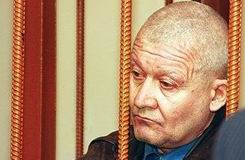 Serhiy Tkach
Serial killer · Ukraine · 1980
Serhiy Tkach (Russian: Серге́й Фёдорович Ткач, born 12 September 1952 in Kisely…
100 victims
Serhiy Tkach
Serial killer · Ukraine · 1980
Serhiy Tkach (Russian: Серге́й Фёдорович Ткач, born 12 September 1952 in Kisely…
100 victims
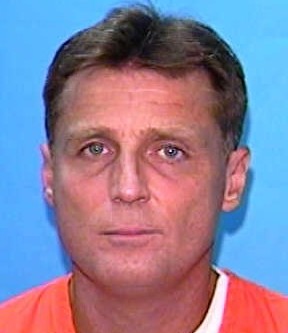 Glen Edward Rogers
Serial killer · USA · 1993
Glen Edward Rogers was a spree killer whose cross-country rampage in 1994-95 le…
70 victims
Glen Edward Rogers
Serial killer · USA · 1993
Glen Edward Rogers was a spree killer whose cross-country rampage in 1994-95 le…
70 victims
 Michael Swango
Serial killer · USA · 1981
Michael Swango (Joseph Michael Swango) was a physician and American serial kill…
60 victims
Michael Swango
Serial killer · USA · 1981
Michael Swango (Joseph Michael Swango) was a physician and American serial kill…
60 victims
 Glen Stewart Godwin
Murderer · USA / Mexico · 1980
August 3, 1980 — Eagle Mountain residents found a blown-up pickup truck with re…
2 victims
Glen Stewart Godwin
Murderer · USA / Mexico · 1980
August 3, 1980 — Eagle Mountain residents found a blown-up pickup truck with re…
2 victims
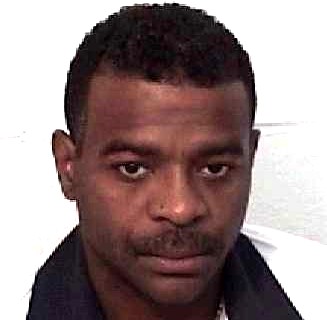 Frederick Whatley
Murderer · USA · 1995
Frederick Whatley (Frederick Ramone Whatley) was sentenced to death on January…
1 victim
Frederick Whatley
Murderer · USA · 1995
Frederick Whatley (Frederick Ramone Whatley) was sentenced to death on January…
1 victim
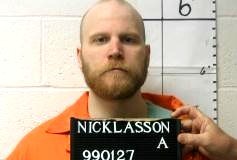 Allen Nicklasson
Murderer · USA · 1994
Allen Nicklasson · late August 1994 — Dennis Skillicorn, Allen Nicklasson, and…
3 victims
Allen Nicklasson
Murderer · USA · 1994
Allen Nicklasson · late August 1994 — Dennis Skillicorn, Allen Nicklasson, and…
3 victims
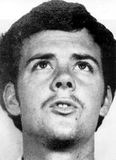 Herbert Mullin
Serial killer · USA · 1972
Herbert Mullin was a serial killer in California in the early 1970s. He was bor…
13 victims
Herbert Mullin
Serial killer · USA · 1972
Herbert Mullin was a serial killer in California in the early 1970s. He was bor…
13 victims
- Gender
- male
- Country
- France / Belgium
- Location
- France / Belgium
- Date of birth
- April 4, 1942
- Age at first offence
- 45
- Characteristics
- kidnapping, rape, abuse
- Victim profile
- An unidentified man / Isabelle Laville, 17 / Fabienne Leroy , 20 / Jeanne-Marie Desramault , 22 / Elisabeth Brichet, 12 / Natacha Danais, 13 / Farida Hellegouarch / Céline Saison, 18 / Manyana Thumpong, 18 / A 16-year old girl
- Method of murder
- Strangulation
- Date(s) of murder
- 1987 - 2001
- Years active
- 1987–2001
- Date of arrest
- June 2003
- Status
-
Life imprisonment
Sentenced to life in prison on May 28, 2008
Case record: Michel Fourniret
Background
Michel Fourniret (born Sedan, 4 April 1942) was a French serial killer who confessed, in June and July 2004, to kidnapping, raping and murdering 9 girls in the span of 14 years during the 1980s and the 1990s. He was suspected of 10 additional murders, 9 in France and 1 in Belgium.
Fourniret’s wife, Monique Olivier, denounced him just after Marc Dutroux's ex-wife Michelle Martin was sentenced to 30 years in prison during Dutroux's trial. Fourniret was also suspected of having links with the once famous French Action Directe gang.
Fourniret buried at least two of his victims at his Sautou chateau in the late 1980s. On 3 July 2004, a team of French and Belgian police recovered the bodies of two of Fourniret's victims near the castle.
People
- Michel Fourniret — serial killer; defendant
- Monique Olivier — wife of Fourniret; denounced him; was sentenced to life in prison for complicity
- Isabelle Laville — 17-year-old victim; disappeared in Auxerre, France, on her way from school to home
- Fabienne Leroy — 20-year-old victim; disappeared in 1988 in Mourmelon; body later found in nearby woods
- Jeanne-Marie Desramault — 22-year-old French student; disappeared in 1989 from the railway station of Charleville-Méziere; body recovered from the estate of Fourniret with his assistance
- Elisabeth Brichet — 12-year-old Belgian girl; disappeared from Namur in 1989 after playing with a friend
- Natacha Danais — 13-year-old French girl; disappeared in 1990
- Farida Hellegouarch — girlfriend of one of the leaders of Action Directe; former cellmate of Fourniret's; Fourniret killed her in 1990 to access the group's funds
- Céline Saison — 18-year-old; disappeared in 2000 in Sedan; body found in Belgium
- Manyana Thumpong — 18-year-old; disappeared in 2001 from Charleville-Méziere; body later found in Belgium
- Joanna Parrish — 20-year-old British teaching assistant; murdered in 1990 while working in Auxerre
- Marie-Angele Domece — 19-year-old disabled woman from France; murder investigated
- Isabelle Laville’s mother, Marie-Jeanne Laville — said she was “very satisfied” with the verdict
- Joanna Parrish’s parents, Roger Parrish and Pauline Sewell — issued a statement after the verdict
- Prosecutor Yves Charpenel — senior French prosecutor who said Fourniret’s DNA didn’t match semen found in Joanna’s body
- Prosecutor Francis Nachbar — prosecutor in Belgium during Monique Olivier’s interrogation; accused of misconduct by Olivier, which officials dismissed as mild shoving
- Judge Gilles Lapatie — dismissed Fourniret’s request for the press and public to be excluded along with photographers
- Detective Superintendent Bernard Kinsella — liaison officer assigned to provide assistance with Joanna’s case; arranged British forensic assistance
- Dr Colin Dark — British DNA scientist consulted by Kinsella; worked on low-copy-number analysis
- Prosecutor Anne Thily — Belgian state prosecutor in Liège
- Crown prosecutor Cedric Visart de Bocarme — in charge of the Brichet case
- Dinant prosecutor Arnoud d'Aspremont Lynden — told Le Soir the psychiatric report confirmed Fourniret was mentally fit
- Prosecutor Charpenel (referred to as a French state prosecutor) — heading inquiries at the chateau digging
- Detective Chief Inspector Bernard Kinsella — mentioned as heading Gloucestershire Constabulary’s specialist crime operations
- Alain Behr — Laville family lawyer who said: “They are liars!”
- Retired local farmer — told that he had no idea a well was there
- Maria-Ascension — surname withheld; 13-year-old girl who escaped from Fourniret’s van in Belgium
- Sélim — Fourniret and Monique Olivier’s son, born in 1988
- Pierre Boudein — named in a separate discussion about another suspect; released early from a previous prison sentence in May
- Julie Scharsch — named as a victim in a separate march context
- Pierre Boudein — named as the suspect released early from a previous prison sentence
- Hedwige Vallee — named victim whose stabbed corpse was discovered nearby
- Jeanne-Marie — named victim whose body was pulled from a ditch in the same area last month
Timeline
- 1984 — Fourniret was arrested for a series of kidnaps and sex attacks on teenage girls and young women in the Paris region and was placed in preventive detention
- 1987 — Fourniret was tried for 11 sex assaults and was given a prison sentence of seven years, two of them suspended
- (Four months later) — Fourniret was released early for good conduct
- October 26 (year not specified) — Fourniret walked free through the doors of Fleury-Mérogis prison, and Monique Olivier was waiting for him in her green Peugeot estate
- 4.45pm on Friday December 11 (year not specified) — 17-year-old Isabelle Laville disappeared on her regular 20-minute walk home from school in the Auxerre suburb of St Georges-sur-Baulche
- June 26, 2003 — Belgian police van pulled up outside their house at the edge of the village of Sart-Custinne; Fourniret was arrested for the kidnap of a 13-year-old Belgian girl in Ciney who had escaped
- July 3, 2004 — a team of French and Belgian police recovered the bodies of two of Fourniret’s victims near the castle (Sautou chateau)
- 3 July 2004 — prosecutors announced a body recovery at the chateau, and experts were to conduct analyses to confirm identifications
- September 10, 2004 — report that French serial killer Michel Fourniret was mentally fit to stand trial for his crimes
- March 28, 2008 — trial coverage described proceedings at Charleville-Mézières
- May 28, 2008 — Fourniret was sentenced to life in prison
- Thursday 29 May 2008 — publication of coverage that a French court sentenced Fourniret to life in prison and sentenced Monique Olivier to life for complicity
The offence
Fourniret confessed to kidnapping, raping and murdering nine girls in the span of 14 years during the 1980s and the 1990s.
The seven victims described as killed in France and Belgium were aged between 12 and 21 (or between 12 and 22 in another passage), and the killings involved being shot, strangled, or stabbed to death. Most killings were said to have occurred in the Ardennes region of northern France and in Belgium.
Fourniret used ruses to lure victims into his car, including stopping to ask for directions and persuading the victim to get into his car. Monique Olivier’s presence in the vehicle was described as designed to help reassure the victim, according to the prosecution.
During trial coverage, it was described that Olivier would gain the confidence of the girls and women, and that after victims were bound, gagged and sometimes drugged by Fourniret, she would examine them to check they were virgins before handing them over to Fourniret “in the sole aim of allowing him to fulfil his fantasies”, according to a report read out in court.
It was also described that Fourniret would assault his victims—“beautiful little subjects” was how he referred to them—before shooting or strangling them. In one account, air was injected into a 20-year-old student’s veins to provoke a heart attack, as said by the investigating magistrates’ report.
Fourniret had been arrested in Belgium in 2003 after an attempt to kidnap a 13-year-old girl who managed to run away. Monique Olivier helped trap the victims, and the court gave her a life sentence.
Fourniret was also suspected of crimes including the kidnapping, raping and murdering British teaching assistant Joanna Parrish, 20, in 1990 while working in Auxerre, and of investigation into the kidnap and murder of Marie-Angele Domece, a 19-year-old disabled woman from France. He denied involvement in both women’s deaths.
Fourniret also confessed to the abduction of minors and sexual misconduct, and he was in detention since June 2003 for the attempted kidnapping of a 14-year-old girl in 2000.
Fourniret was suspected of killing an unidentified man in a robbery for quick cash. Fourniret’s wife also said that Fourniret killed a 16-year-old girl who worked as an au pair at their house, and it was alleged this occurred in 1993, though Fourniret allegedly had not confessed and the identity of the au pair had not been discovered.
Investigation
Fourniret was in custody in Belgium from June 2003. He confessed to the killings after his estranged wife accused him of committing at least 10 murders.
Police recovered bodies near the Sautou chateau. Authorities were also checking decades of files for links with other disappearances. In Denmark, police noticed that a police sketch of a rape suspect looked a lot like Fourniret. In the Netherlands, investigators in the disappearances of Tanja Groen and Nicky Verstappen investigated Fourniret.
By June 2004, Belgian police sent human hairs found in Fourniret’s van for DNA analysis in France; one sample was suspected to belong to Thumpong. After this, Monique Olivier decided to agree to give a statement.
Prosecutor Anne Thily gave a report of Olivier’s accusations, including the description of Fourniret’s approach to his wife and what would happen after the young girl was brought home: “He would say to his wife 'I'm going out hunting. So there you have it. I'm going out and you know very well that it means I am going to look for young girl, pretty, maybe virgin," Thily said. "Then he brought her home, kept her two or three days, raped her...and then strangled her.”
During the digging at the Sautou chateau, prosecutor Yves Charpenel announced on-site: “We have found the second body, and thus 15 years of investigation have just come to their conclusion.” Another prosecutor, Cedric Visart de Bocarme, said: “The elements of visual identification are absolutely positive, there are traces of fabric which have made a formal identification possible.”
During trial reporting, it was described that Fourniret claimed his right to privacy under French law to prevent media from taking his photograph, a customary practice in high-profile trials in France. When asked to confirm his identity, he held up a note written in capital letters that said: “Lips sealed if not in closed session.” Judge Gilles Lapatie dismissed the request for the press and public to be excluded along with photographers.
Fourniret then handed Judge Gilles Lapatie a second handwritten note rolled up and bound like a medieval scroll, and he said:
“This is the account of my acts which I intended to read,” the defendant said, breaking the vow of silence that he had made minutes earlier. “But I cannot talk if the court is not in camera. I ask for your permission for you to read it out yourself.”
A lawyer at the court said later that the note included that Fourniret described himself as “a bad being and devoid of all human sentiment” and that his wife was “an object that my lack of morals constantly manipulated through a perverse game”.
Arrest and detention
Fourniret was arrested in Belgium in 2003 after an attempt to kidnap a 13-year-old girl in Ciney who later managed to run away. The girl was rescued by a passing motorist who took down Fourniret’s registration number.
Belgian police applied to the French for his criminal record, but none was found even though Fourniret had been convicted in France for separate crimes of paedophilia, exhibitionism and serious sex assaults.
Trial
Fourniret and Monique Olivier were brought to the Sautou chateau, where police with ground-digging excavators hunted for victims’ bodies in areas indicated by Fourniret. Prosecutor Charpenel said that, when bodies were disinterred, Fourniret showed no emotion.
Trial coverage described that Fourniret refused to co-operate further during the two-month trial despite admitting the murders. He also said he would not appeal against his sentence.
Fourniret was on trial charged with the murder of seven girls and women aged between 12 and 21 in France and Belgium between 1987 and 2001. It was also described that he had confessed to the crimes.
Monique Olivier was charged with one count of murder and complicity in four other killings. She admitted helping her husband but sought to minimise her role with a claim that she was in his psychological grip. It was described that she acted as a decoy to gain victims’ confidence.
During trial reporting, it was described that he listened impassively to a list of crimes with which he is charged and held up the note with the vow of silence.
Sentencing
Fourniret was sentenced to life in prison on May 28, 2008.
The court also gave Monique Olivier a life sentence for complicity, and it was stated that she must serve at least 28 years of her prison term, the court said.
The trial coverage also included that Fourniret was sentenced to life imprisonment and that Olivier’s sentencing required at least 28 years before eligibility.
Marie-Jeanne Laville told AFP news agency: “I can breathe again,” she said.
Roger Parrish and Pauline Sewell issued a statement after the verdict was announced:
“This is not the final chapter in our quest for justice for Joanna; we must wait to see if Fourniret is to be charged in connection with her death,” they said.
Appeals
Fourniret said he would not appeal against his sentence.
Outcome
Authorities recovered bodies of multiple victims at the Sautou chateau on 3 July 2004.
Fourniret was convicted and sentenced to life in prison on May 28, 2008. Monique Olivier was sentenced to life in prison for complicity.
Fourniret was described as mentally fit to stand trial in a report dated September 10, 2004, after psychiatrists examined him.
Aftermath
After his conviction and sentencing, Joanna Parrish’s parents expressed that they would wait to see if Fourniret would be charged in connection with Joanna Parrish’s death.
Investigators continued trying to establish what happened in missing years between 1990 and 2000.
In addition to the main convictions, further investigations were described, including that French police reopened murder inquiries to search for similarities.
Other details
Confessions and suspected additional crimes
- Fourniret confessed to nine killings, and prosecutors believed more could exist.
- Monique Olivier’s denouncement contributed to the confessions in June and July 2004.
- Prosecutors believed they revealed only the tip of an unfathomed iceberg.
- Fourniret and Olivier agreed on seven murders in France and one in Belgium, along with miscellaneous crimes including assaults and armed robbery.
Arrest attempt and earlier detention
Fourniret had been in detention since June 2003 for the attempted kidnapping of a 14-year-old girl in 2000.
Escape incident and description of kidnapper
A 13-year-old Belgian girl managed to escape from his van when he stopped at a petrol station, and she was rescued by a passing motorist who took down the registration number.
DNA evidence dispute described during investigation
Senior French prosecutor Yves Charpenel said Fourniret’s DNA didn’t match the main piece of evidence—semen found in Joanna’s body during a postmortem. Joanna’s parents later learned that the DNA profile taken from stored semen had been identified in 1993 using a now obsolete system called HLA-DQ alpha. Fourniret’s DNA was established using the SGM+ system, which the narrative described as incompatible with the former system. A partial comparison was described as possible, but if there was no identical detail of numbers it could not be the same DNA. The narrative then described that experts advised the 1993 result was obsolete and flawed, with a mixture of information about Joanna’s DNA profile and that of her aggressor.
Mental fitness
The psychiatric report was said to confirm Fourniret was responsible for his actions and therefore did not need to be taken to a mental institution.
Additional named dates and events (from the narrative context)
- On February 14, 2005, Monique Olivier was questioned in Dinant in southern Belgium by French detectives and a provincial public prosecutor; Olivier later claimed she was slapped by prosecutor Francis Nachbar and elbowed in the chest by one of the detectives. Belgian officials dismissed the incident as mild shoving and a later inquiry cleared both men of misconduct.
- On 1991, Fourniret and Monique Olivier were described as fleeing from France to the village of Sart-Custinne in the Ardennes and buying a farmhouse and raising their son, Sélim, born in 1988.
- In December (year not specified), Prosecutor Nachbar met families of seven alleged victims and told them he had no intention of trying the couple for Joanna’s murder, nor other crimes not confessed to, due to it taking years to solve.
- In March 2006, Roger Parrish and Pauline Sewell travelled to Charleville-Mézières and met French examining magistrates leading the investigations, including Pascal Préaubert and Anne Devigne.
Quotes in after-context narrative
Alain Behr, the Laville family lawyer, said: “They are liars!” and continued: “They constantly manipulate, playing between truth and lies. The well was within a closed brick transformer building — he could not have known what was in there.”
When asked about low-copy-number analysis, Dr Colin Dark was quoted as saying:
“We’re very hopeful of getting something that identifies the offender,” Dark commented from his laboratory in Chepstow, Monmouthshire.
When asked about assistance to French investigators, Kinsella was quoted:
“We are very pleased to assist the French,” he said. “There are no foregone conclusions; the single important thing is to deliver justice to Joanna’s family.”
Kinsella was also quoted:
“We are very hopeful of getting something that identifies the offender,” Dark commented from his laboratory in Chepstow, Monmouthshire.
Note on a separate narrative about Christian Ranucci
The record included a separate narrative about Marie-Dolores Rambla and Christian Ranucci involving a car accident with Martinez, a kidnapping, searches for a knife hidden in bushes, bloodstains found on Ranucci’s pants, and statements about blood type matching and multiple witnesses pointing to different people. It also included that Ranucci received the death penalty and that his case was controversial, with discussion that new evidence showed Fourniret taking a holiday in Marseille in June 1974.
This narrative was not part of Fourniret’s sentence outcome described elsewhere in the record.
Spotted an error, or have more information about this case?