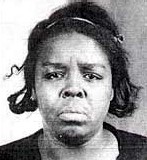
Helen Ray Fowler
Murderer Marie Noe
Murderer · USA · 1949
Marie Noe was convicted in June 1999 of murdering eight of her children. Betwee…
8 victims
Marie Noe
Murderer · USA · 1949
Marie Noe was convicted in June 1999 of murdering eight of her children. Betwee…
8 victims
 Earle Dennison
Murderer · USA · 1952
Earle Dennison was a widow and worked as a surgical nurse. She worked at the We…
2 victims
Earle Dennison
Murderer · USA · 1952
Earle Dennison was a widow and worked as a surgical nurse. She worked at the We…
2 victims
 Alice Wynekoop
Murderer · USA · 1933
Name: Alice Wynekoop Alice Wynekoop was sentenced to 25 years in prison on Marc…
1 victim
Alice Wynekoop
Murderer · USA · 1933
Name: Alice Wynekoop Alice Wynekoop was sentenced to 25 years in prison on Marc…
1 victim
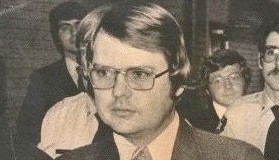 Francis Nemechek
Serial killer · USA · 1974
Francis “Don” Nemechek killed women and a small boy in multiple incidents in we…
5 victims
Francis Nemechek
Serial killer · USA · 1974
Francis “Don” Nemechek killed women and a small boy in multiple incidents in we…
5 victims
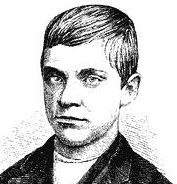 Jesse Pomeroy
Homicide · USA · 1874
Jesse Pomeroy was sentenced to death on two counts in 1876. His sentence was co…
10 victims
Jesse Pomeroy
Homicide · USA · 1874
Jesse Pomeroy was sentenced to death on two counts in 1876. His sentence was co…
10 victims
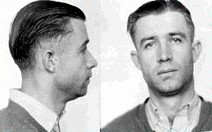 David Benjamin Knight
Murderer · USA · 1935
Howard C. Speakman and Judge Earl Anderson were involved in the case. Deputy C.…
1 victim
David Benjamin Knight
Murderer · USA · 1935
Howard C. Speakman and Judge Earl Anderson were involved in the case. Deputy C.…
1 victim
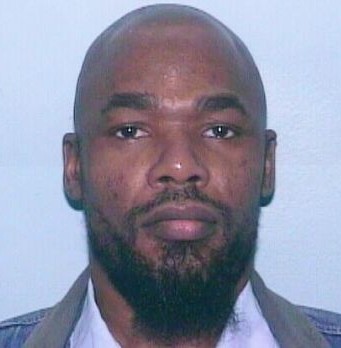 Gregory Clepper
Murderer · USA · 1996
1991 — The killings began. · April 24, 1996 — Patricia Scott was found in a tra…
1 victim
Gregory Clepper
Murderer · USA · 1996
1991 — The killings began. · April 24, 1996 — Patricia Scott was found in a tra…
1 victim
 David Lawson
Murderer · USA · 1980
David Lawson was scheduled to be executed by the State of North Carolina using…
1 victim
David Lawson
Murderer · USA · 1980
David Lawson was scheduled to be executed by the State of North Carolina using…
1 victim
- Gender
- female
- Country
- USA
- Location
- Niagara Falls, New York, USA
- Date of birth
- 1907
- Age at first offence
- 36
- Characteristics
- convicted rapist
- Victim profile
- George William Fowler, 63
- Method of murder
- Hitting with a hammer
- Date(s) of murder
- October 30, 1943
- Years active
- 1943
- Date of arrest
- December 1943
- Status
-
Executed
Sentenced to death on February 19, 1944; executed by electrocution in the Sing Sing electric chair in New York on November 16, 1944
Case record: Helen Ray Fowler
Background
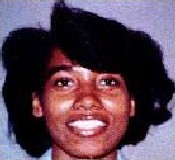
Helen Ray Fowler was a 37-year-old woman who lived in the village of Niagara Falls in upstate New York. She ran a boarding house to make ends meet while caring for her children. She was described as a large woman, 5'7'' and 227 lbs. according to her prison records.
She had five children, and at the time of her arrest in 1943 her children ranged in age from five to 20, as well as a grandchild. She had been married several times. Her daughter was Ruth, and her daughter Genevieve Persons was Helen Fowler’s daughter by a prior marriage.
During the summer of 1943, Helen Fowler took in a boarder named George Knight at her home on Memorial Parkway.
The lead investigator in her case was Niagara Falls Police Capt. Robert Fitzsimmons.
The offence
On the night of October 30, 1943, George Knight and another woman were drinking in a local tavern in Niagara Falls. At the same time, Helen Fowler walked in unexpectedly and saw them together. Words were exchanged by the three and soon, fists were flying. The fight spilled out into the street along with some of the other customers.
Also drinking in the same bar was a gas station owner from nearby Ransomville named George William Fowler, 63, a white man and no relation to Helen. He watched the brawl and later decided to follow Helen home.
When Helen arrived at her home on Memorial Parkway, William went inside with her. Another fight soon developed which ended with William on the floor. George Knight arrived and immediately broke a large vase over William’s head. William suffered a severely fractured skull and died on the floor of Helen’s home.
Helen Fowler and George Knight dumped the body in a trunk. They then placed the trunk in a car and drove it down to the North Grand Island Bridge, which spans the upper Niagara River. Under cover of nightfall and within sight of Canada, they dumped the trunk into the river.
After the body washed up on shore, residents of Ransomville were shocked. Police arrested the suspects after a brief investigation.
Investigation
An autopsy revealed a fractured skull, so Niagara Falls police investigated William Fowler’s death as a murder.
Within a few days, a car seen near the North Grand Island Bridge on October 31 was traced to its owner. The owner was a serviceman home on leave at the time of the murder. The serviceman directed police to Helen Ray Fowler and George Knight, who had borrowed the car.
Capt. Robert Fitzsimmons questioned both Helen Fowler and George Knight. Each made a statement implicating the other. During interrogation:
- George Knight first told Fitzsimmons that Helen Fowler killed the old man in the course of robbing him.
- George Knight then changed his story, saying he beat the man after robbing him, then finished him with a hammer blow to the back of the skull at the urging of Helen Fowler.
- Helen Fowler said William Fowler arrived at her apartment late in the afternoon, followed shortly by Knight, and that a brawl ensued. She said Knight killed the unconscious man despite her pleas to stop.
- Both stories shared a common thread: they hid William Fowler’s body in the back of the house until the next night, then borrowed a car, loaded the corpse into it, drove to the Grand Island Bridge, and tossed it in the upper Niagara River.
Prior to trial evidence included that Helen Fowler had given Genevieve Persons two Carborundum payroll checks to cash. The two employees to whom the checks were made out testified that they had cashed them at William Fowler’s gas station in the week before his disappearance.
Police Capt. Robert Fitzsimmons also took statements from both defendants. They were charged with first-degree murder.
Arrest
After the body washed up on shore, police arrested the suspects. During interrogation by the local sheriff’s office, both Knight and Fowler admitted to the crime.
Trial
Helen Fowler and George Knight were assigned lawyers. J. William O’Brien represented George Knight. Earl W. Brydges handled Helen Fowler’s defense. O’Brien and Brydges moved to separate the trials due to the life-and-death implications of the outcome. State Supreme Court Justice William Munson denied the motion and jury selection began on Monday, February 7, 1944.
The jury made history by including five women, the first to hear a murder case in the county. District Attorney John Marsh presented 30 witnesses.
Marsh’s witness Genevieve Persons testified that on the afternoon of October 30, Knight came into the apartment and told Fowler there was a “white fellow” in the neighborhood with quite a lot of cash on him. Persons said Knight urged Fowler to help him lure the man into the apartment in order to roll him. Persons testified that once the gas station owner was inside, Knight attacked. She testified:
"The man was hollering and begging Knight not to hit him anymore," said Persons, adding that her mother tried to stop the assault.
Persons testified that Knight said he might as well finish the job so William Fowler couldn’t go to the police, then did just that with a hammer. Persons testified:
She testified that she watched her mother and Knight drag the body to the back of the apartment. "Then I went to the movies," she said.
Persons testified that she told a friend, identified only as Norman, that Knight had come into a lot of money and that the two conspired to rob the killer. She testified that their search of the apartment yielded nothing.
Persons and her mother had been convicted of assault prior to the murder. The daughter was awaiting sentencing for that crime and was implicated, but not charged, in several others, a point O’Brien brought up on cross-examination.
O’Brien asked an alternate theory on cross-examination:
"As a matter of fact, you beat this man with a hammer yourself, didn't you?" O'Brien asked.
"No, I didn't," Persons said.
That night, being held as a material witness at the County Jail in Lockport, Persons drank a cup of cleaning fluid in an apparent effort to commit suicide.
O’Brien and Brydges called only two defense witnesses: June Tucker, 13, and 9-year-old George Tucker. They offered stories different from prior versions. June Tucker said William Fowler visited the apartment early in the afternoon, and after Helen Fowler left and returned with beer, William stayed for another half-hour. Tucker testified that later, while her mother argued with Knight about another woman, “the white man” came in again. June Tucker testified that Knight asked what she wanted and accused Helen Fowler of having a man chasing her around while he couldn’t look at another woman. Tucker testified that both children watched through a crack in the wall as Knight beat and kicked the older man into submission. Tucker testified:
When Knight grabbed a vase to use as a weapon, both testified that their mother grabbed it away from him.
In his closing statement on Friday afternoon, Marsh called William Fowler’s murder:
"the most brutal and atrocious crime ever perpetrated in Niagara City,"
O’Brien closed by invoking the “a man’s home is his castle” argument, saying that William Fowler walked in uninvited while his client quarreled with Helen Fowler. O’Brien maintained that Knight killed William Fowler in the ensuing brawl and that any robbery was not premeditated. Brydges agreed with O’Brien’s theory.
During deliberations, the jury asked for clarification on one issue: whether a person who didn’t actually kill anyone could be found guilty of murder. Justice Munson told them:
"Both parties engaged in commission of a felony are equally guilty,"
Jury foreman William Wendt of Cambria later announced that the panel found both guilty. Helen Fowler cried periodically throughout the trial and again broke down sobbing after the verdict.
Helen Fowler and George Knight were found guilty of 1st Degree Murder after a five-day trial. It was the first murder trial in the county since 1938.
Sentencing
On February 19, 1944, in the same county courtroom, Judge William Munson sentenced both defendants to death in the electric chair at Sing Sing.
Helen sobbed loudly from behind the defense table as the sentence was read. Her attorneys requested a new trial, which was immediately denied by the Judge.
The prisoners were taken back to the Niagara County jail to await transfer to Ossining. On February 21, Fowler and Knight were taken by train to Sing Sing where they were sent to Death Row.
The execution was originally set for September 4, 1944, but it was delayed twice, with the date eventually fixed for November 16, 1944.
Appeals
The State Court of Appeals upheld the verdicts and sentences in June. Brydges and O’Brien won a delay from Gov. Thomas Dewey so the attorneys could apply for a new trial. That court denied the request and set a new execution date of Nov. 16. District Attorney John Marsh fought the pair’s appeals at each step.
Outcome
Helen Ray Fowler was electrocuted in the Sing Sing electric chair in New York on November 16, 1944.
On the day of execution, Helen made a last desperate attempt to save herself from the waiting chair by accusing her daughter Ruth of the murder and claiming she wanted to get rid of her dominant mother.
Helen stated that Ruth had said she would:
"make a nice fat crackling in the chair".
Helen was allowed to dictate a letter to Lt. Governor Hanley. In her final plea for mercy, just two hours before the scheduled execution, Helen told the story she had on her mind at the time of the trial. She began by saying:
“I had these things on my mind at the time of the trial. I hate the disgrace of bringing these things out.”
Helen told the Lt. Governor that her daughter Ruth plotted against her and said:
“Ruth was going with my husband. I have proof by Niagara Falls Police Department because of his arrest. I have a letter here to prove my husband went with one daughter.”
Helen accused her daughter of murder and told the Lt. Governor:
“Her (her daughter’s friend) and Ruth both poisoned my husband and I to get rid of me.”
Helen said Ruth was glad when she was put in jail:
“She said she was free for the first time in her life and intended to stay free. She also said I’d make a nice fat crackling in the chair,” Helen said.
Helen also claimed she was innocent of the murder of George Fowler and said she helped move the body. She said:
“I fought hard all the time to keep my children under a roof with me. Please give me a chance to prove these things. I’ve said I’m not guilty of any murder or robbery but I did help to get the man out of the house or he’d have left him there in the trunk because he was drunk for over a week after and a couple of days before. Please have mercy on me. Please spare my life!” (Christianson, p. 84, Helen Fowler’s statement of November 16, 1944).
She was described as large and 5'7'' and 227 lbs. She was 37 years old. She was crying silently but seemed composed as she sat down for the last time. At 11:04 p.m., the current was coursing through her body. She was not declared dead until 11:17 p.m. She “did quite some crackling” before her body gave up. She wrote:
“It’s a mother’s love and it’s been so much disgrace but this is the truth of why I am here. Please, I’ll live for God from now on if spared, for when children try to have your life taken just to be free, it’s a shame!” (Christianson, p. 85).
Catholic Chaplain Bernard Martin prayed for her soul as she was led into the death chamber at Sing Sing. She remained silent and composed, according to witnesses, as guards strapped her into Sing Sing’s electric chair.
George Knight was executed after Helen Fowler. Before he sat down for the last time, he asked the warden to speak. The account quotes Knight and the warden:
“Can I talk?” he said.
The warden replied that it was customary to allow the condemned to say a few last words.
“I want to thank you all for being so nice to me,” Knight said simply.
Aftermath
Both Helen Fowler and George Knight were the 19th and 20th prisoners to die in Sing Sing’s electric chair that year.
The execution followed the death of Robert G. Elliott, Sing Sing’s executioner, who died in 1939 of heart disease in Queens, N.Y. Before Elliott’s death, his execution time spanned 13 years, and prison officials received over 400 applications for his job after his death.
Brydges went on to win election to the New York State Senate in 1948 and served until 1972. He finished his time in office as Senate Majority Leader. The Niagara Falls public library and Artpark bear Brydges’s name.
Dewey ran against incumbent President Harry Truman in 1948.
New York State abolished the death penalty less than 20 years after the executions of Fowler and Knight, using the electric chair for the final time in 1963. The death penalty was reinstated in 1995, and no executions have been carried out since.
Jon Getz, a civil and criminal attorney in Rochester, said there was little chance Helen Ray Fowler’s case could be repeated today. He discussed appellate review and legal benefits of the doubt.
The narrative included comparison to Michael Northrup’s acquittal in the murder of John Montstream, which occurred after three trials that lasted a total of 23 weeks. It also mentioned Getz’s successful appeal of Betty Tyson in 1998, who had spent 25 years in prison, for the 1973 robbery and murder of a Philadelphia businessman. Getz said police had beaten Tyson into signing a confession and that a detective had put a gun to the head of a witness to coerce testimony. After conviction was overturned, the Monroe County district attorney decided against filing new charges.
Getz also made statements about race potentially playing a factor in murder cases and commented on fairness and the system.
"I think race may have played a strong factor -- you've got two black people killing a white guy," Getz said.
"That dynamic is inescapable in a murder case, particularly in the 1940s."
"I think they threw her in for good measure, so to speak. She certainly didn't get her fair day in court, and so she died an early death. The system is supposed to be about fairness."
Other details
Prior marriage history was described as Helen Fowler having been married several times and having five children ranging in age from five to 20 at the time of arrest, plus a grandchild.
The account described neighborhood context around Memorial Parkway as a red-light district and stated that city officials renamed the south end of 11th Street as Memorial Parkway. It also stated that it “didn't work.”
The account also stated that the victim’s wife was able to identify William Fowler’s body only because of a stiffened elbow that resulted from an old injury. His decomposed body washed up behind the Adams Plant of the Niagara Falls Power Company on December 8.
The account described that William Fowler owned a service station in Ransomville, and that his cousin Lee Clark picked Fowler up at his business on October 30 and made stops at gin mills along the way. Clark testified that Fowler still wore work uniform pants and carried cash and checks adding up to at least $1,000.
The account described that Clark later reported Fowler missing. It also stated that Clark never saw him alive again after they separated at the corner of Buffalo Avenue and Memorial Parkway and after Fowler returned to Memorial Parkway dressed in a particular way.
The account stated that Helen Fowler and George Knight were described as living arrangements where William Fowler wound up a few doors down at the home of Helen Fowler and George Knight, described in newspaper accounts as her “boarder.”
Spotted an error, or have more information about this case?