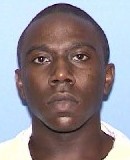
Beunka Adams
Murderer Robert Martines Perez
Murderer · USA · 1994
Name: Robert Martines Perez · Other name used in proceedings: Robert Martinez P…
15 victims
Robert Martines Perez
Murderer · USA · 1994
Name: Robert Martines Perez · Other name used in proceedings: Robert Martinez P…
15 victims
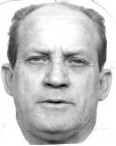 Billy Frank Vickers
Murderer · USA · 1993
Billy Frank Vickers Vickers was executed by lethal injection in Texas on Januar…
14 victims
Billy Frank Vickers
Murderer · USA · 1993
Billy Frank Vickers Vickers was executed by lethal injection in Texas on Januar…
14 victims
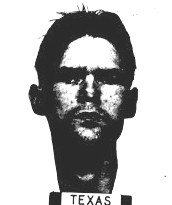 John Russell Thompson
Murderer · USA · 1977
July 3, 1987 — United States Court of Appeals, Fifth Circuit decided John Russe…
1 victim
John Russell Thompson
Murderer · USA · 1977
July 3, 1987 — United States Court of Appeals, Fifth Circuit decided John Russe…
1 victim
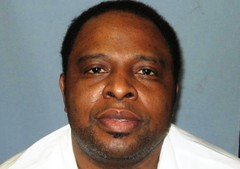 Willie McNair
Murderer · USA · 1990
Inmate name: MCNAIR, WILLIE · Gender: M · Race: B · Date of birth: 11/18/1964 ·…
1 victim
Willie McNair
Murderer · USA · 1990
Inmate name: MCNAIR, WILLIE · Gender: M · Race: B · Date of birth: 11/18/1964 ·…
1 victim
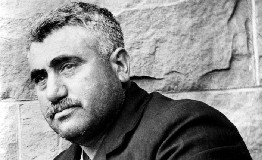 Emilio Picarielo
Murderer · Canada · 1922
Emilio Picariello was also known as Emileo Picariello and Emil Picariello. Emil…
1 victim
Emilio Picarielo
Murderer · Canada · 1922
Emilio Picariello was also known as Emileo Picariello and Emil Picariello. Emil…
1 victim
 George Clifton Gilmore
Murderer · USA · 1979
George Clifton Gilmore was executed on August 31, 1990. George Clifton Gilmore…
5 victims
George Clifton Gilmore
Murderer · USA · 1979
George Clifton Gilmore was executed on August 31, 1990. George Clifton Gilmore…
5 victims
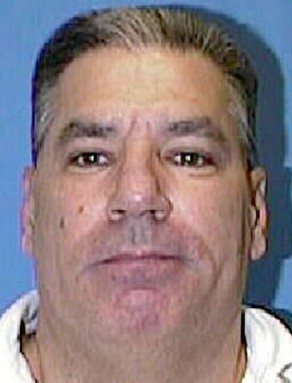 Michael Griffith
Murderer · USA · 1994
Name: Michael Griffith · Status: Executed by lethal injection in Texas on June…
1 victim
Michael Griffith
Murderer · USA · 1994
Name: Michael Griffith · Status: Executed by lethal injection in Texas on June…
1 victim
- Gender
- male
- Country
- USA
- Location
- Cherokee County, Texas, USA
- Date of birth
- December 10, 1982
- Age at first offence
- 20
- Characteristics
- robbery, kidnapping, rape
- Victim profile
- Kenneth Wayne Vandever, 24 (convenience store customer)
- Method of murder
- Shooting (shotgun)
- Date(s) of murder
- September 2, 2002
- Years active
- 2002
- Date of arrest
- Next day
- Status
-
Sentenced to death
Executed by lethal injection in Texas on April 26, 2012; sentenced to death on August 30, 2004
Case record: Beunka Adams
Status
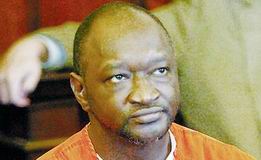
Beunka Adams was sentenced to death on August 30, 2004. He was executed by lethal injection in Texas on April 26, 2012.
Background
Beunka Adams was a Black male. He was identified in case material as having hair color “Black,” eye color “Brown,” a height of 5' 6", and a weight of 179. He had 10 years of education and worked as a laborer. His prior prison record was none. His occupation was laborer.
The victims included Kenneth Wayne Vandever, Candace Driver, and Nikki Dement. Kenneth Vandever had been described as mentally challenged and often “hung around” at the convenience store, helping clean and take out the trash.
A family history described Kenneth Vandever as being born in Dallas. It described that Don and his first wife divorced when Kenneth and his brother, Jerry, were in elementary school. It described that when Kenneth graduated from Caddo Mills High in 1983, he had managed the local Dairy Queen for two years and was mapping out a career as an architect. It described that less than a week after graduation, Kenneth began summer school at Eastfield Junior College in Dallas, making an A- and a B+ in his core subjects. It described that on Labor Day Kenneth fell asleep at the wheel of his car, and the accident resulted in massive head injuries, that he lay in a coma for 10 days, and that with his memory and much of his intellect nearly gone it was impossible for Kenneth to hold a job.
The family history described that the Vandevers moved to Rusk in 1986 to open the auto parts business. It described that Kenneth began spending evenings at BDJ’s store after he learned that a female employee was working while pregnant, and that he “didn’t like to see her mopping and sweeping,” so he would do it. It described that Kenneth liked “being useful,” and that he was upset when Sister Pate worked and wanted to help. The family history also described that Kenneth told the store family that he was their guardian angel.
The family history also stated that Kenneth had felt threatened by his murderers before the killing and that his parents told police Adams and a white male had been to their house for some unknown reason.
The offence
On September 2, 2002, Adams entered and robbed a convenience store in Cherokee County, Texas. The incident involved two male robbers wearing masks. One robber carried a 12-gauge shotgun. The only customer present was Kenneth Vandever, who was described as mentally challenged and who often “hung around” at the store, helping clean and take out the trash. Candace Driver and Nikki Dement were working at the store.
Adams and his co-defendant, Richard Cobb, robbed the store and demanded money from the cash register. Adams then demanded the keys to a Cadillac parked outside the store. After Candace Driver produced the keys from the back room, Adams ordered the three victims—Driver, Dement, and Vandever—into the Cadillac with Adams and Cobb.
During the drive toward Alto, Texas, Adams removed his mask after Dement recognized him because they had gone to school together. Adams repeatedly told the victims that they would not be hurt and that he just needed money for his children.
Adams turned off the road and drove the vehicle into a field described as a pea patch. After the group got out of the car, Adams ordered Driver and Vandever into the trunk. Adams escorted Dement away from the car and sexually assaulted her. Adams then led Dement back to the Cadillac and released Driver and Vandever from the trunk. Adams told the victims that he and Cobb were waiting for Adams’s friends to arrive, and Adams later decided to let all three victims walk away. He reconsidered a few moments later.
Adams and Cobb made the three victims kneel on the ground. Adams tied the women’s hands behind their backs using their shirts but left Vandever unrestrained. The victims were out of audible range from the discussions behind them and were unable to remember who was carrying the shotgun through these events.
The victims then heard shots:
- A single shot occurred after Adams asked, “Did we get anybody?” Driver answered, “No.”
- A second shot occurred shortly thereafter. Vandever cried out, “They shot me.”
- A third shot struck Dement.
When Dement fell forward, Driver fell forward as well, pretending to be hit. Adams approached Driver and asked if she was bleeding while carrying the shotgun. Driver did not answer immediately, hoping the men would believe she was dead. Adams said:
- “Are you bleeding? You better answer me. I’ll shoot you in the face if you don’t answer me.”
Driver answered, “No, no, I’m not bleeding.” Adams then fired the shotgun right next to Driver’s face; although pellets hit her lip, she did not move, pretending to be dead.
Adams and Cobb turned to Dement and asked the same questions. Dement continued feigning death. Driver heard Cobb say: “She’s dead. Let’s go.” That was the only time Driver heard Cobb speak.
After Adams and Cobb left, Driver and Dement each feared the other was dead, got up, and ran in separate directions. Driver had minor injuries. Dement had been shot directly in the left shoulder.
By the time police arrived at the pea patch, Vandever had been shot in the chest and had died from the shotgun wound.
Co-defendant and related charges
Adams was indicted for murdering Kenneth Wayne Vandever during the course of committing a felony. The prosecution evidence described participation through the law of parties, allowing conviction as a principal or as a party.
During the penalty phase of Adams’s trial, the jury heard that Adams participated in two previous aggravated robberies with Cobb. Evidence tied Adams and Cobb to a string of robberies that happened around the same time.
Separate case material stated that Richard Cobb received a death sentence for his role in the slaying and was on death row.
Investigation and arrest
Adams and Cobb were arrested several hours after the shootings in Jacksonville. Adams was identifiable because he had slipped off his mask after one of the women said she thought she knew him.
During questioning by police, Adams “didn’t fully say what he did but enough to show guilt under the law of parties,” said Cherokee County District Attorney Elmer Beckworth. The material stated that Texas law made an accomplice equally culpable as the actual killer. Beckworth said evidence pointed to Cobb as the gunman, while testimony at trial showed Adams bragged to another jail inmate that he was the shooter.
Trial
Indictment and pleas
In September 2002, a Cherokee County grand jury indicted Adams for murdering Kenneth Wayne Vandever during the course of committing a felony. In 2002, a Cherokee County jury found Adams guilty of murdering Kenneth Wayne Vandever during the course of committing a felony.
Adams pleaded not guilty. The case was tried before a jury.
Verdict and sentencing at trial
The jury found Adams guilty of capital murder. After the jury recommended capital punishment, the court sentenced Adams to death by lethal injection. Judgment was entered August 30, 2004.
The material described that under Texas law, evidence of prior criminal conduct was presented during the punishment phase. In the penalty phase, jurors were presented with information about Adams’s prior criminal conduct.
Party liability and intent issue discussed at trial
The appellate material described that the jury heard testimony that from the time Adams and Cobb entered the store until they left, Adams was in charge, giving orders and threatening the victims with the shotgun. The appellate material also described that Adams demanded the money and the keys to the car and ordered the victims into the car and later into the trunk. It described that Adams sexually assaulted Dement and forced the victims to kneel with their hands tied behind their backs. It described that after the first shot, Adams asked if anyone had been hit, and that when Candace said no, the shot that killed Kenneth was fired. It described testimony that Adams approached Driver after Nikki was shot holding the shotgun and that Driver said it was Adams who fired the shotgun when she learned that she was not bleeding. It also described that testimony included Nikki being lifted and kicked to see if she was still alive, and testimony from a jail inmate, Lavar Bradley, that Adams bragged he had fired the shotgun “because Cobb didn’t have the balls to do it.”
Sentencing
At trial, Adams was sentenced to death by lethal injection after the jury recommended capital punishment.
During the trial’s penalty phase, the jury heard evidence about future dangerousness and extraneous violent acts. The appellate decision described that evidence included Adams’s participation in two aggravated robberies with Cobb in the days preceding the offense, with evidence that he kept the shotgun and shells used in the robberies, planned the robbery at BDJ’s, initiated the kidnapping, and was in charge. It also described testimony that Adams threatened to kill Candace if she did not do what he said and that Adams sexually assaulted Nikki. It described testimony that Adams forced all three victims to kneel, asked after the first shot if anyone had been hit, fired again when Candace was not bleeding, kicked Nikki until her ribs were fractured, and lifted her up by her pony-tailed hair to see if she was still alive. It also described evidence that Adams was in charge during escape and that his statements to law enforcement downplayed his role, while he later bragged about the shooting to another jail inmate. It described expert psychiatric testimony that Adams fit the profile of a person with probability of future dangerousness.
The jury answered the punishment issues such that death was imposed.
Appeals
Direct appeal (Texas Court of Criminal Appeals)
On June 27, 2007, the Texas Court of Criminal Appeals rejected Adams’s direct appeal and affirmed his conviction and sentence.
A published procedural description stated that on automatic appeal the Court of Criminal Appeals held that:
- evidence was legally and factually sufficient to prove that defendant participated as a party in shooting of victim;
- evidence in punishment phase was sufficient to support a finding that defendant was a future danger to society; and
- defendant failed to establish a prima facie case of discrimination in the composition of county's grand juries. The decision affirmed the trial court’s judgment and sentence of death.
The decision included that appellant’s point of error one was overruled regarding sufficiency, points of error two through four were overruled regarding admission of evidence in the punishment phase, point of error five was overruled regarding future dangerousness, point of error six was overruled regarding mitigation special issue sufficiency review, point of error seven was overruled regarding constitutionality of Article 37.071 under the Eighth Amendment, point of error eight was overruled regarding Penry v. Johnson challenges to mitigation special issue instructions, point of error nine was overruled regarding shifting burden to the defendant for mitigating circumstances, and point of error ten was overruled regarding the grand jury array.
Grand jury array challenge
The appellate material described that Adams complained of the trial court's refusal to quash the indictment because the grand jury allegedly was not comprised of a representative cross-section of Cherokee County citizens. It described his allegation that the grand jury had twelve non-Hispanic citizens and that this composition was not representative of Cherokee County’s population, which was 8.9 percent Hispanic. It described his argument that approximately sixteen grand jurors should have been Hispanic over the statistical period and that the actual number was considerably less.
It also described that Adams presented evidence consisting of grand jury lists, census materials, and telephone books for ten years before trial and that this evidence showed no definitive demographic conclusions. It stated that testimony showed several grand jurors believed non-Hispanic were known to be Hispanic by either the district clerk or the district judge. It also described that relying on surnames alone was not a reliable indication of heritage and that even if it was relied upon, his argument would fail because in the two years before indictment, ten percent of the grand jurors had identifiably Hispanic surnames and in the eight most recent grand juries over seven percent had identifiably Hispanic surnames, while census records showed Hispanic population ranged from 7.9 to 8.9 percent. The court concluded it was not able to conclude that absence of identifiable Hispanics was caused by purposeful discrimination.
Denial of certiorari (U.S. Supreme Court)
On January 14, 2008, the U.S. Supreme Court rejected Adams’s direct appeal when it denied his petition for certiorari.
State habeas proceedings
After exhausting direct appeal, Adams sought to appeal by filing an application for a state writ of habeas corpus with the Texas Court of Criminal Appeals. On November 21, 2007, the high court denied Adams’s application for state habeas relief.
Adams filed a successive state habeas petition which was dismissed as an abuse of the writ by the Court of Criminal Appeals on April 29, 2009. Another state habeas petition was dismissed by the Court of Criminal Appeals on February 15, 2012.
Federal habeas proceedings
Adams attempted to appeal his conviction and sentence in federal district court for the Eastern District of Texas on January 8, 2009. The federal district court denied his petition for federal writ of habeas corpus on July 26, 2010.
On March 31, 2011, the U.S. Court of Appeals for the Fifth Circuit rejected Adams’s appeal when it affirmed the federal district court’s order denying a federal writ of habeas corpus.
On October 11, 2011, the U.S. Supreme Court rejected his appeal a second time when it denied his petition for a writ of certiorari.
Federal appellate opinion (habeas)
A federal appellate decision stated that:
- The court affirmed denial of Adams’s petition for a writ of habeas corpus.
- It held that state court determination that trial counsel’s failure to introduce testimony of codefendant was not ineffective assistance of counsel was not an unreasonable application of federal law.
- It held that Adams failed to overcome procedural default on cause/prejudice grounds.
- It held that state court determination regarding appellate counsel’s failure to challenge extraneous victim impact testimony was not ineffective assistance of counsel under federal standards.
- It held that state death penalty statute did not violate Eighth or Fourteenth Amendments.
The federal appellate decision included quotes from jury instruction special issue question text regarding intent during sentencing:
“Do you find from the evidence beyond a reasonable doubt that BEUNKA ADAMS, the defendant himself, actually caused the death of KENNETH WAYNE VANDEVER, the deceased, on the occasion in question, or, if he did not actually cause the deceased's death, that he intended to kill the deceased or another or that he anticipated that a human life would be taken?”
The federal appellate decision also included verbatim questions about the mitigation special issue in describing the jury’s negative answer:
“Taking into consideration all of the evidence, including the circumstances of the offense, the defendant's character and background, and the personal moral culpability of the defendant, do you find that there is a sufficient mitigating circumstance or circumstances to warrant that a sentence of life imprisonment rather than a death sentence be imposed?”
The federal appellate decision described legal reasoning regarding procedural default, cause and prejudice, and Strickland standards. It described that certain claims were procedurally defaulted due to the state court’s abuse-of-the-writ doctrine and that Adams did not show cause sufficient to overcome the procedural default.
It described victim impact testimony by Nikki Dement during punishment and recounted Dement’s testimony about effects on school and career options, recovering from injuries, effects on her wedding and honeymoon, problems with pregnancy, trouble sleeping at night, and inability to be alone in her house at night.
It also described the State’s expert on future dangerousness, Dr. Tynus McNeel, and stated that Adams abandoned that claim by failing to brief it on appeal.
It described that the jury had been instructed on life sentence if special issues were answered in ways resulting in life imprisonment under Texas law.
The decision also addressed challenges to constitutional provisions of Texas’s death penalty scheme, burden of proof on mitigation, limits on mitigating evidence categories, jury instructions on failure to answer special issues, meaningful appellate review, and alleged unbridled discretion.
Outcome
Adams’s execution was carried out after legal proceedings concluded and after a request for review was denied.
In reporting immediately before execution, a statement attributed to Adams described: “To the victims, I’m very sorry for everything that happened,” and “I am not the malicious person that you think I am. I was real stupid back then. I made a great many mistakes.”
Further reporting included verbatim language from Adams, including: “Everything that happened that night was wrong,” “If I could take it back, I would. ... I messed up and can't take that back.”
An execution-time report stated that Adams asked for forgiveness and apologized to victims and family members before lethal injection was carried out.
The execution-time report also described that lethal injection was carried out and Adams was pronounced dead at 6:25 p.m., nine minutes after the lethal dose was administered.
Aftermath
A report stated that Nikki Ansley, described as one of the surviving victims, witnessed Adams’s execution. She said she was glad Adams apologized but that justice had to be carried out, and it quoted: “He asked for forgiveness and I forgive him, but he had to pay the consequences.”
The report also stated that Nikki Ansley, described as surviving being raped and shot, continued to suffer painful injuries from the gun blast. It quoted her after describing her work as a nurse: “I help people in surgery,” and “Standing in there, it was a feeling that I didn't want to help him.”
The report included a quote attributed to her mother, Melinda Ansley: “It's not going to fix the hole in her back,” referring to her daughter’s wound.
A report also included a quote attributed to Donald Vandever, the father of Kenneth Vandever: “doesn't really change anything.” “As far as I'm concerned, it was way too easy on him,”
The material also stated that Cobb, who was 18 at the time of the holdup, was convicted and sentenced to die in a separate trial eight months before Adams, who was 19 at the time of the crime, and that Cobb does not yet have an execution date set.
Other details
The federal appellate material described that after Adams was convicted and sentenced to death for capital murder, the jury answered punishment special issues, including one where the jury answered “No” to the mitigation special issue. It stated that under Texas law, if the jury answered “no” to either of the first two special issues or “yes” to the third special issue on mitigation, or if the jury failed to answer any of the special issues, the court had to sentence the defendant to life in prison.
In the federal habeas proceedings narrative, it described that Adams filed a petition for a writ of habeas corpus under 28 U.S.C. § 2254, that the district court denied the application but granted a certificate of appealability on all of his claims, and that the appellate court affirmed denial.
It also described that the evidence described “law of parties” issues and that trial testimony and appellate arguments focused on jury instructions related to the law of parties.
Spotted an error, or have more information about this case?